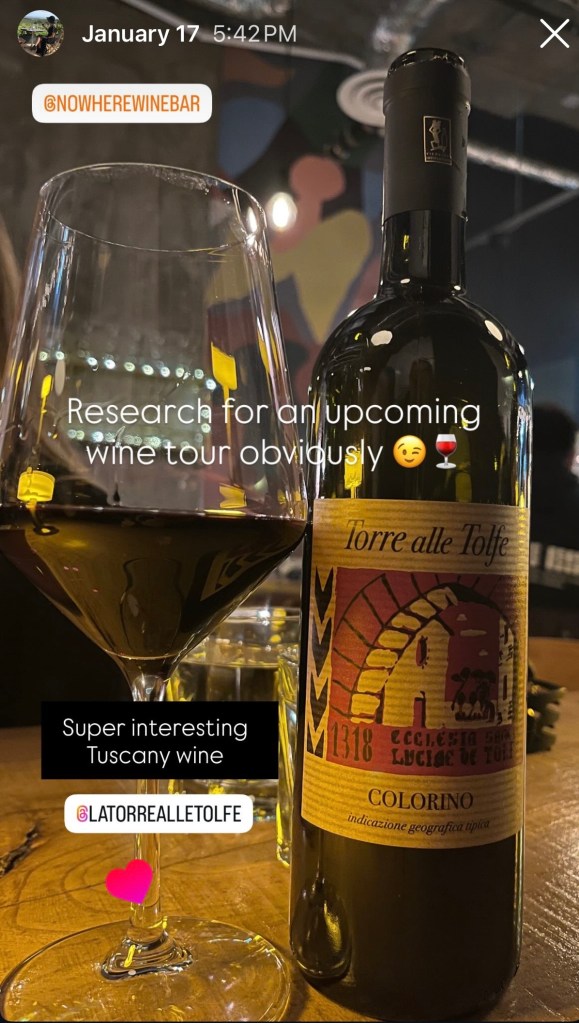
It started, as many great wine adventures do, with an inspiring bottle of wine. Sipping a glass of red at my local wine bar, I discovered a label and an interesting Tuscan varietal that I’d never encountered before. Naturally, I did what I always do — I started chasing the story behind the wine. And that story led me to La Torre alle Tolfe, the medieval estate that would become our home base for an unforgettable Tuscany wine adventure.
My journey through Tuscany wasn’t about checking famous wineries off a list. I came looking for the people and the places that give wine its soul. A winemaker mapping the DNA of ancient vines. A legendary woman who opened doors to shape modern Tuscan wine. A family who’s life revolves around the same home, the same land, and the same purpose. A one-woman force of nature farming her vineyard alongside her faithful dog. A modern day guardian of Etruscan winemaking, crafting her wines in ancient wine stones. A winemaker blending Swiss precision with the soul of Tuscany. And the medieval estate that became our home away from home.
But before all of that, there were three women.
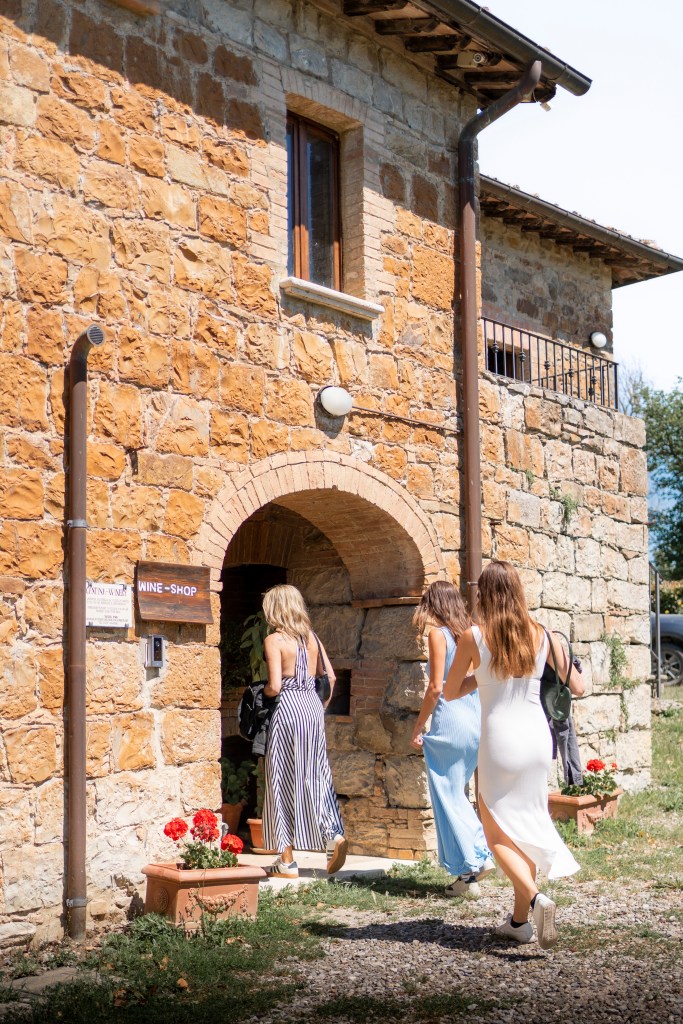
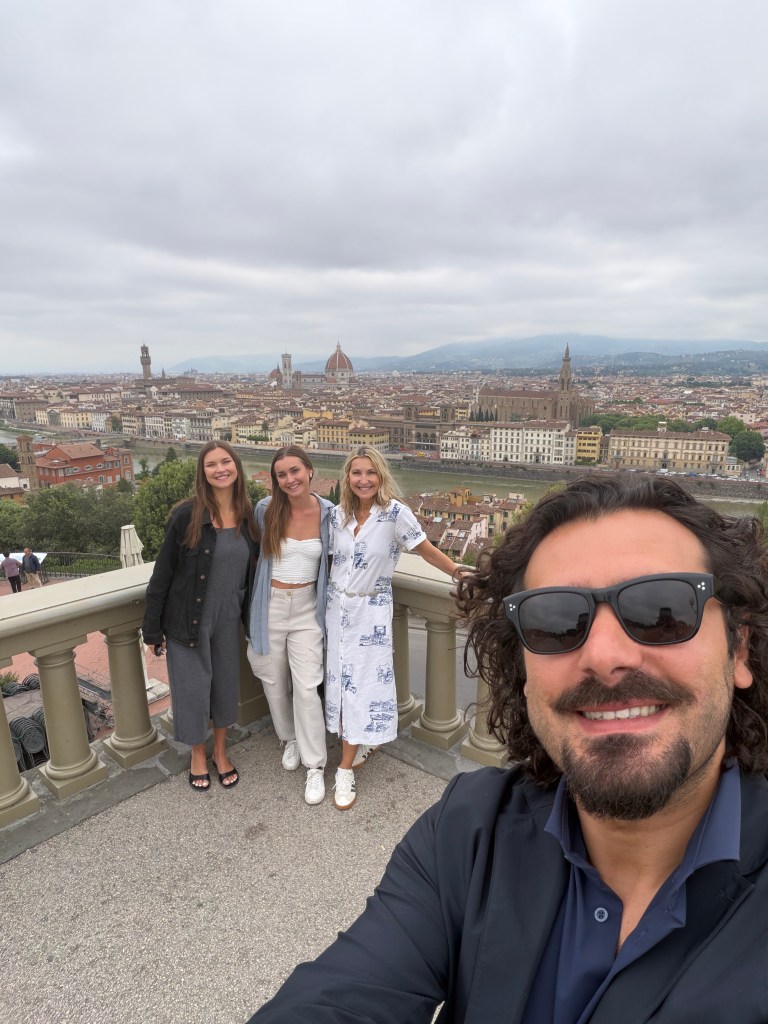
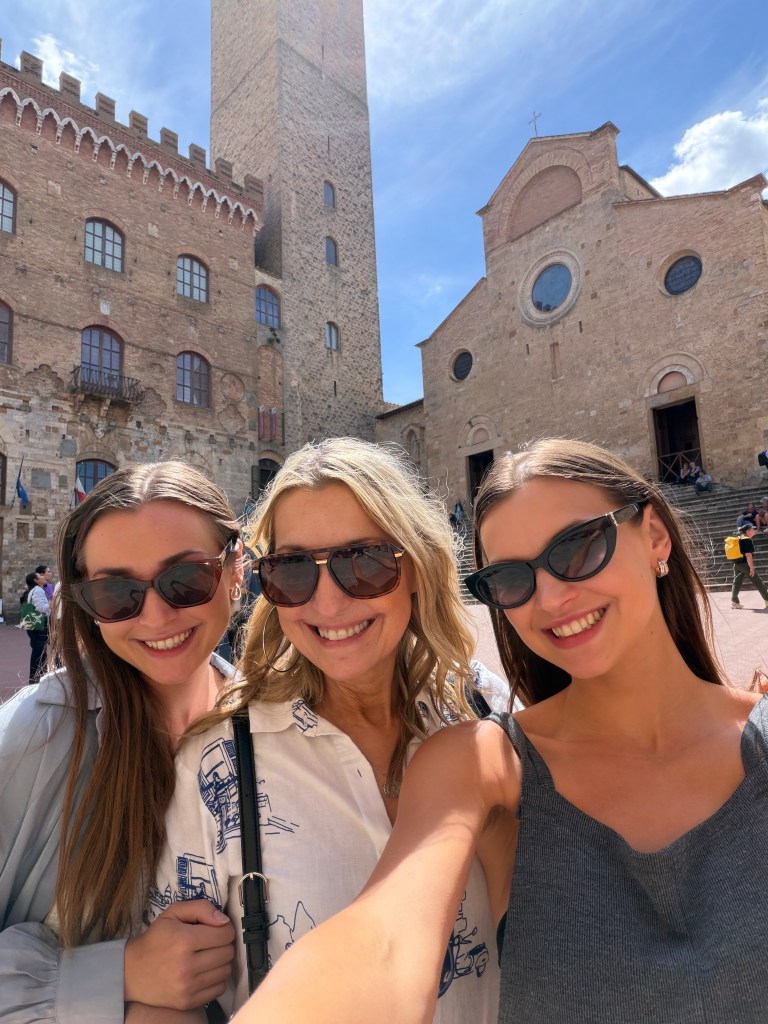
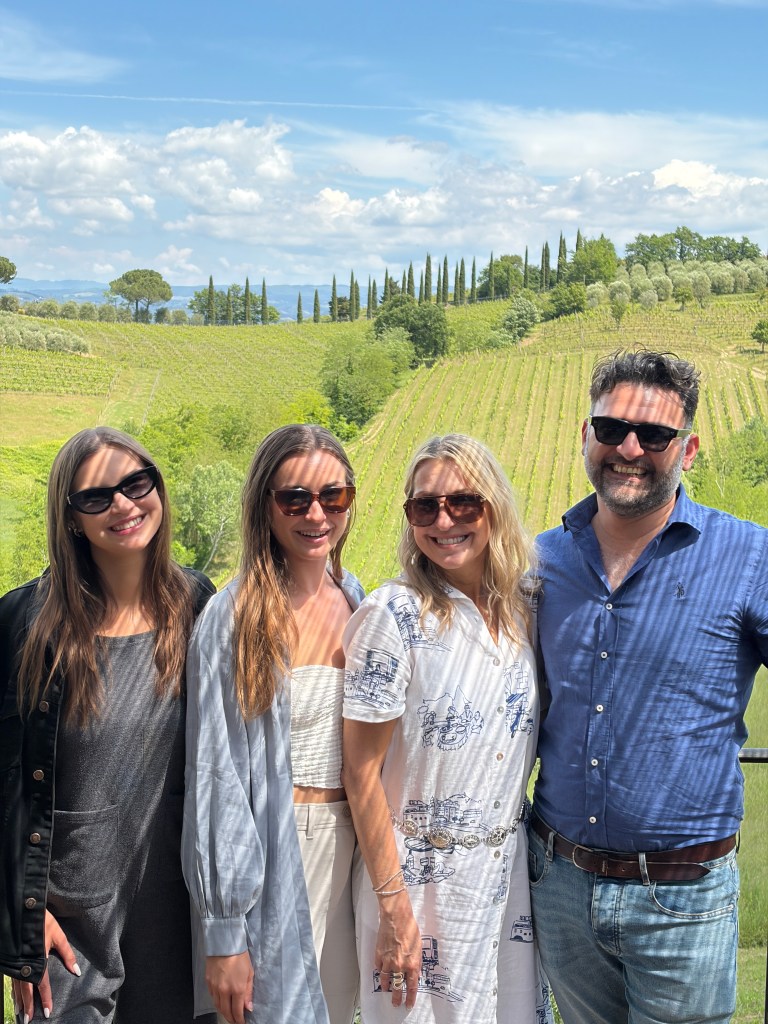
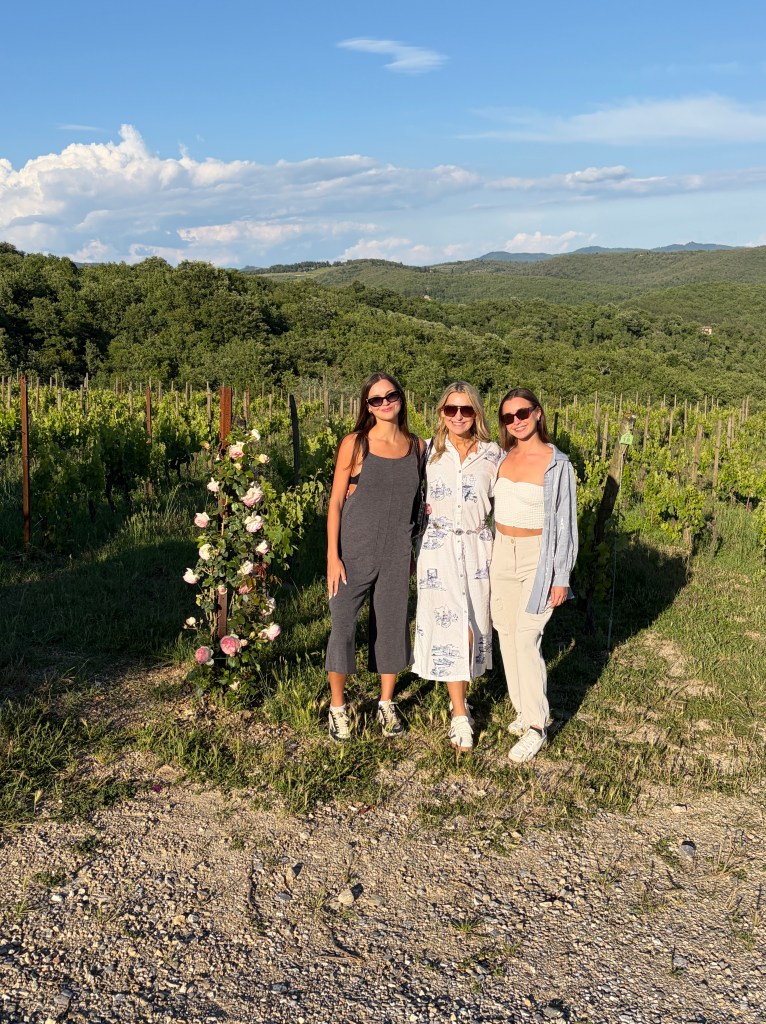
My daughters and I arrived in Tuscany from three different corners of the world, reuniting among rolling hills, cypress-lined roads, vineyard sunsets, and tables seemingly designed for lingering. These moments together are rare now, which made them all the more precious. Every glass, every laugh, every winding drive through wine country felt like a gift.
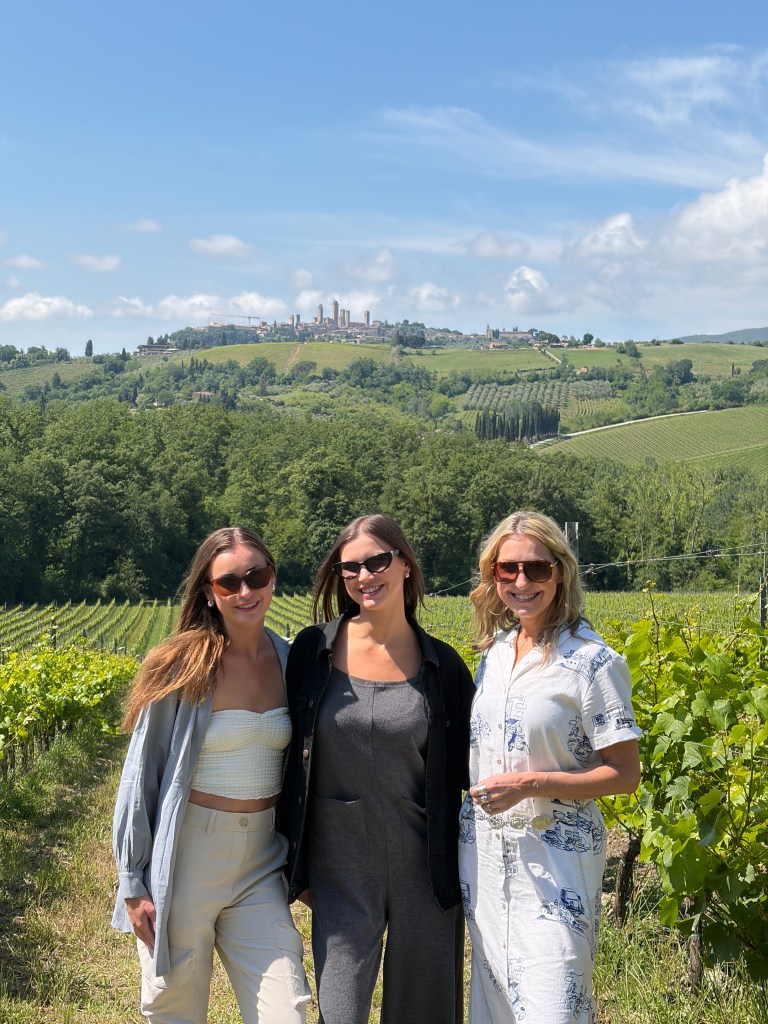
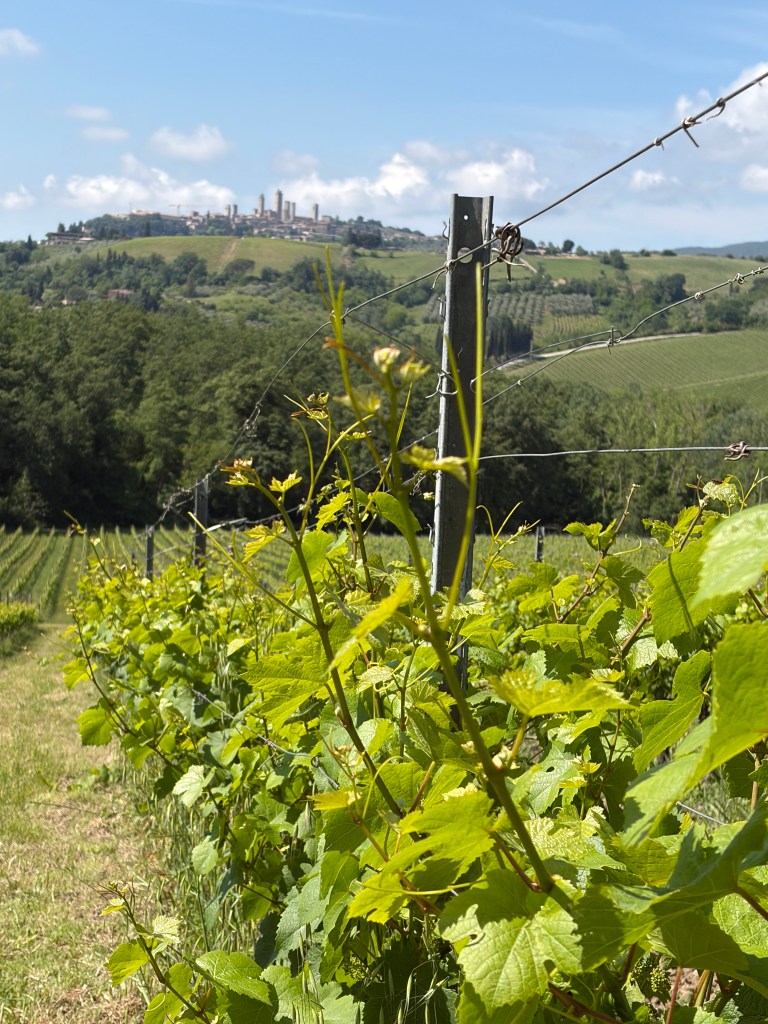
Tuscany itself feels like a place suspended between history and imagination. Millions of years ago, much of this landscape lay beneath an ancient sea. Today, those ancient beaches have become some of the world’s most celebrated vineyards.
Il dolce far niente — the sweetness of doing nothing. Tuscany taught me that doing “nothing” often looks like slowing down long enough to notice everything: the people, the conversations, the landscapes, and the simple joy of relaxing, swirling, laughing, and being present. Because wine isn’t just what’s in the glass. It’s what happens around it.
This is My Tuscany Wine Playlist — a collection of people, places, and moments I’ll be replaying for years to come.
A wine tour with big personality: Meeting Ema DiWine
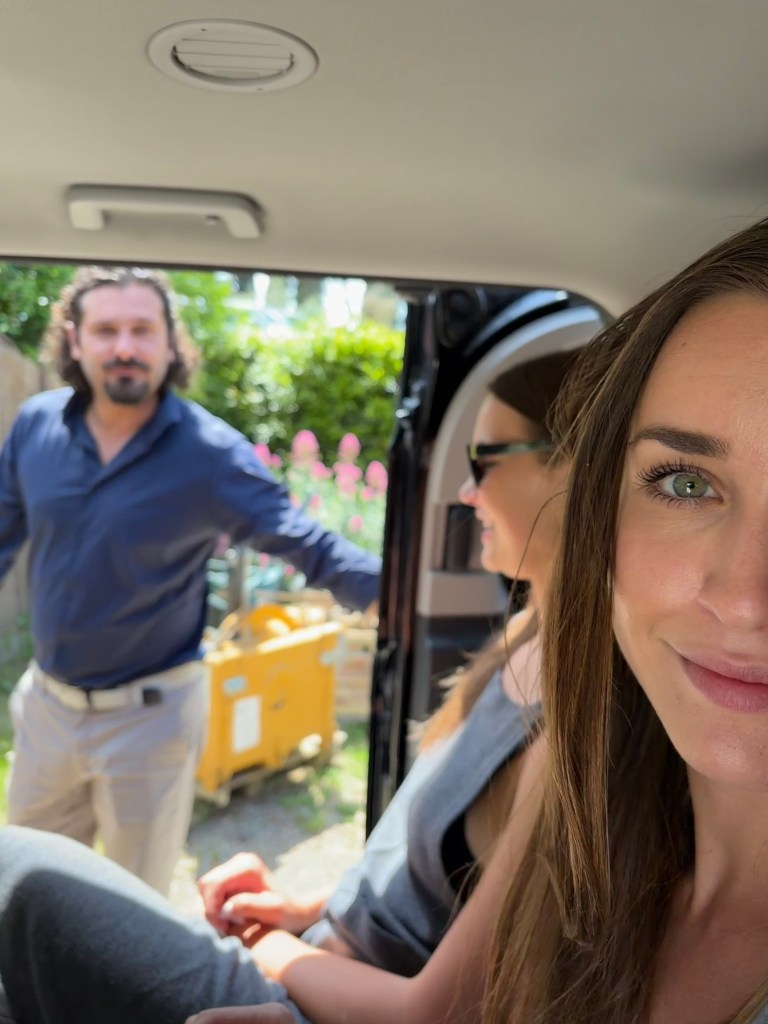
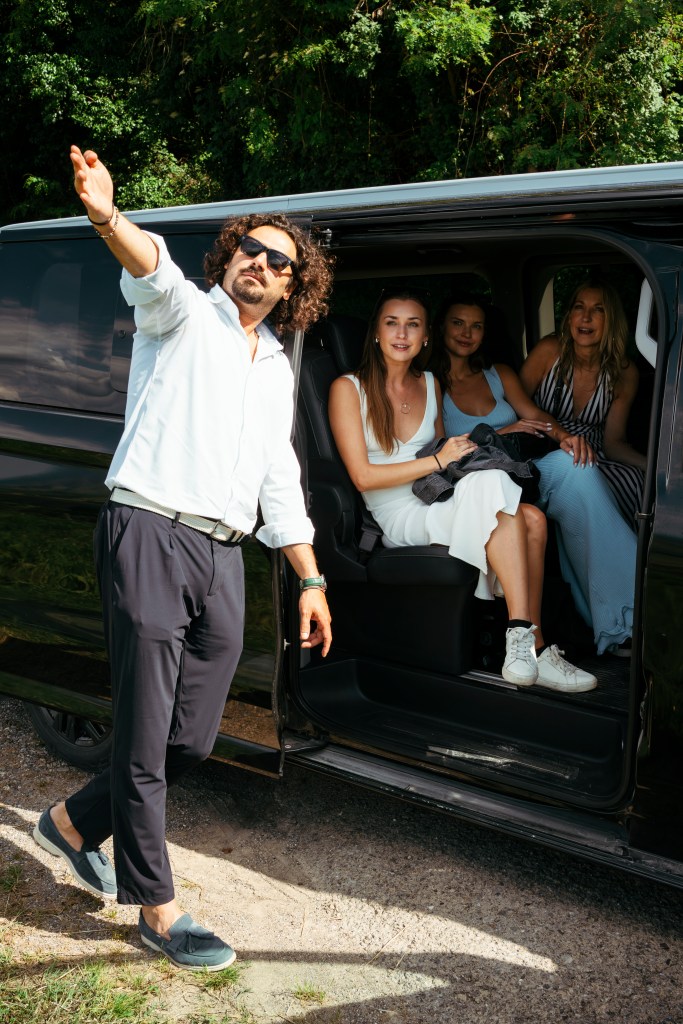
“We are perfectly on time to be a little late.” – Ema DiWine
That became one of Ema’s signature sayings as we made our way through Tuscany’s rolling hills. Through his stories, local knowledge and genuine love for Siena and the surrounding region, every vineyard, medieval village and winding country road became more than a destination.
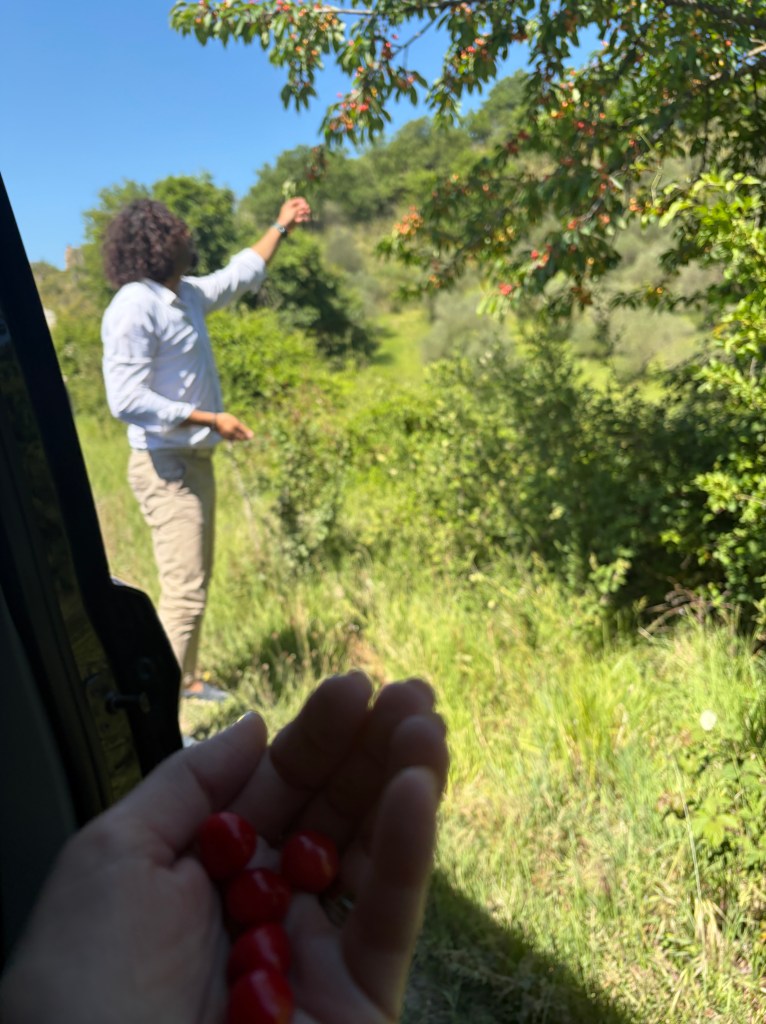
Over four unforgettable days spanning four Tuscany wine regions, Ema wore many hats: driver, sommelier, guide, translator, DJ, comedian and our designated “you go first” person whenever we encountered an intimidating goose, a beware of dog sign, a spider web, or fruit hanging from a tree that we were tempted to sample. Thankfully, he survived every assignment.
Terre di Sovernaja: Where Dreams, DNA, and Generations of Tradition Meet
Some winemakers inherit vineyards. Federico Montagnani inherited something far rarer — a family legacy with secrets still waiting to be uncovered.
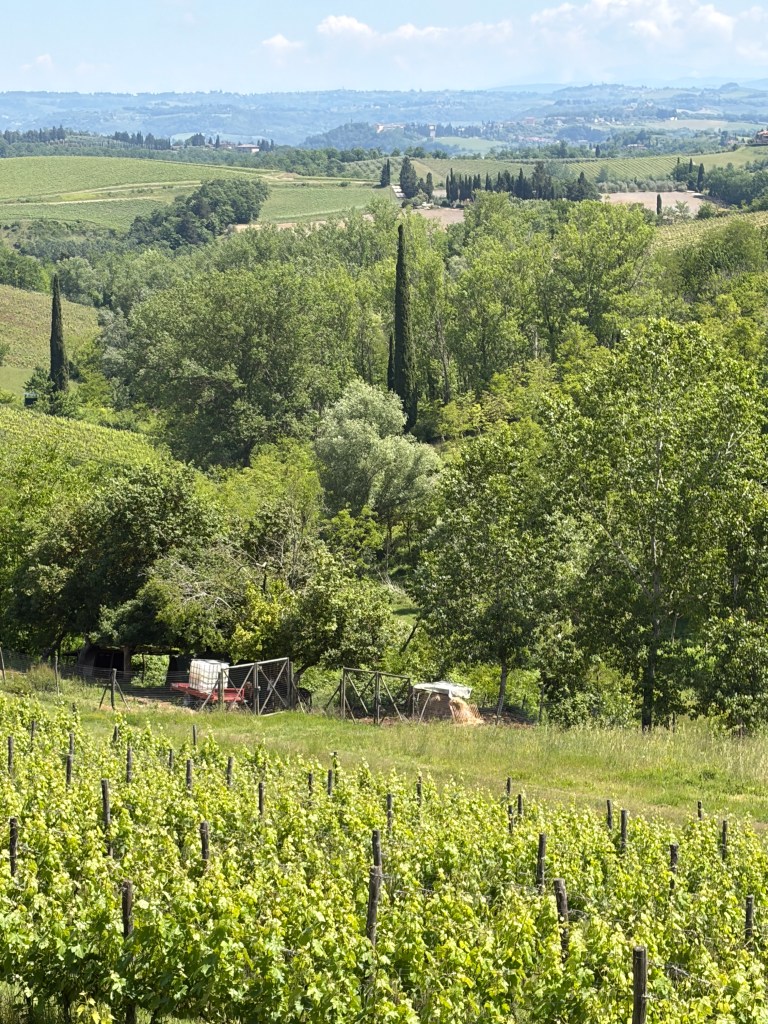
When we arrived at Terre di Sovernaja, nestled among the rolling hills near San Gimignano, we met a man who sees wine through the eyes of a scientist, a historian, a farmer, and a dreamer. As the Montagnani family’s 13th generation, Federico carries forward a legacy started by his grandfather.
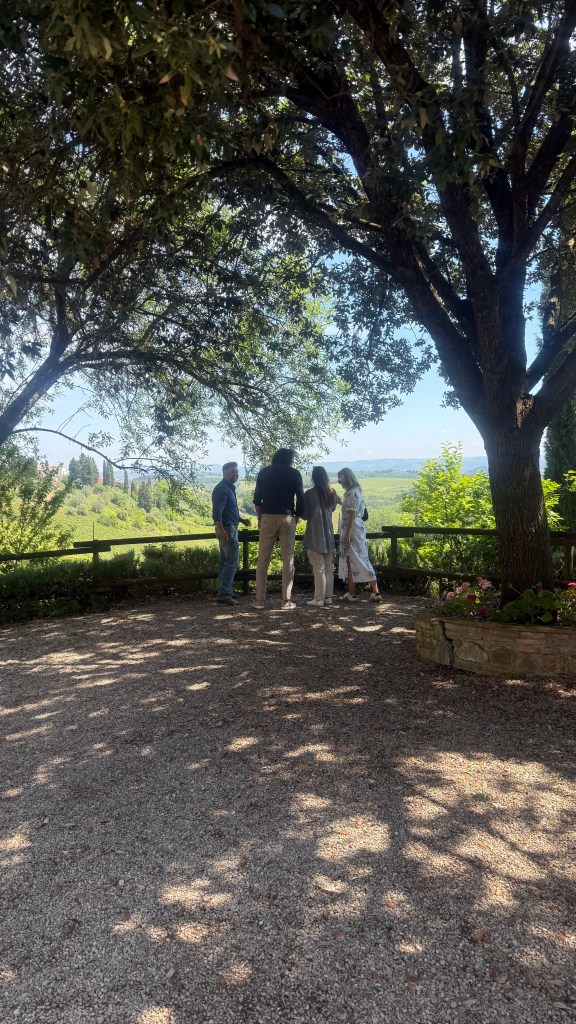
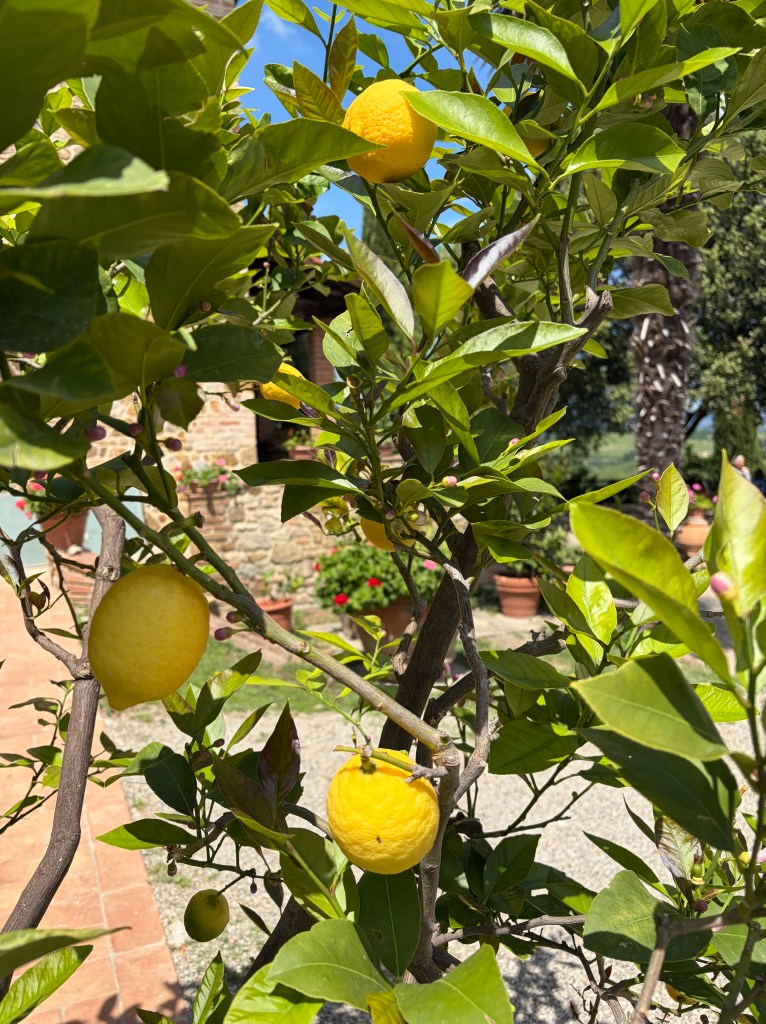
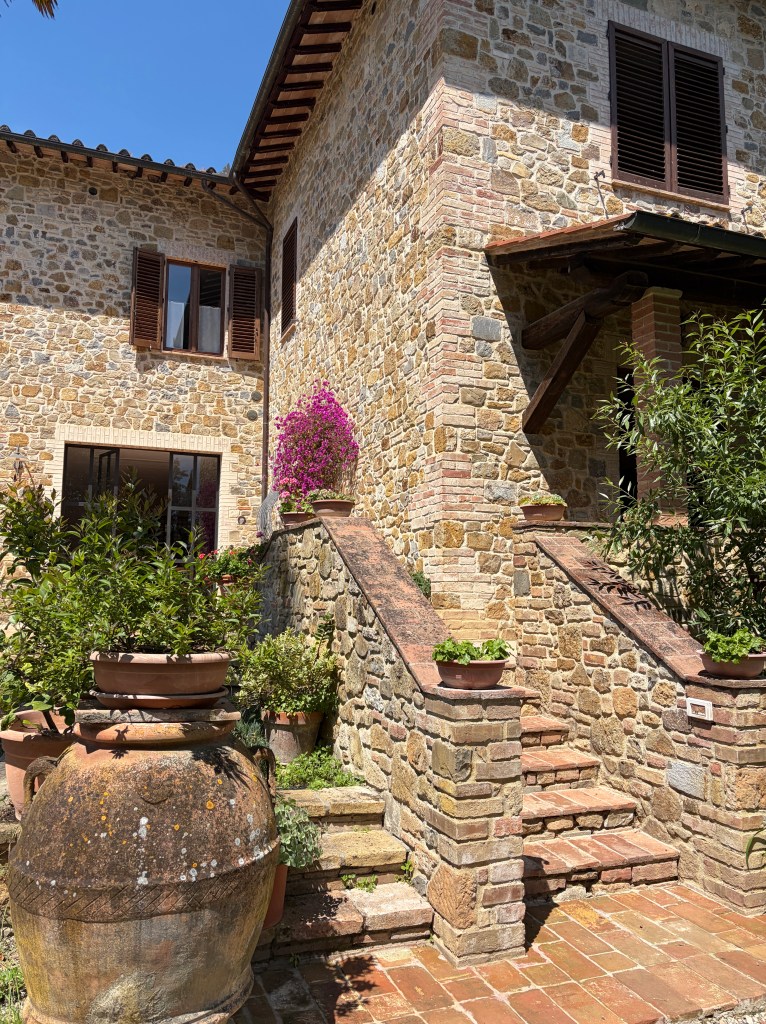
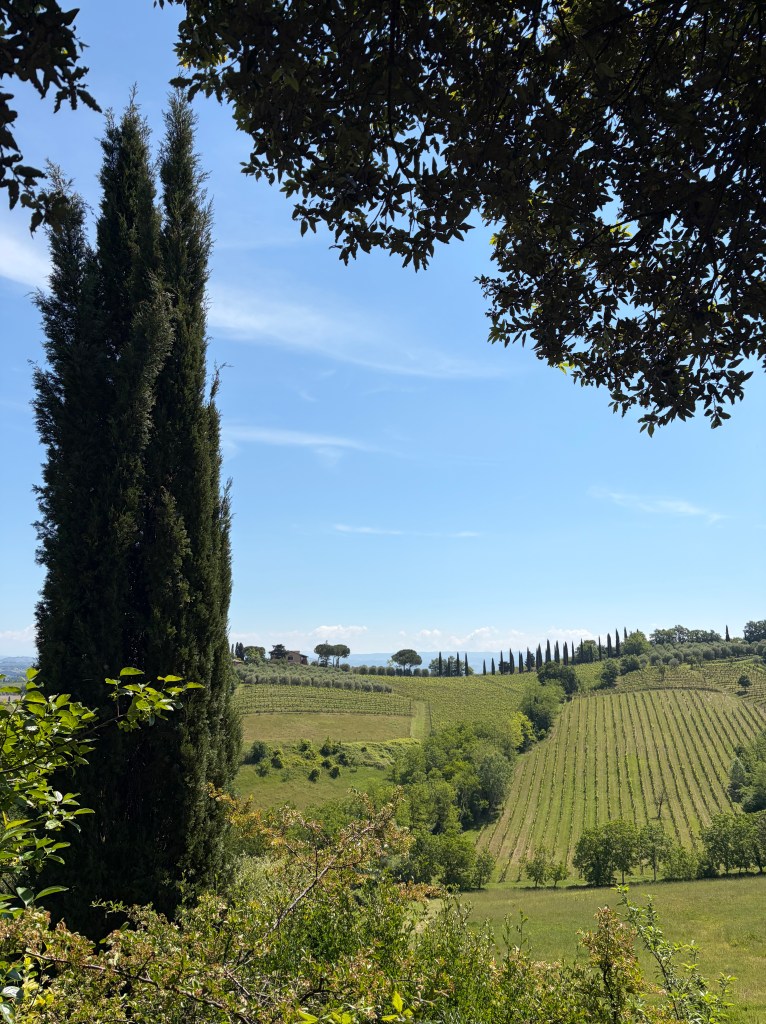
San Gimignano is world-renowned for Vernaccia di San Gimignano, Tuscany’s only DOCG white wines and one of Italy’s oldest celebrated white wines. But hidden among Terre di Sovernaja’s oldest vines was a discovery that would rewrite a piece of Tuscan wine history.
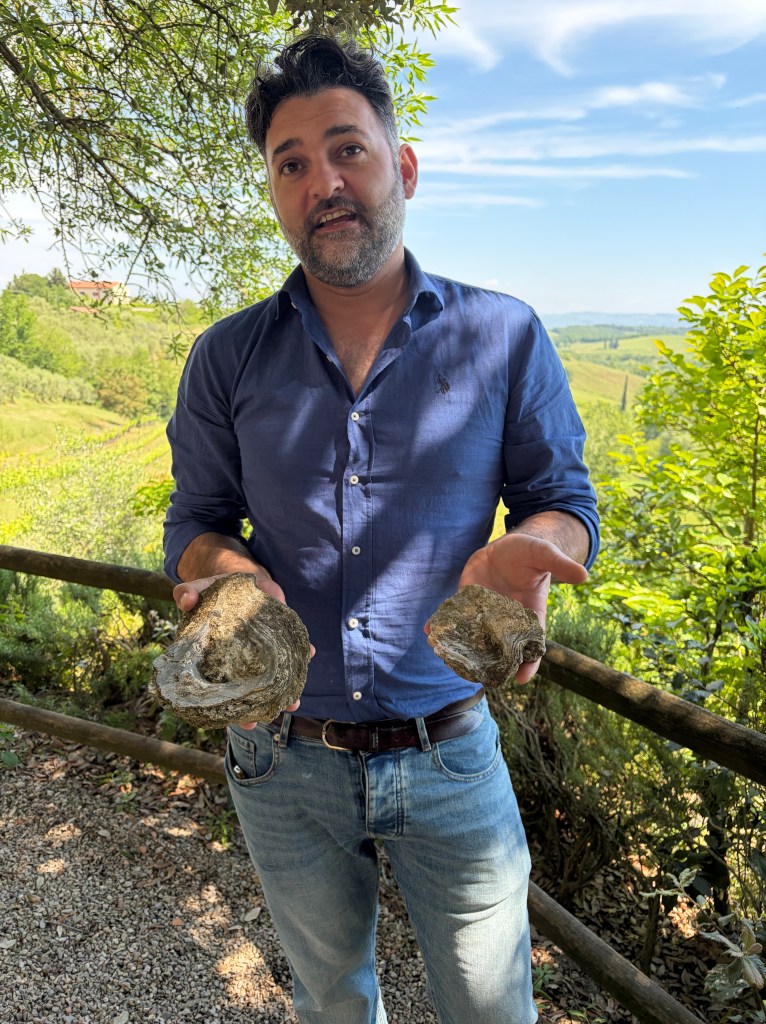
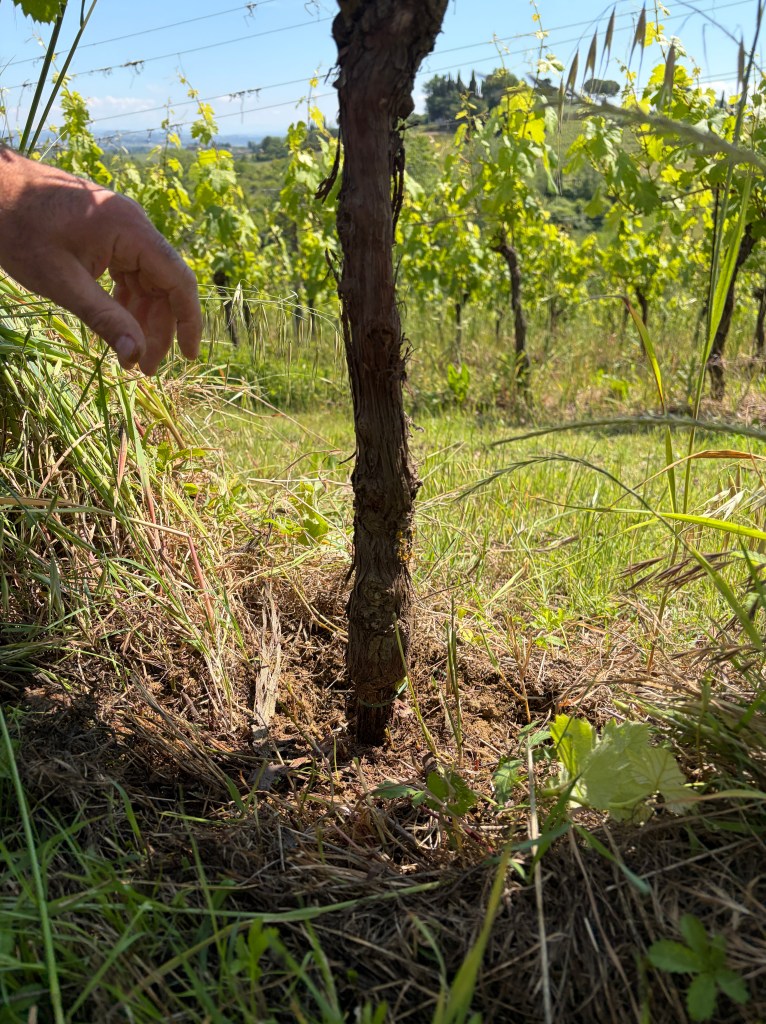
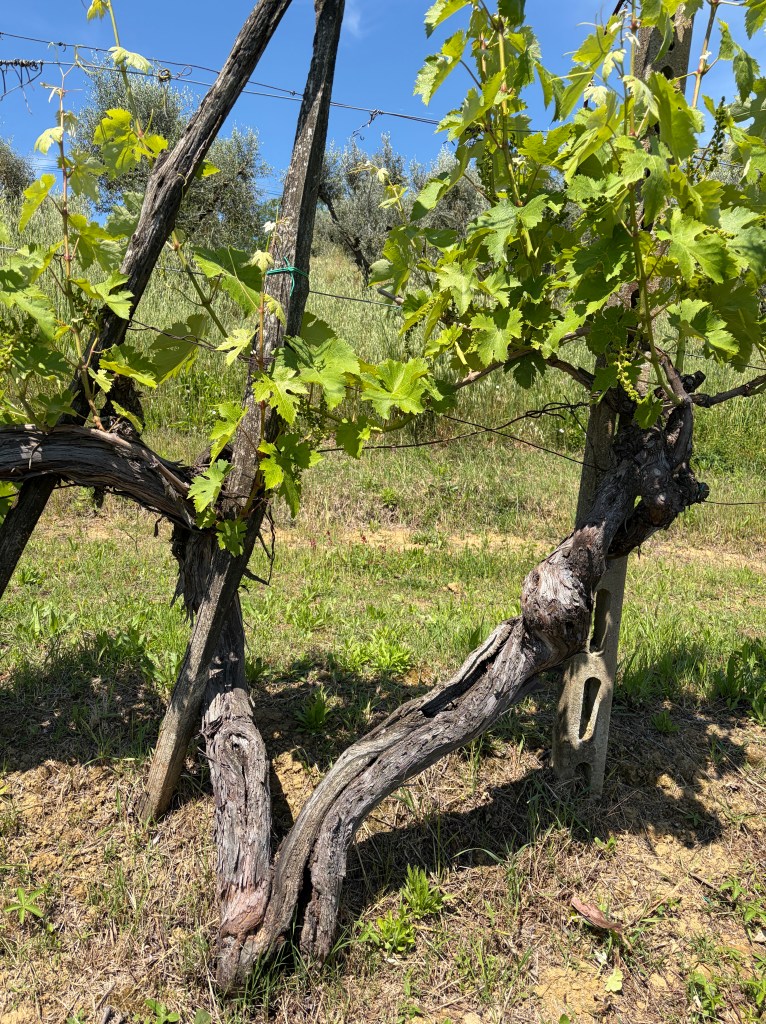
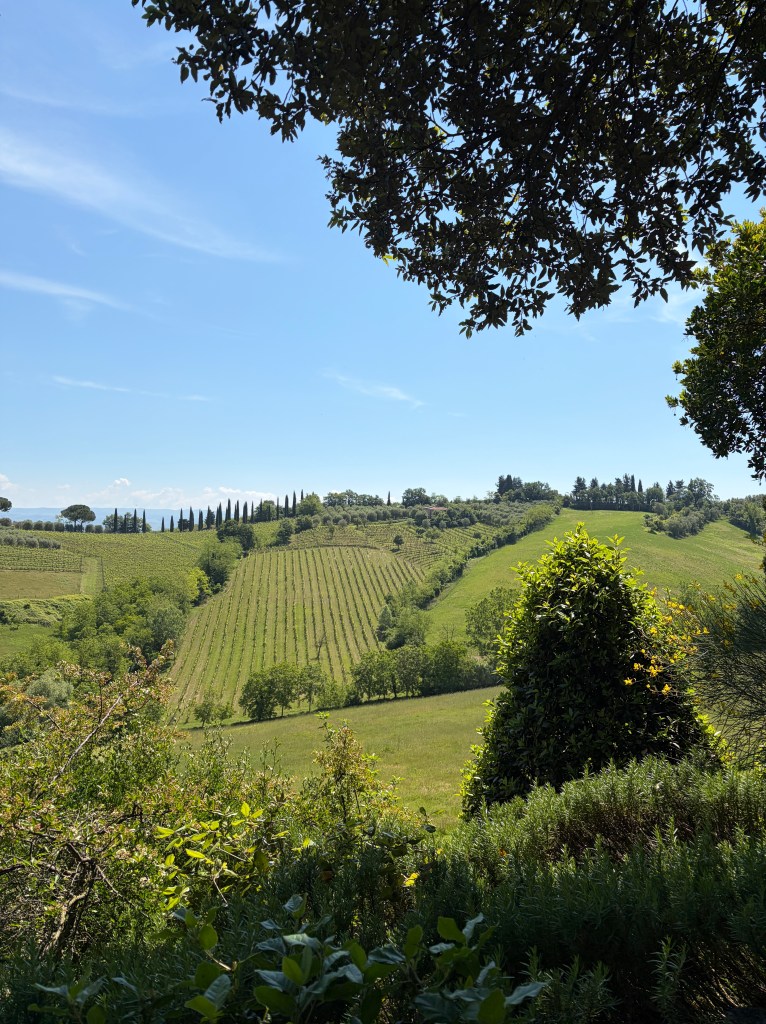
When Federico’s grandfather bought the property in the 1960s, he discovered several mysterious vines growing among the vineyards. Rather than replace them, he preserved them — a decision that led to an extraordinary discovery decades later. Working with researchers at the University of Siena, Federico used DNA testing to reveal they were Verdacchio, an ancient Tuscan white grape once thought extinct. Today, those 120-year-old vines are the only known survivors, and in 2019 Federico produced the world’s first 100% Verdacchio wine from this remarkable rediscovery.
Listening to Federico felt a little like stepping into an episode of Drops of God. Conversations flowed effortlessly between DNA testing, ancient grape varieties, soil composition, moon phases, and family history.
Dreams and Moon Phases
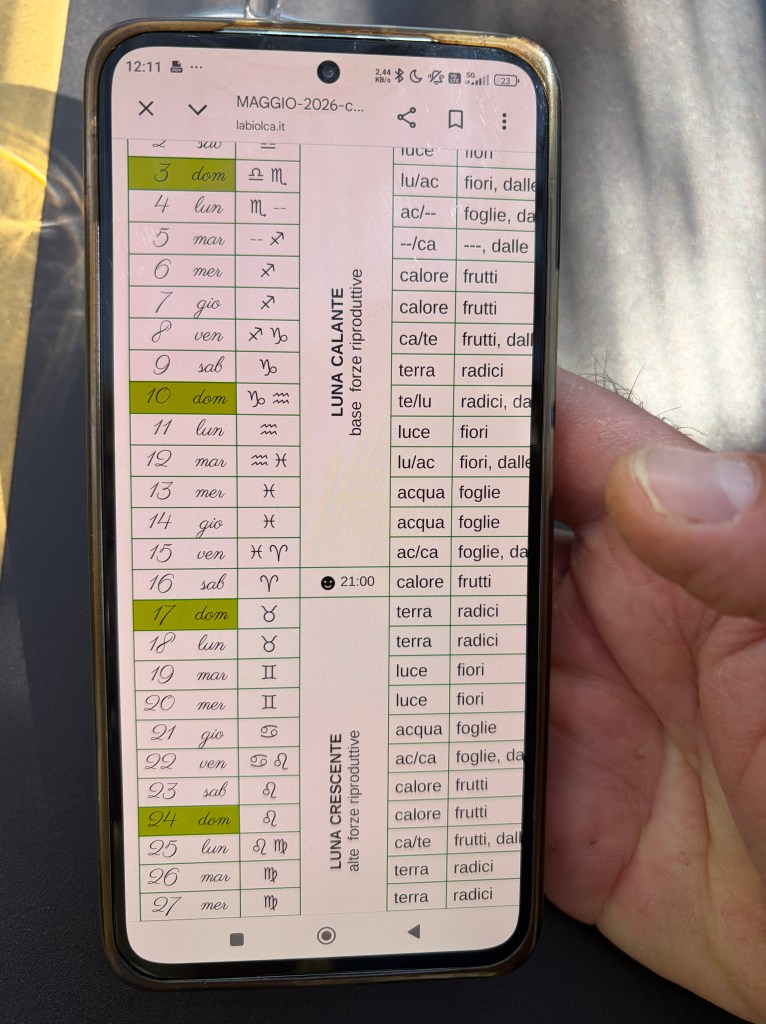
The winery embraces biodynamic principles and pays close attention to the rhythms of nature. Moon phases influence vineyard activities, and astronomical calendars help determine ideal periods for pruning, transplanting, harvesting, and cultivation.
In the week that we visited, the moon was descending which is a period considered favorable for vineyard work. Naturally, we all agreed it was also an excellent time for tasting wine!
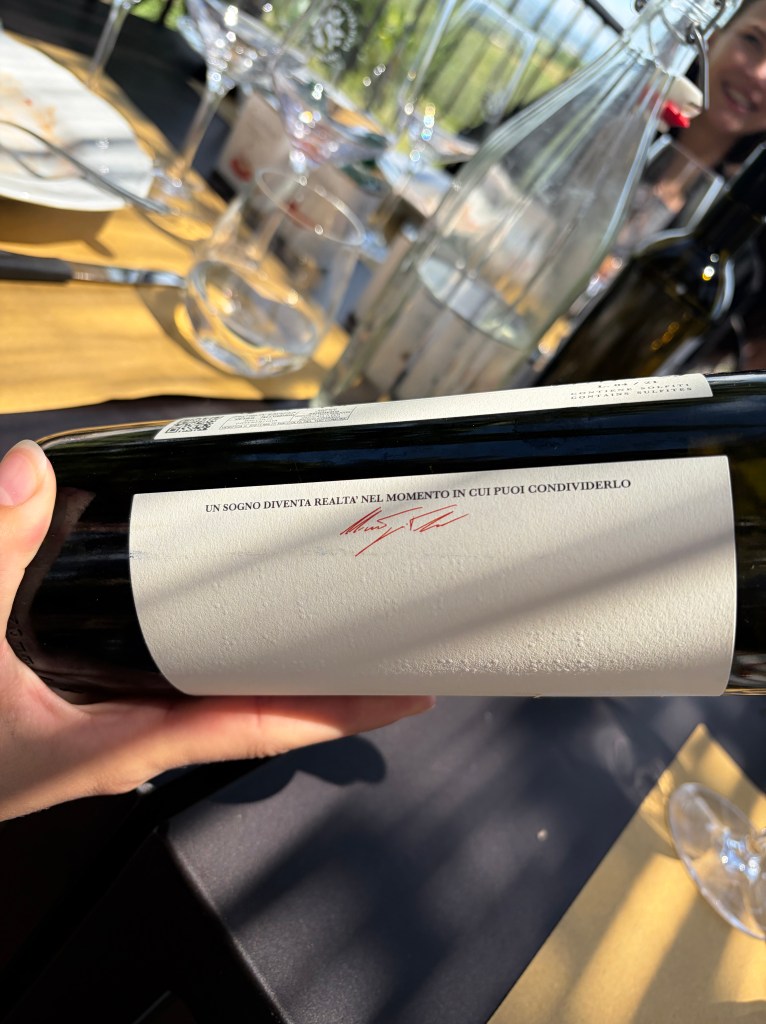
“A dream becomes reality the moment you share it.”
Science may guide Federico’s work, but dreams inspire it. Every bottle carries his signature phrase: “A dream becomes reality the moment you share it.” More than words on a label, it’s the philosophy behind Terre di Sovernaja itself.
As Federico told us: “Terre di Sovernaja is my dream.”
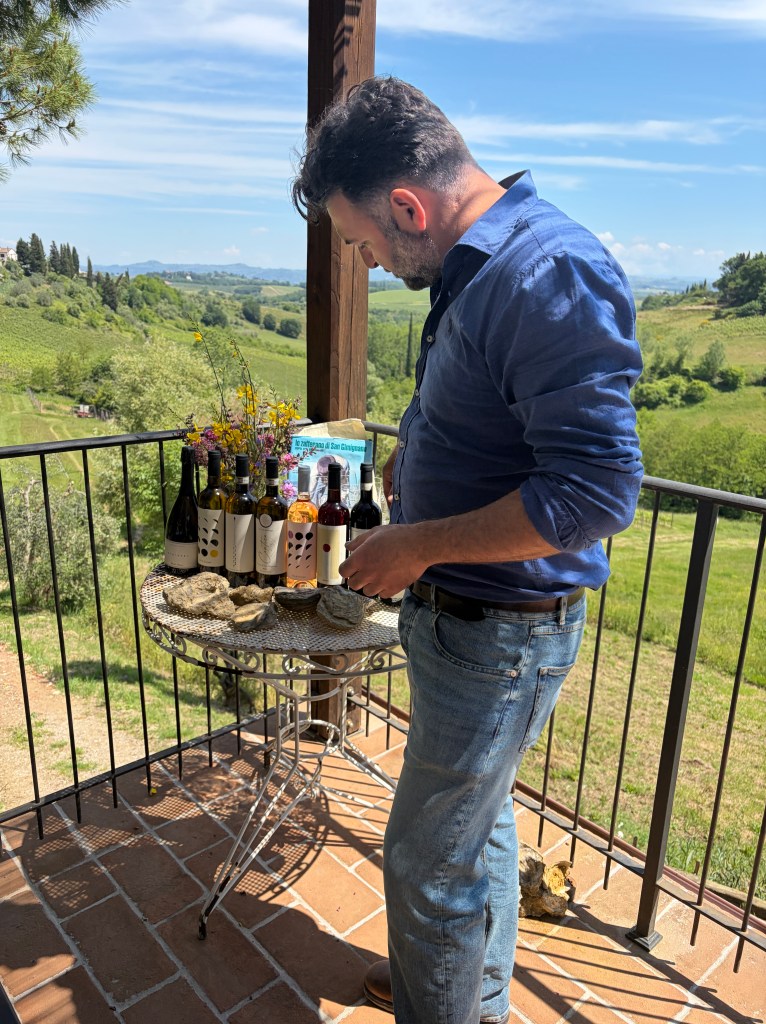
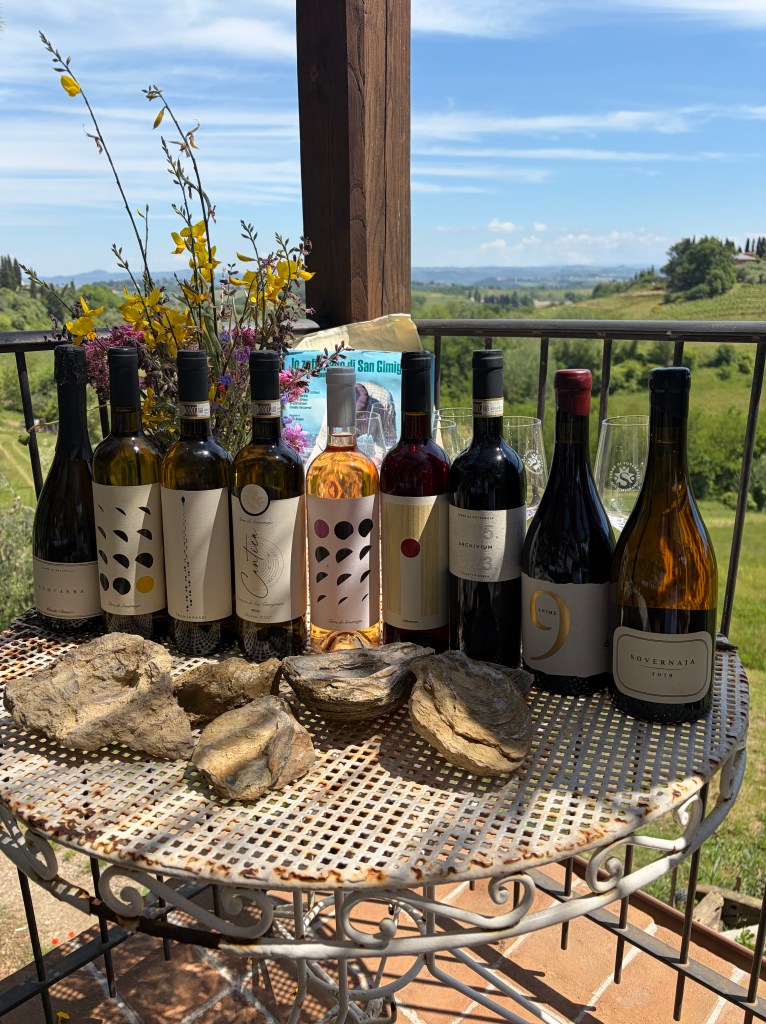
With nine labels, every wine at Terre di Sovernaja tells a story. Federico says his wines are “bottled in the vineyard” with minimal intervention. In many ways, he’s following the path is grandfather walked decades ago — to bottle a truthful expression of the land.
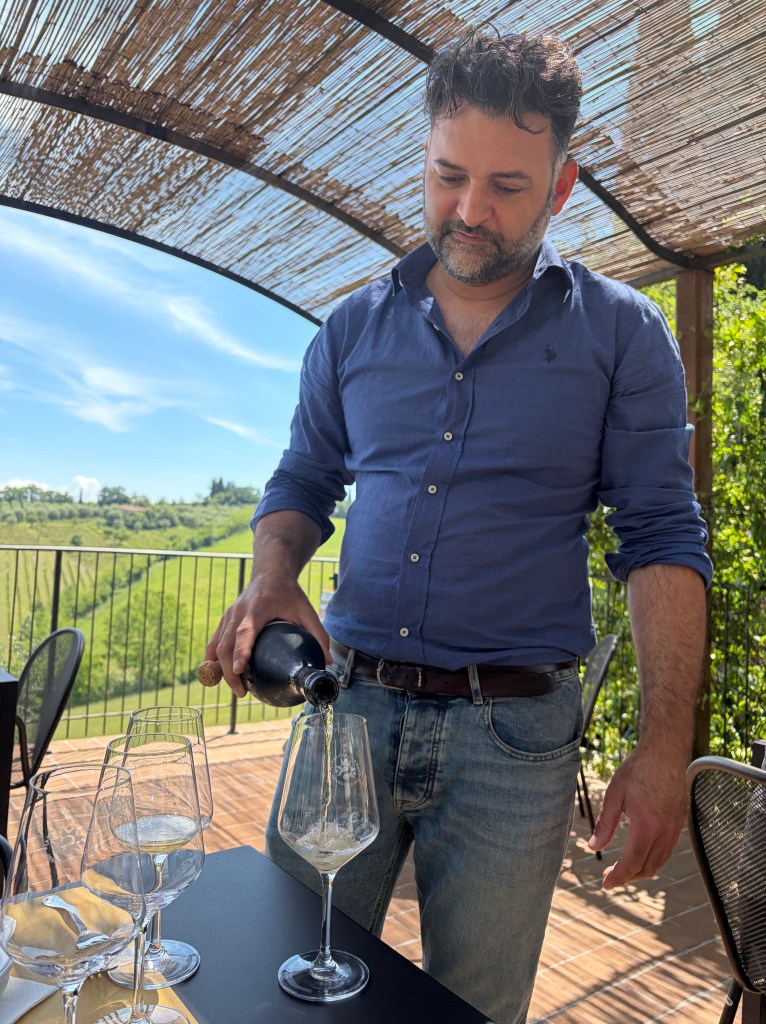
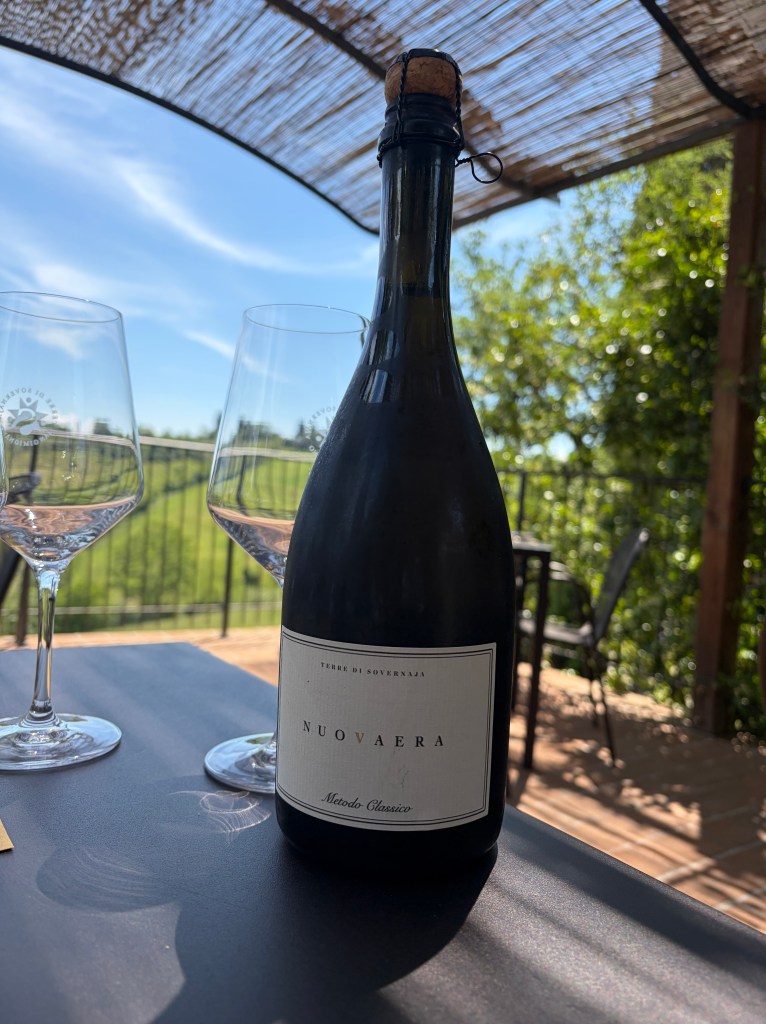
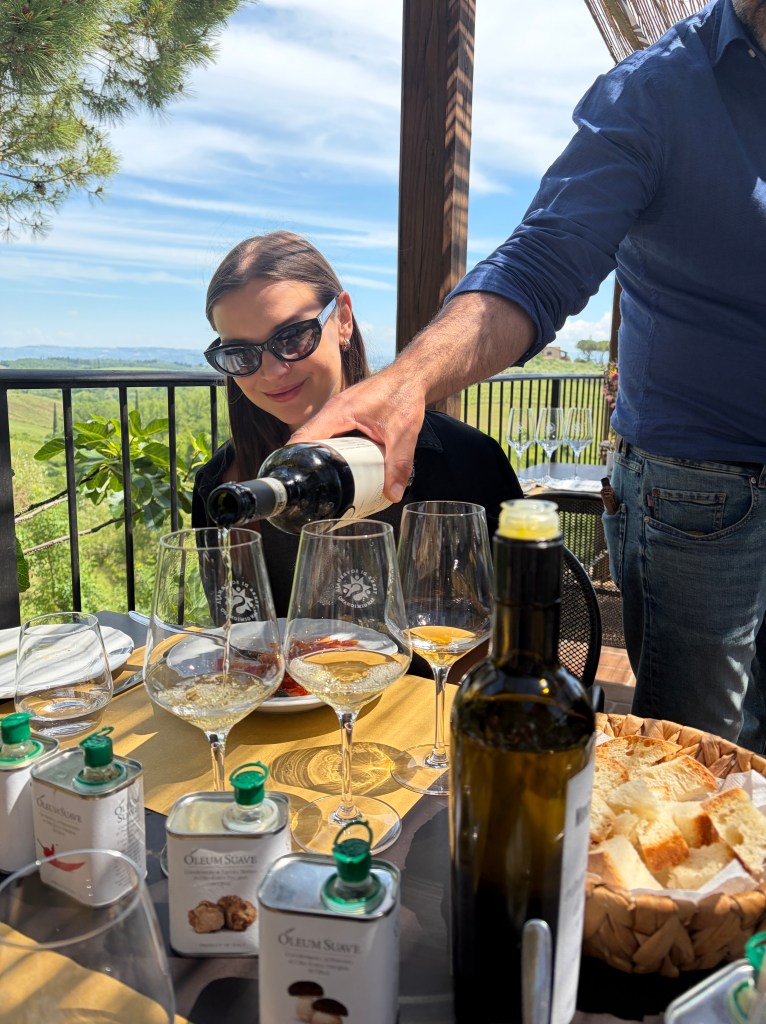
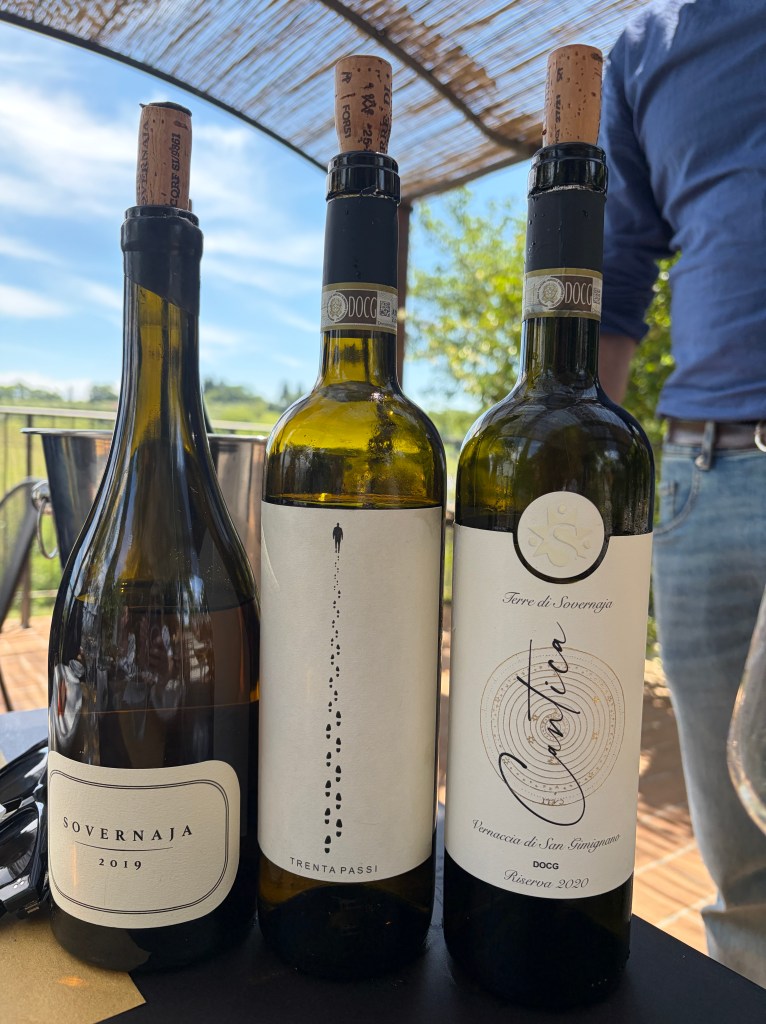
The tasting was a delightful journey through remarkable diversity of Terre di Sovernaja. We began with Nuovaera, a sparkling reinterpretation of Vernaccia that signals a bold new chapter for Tuscany’s iconic white grape. Next came 30 Passi, a Vernaccia shaped through thirty separate micro-fermentations, and Cantica Riserva 2020 born from the original vineyard — both beautiful expressions of place with fabulous labels.
Then there was Sovernaja 2019 — rare, historic and unforgettable. Produced only in exceptional vintages from the rediscovered Verdacchio vines, it’s the first white Super Tuscan, with just 900 bottles made!
We also explored Federico’s “sun series”, three wines inspired by the phases of the sun.
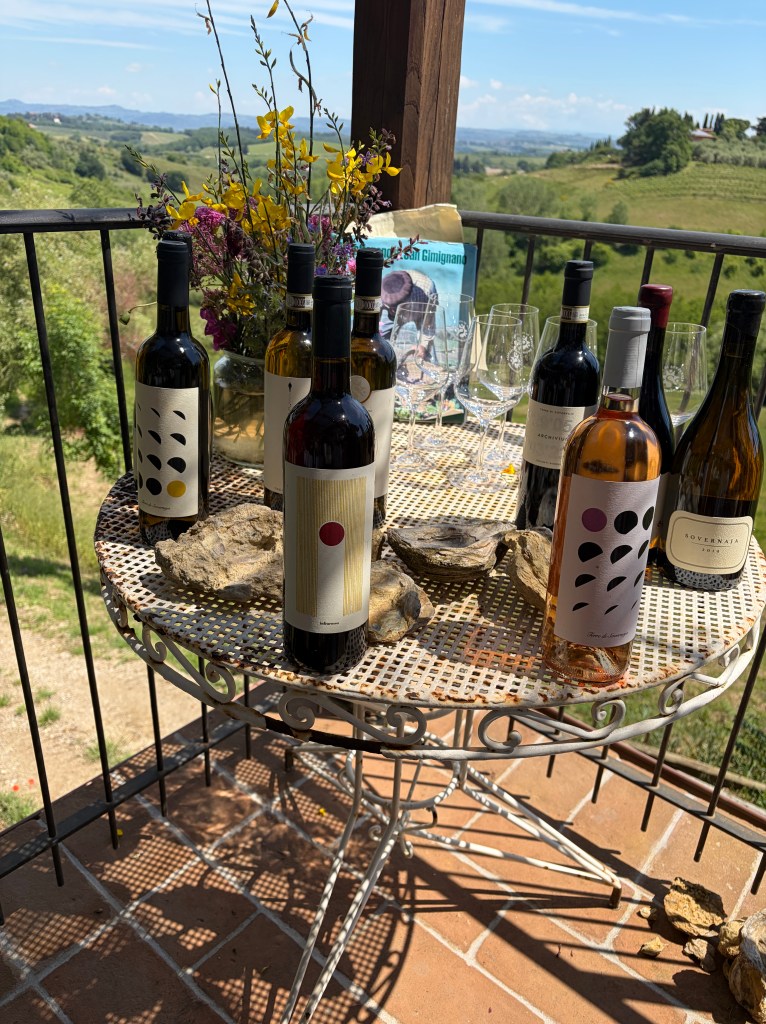
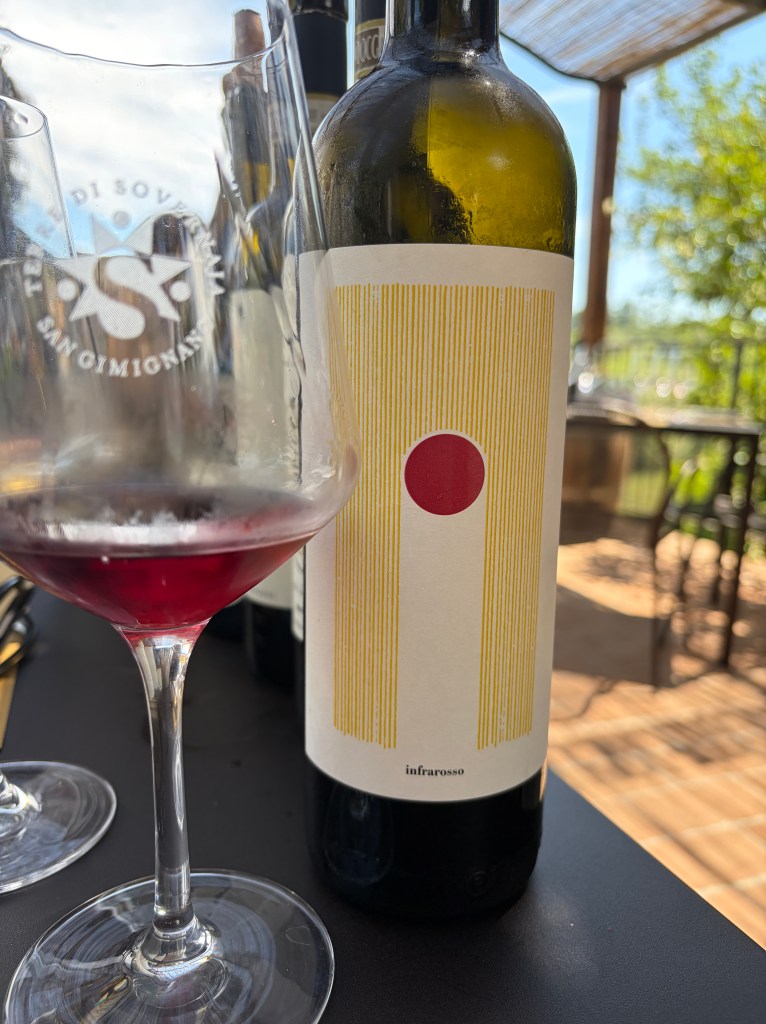
Perhaps the most fascinating wine of the tasting was Infrarosso (pictured above) made primarily from white Trebbiano grapes with a touch of Sangiovese. It challenges every expectation of what a red wine should be. Federico calls it the wine of the future and shared that during a blind tasting, journalists debated whether it was even possible for such a wine to exist. Yes… another Drops of God moment.
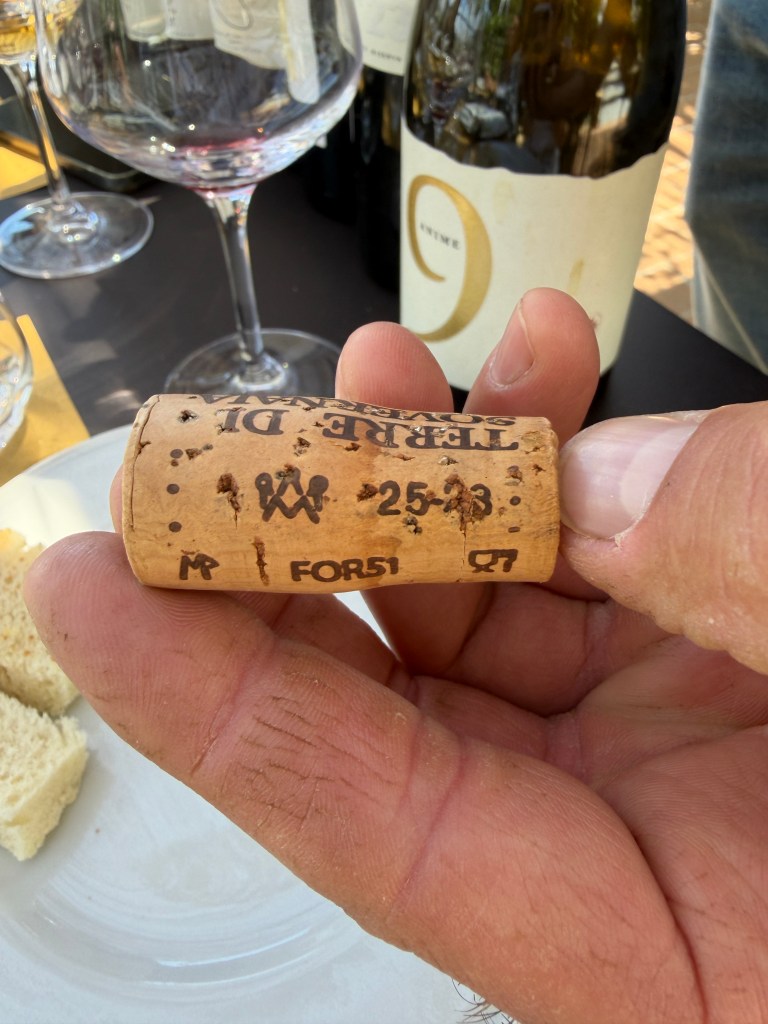
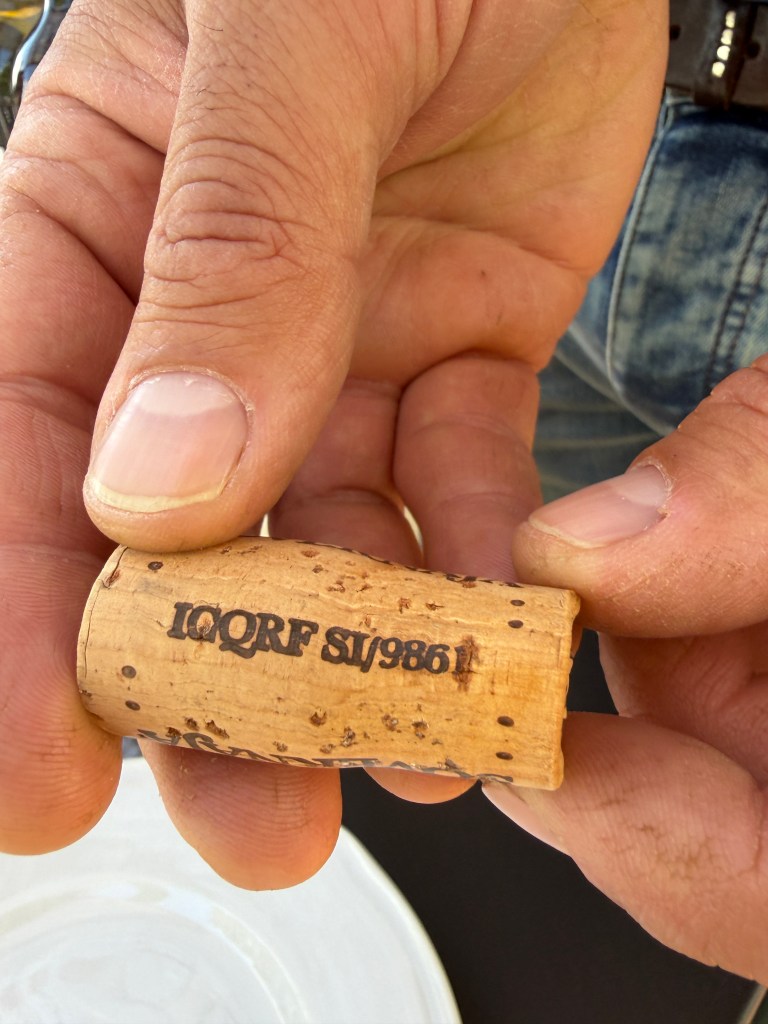
My favourite of the tasting was 9Anime (9 Souls) — a remarkable blend of nine grape varieties that pays tribute to the origins of Tuscan red wine. As if the wine itself wasn’t memorable enough, I loved learning that each cork is handcrafted by women in Sardinia and every bottle is individually numbered. Ours? Bottle #9861.
Curiosity Beyond the Vineyard:
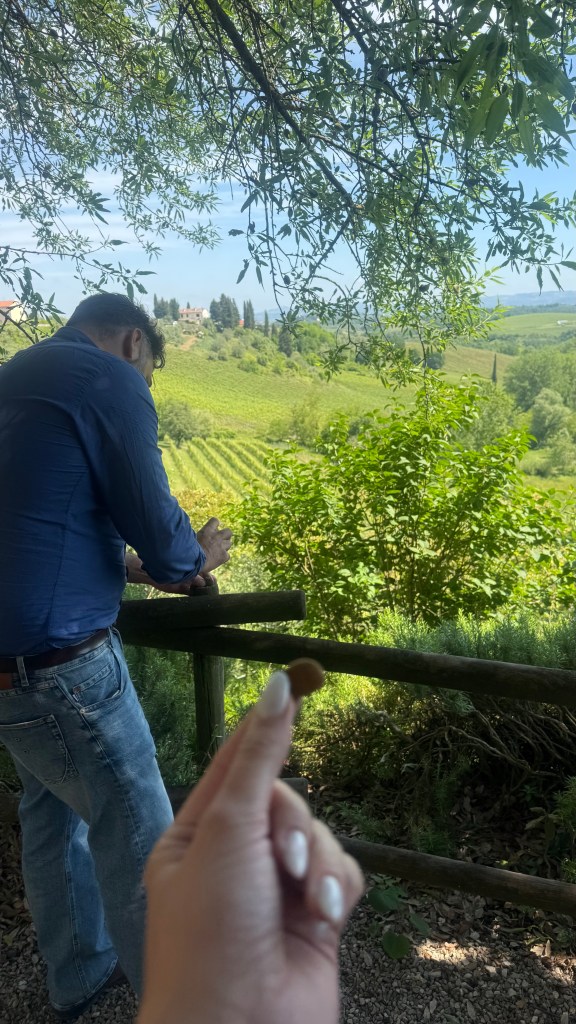
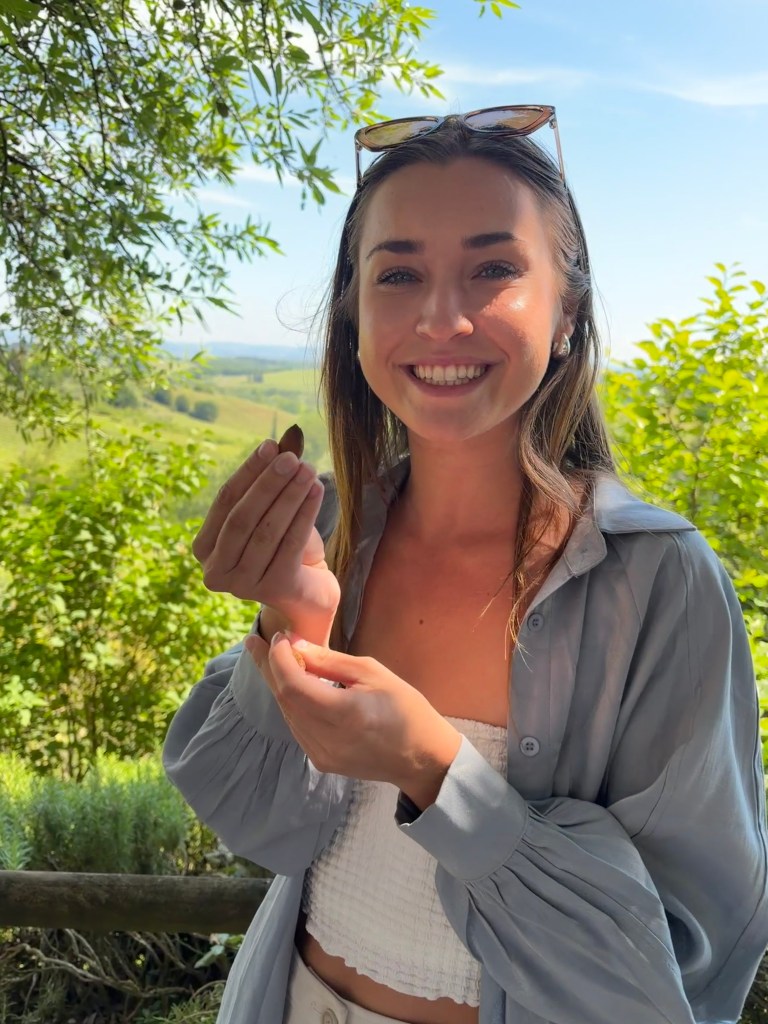
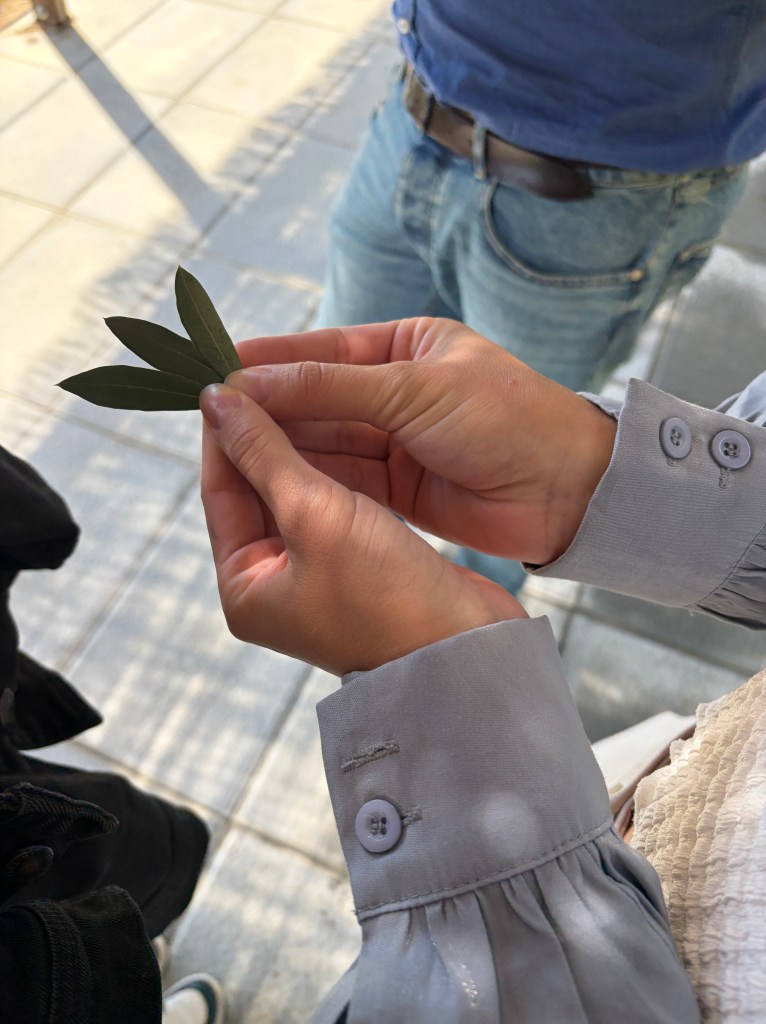
Wine may be the headline at Terre di Sovernaja, but it is far from the whole story. The farm is home to approximately 200 olive trees spanning 16 different varieties along with almonds, saffron, fruit trees, free-roaming animals, even a donkey named Pinocchio. Federico is currently conducting a fascinating olive cross-pollination experiment that may eventually result in an entirely new olive variety — yet unnamed! (He kindly gave me permission to share this little glimpse of his latest adventure!)
Terre di Sovernaja impressed me with wine and wonder. Here, ancient vines are rescued through modern science, a grandfather’s vision continues through his grandson’s determination, and every bottle begins with a deep respect for the land. It’s a reminder that wine is not simply something we sip — it is discovered, protected, and shared from one generation to the next.
Arriving in Chianti Classico
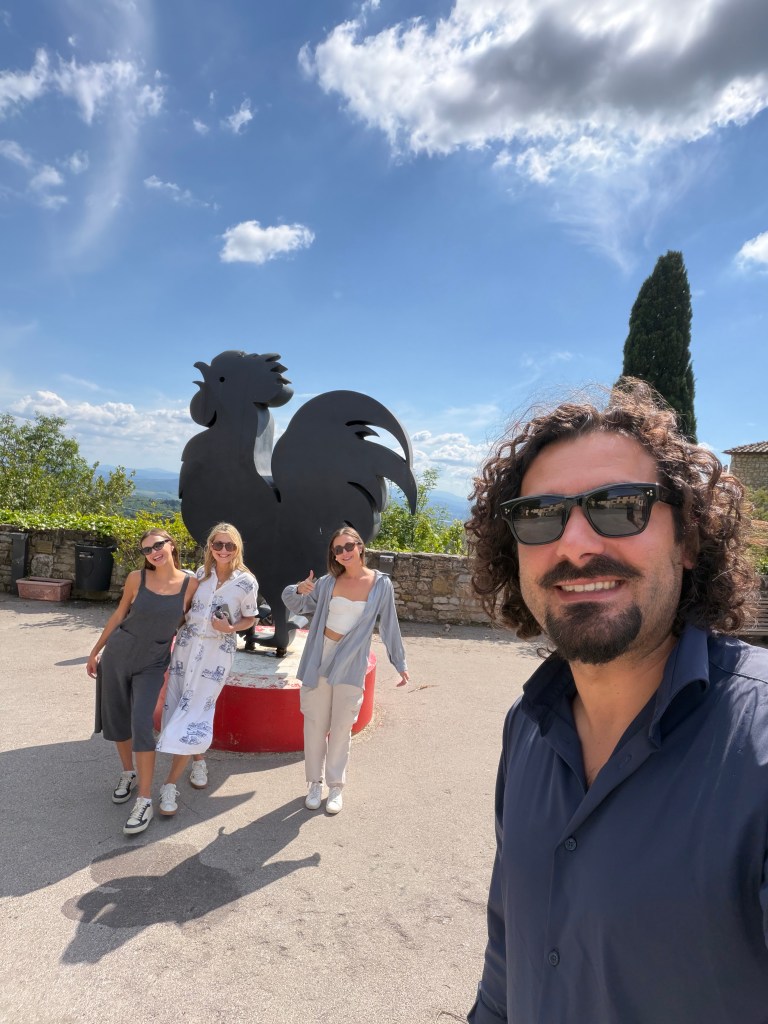
The Black Rooster (Gallo Nero) is the iconic symbol of every authentic Chianti Classico. Legend has it that Florence and Siena settled a border dispute with a horse race that began at the first crow of a rooster. Florence’s hungry black rooster crowed before dawn, giving its knight an early start — and winning much of the Chianti region. Today, that little black rooster on the bottle label is your sign that you’re drinking the real deal.
Brancaia: Love at First Sight — A Perfect Blend of Swiss Vision and Tuscan Terroir
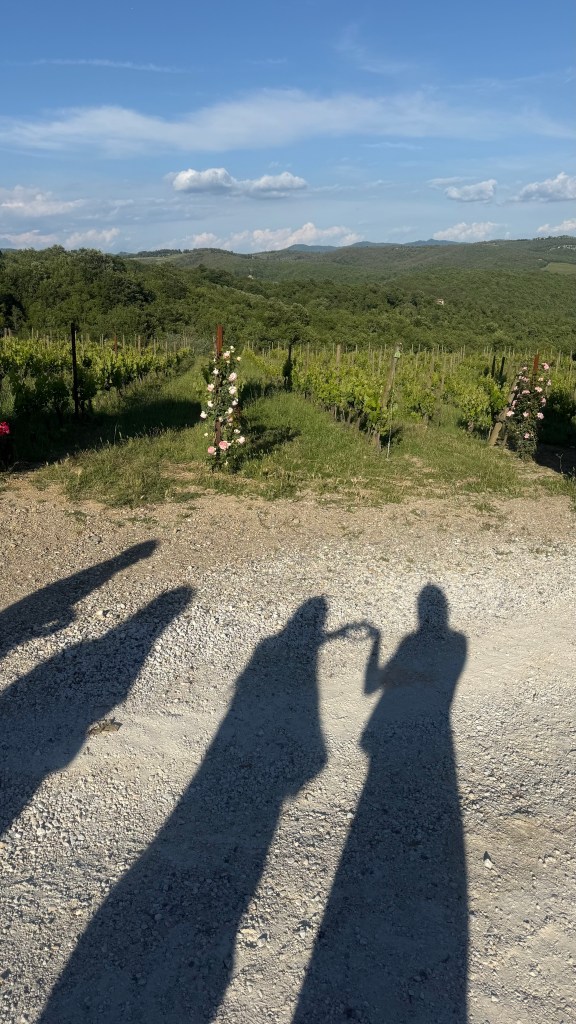
Some wineries are discovered on a wine list. Others become old friends long before you ever set foot on their property. Brancaia has long been one of my go-to Tuscan wines back home in Canada, so arriving at the estate in Castellina in Chianti felt a little like meeting a celebrity you’ve admired for years. Only this celebrity was surrounded by rolling vineyards, cypress trees, and some of the most beautiful Sangiovese vines in Tuscany.
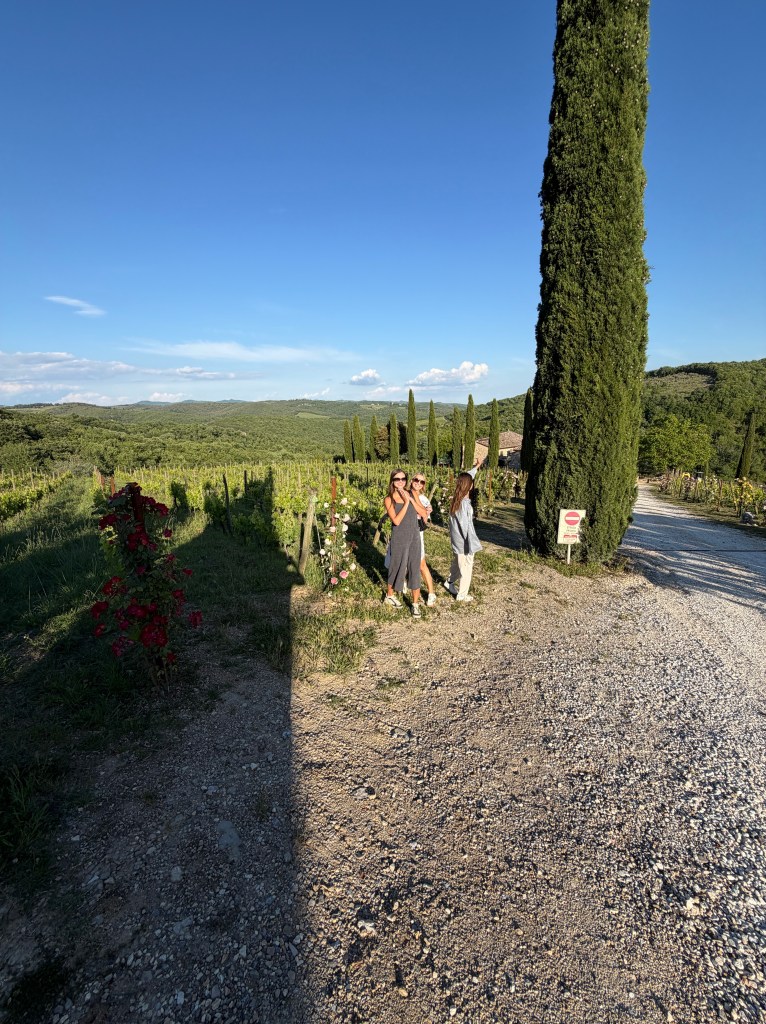
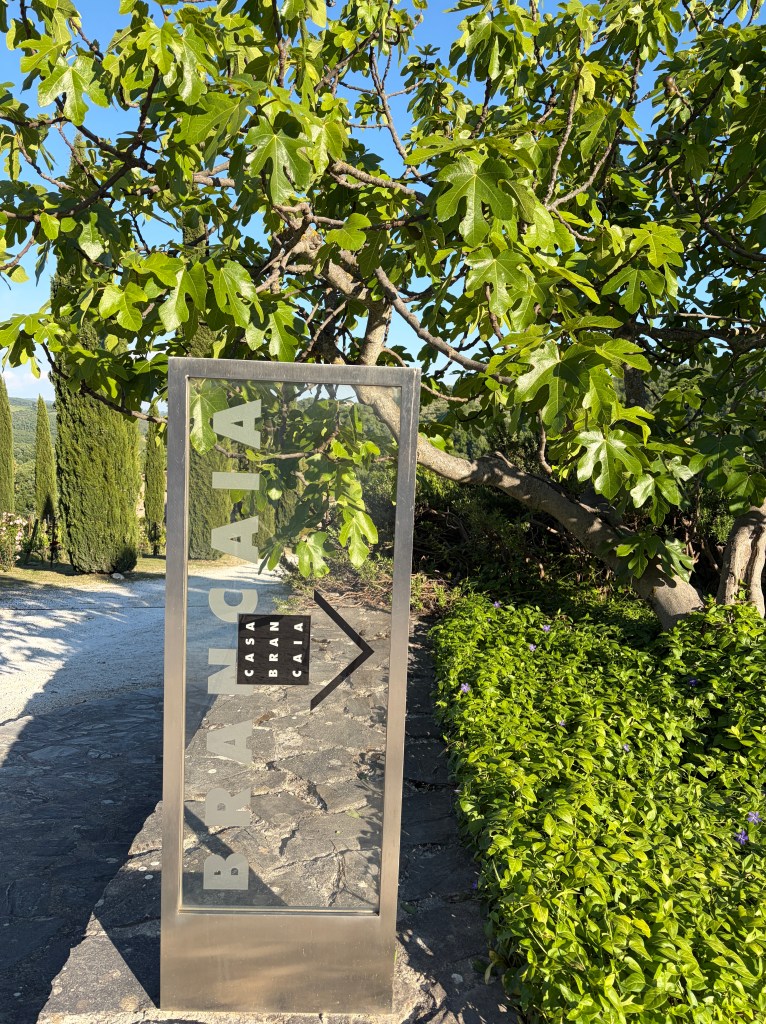
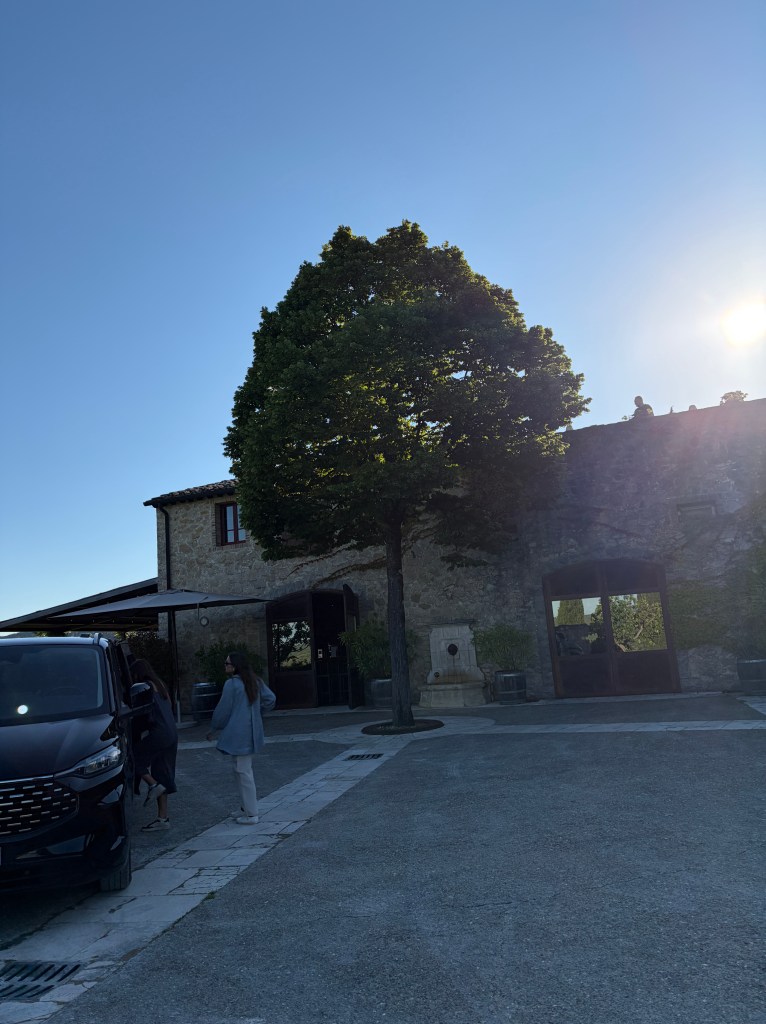
What makes Brancaia special isn’t just the wine — it’s the story behind it. In 1981, Swiss couple Bruno and Brigitte Widmer visited Tuscany and fell head over heels for a hillside known as “Brancaia“. What began as love at first sight became one of Tuscany’s most respected wineries.
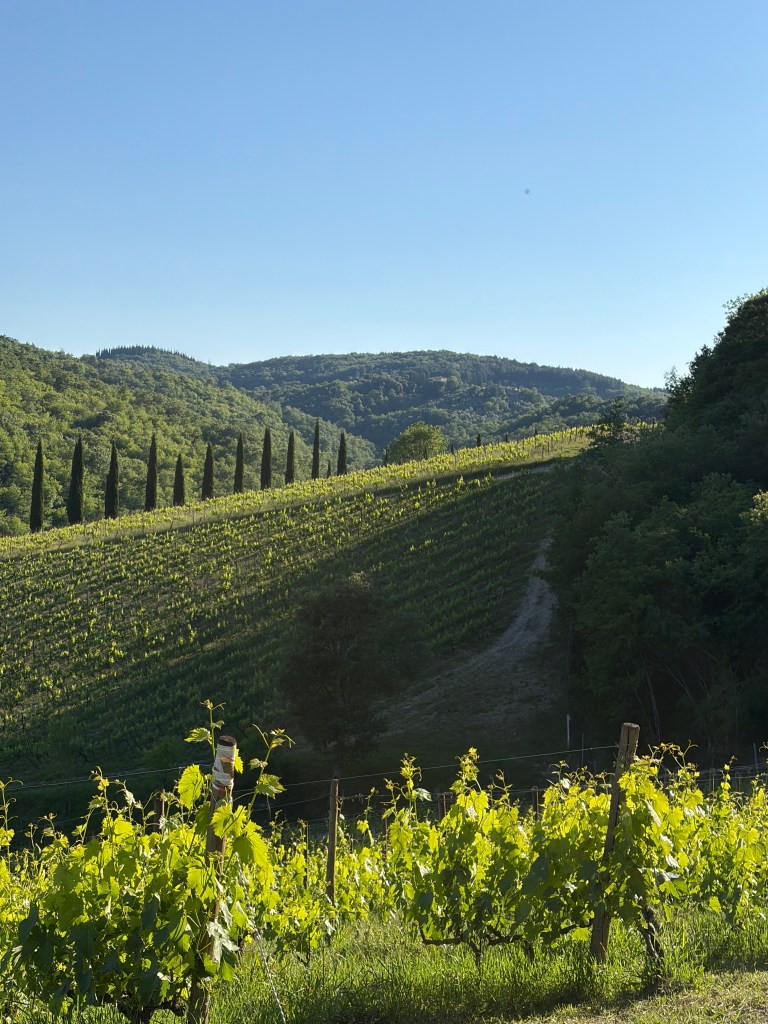
Today, their daughter, Barbara Widmer, carries that vision forward. Widely regarded as one of Tuscany’s most influential winemakers, she combines precision, innovation, and a deep respect for the land, believing that great wine begins in the vineyard and should reflect both place and personality.
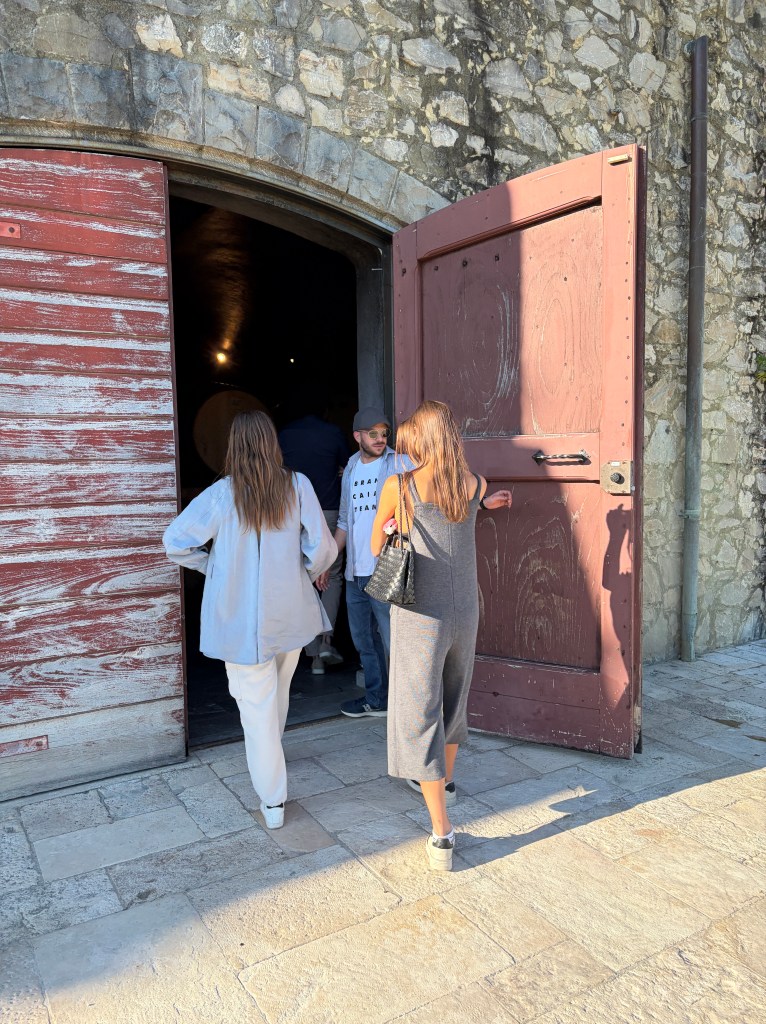
And personality is something Brancaia has in abundance. In 1988, Brancaia released the first vintage of IL BLU. The wine didn’t fit within the regulations of Chianti Classico at the time, meaning it could only be classified as a simple table wine. Bruno Widmer wasn’t concerned. He believed quality mattered more than classification and history proved him right. IL BLU would become one of Tuscany’s iconic Super Tuscans, while Bruno’s distinctive square label, inspired by his advertising background, became instantly recognizable to wine lovers around the world.
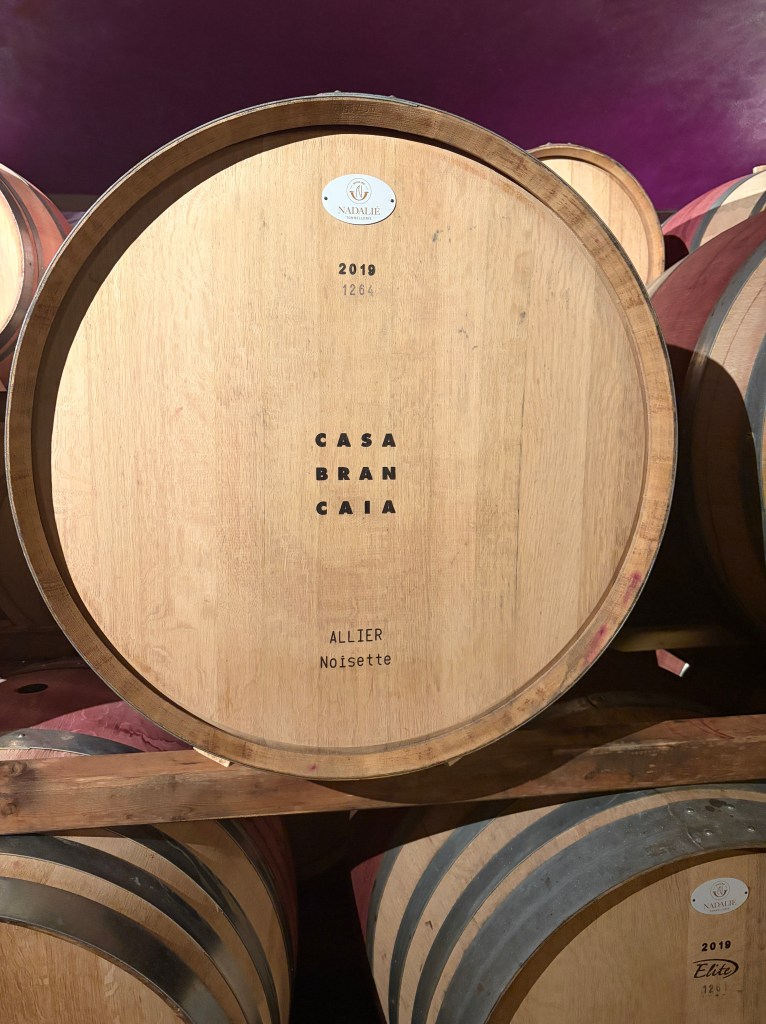
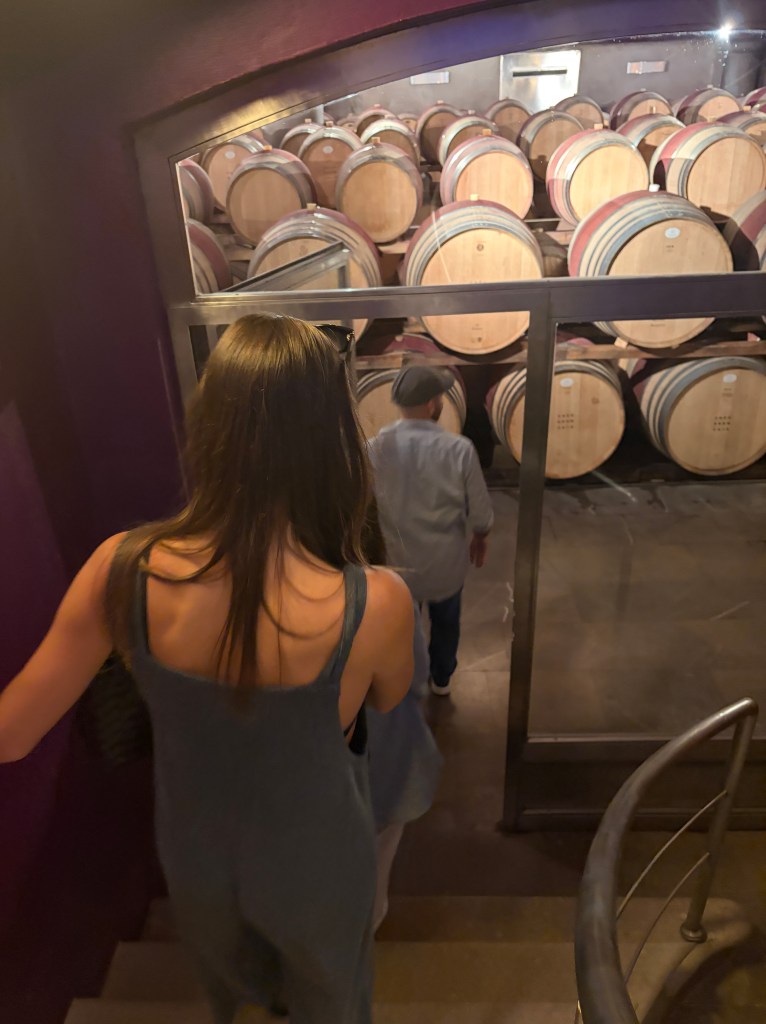
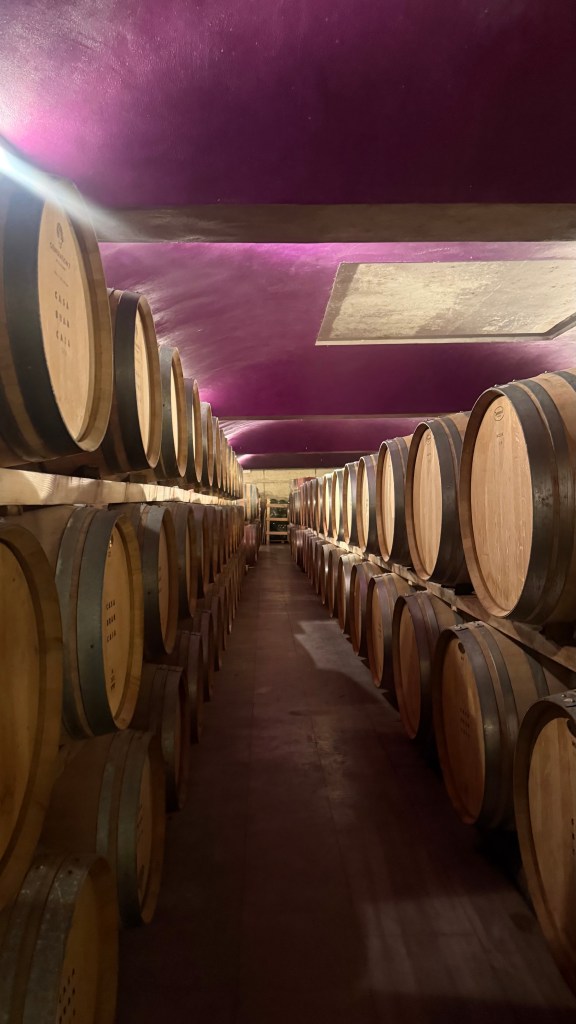
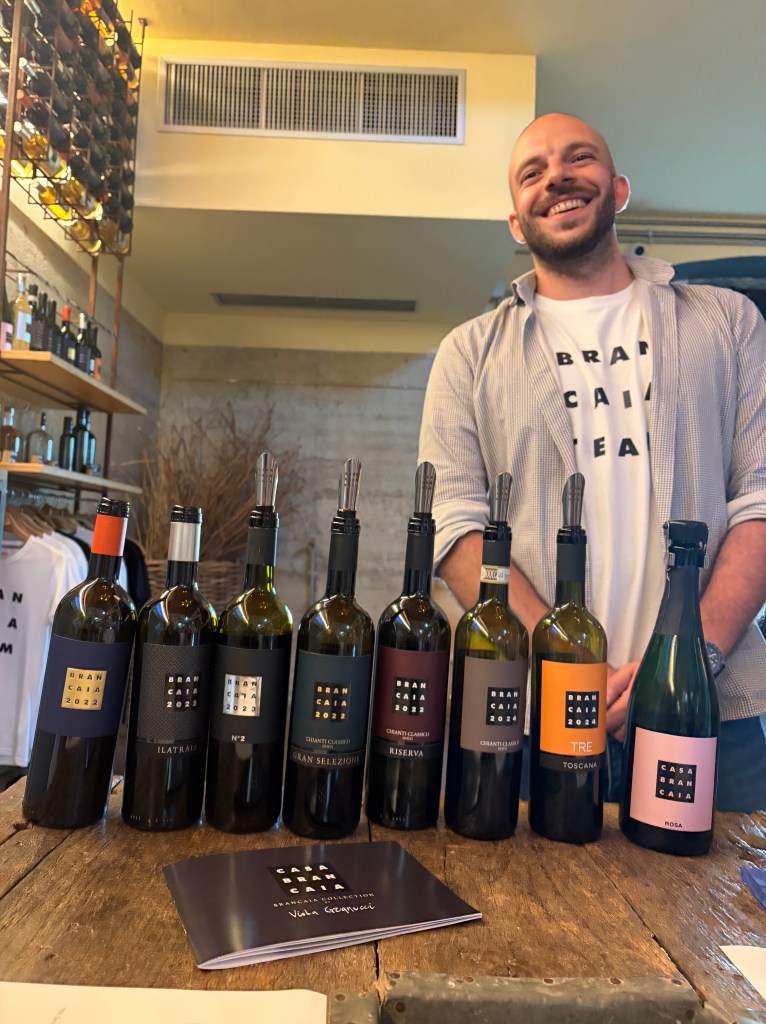
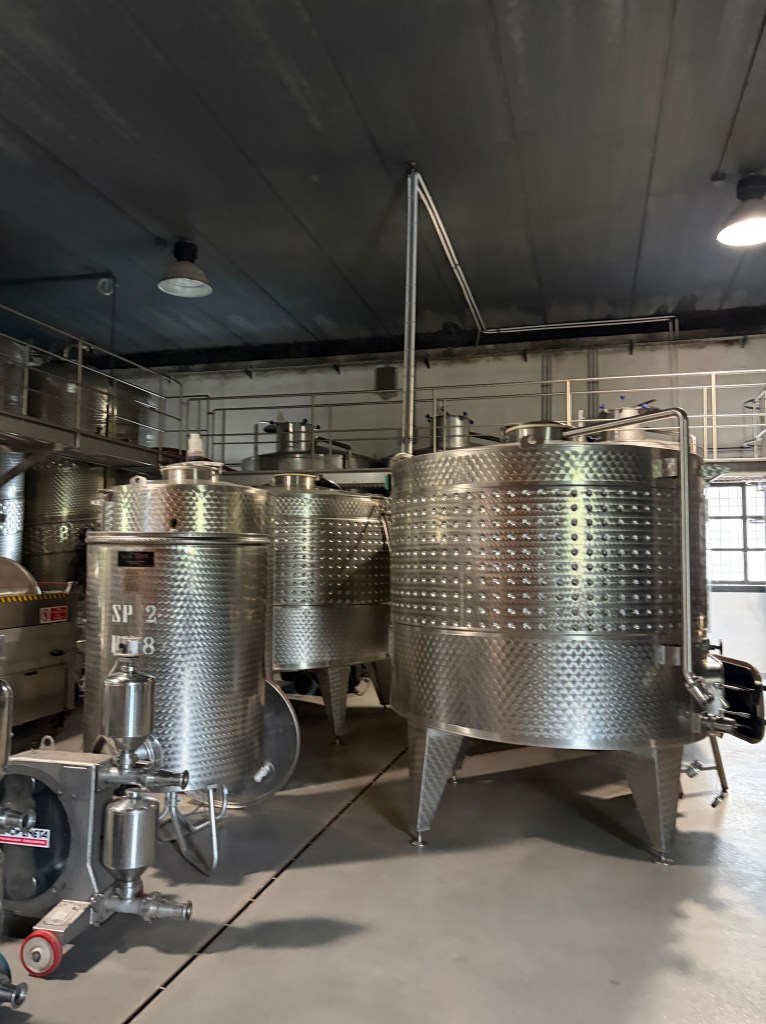
Brancaia’s tasting experience was every bit as polished as its reputation, but never pretentious. It was welcoming and fun. Along with exceptional reds, the sparkling and rosé were delightful surprises. Touring the modern winery offered a fascinating look at the precision behind every bottle, from temperature-controlled tanks to the carefully chosen vessel shapes used for reds and whites. A special thank you to Barbara, Guido, Francesco, and the Brancaia team for such a memorable visit.
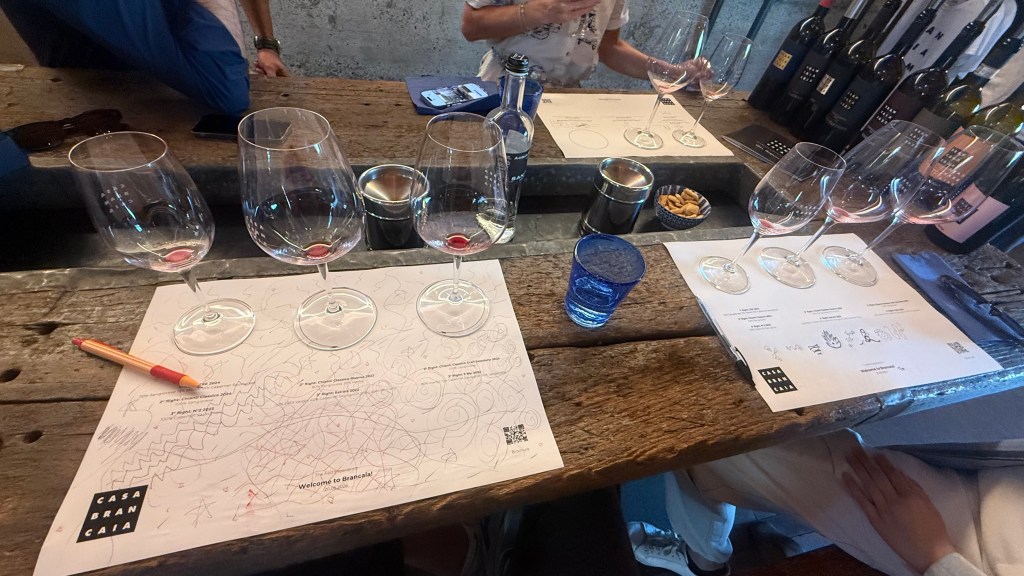
Tasting Notes, Reimagined: Most people take tasting notes with words. We drew ours. As each wine was poured, our notes somehow evolved into sketches, doodles, symbols, and what could generously be described as abstract art. Safe to say our winery host was thoroughly entertained. Turns out tasting notes don’t always need adjectives. Sometimes a great wine inspires a drawing instead.
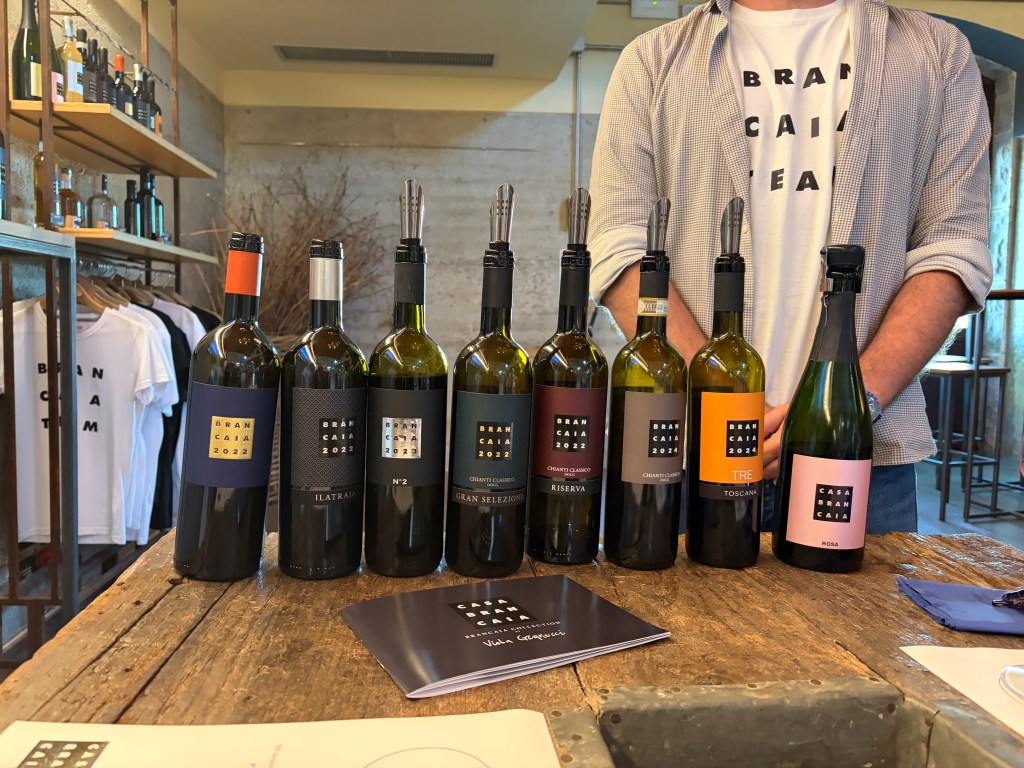
One of the joys of tasting at the source is discovering the stories behind wines you’ve enjoyed for years.
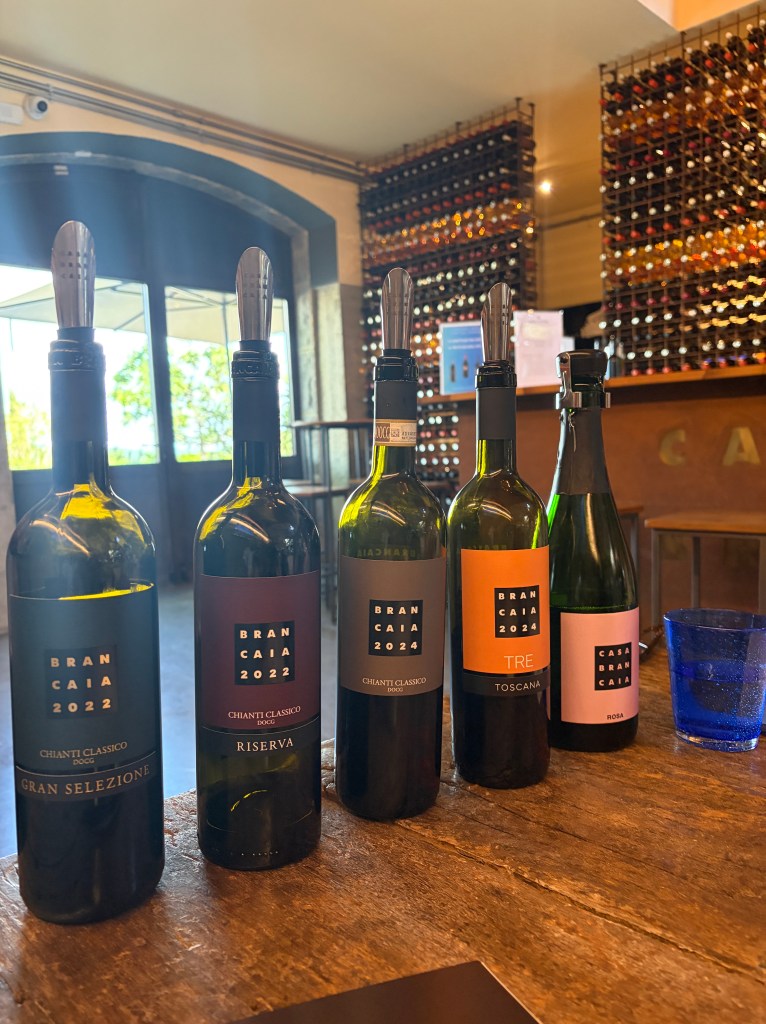
TRE Toscana has been a regular on my personal wine playlist for a long time. Barbara affectionately calls it the “baby Super Tuscan.” The name TRE means three — a nod to the three grape varieties in the blend, the three Brancaia estates that contribute fruit, and the fact it was the third wine added to the portfolio. Approachable yet serious, it proves that great wine doesn’t need to be complicated.
The Chianti Classico and Riserva showcased the elegance of Sangiovese, while the newly introduced Gran Selezione demonstrated just how refined and expressive the region’s flagship grape can become.
The 100% Merlot Rosé, from their coastal Maremma vineyards delivered bright grapefruit notes, freshness, and the kind of easy elegance that practically demands a sunny patio. Then came Ilatraia, Brancaia’s coastal Super Tuscan, followed by No. 2, a striking 100% Cabernet Sauvignon. Both reflected the warmth and character of Brancaia’s Maremma vineyards.
And finally, the wine we’d been waiting for.
IL BLU.
Brancaia’s flagship blend of Sangiovese, Merlot, and Cabernet Sauvignon, perfectly capturing everything Brancaia stands for – precision, harmony, elegance, and the confidence to follow its own path.
Tasting IL BLU in Tuscany and overlooking the vineyards where the Brancaia story began, felt like one of those full-circle wine moments. The wines I’ve enjoyed for years suddenly had a landscape, a history, and the people behind it.
Legend, Legacy & Love: An Afternoon with Donatella Cinelli Colombini
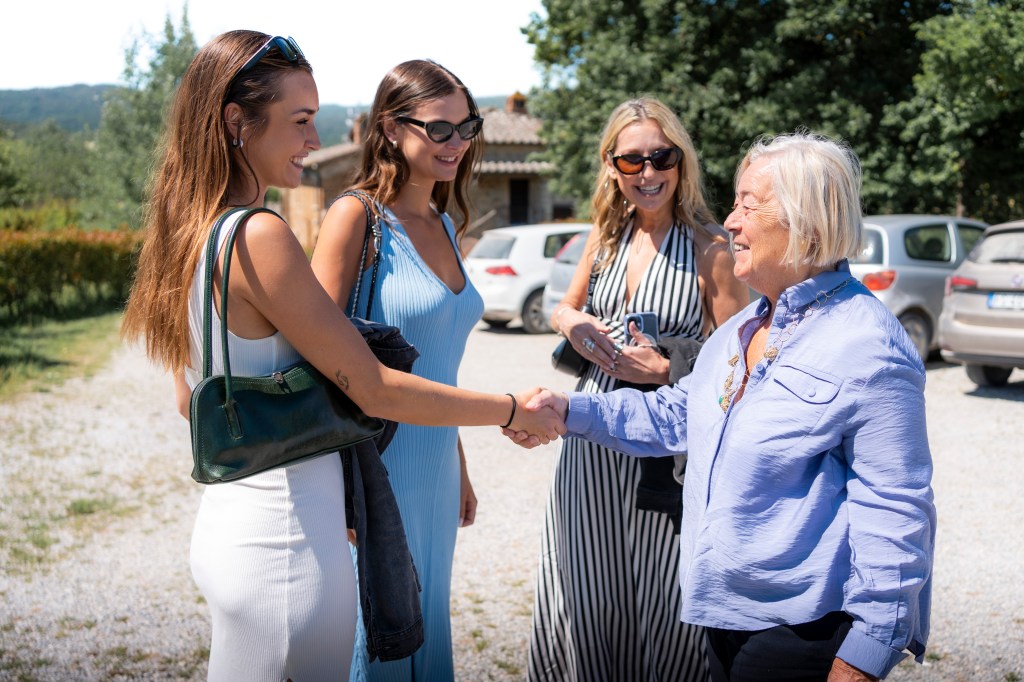
Tuscany hits differently when you’re standing beside a woman who helped shape the wine world.
For years, I admired Donatella Cinelli Colombini’s wines from Canada. Meeting her in Tuscany felt almost surreal — one of those rare moments where the person exceeds the legend. We spent the afternoon with Donatella touring her estate, tasting her wines, and sharing stories around the table. What struck me most wasn’t just her remarkable accomplishments, but her genuine curiosity. Despite a lifetime of achievements, she was just as interested in hearing about our lives — my daughters, our journeys, our successes and challenges — as we were in learning about hers.
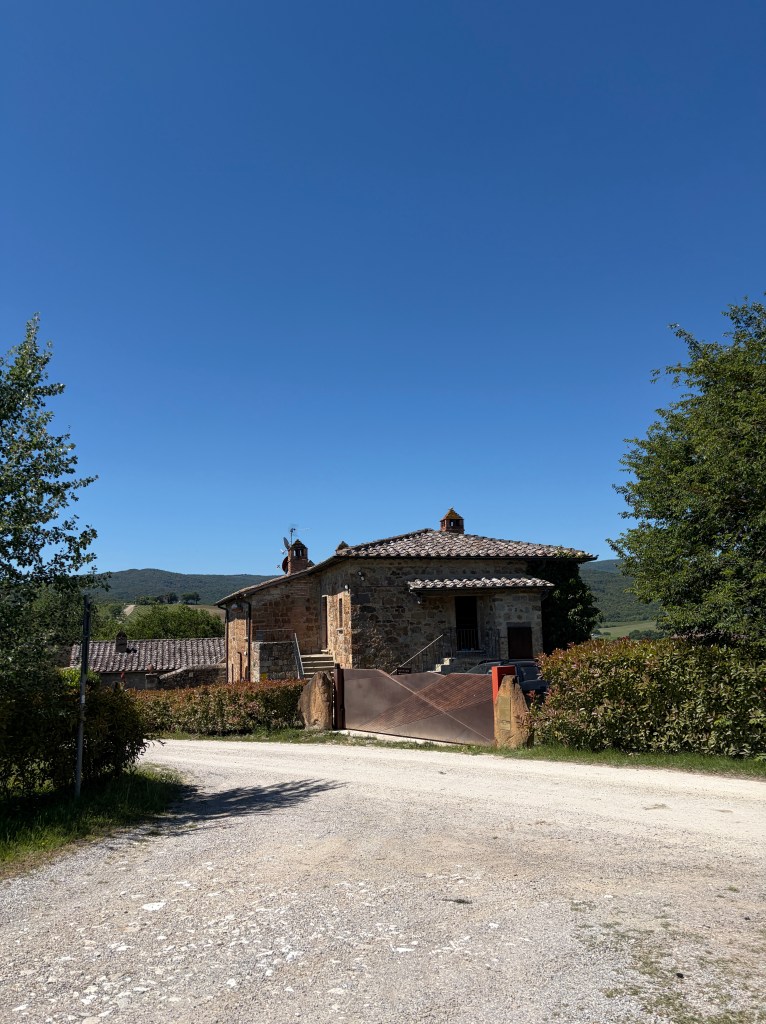
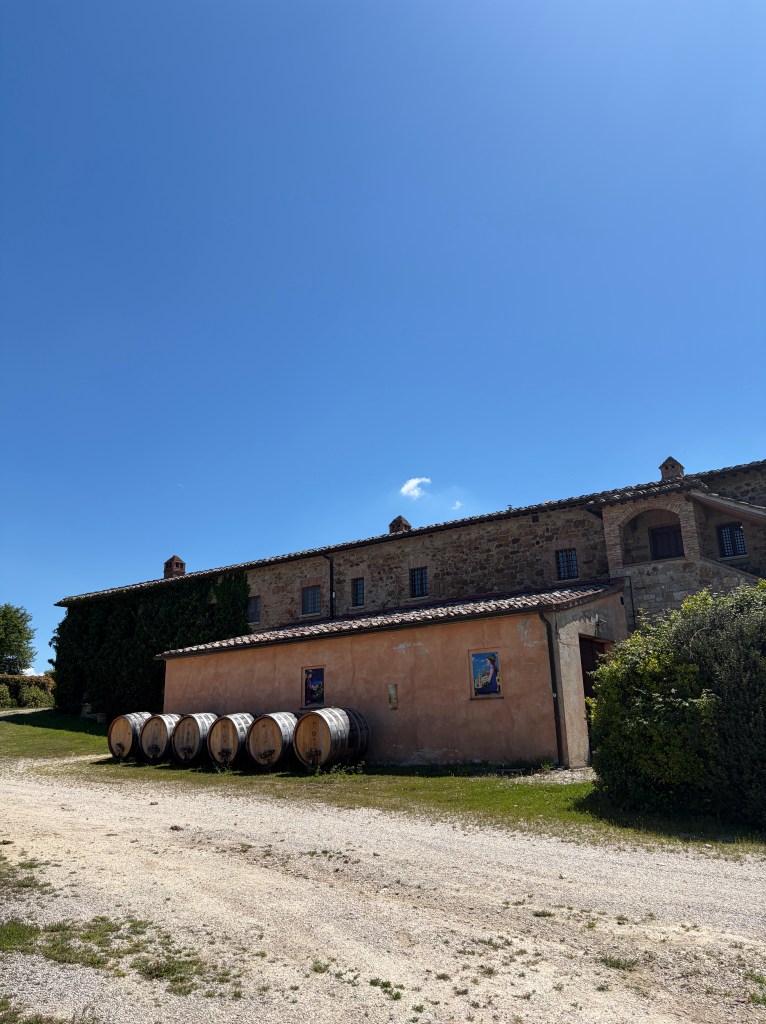
Donatella is a true pioneer of Italian wine. Born into one of Montalcino’s most historic Brunello families, she went on to become one of the most influential figures in modern Italian wine tourism, creating Cantine Aperte (Open Cellar Doors) in 1993 inviting the public into the wineries.
Her greatest legacy isn’t just the fabulous wines she makes, but the doors she has opened for others. In 1998, she left her family’s renowned estate to build her own vision: Casato Prime Donne and Fattoria del Colle. When she needed a cellar master, she discovered talented female graduates were being overlooked simply because they were women. Her response was revolutionary.
She founded Casato Prime Donne, Italy’s first winery staffed entirely by women, proving what she still says today: “Great wine comes from talent not from muscles.”
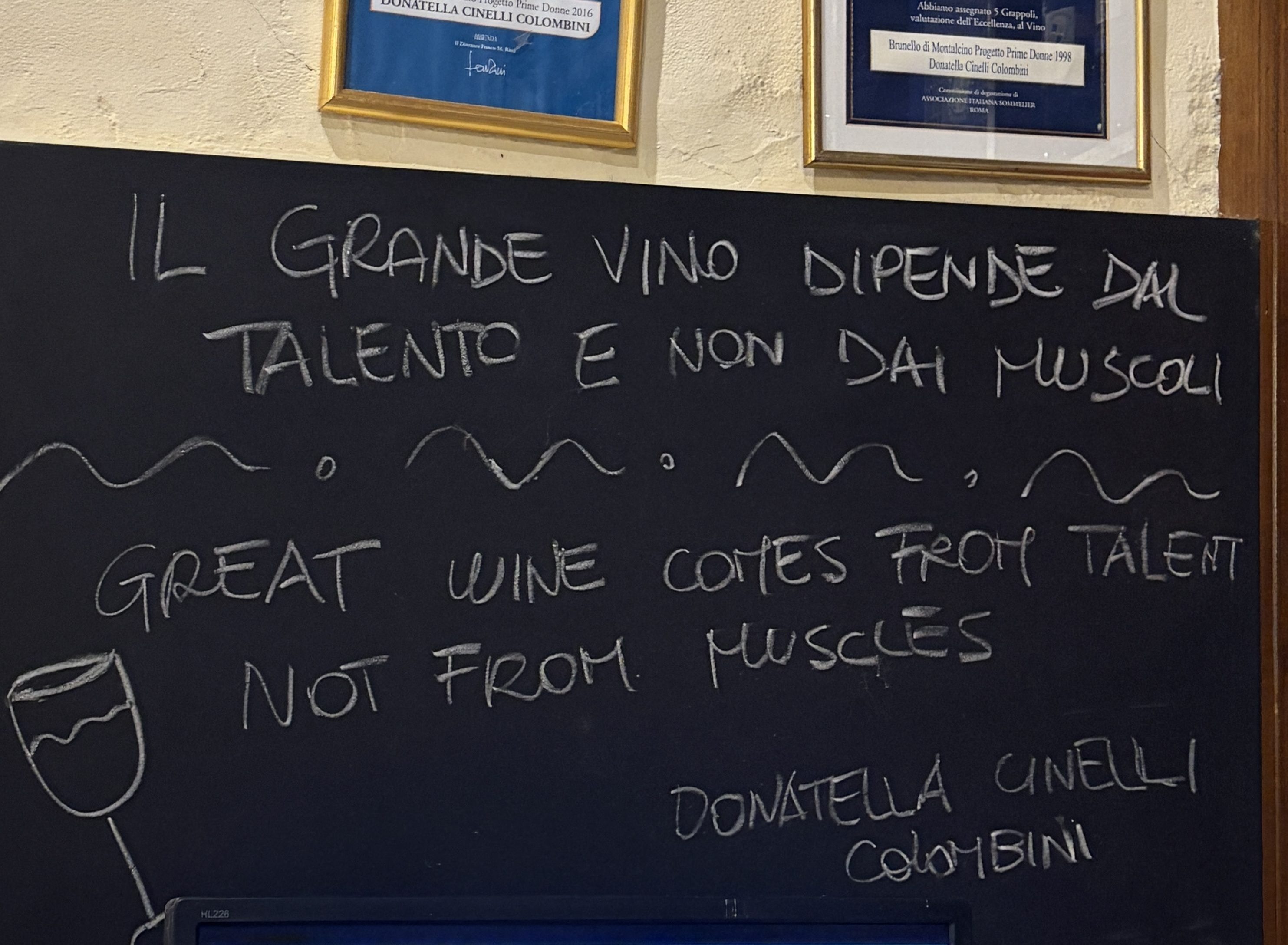
Today, Casato Prime Donne stands as both a world-class Brunello producer and a symbol of opportunity, demonstrating that excellence in wine comes from passion, intelligence, vision, and dedication.
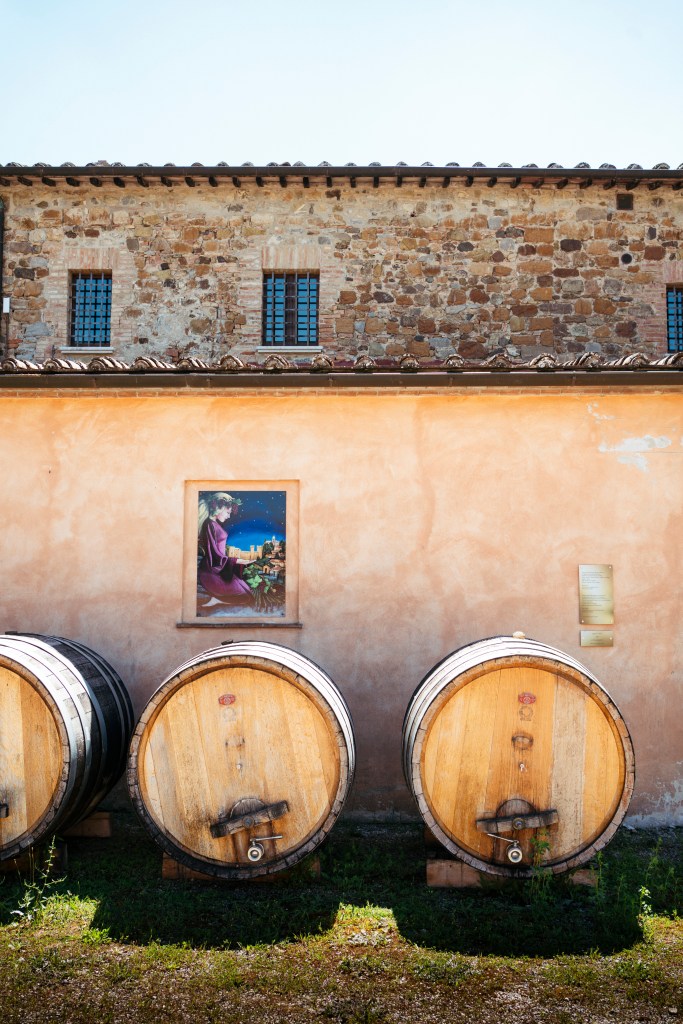
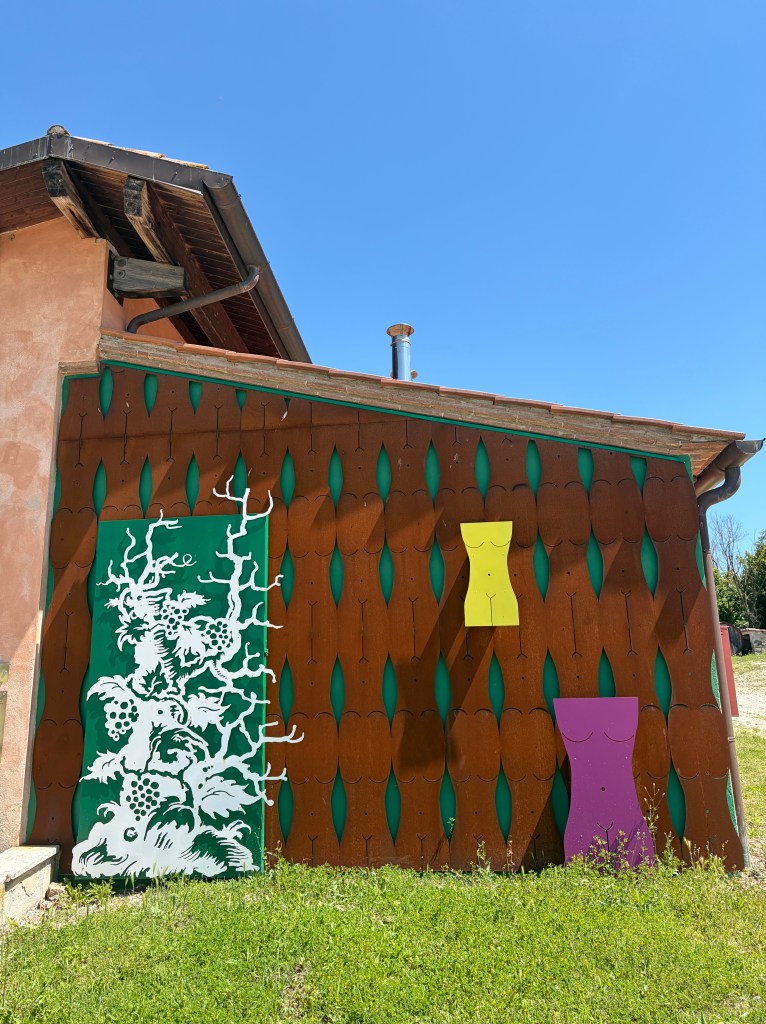
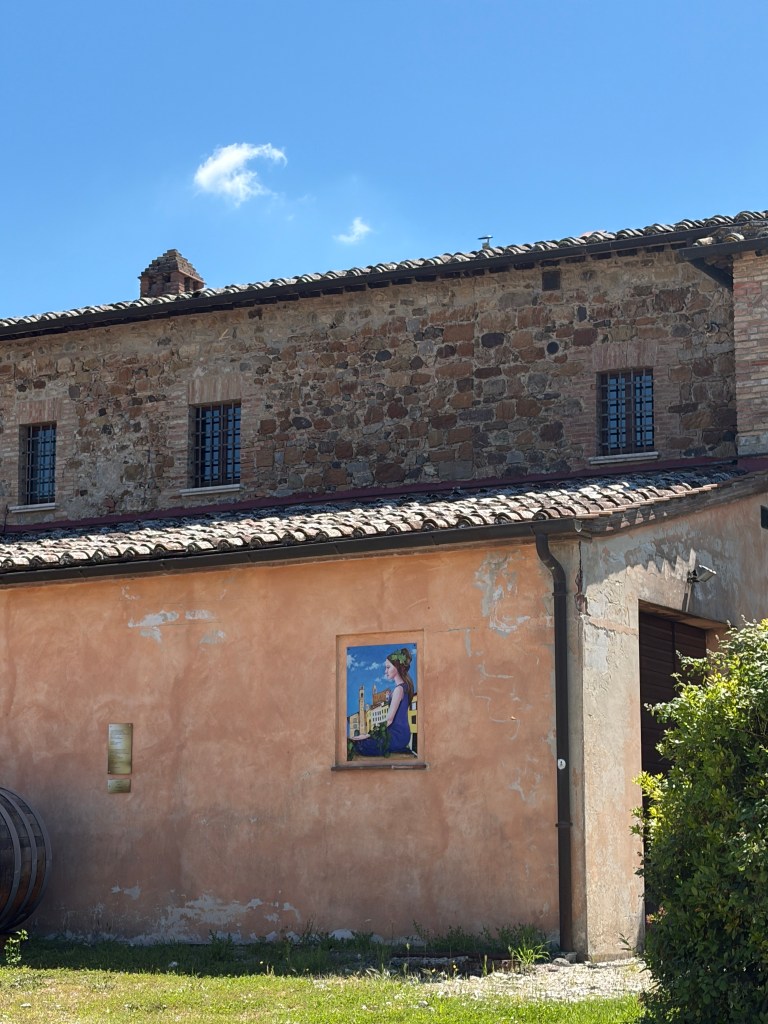
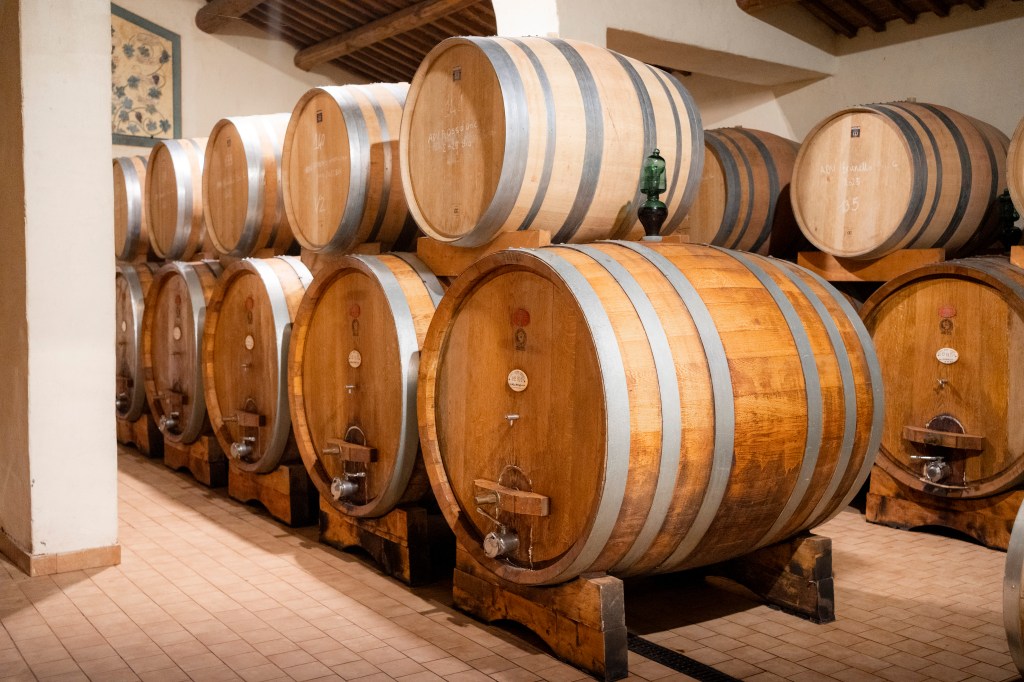
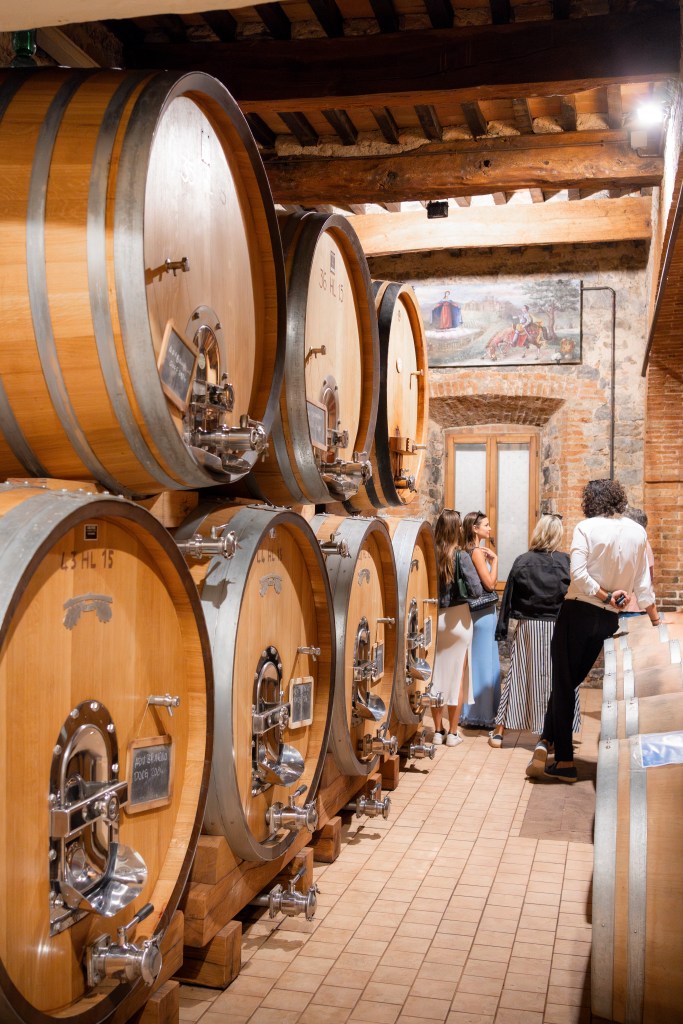
Walking through the winery felt like stepping through a living museum of Montalcino’s history. Art, family heritage, storytelling, and wine intertwine at every turn. Even the cellar walls tell stories.
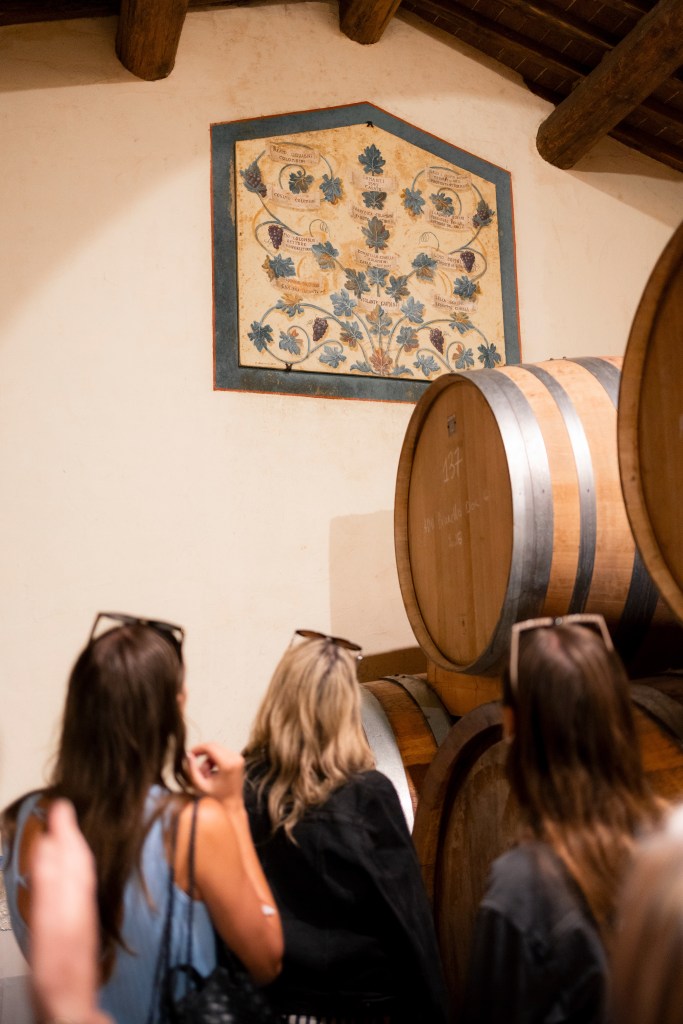
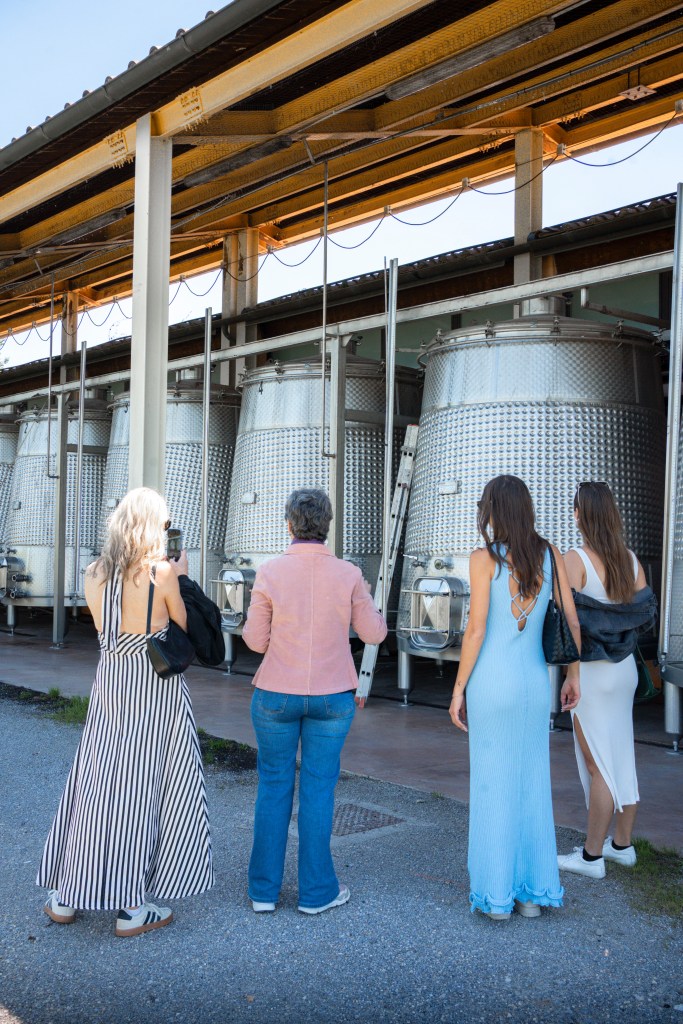
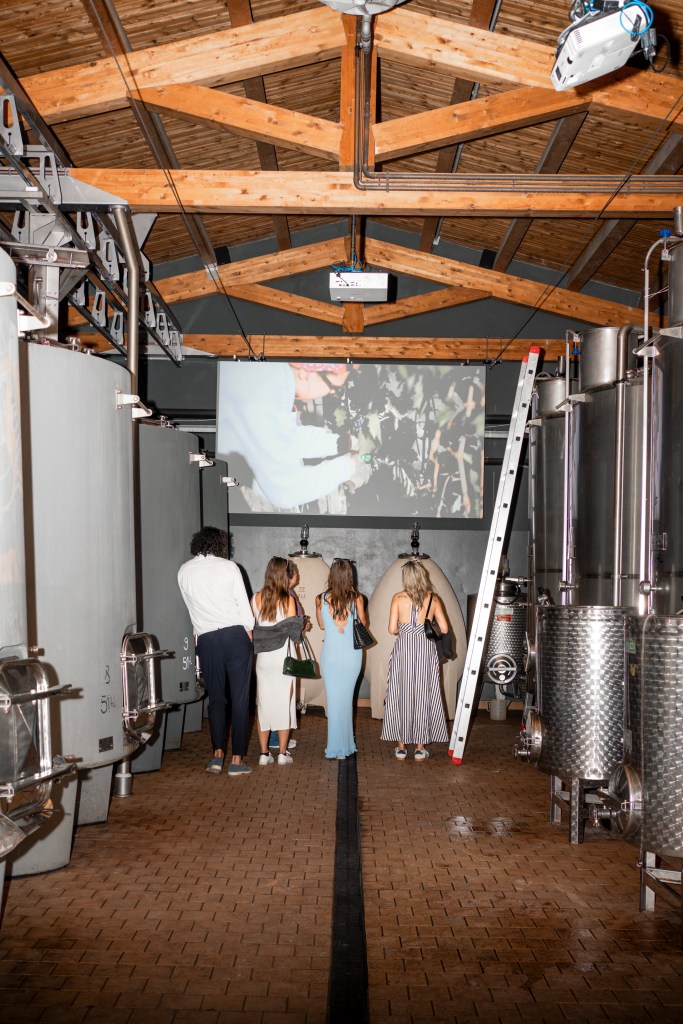
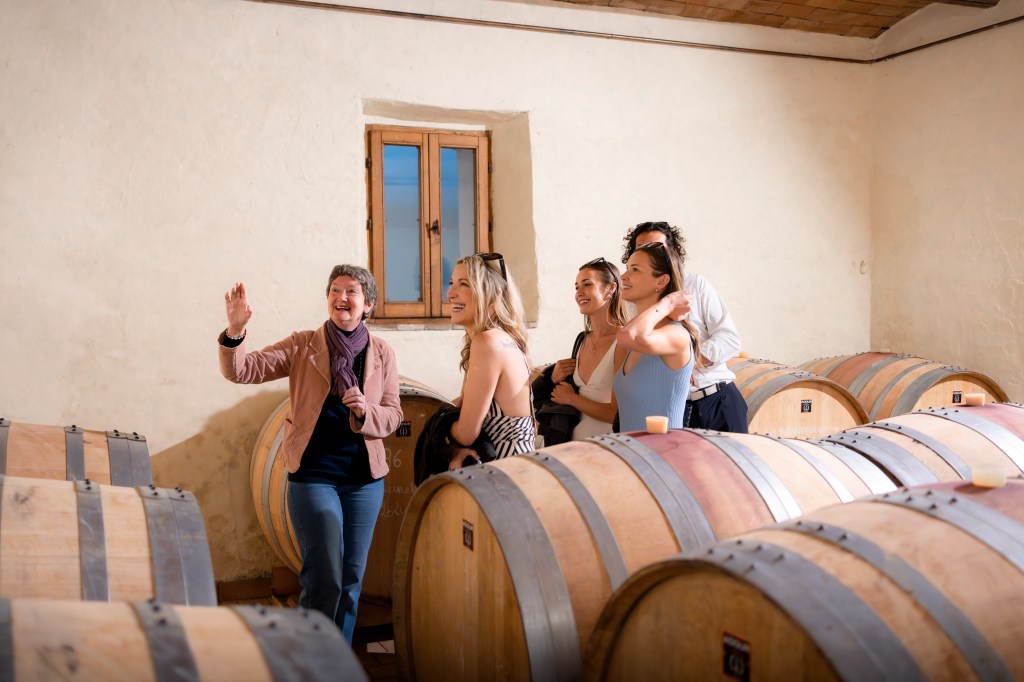
And then there were the hearts.
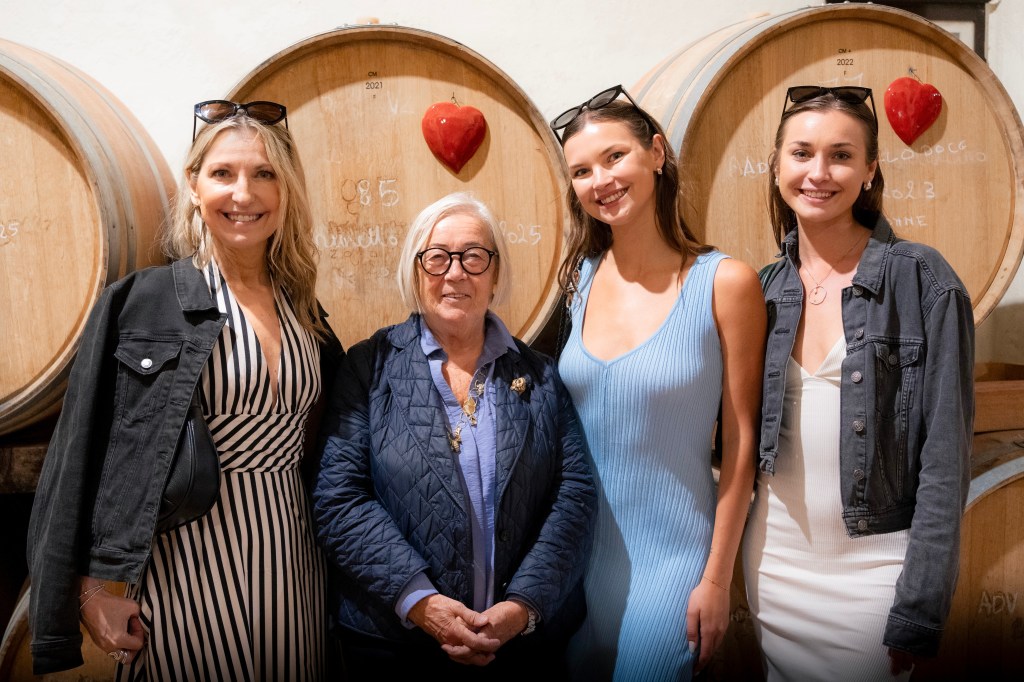
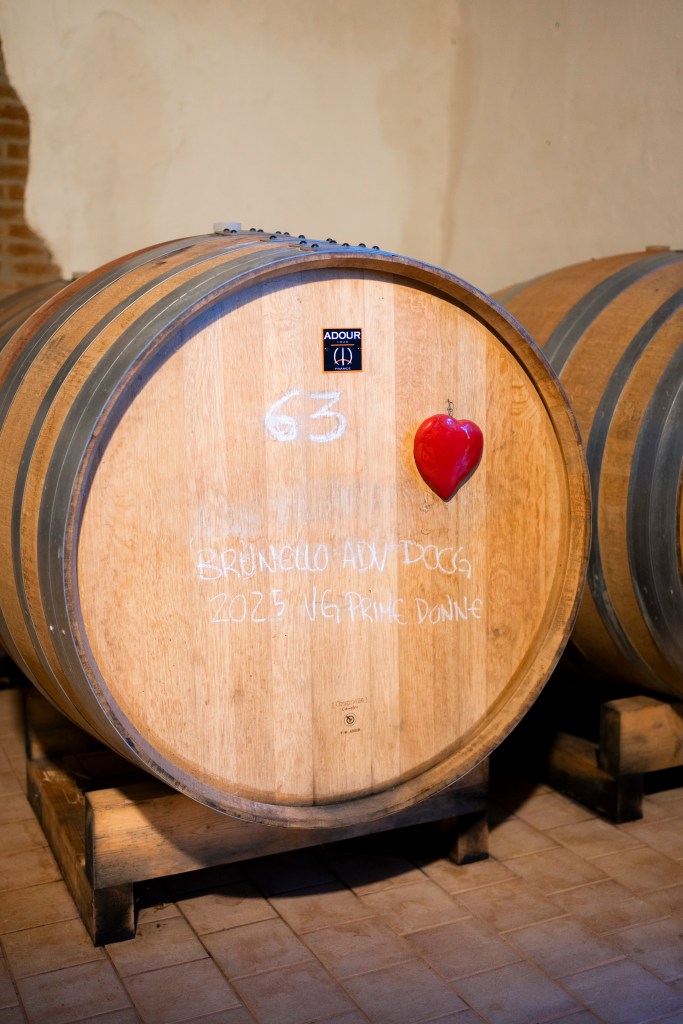
Red hearts mark the barrels containing the winery’s most treasured wines. They symbolize wine made with heart, care, and intention – a detail we absolutely loved. Tasting a wine aging from one of those special barrels was one of the unforgettable moments of our visit.
A Seat at the Table with Donatella
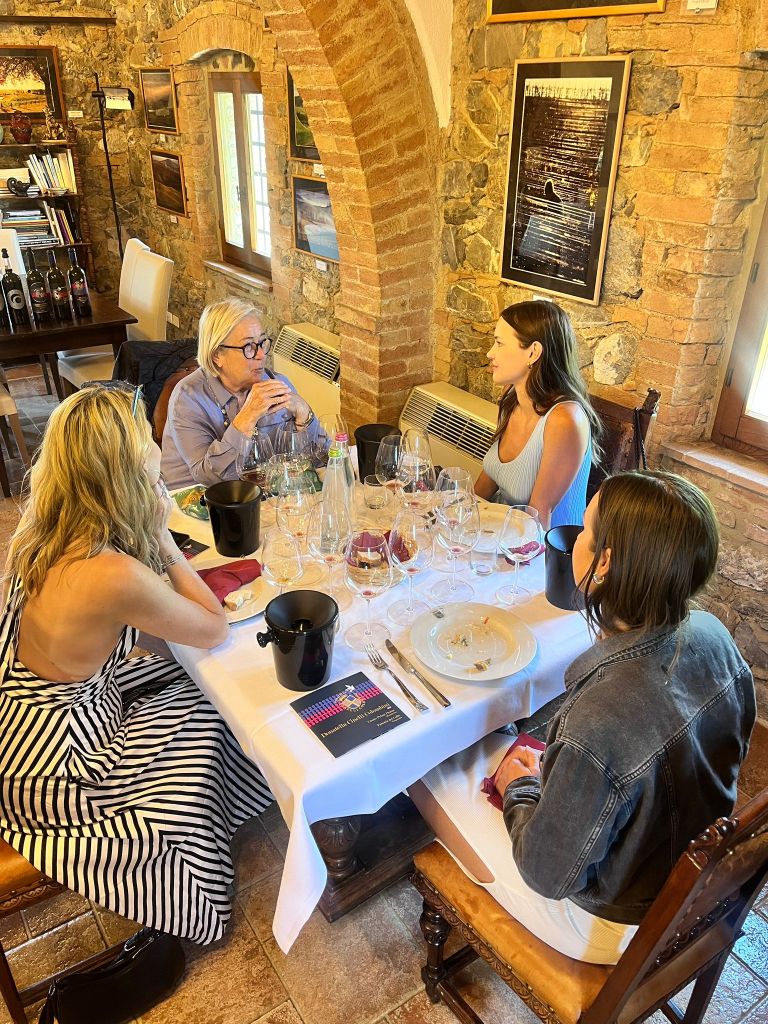
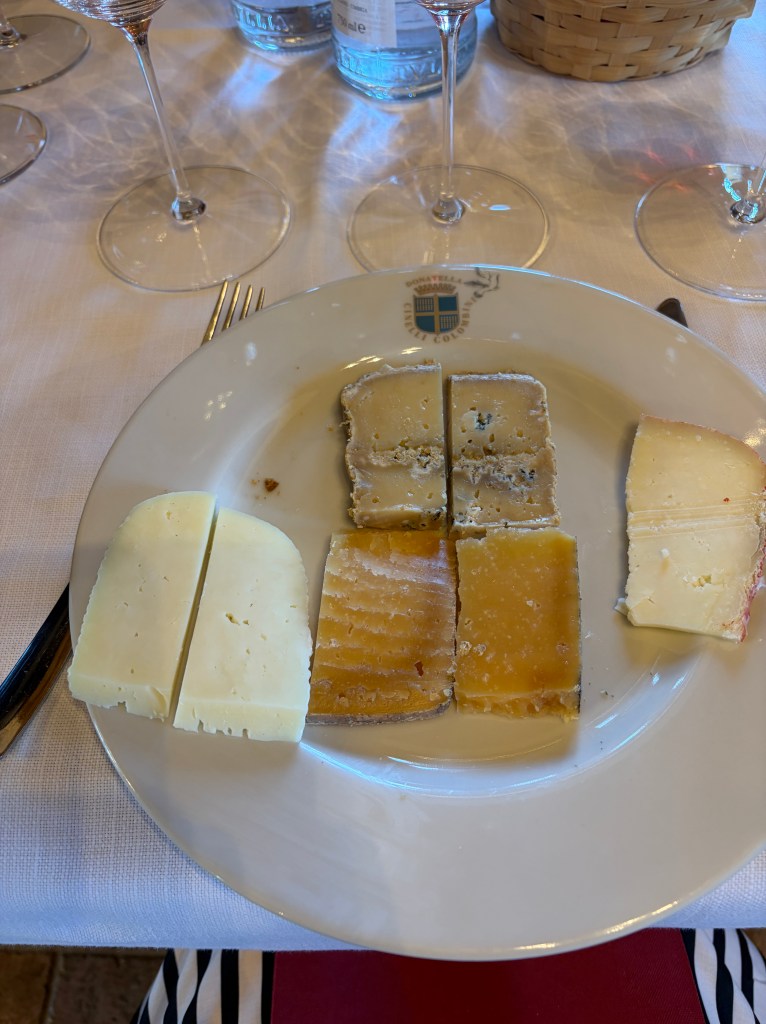
The table was set. We settled in with Donatella and her wines alongside generous plates of pecorino cheese. The conversation flowed as easily as the wine.
The pecorino came from her brother Stefano’s renowned estate, Fattoria dei Barbi, another legendary name in Montalcino that represents the continuity of the family’s winemaking tradition. The cheese was fabulous with it’s own fascinating story and even better for us it eventually became our “girl dinner” later that evening — one of those little moments that unexpectedly becomes a highlight.
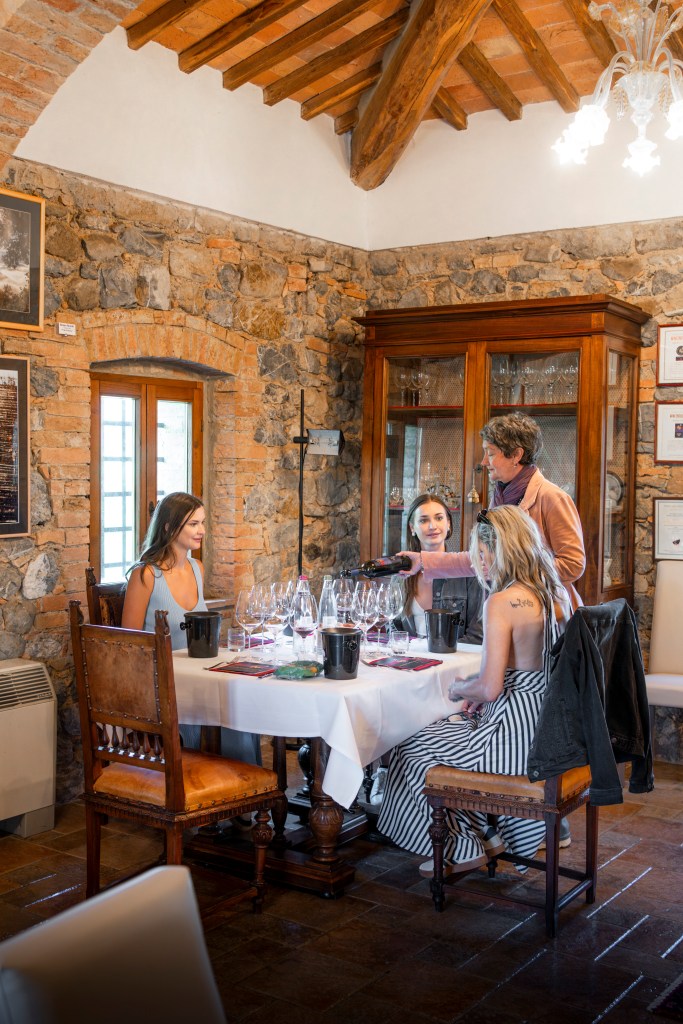
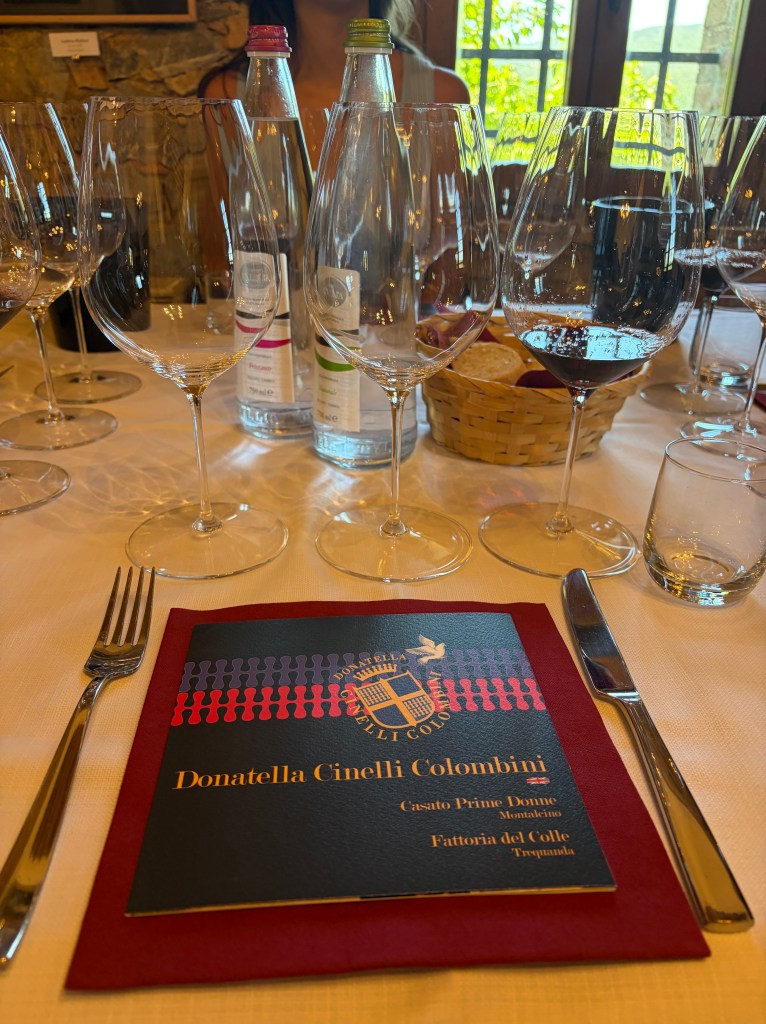
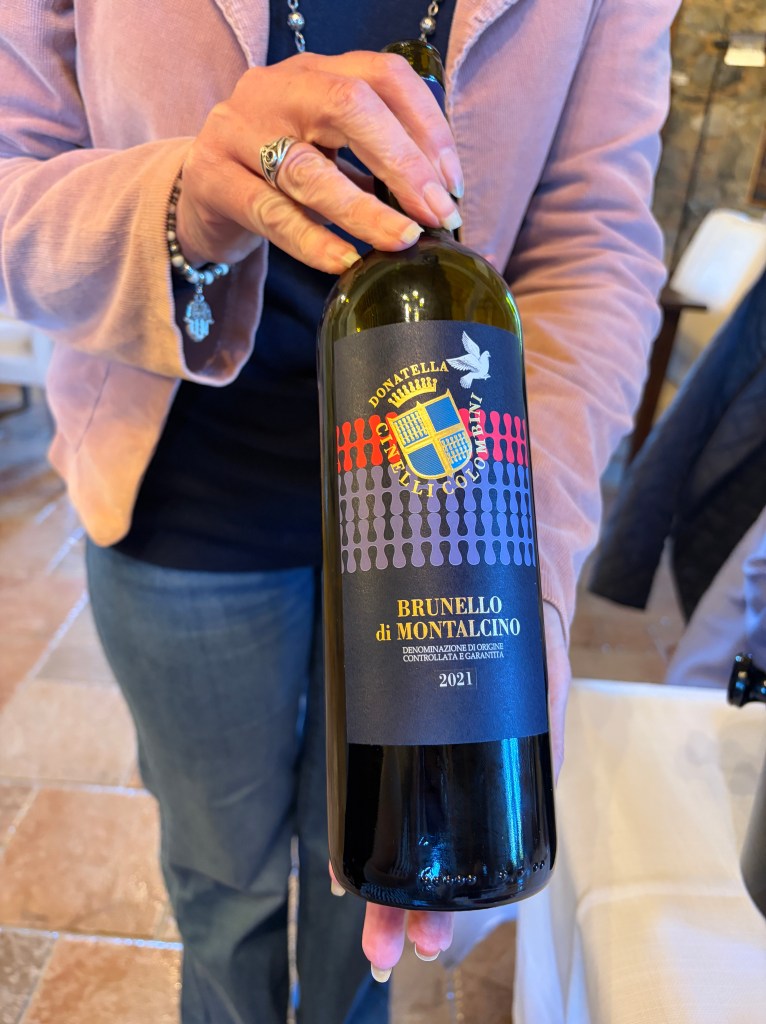
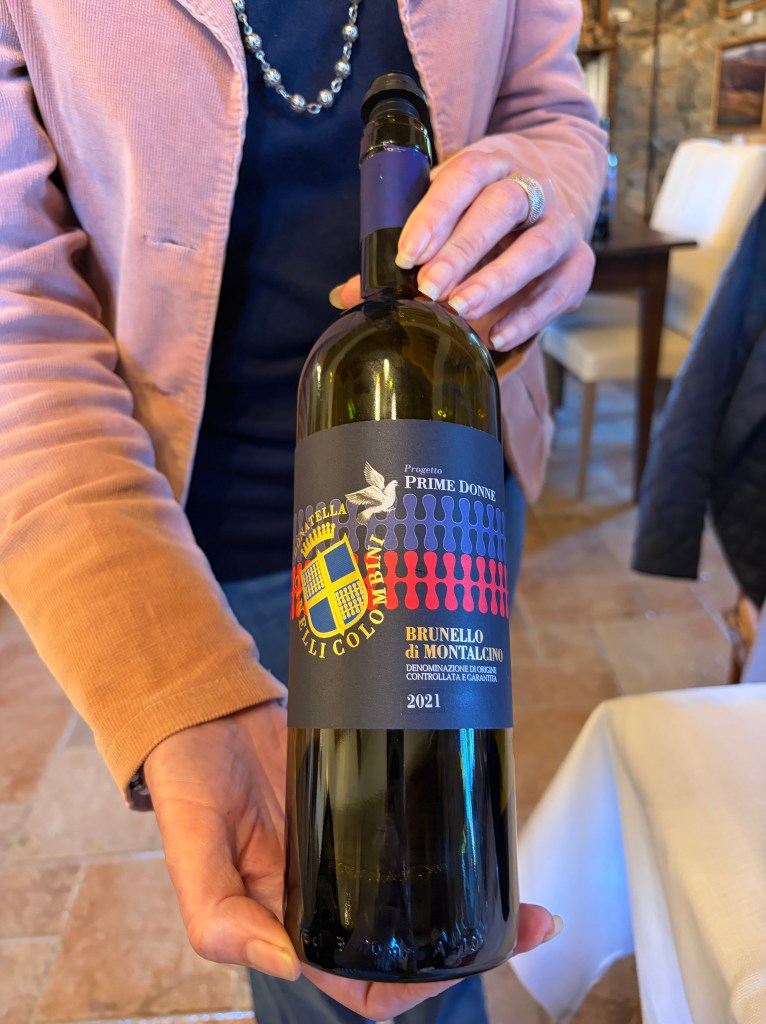
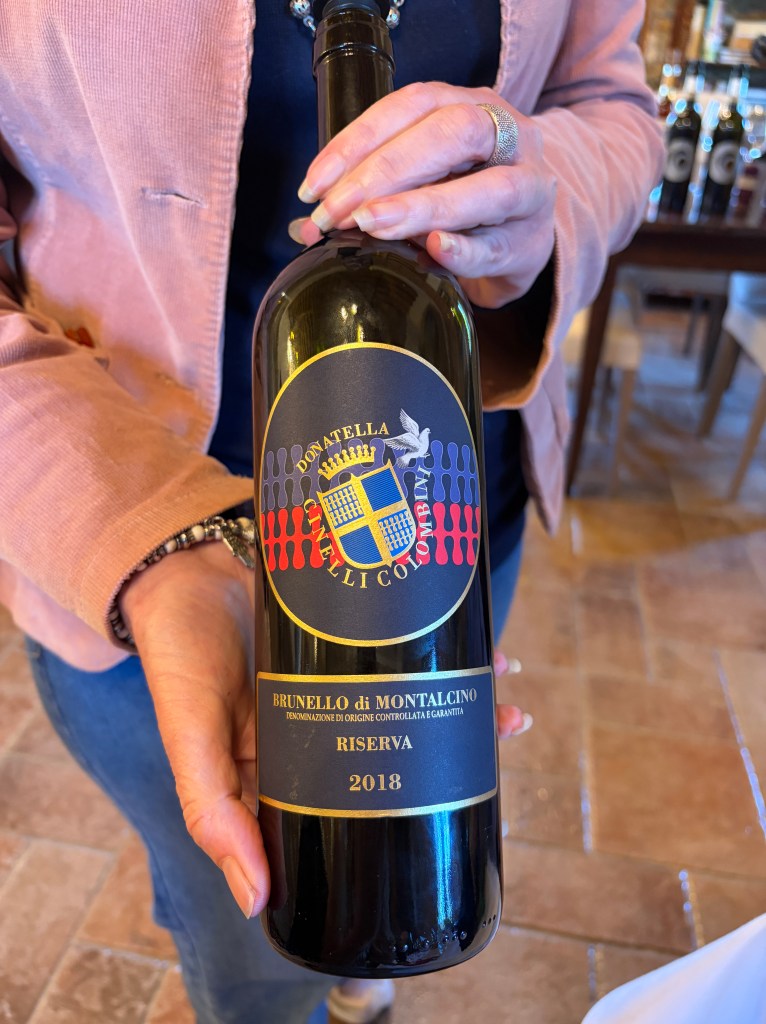
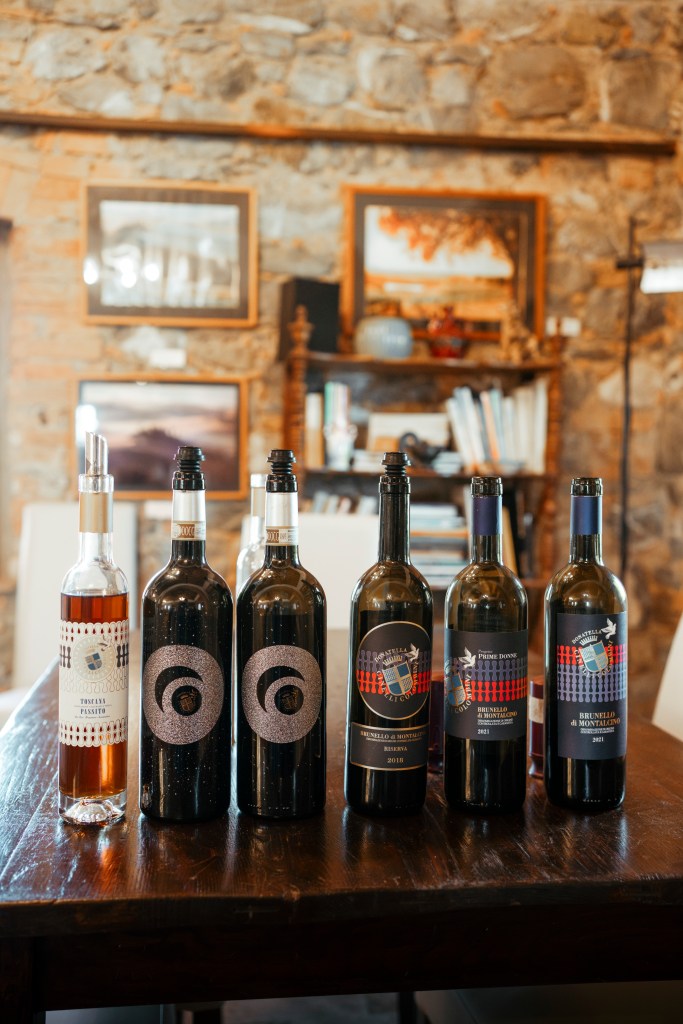
The white dove that appears on many of Donatella’s labels symbolizes new beginnings — a fitting emblem for a woman who has spent her life creating them.
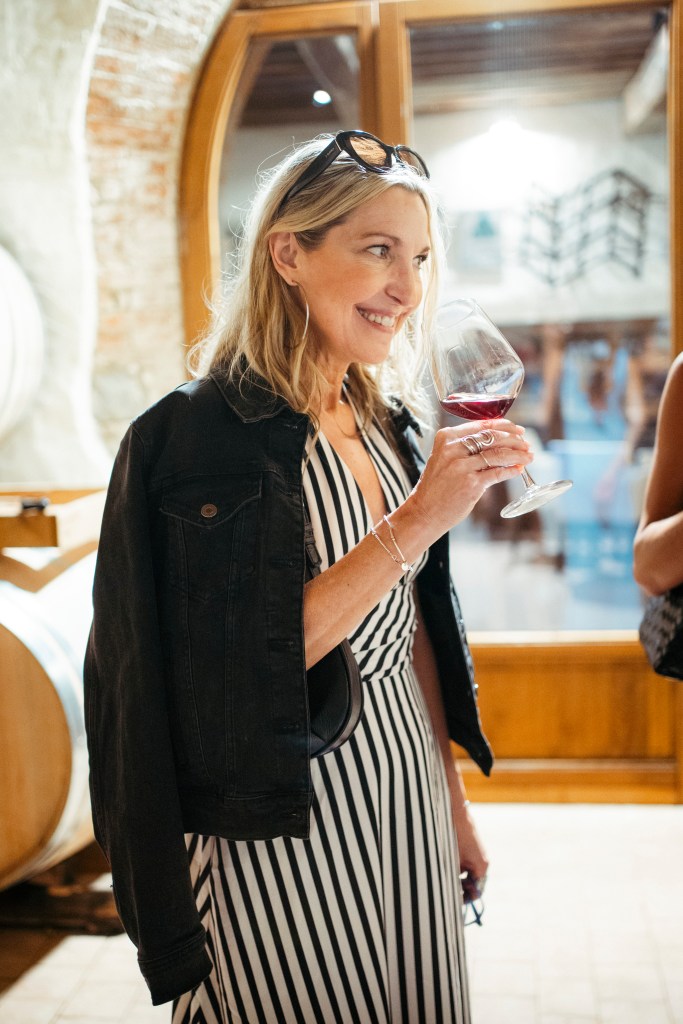
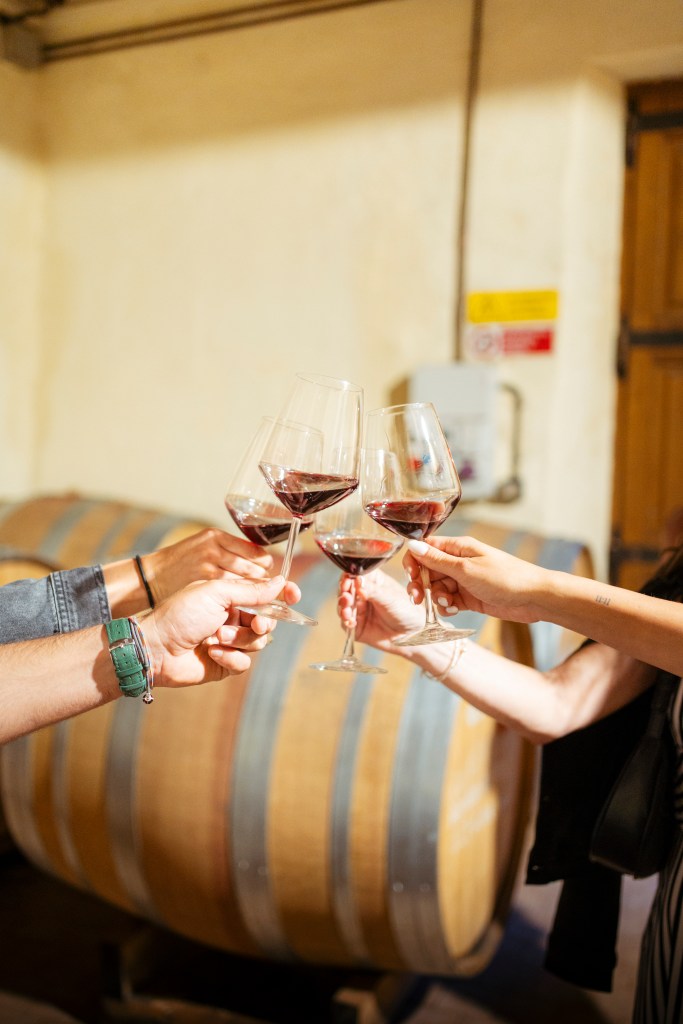
We tasted a beautiful lineup of wines that reflected both tradition and innovation. The Donatella Cinelli Colombini Brunello di Montalcino 2021 opened with a gorgeous nose and immediately showed why Brunello lovers seek out her wines. The Prime Donne Brunello di Montalcino 2021 offered a more traditional expression of Sangiovese and showcased the character of the estate. Her personal favourite, and agreeably mine, the Brunello di Montalcino Riserva 2018, was beautifully balanced with remarkable depth and elegance.
But the wine we’ll remember most is IOsonoDonatella — her rare and deeply personal Brunello. Produced only in exceptional vintages and in very limited quantities, it’s more than a wine; it is a reflection of Donatella herself: elegant, powerful, authentic, and unforgettable.
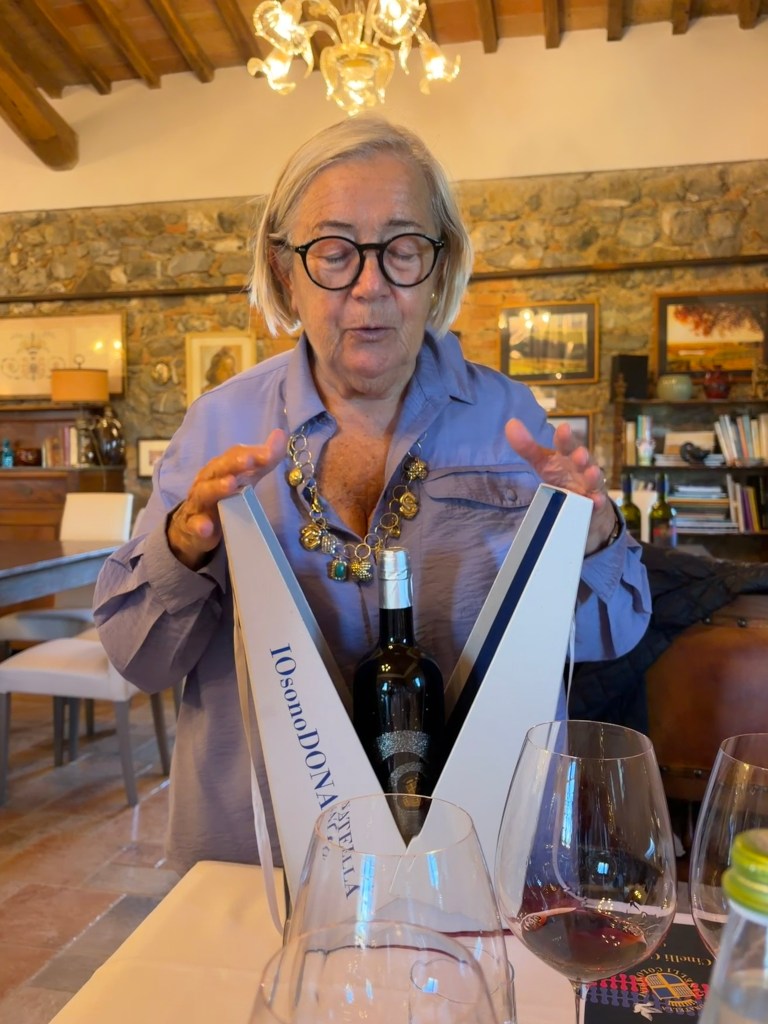
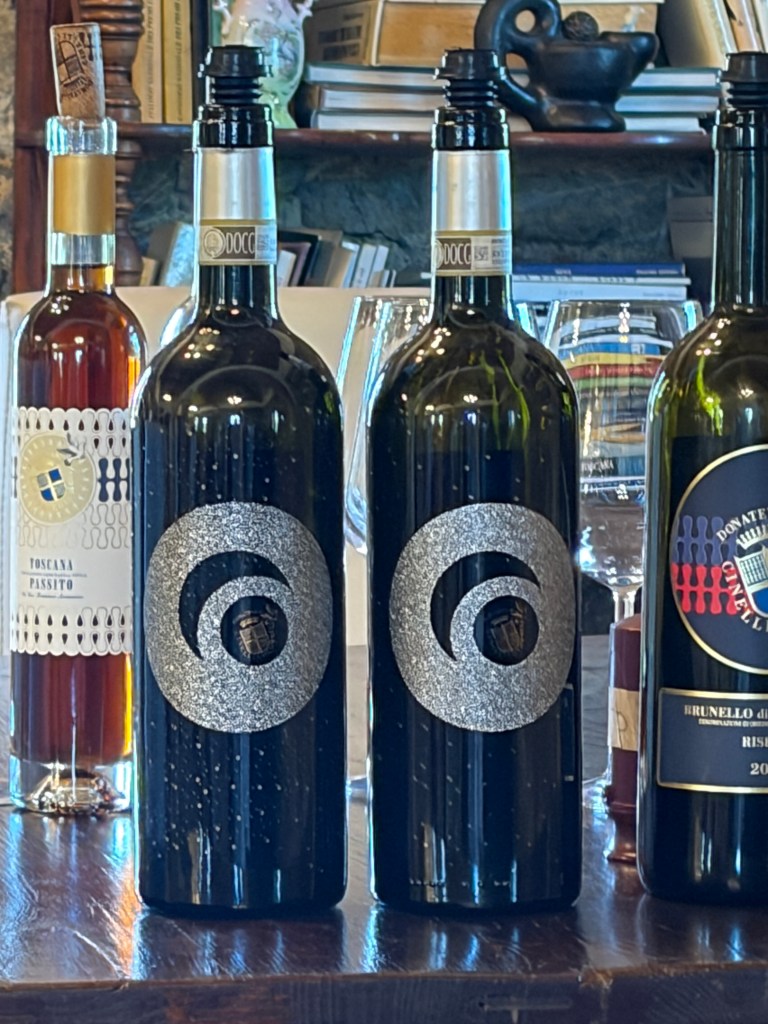
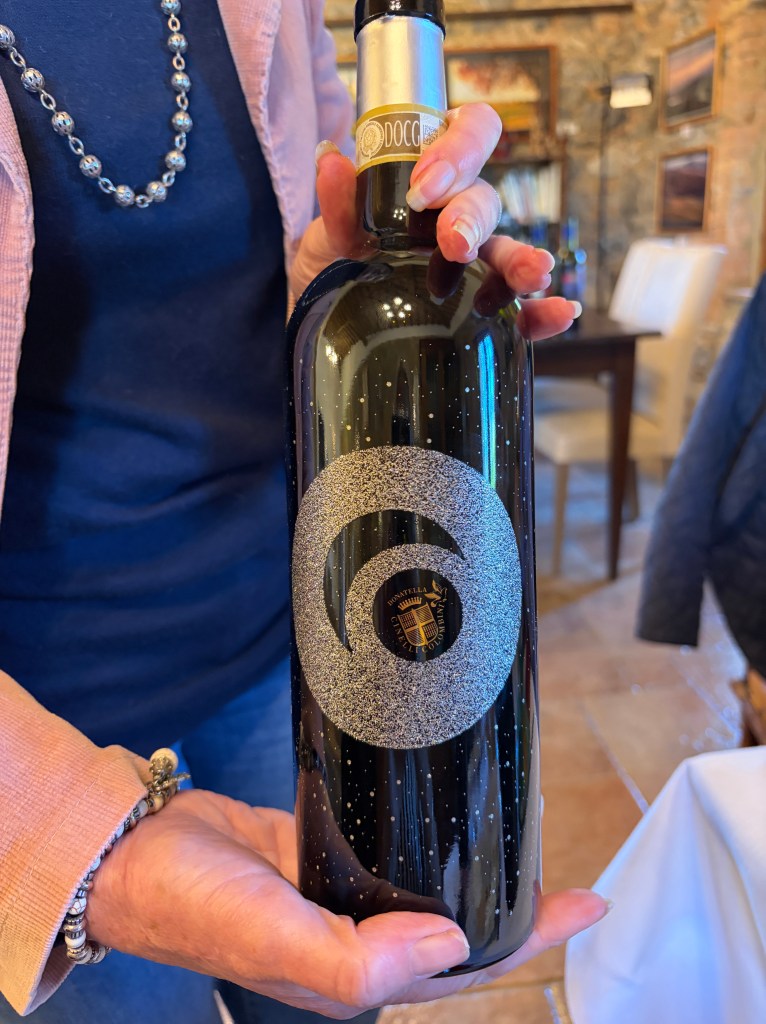
Everything about the wine tells Donatella’s story. The bottle is adorned with stars and a family crest inspired by a ring seal. The presentation box unfolds like a flower referencing medieval Tuscan art and history — a beautiful nod to Donatella’s own background as an art historian.
This isn’t simply a wine. It’s a personal statement. A legacy captured in a bottle.
We finished with a lovely Toscana Passito sweet wine, the perfect closing note to an unforgettable afternoon.
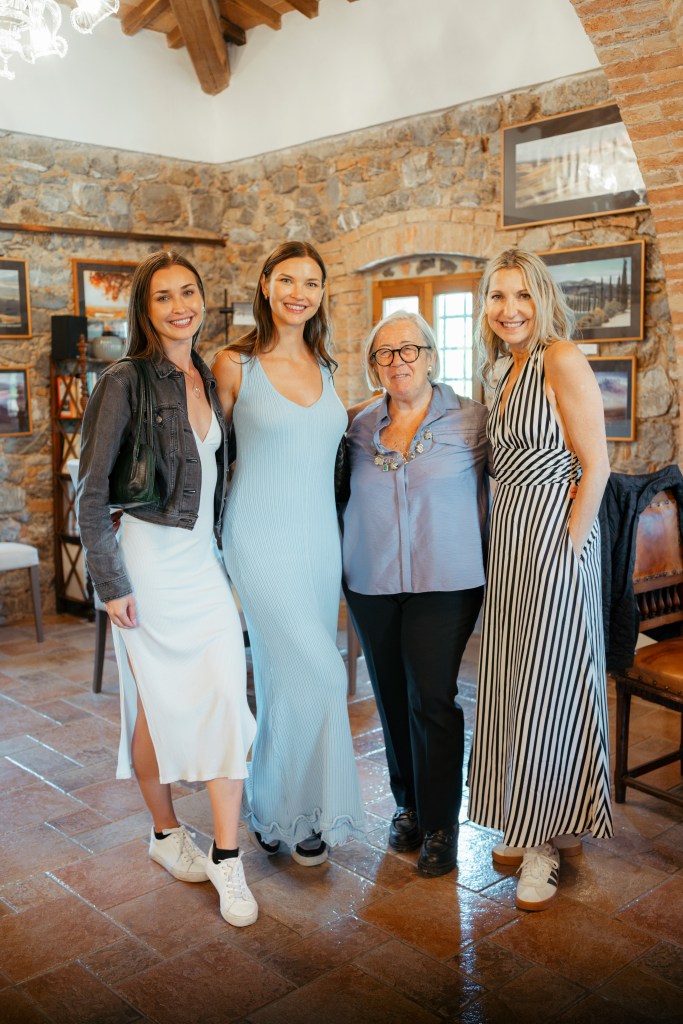
I left Casato Prime Donne inspired by the wines, but even more inspired by the woman behind them. Standing together in her tasting room — three generations of women connected through stories, ambition, challenges, and dreams — I couldn’t help but reflect on what Donatella has built.
Not just a winery.
A movement.
Still pinching myself that I had the chance to meet a true legend of Tuscany — a woman whose life’s work reminds us that the greatest legacy isn’t what we build for ourselves, but what we make possible for those who follow.
Next stop: Molino di Sant’Antimo
Molino di Sant’Antimo: A Family Rooted in Home, Land and Purpose
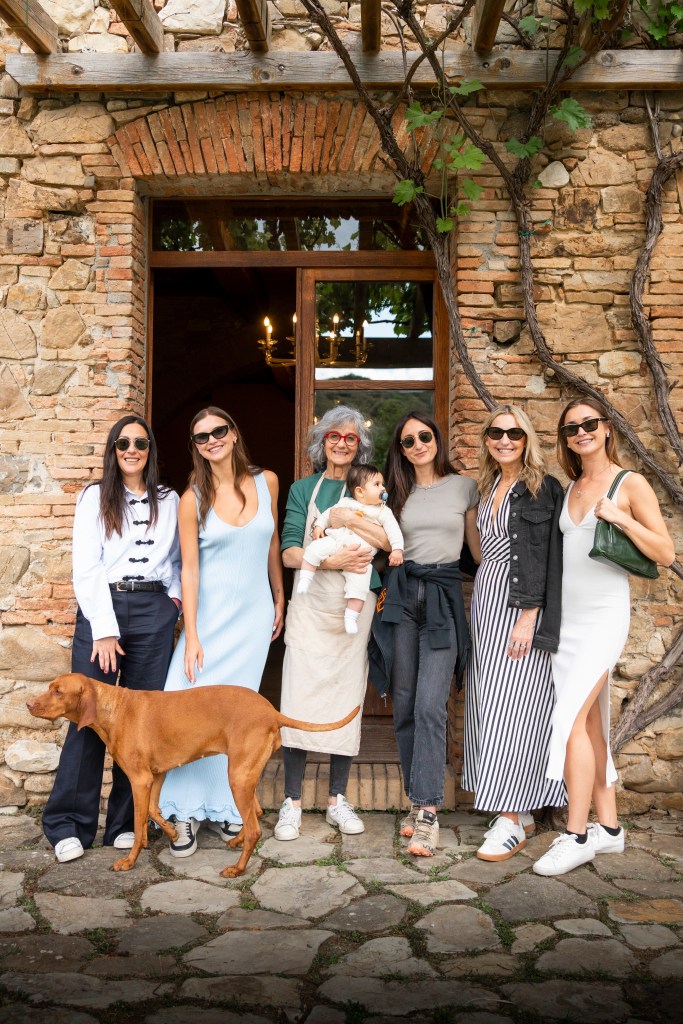
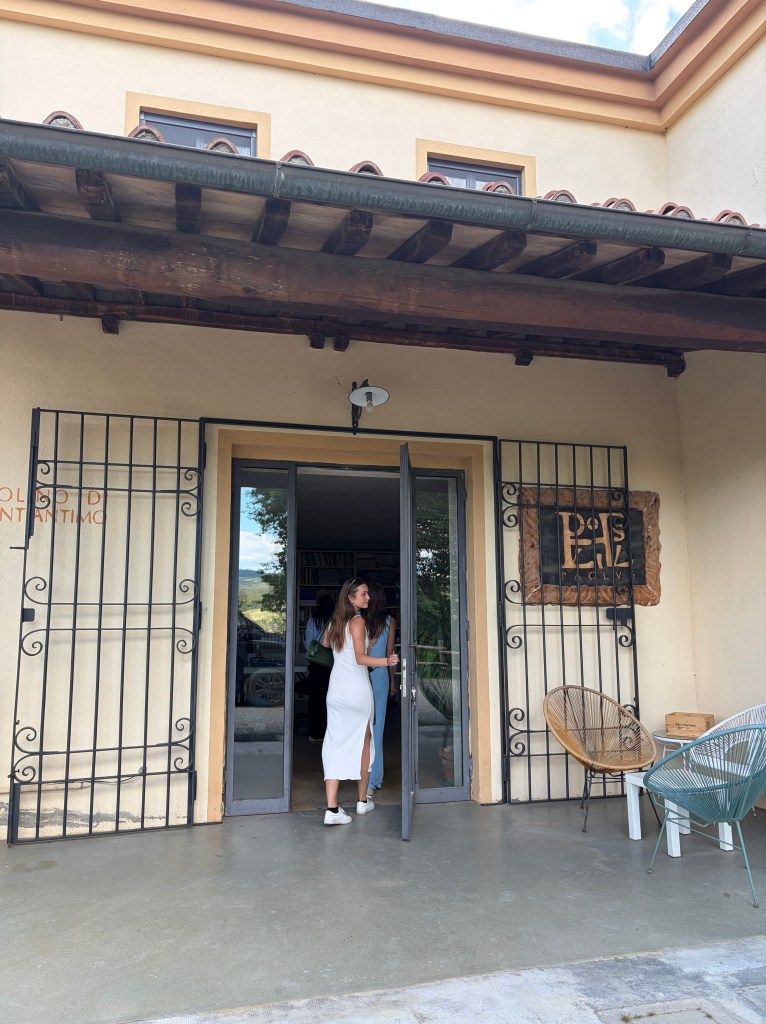
In Montalcino, home to some of the world’s most celebrated wines, we found something truly beautiful and memorable at Molino di Sant’Antimo — not just exceptional wines, but a family living and working together under one roof. Our guide, Ema, described it as a “small diamond” among Montalcino’s 200 wineries. After spending an afternoon with the Vittori family, I understood exactly what he meant.
Family is important to me too. Mine is spread across Canada, Spain, and Australia but whenever we’re together, we’re stronger. Watching the Vittori family work side by side was a beautiful reminder of what can happen when generations share not only a home, but a purpose.
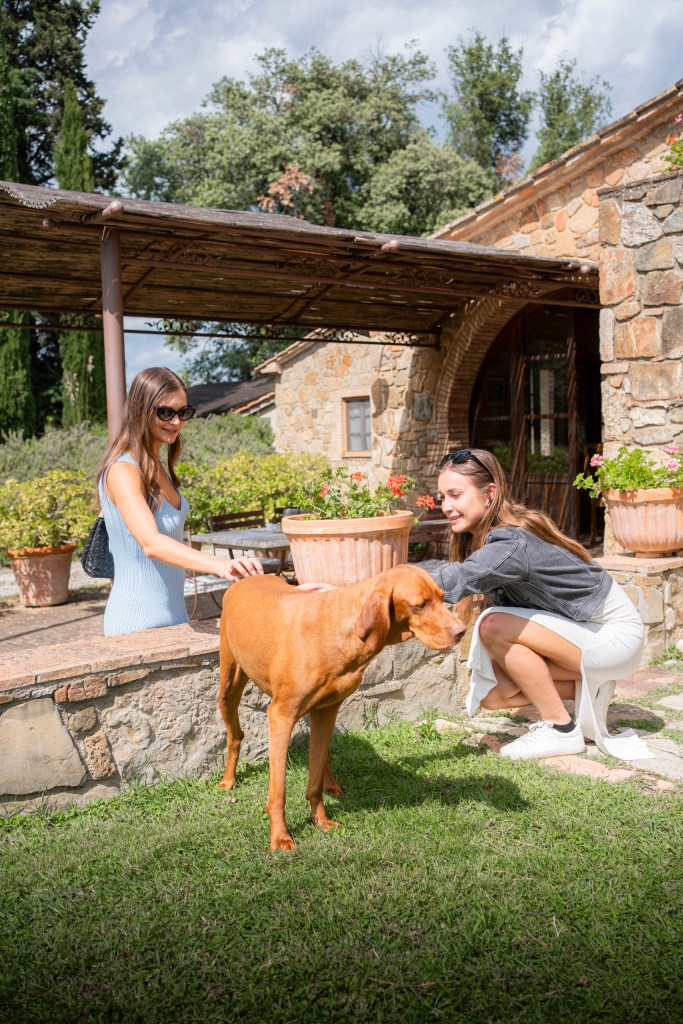
At Molino di Sant’Antimo, everyone in the family has a role. Carlo Vittori’s vision laid the foundation. Susanna welcomes guests with the warmth only a Tuscan mother can provide. Giulia oversees hospitality and tastings. Valeria crafts the wines. Even Gina, the family dog, seems to know she has an important job. And somehow, it all comes together beautifully.
A Place Shaped by History
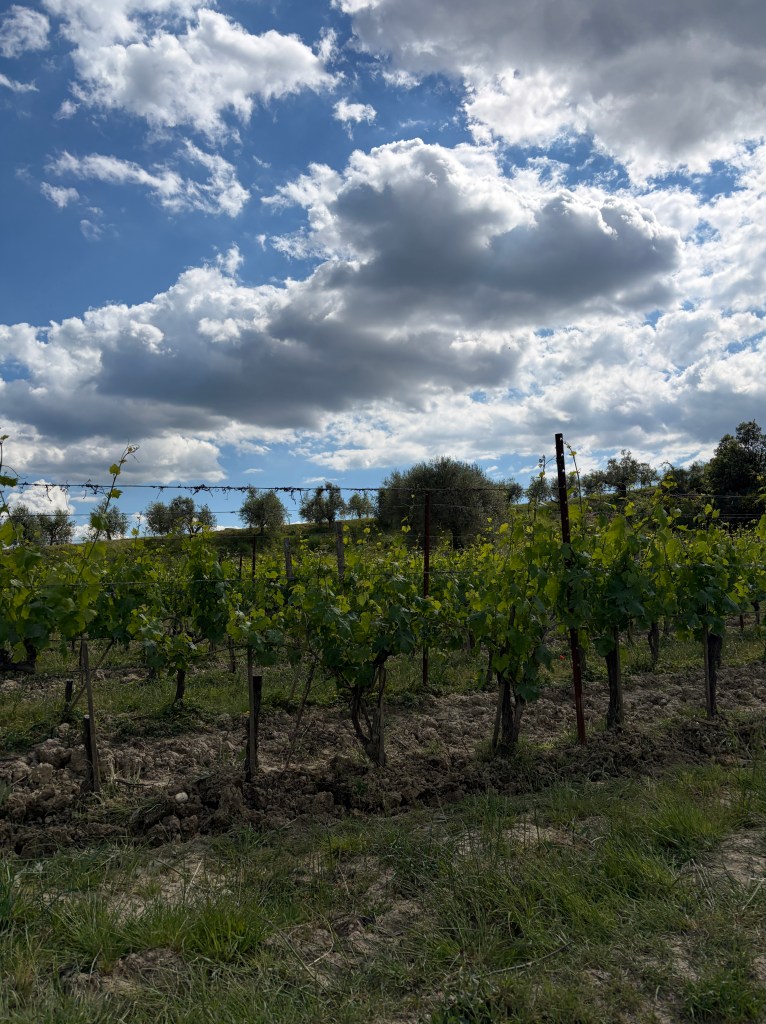
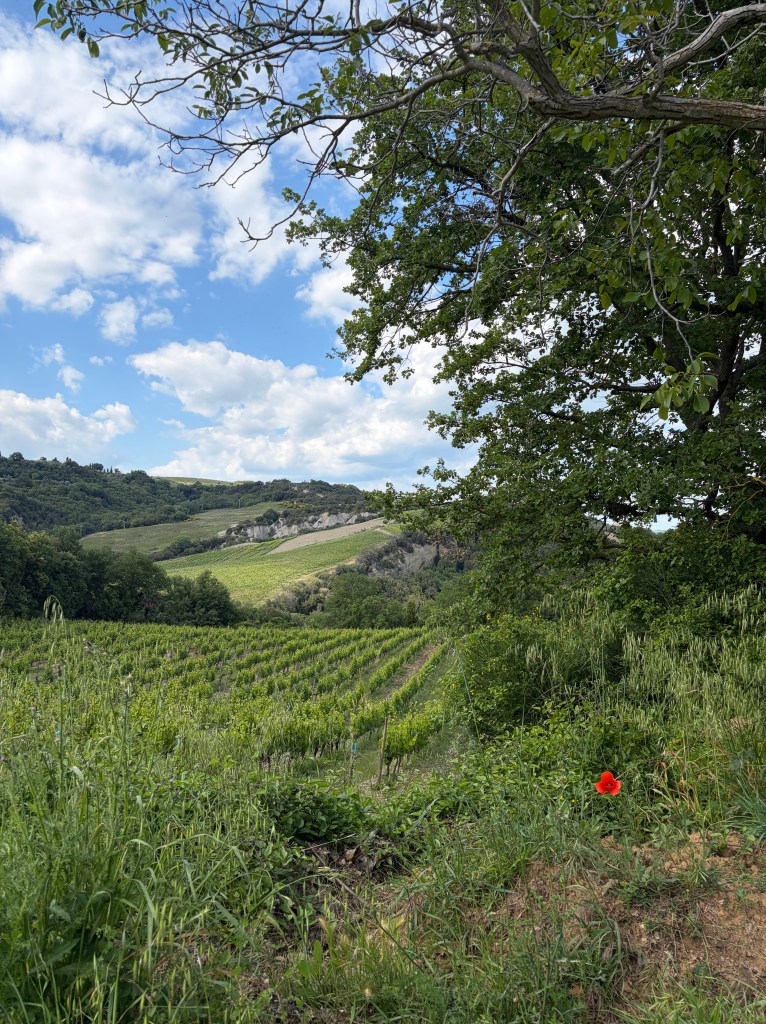
Few wineries in Montalcino are as deeply rooted in place as Molino di Sant’Antimo. The estate sits beneath the ancient Abbey of Sant’Antimo, one of Italy’s most beautiful Romanesque churches. According to legend, Charlemagne founded the abbey in the eighth century after his troops were miraculously cured of plague while travelling through the valley.
The winery takes its name from a centuries-old water mill standing in the abbey’s shadow. Dating back to the 13th century and expanded in 1606, the mill once played a vital role in the region’s agricultural life.
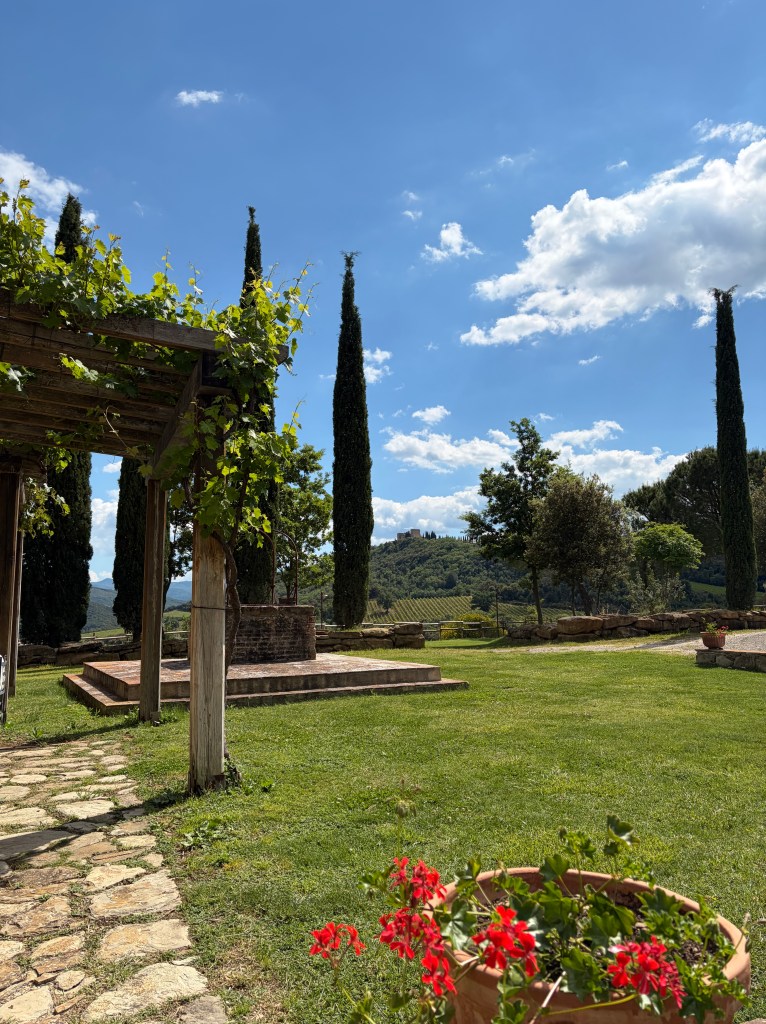
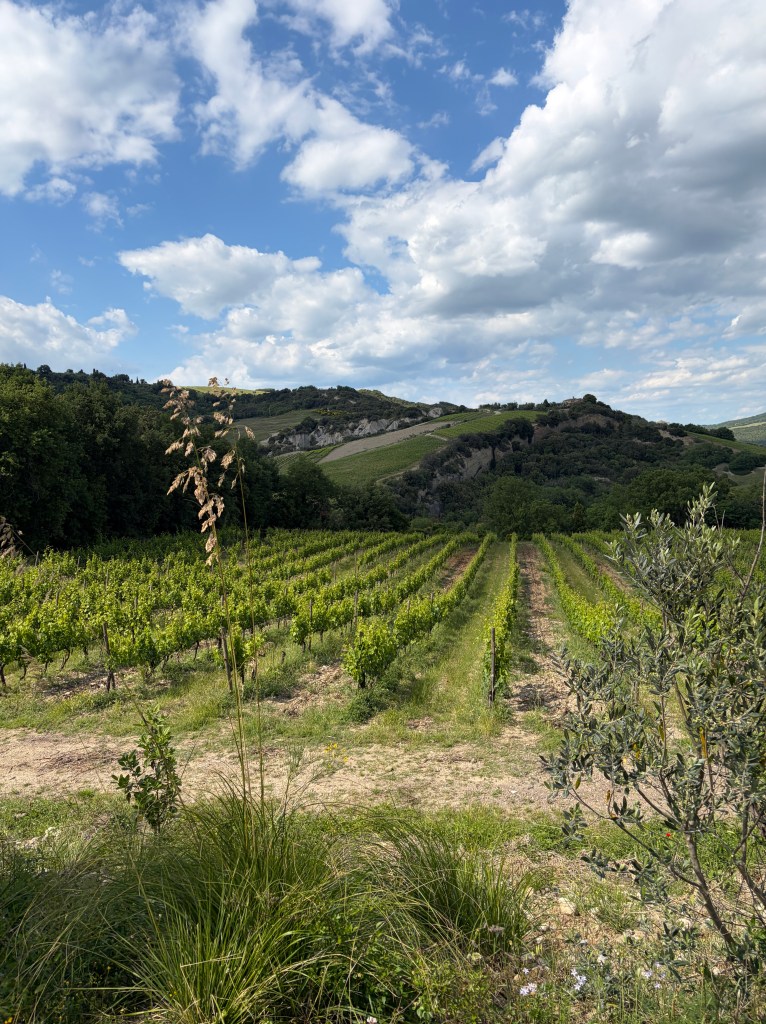
Long before this area became recognized as one of the most desirable zones for Brunello production, Carlo Vittori saw potential where others saw abandonment. He purchased the land in the 1980s and later restored the historic mill, connecting the family’s wines with centuries of local history.
The Women Behind the Wines
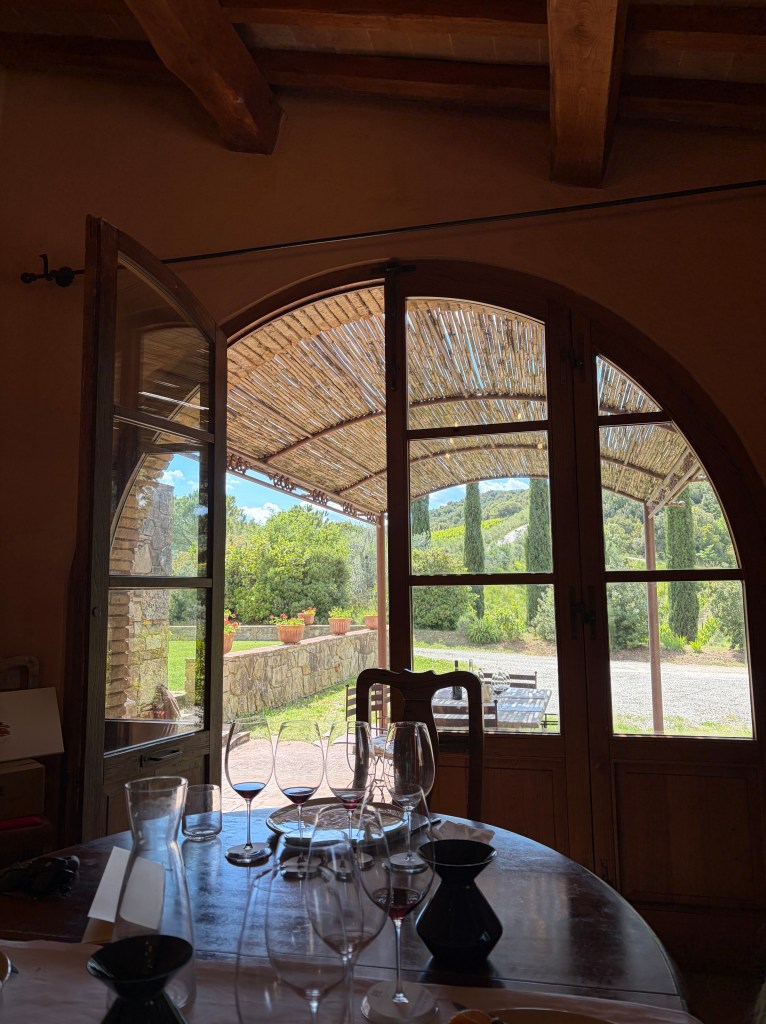
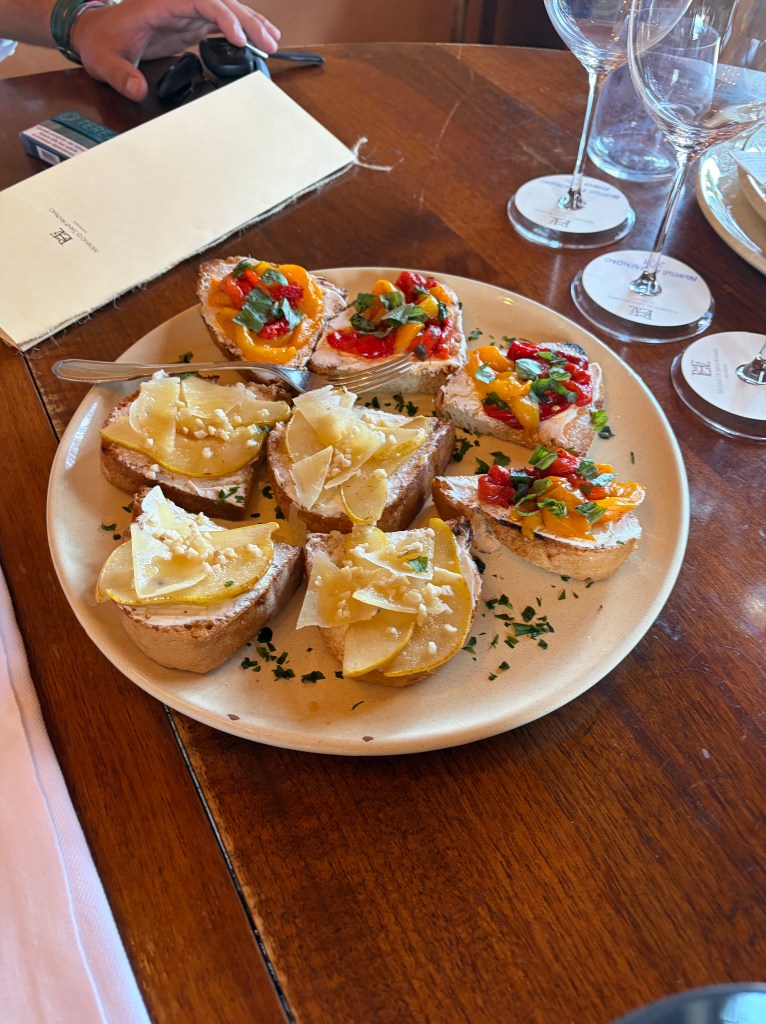
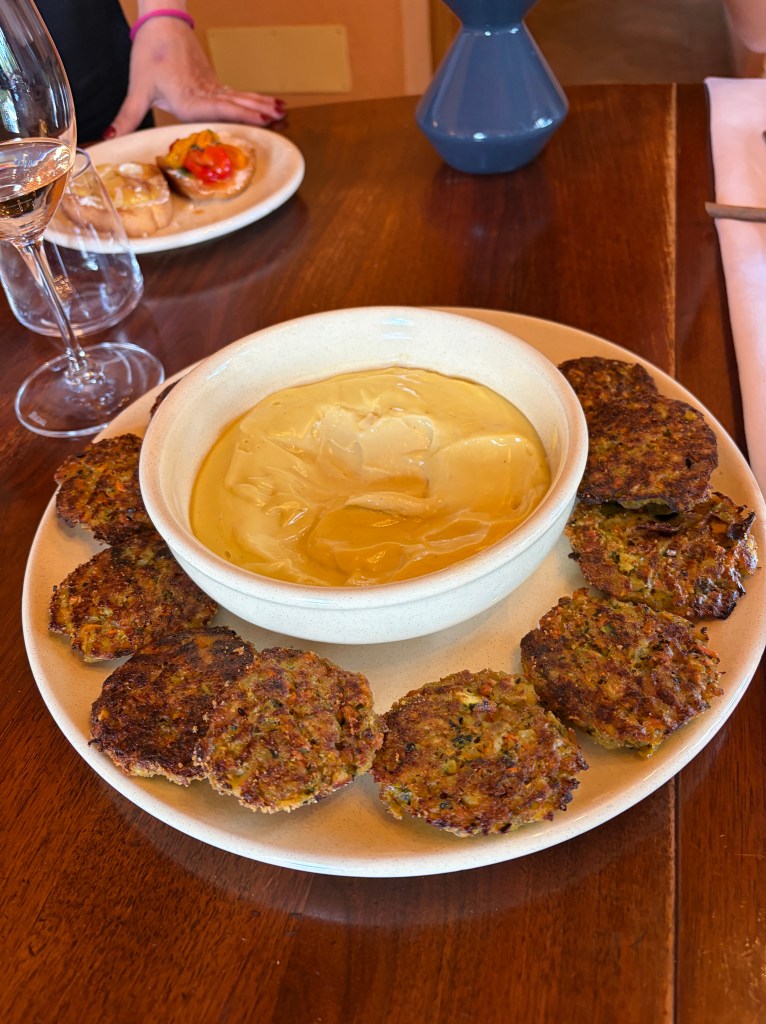
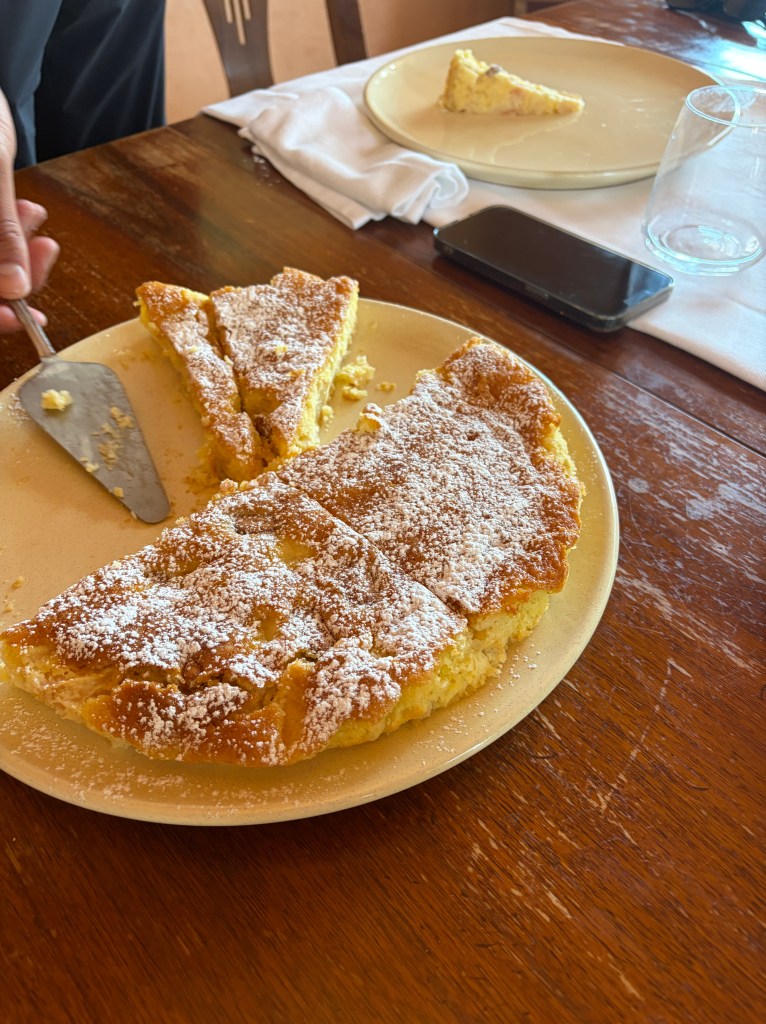
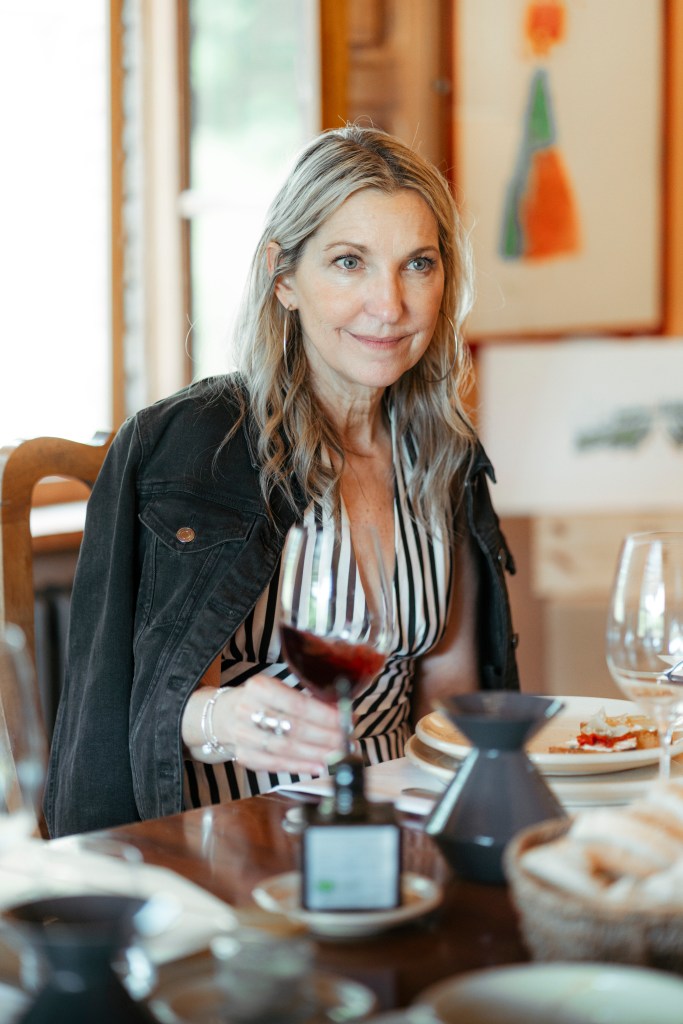
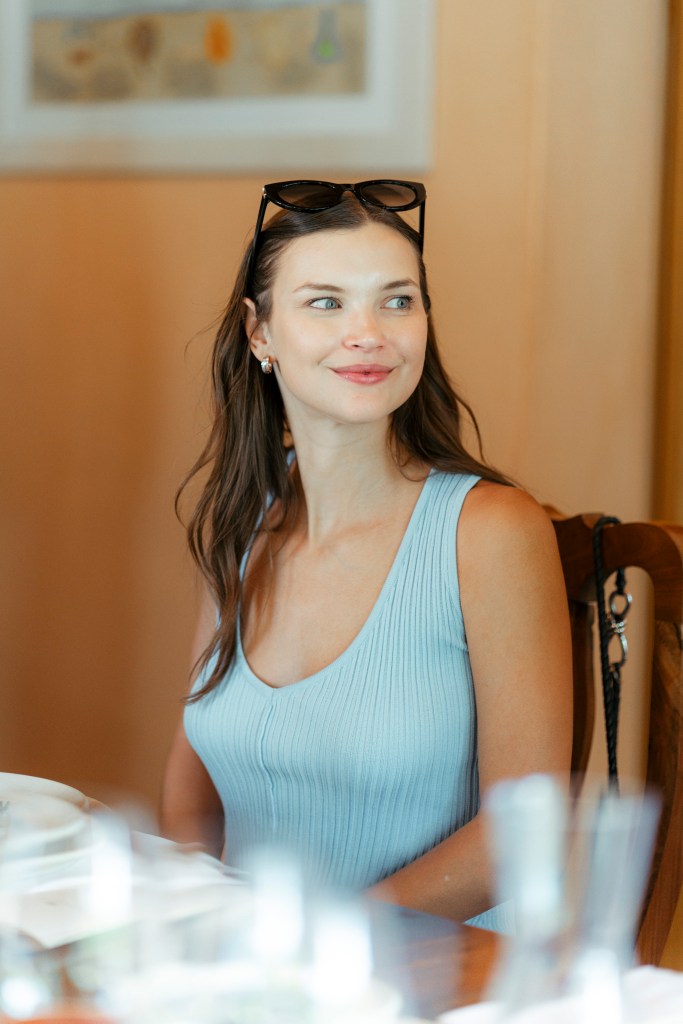
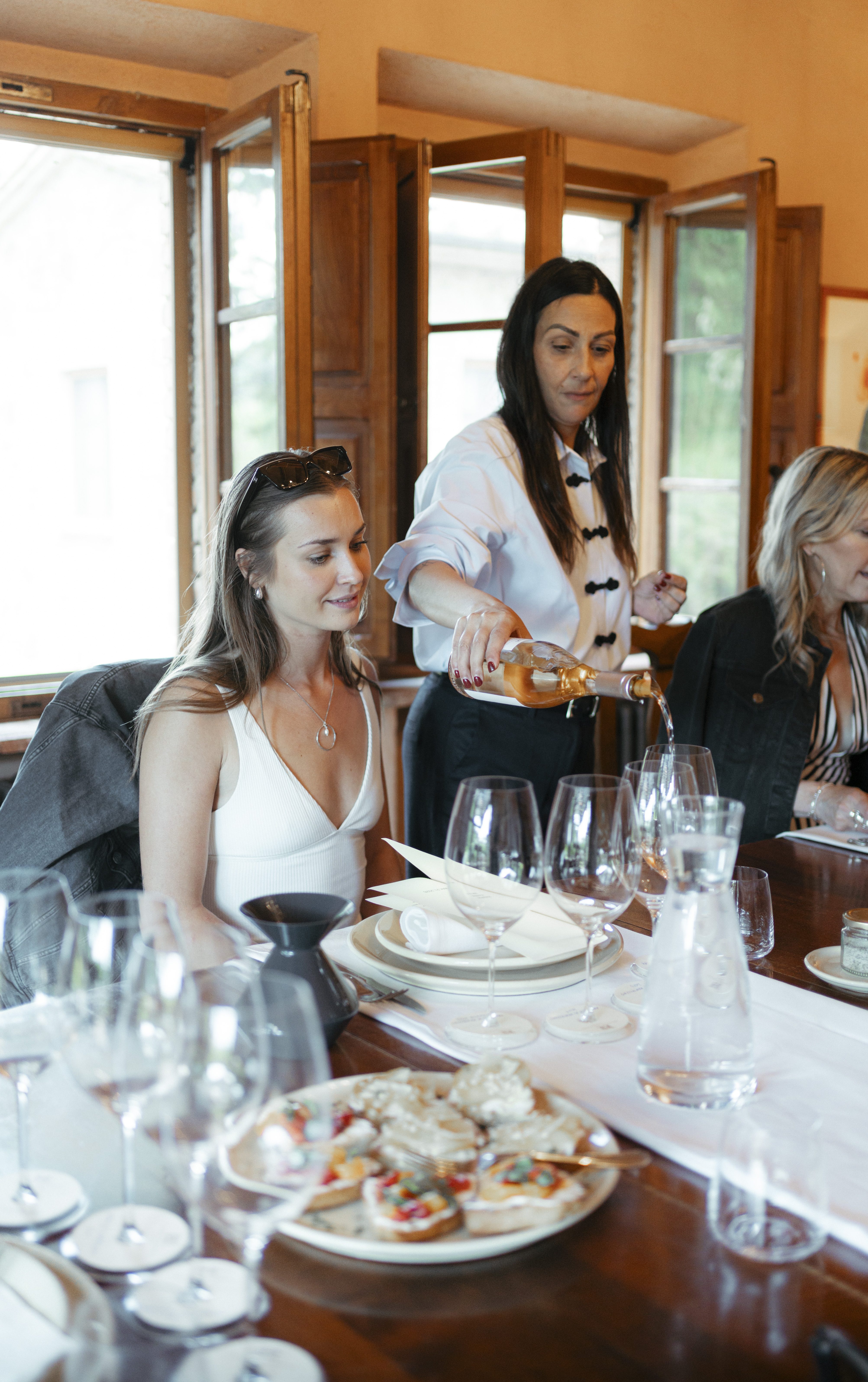
Our afternoon began with a wonderful home-cooked lunch made by Susanna and graciously hosted by Giulia in the family’s 19th-century farmhouse, complete with an appearance by her adorable baby. And I have to mention the apple pie — quite possibly the best I’ve ever tasted.
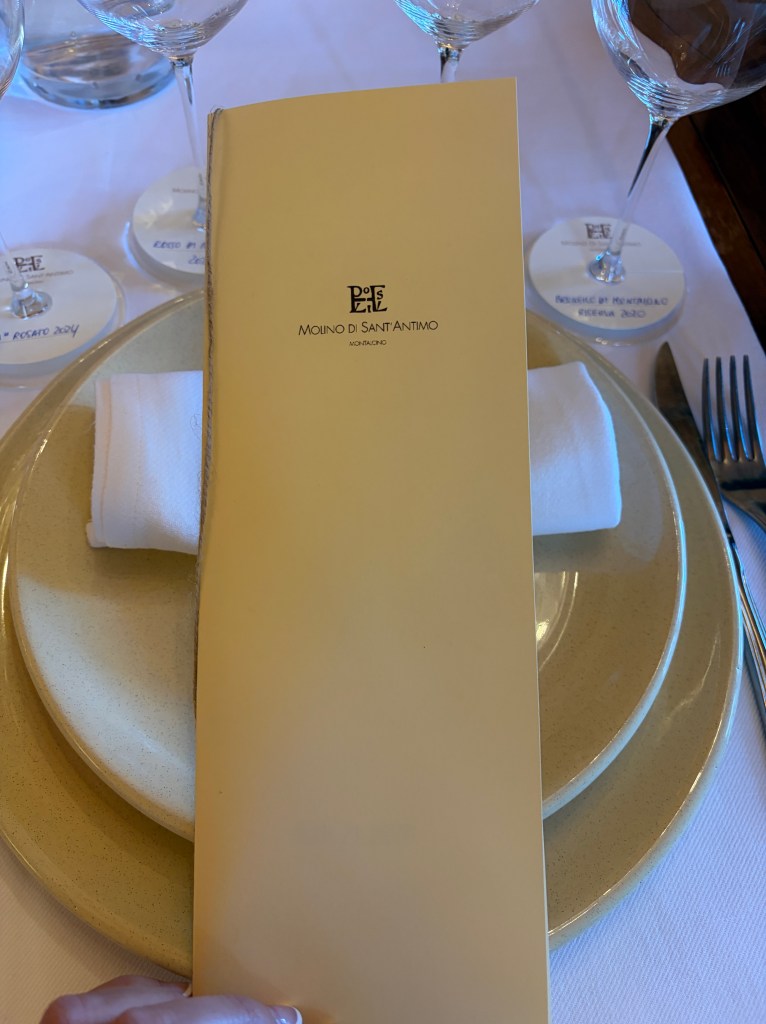
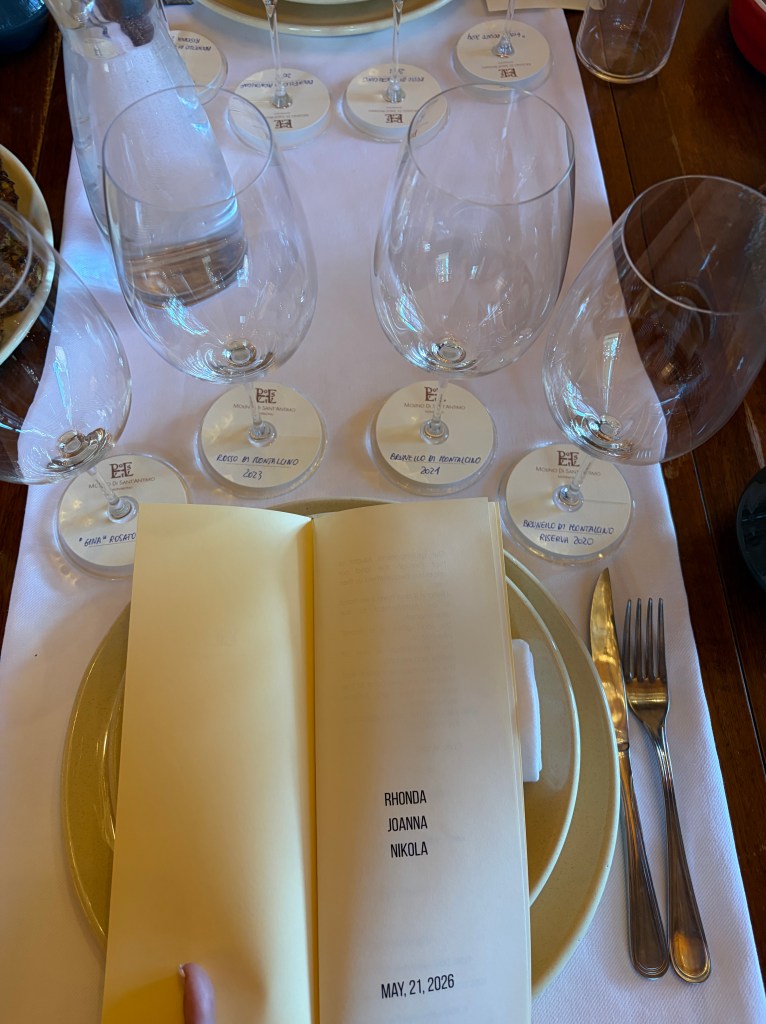
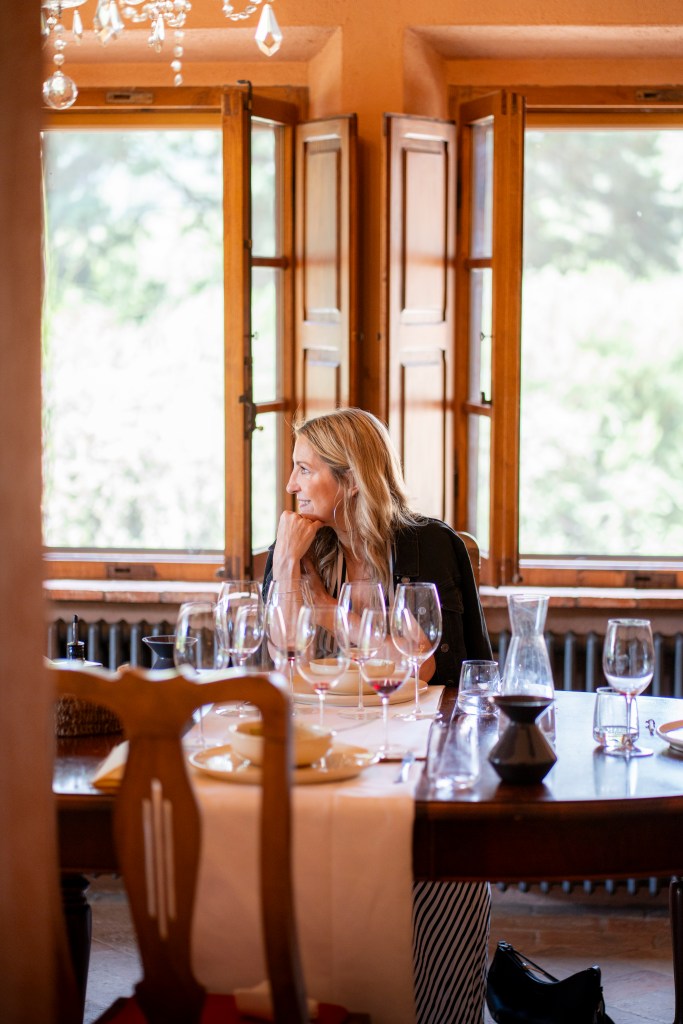
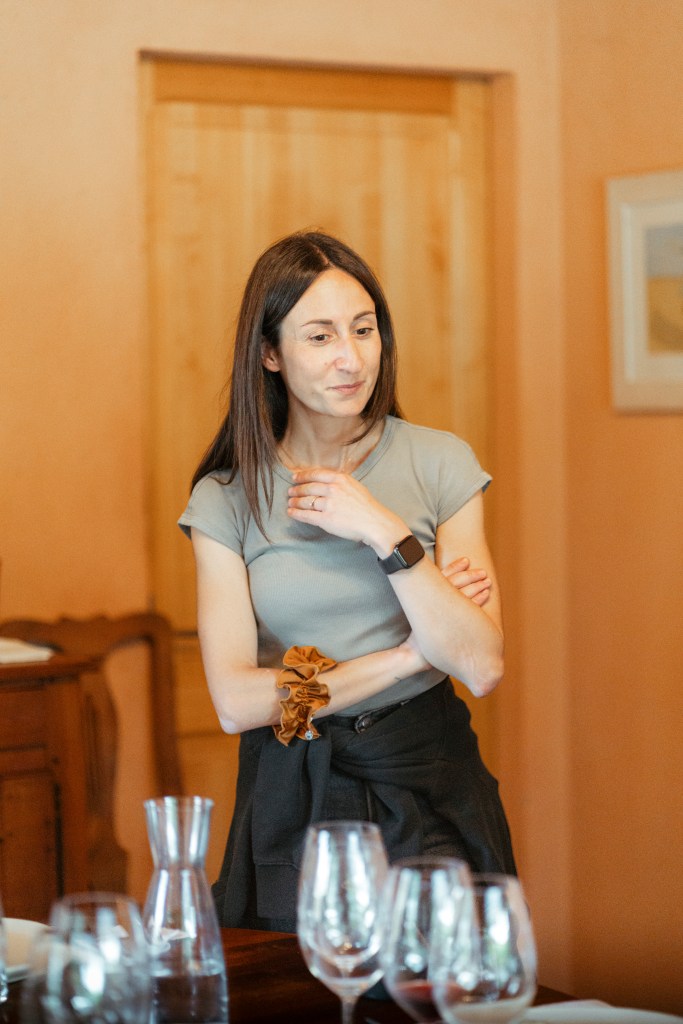
One of the highlights of our visit was meeting winemaker, Valeria Vittori. Confident, thoughtful, and deeply connected to her vineyards, Valeria represents the next generation of Montalcino winemaking. Molino di Sant’Antimo feels rooted in tradition in all the right ways, yet there is a modern, fresh energy here as well, and much of that energy comes from her.
Valeria’s influence is impossible to miss. Listening to her speak about the vineyards and wines, I couldn’t help but think about how many exceptional women are shaping Tuscany’s wine future. Creativity, patience, intuition, precision — qualities that define great winemakers — and Valeria embodies every one of them.
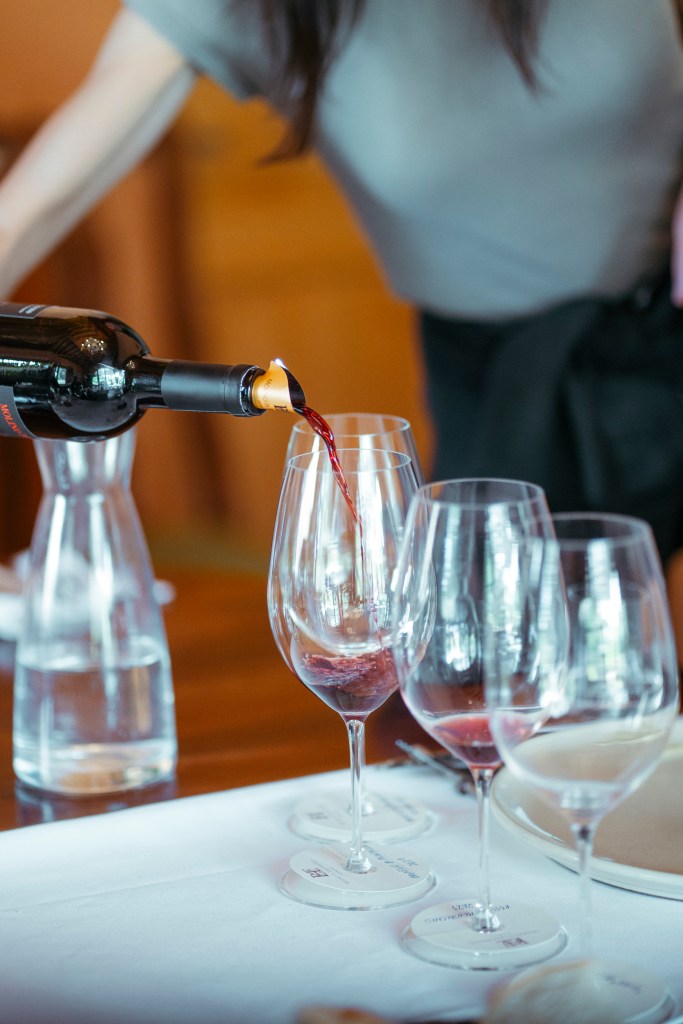
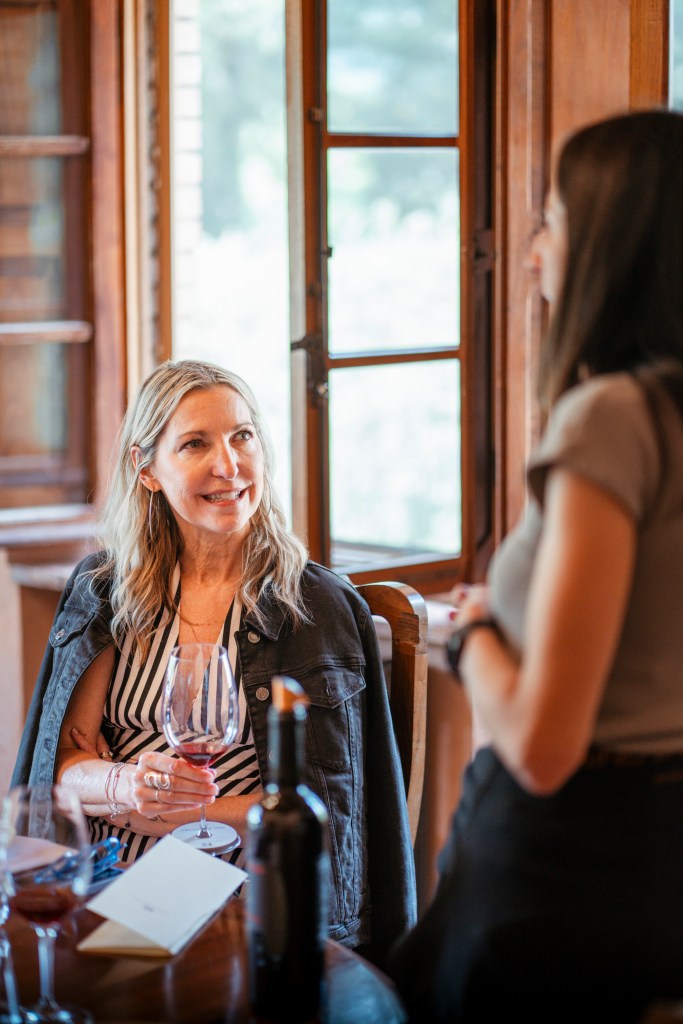
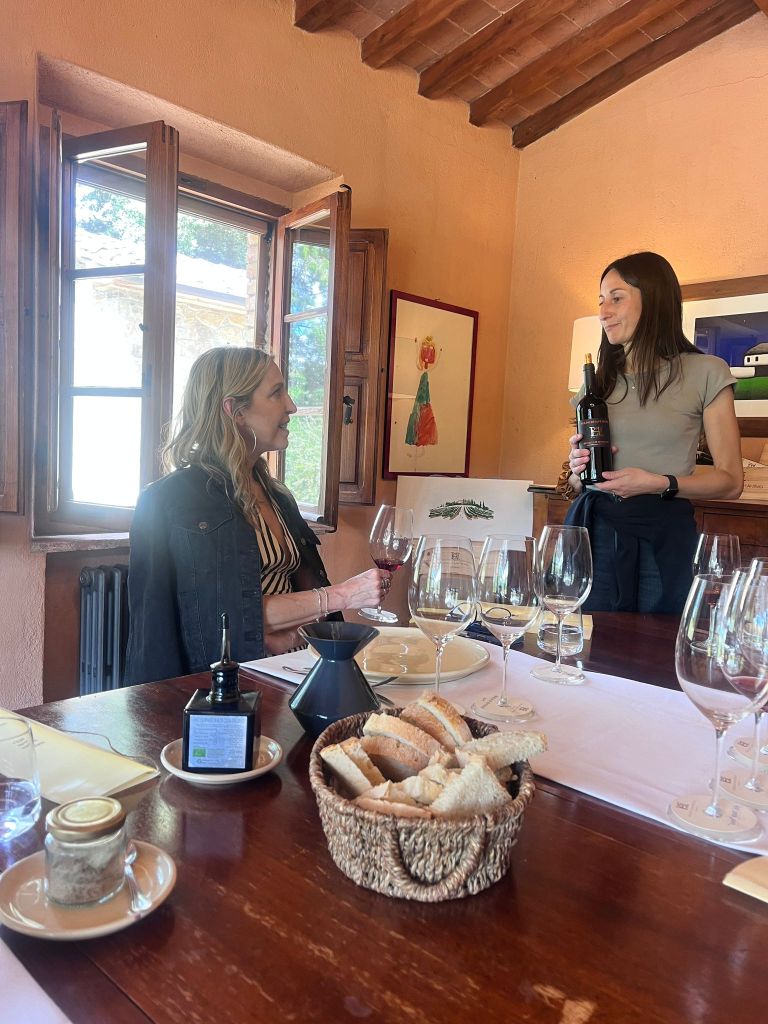
A great Brunello is meant to be savoured, and we certainly did. The Brunello di Montalcino Riserva 2020 felt special from the very first sip, so I made sure a bottle found its way home in my suitcase. Since then, that same wine has earned 96 points and a Gold Medal at the Decanter World Wine Awards. Some bottles simply announce themselves before the critics do. Huge congratulations to Valeria and the Vittori family!
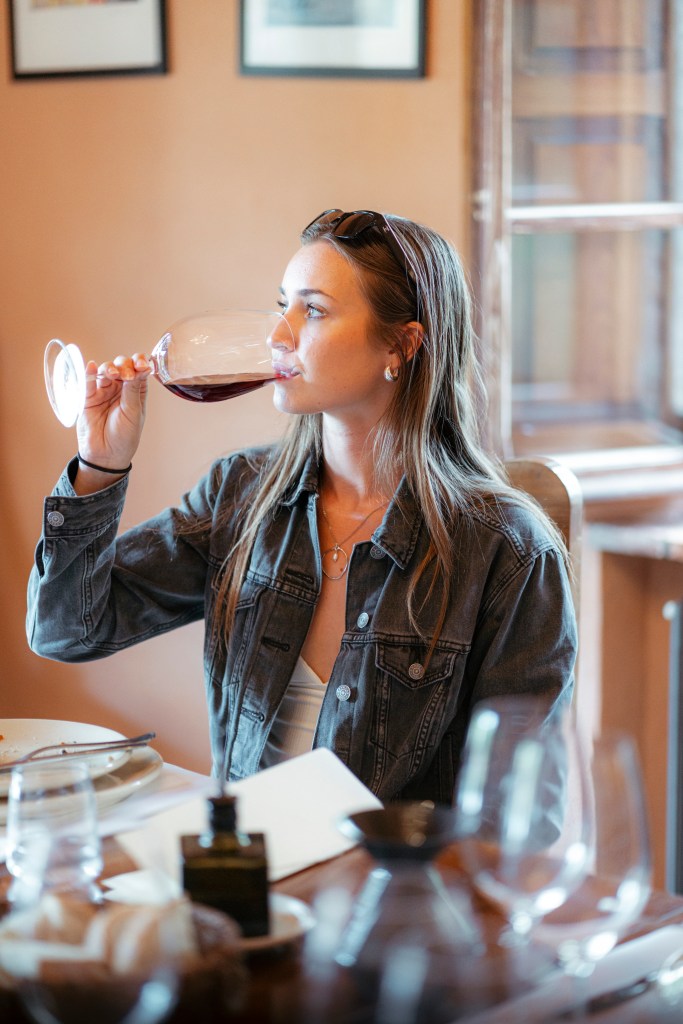
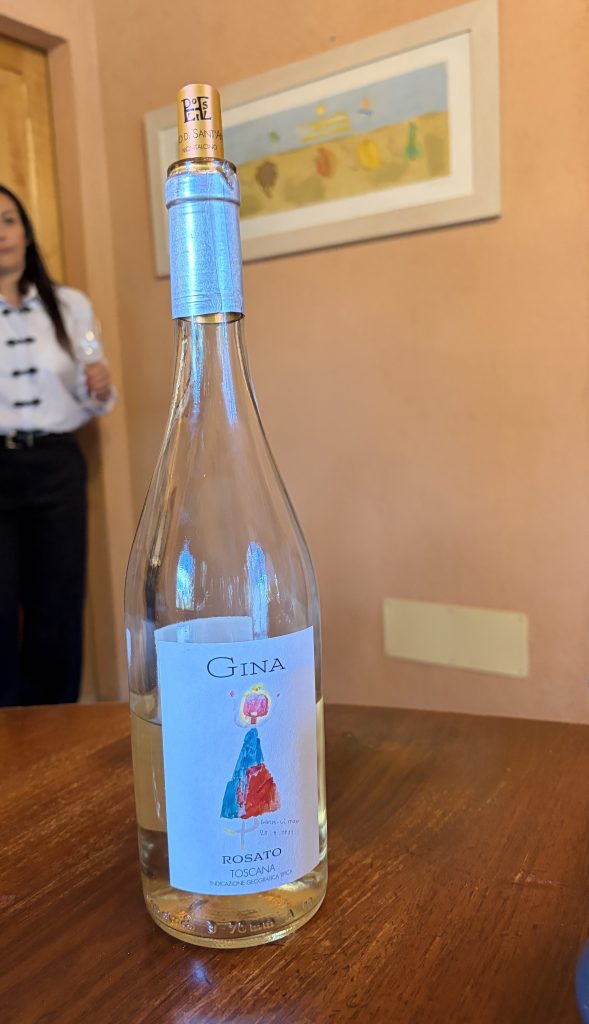
As a mother who, admittedly, still proudly displays the artwork of her children, the story behind another of the family’s wines touched me deeply. The beautiful label on the Rosato features a self-portrait drawn by Giulia when she was just nine years old, and the wine itself is named after their sweet dog, Gina.
It’s the kind of detail that perfectly captures Molino di Sant’Antimo — where family isn’t a marketing story, it’s simply the way they live.
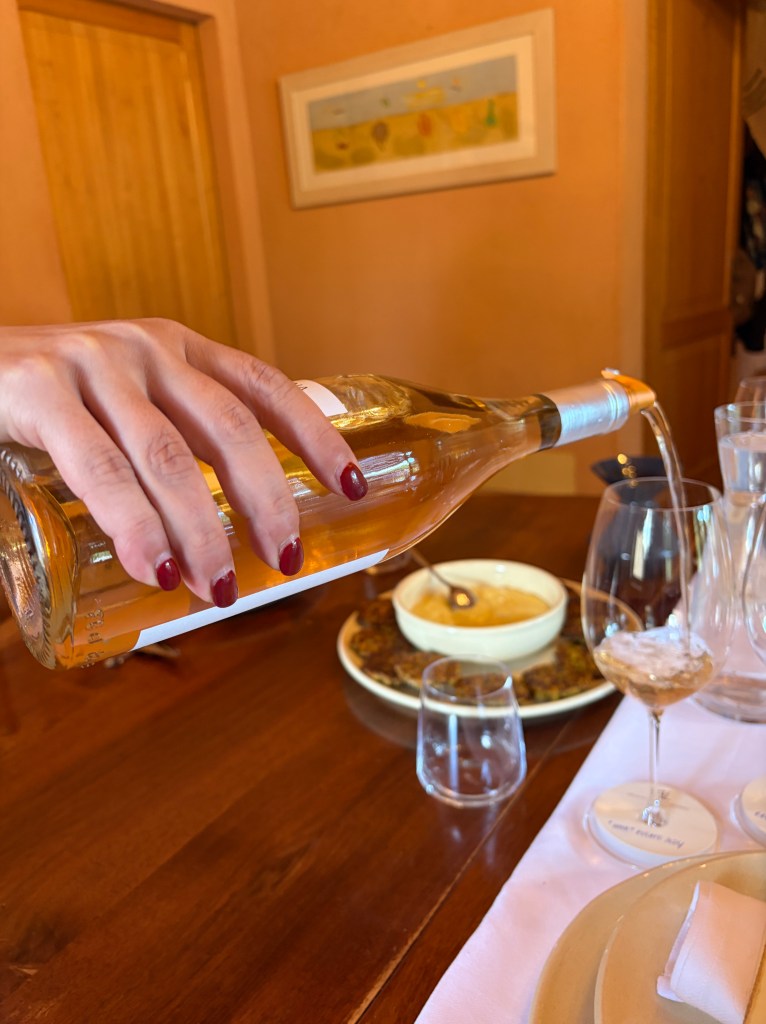
As we drove away, I realized I wasn’t just leaving with a few exceptional bottles. At Molino di Sant’Antimo, every bottle carries a little piece of the Vittori family’s history, their heart, and their home.
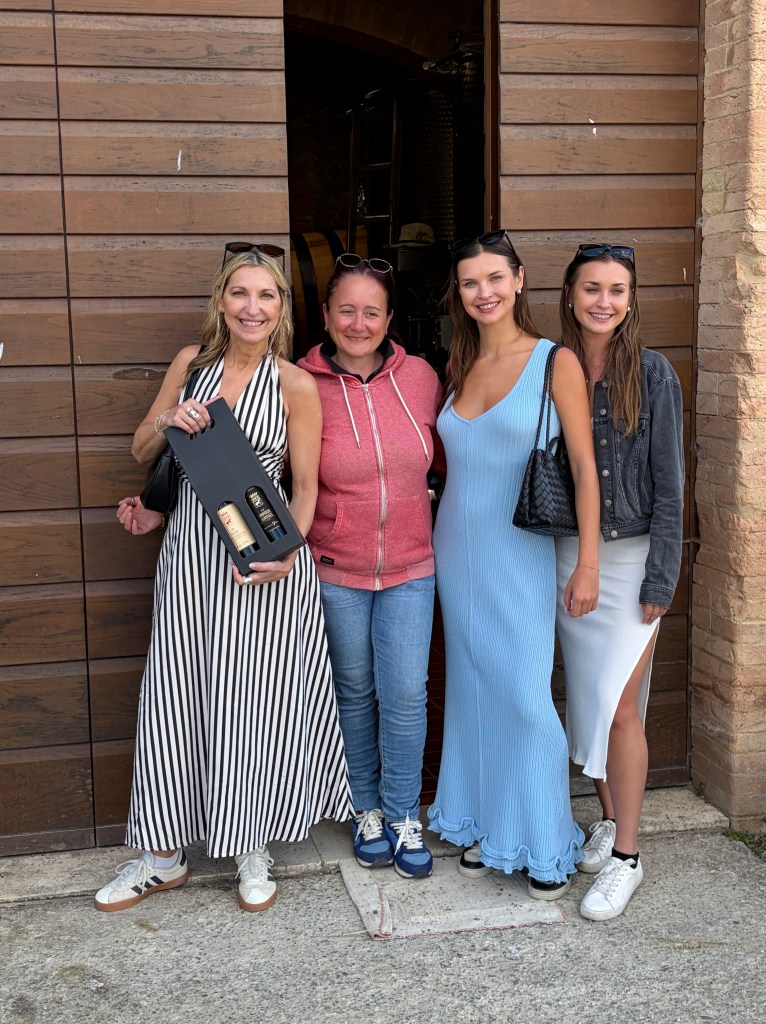
In a League of Her Own: Jessica’s Kingdom at Fattoria del Pino
Most wineries greet visitors in a tasting room. Jessica Pellegrini greeted us in an excavator.
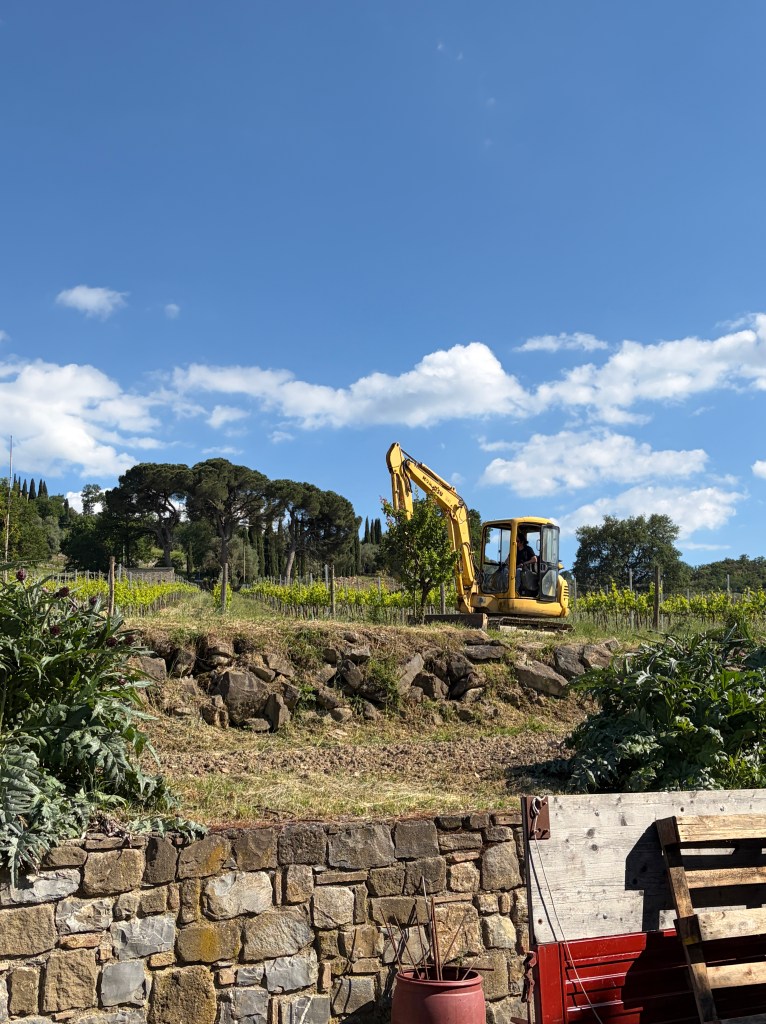
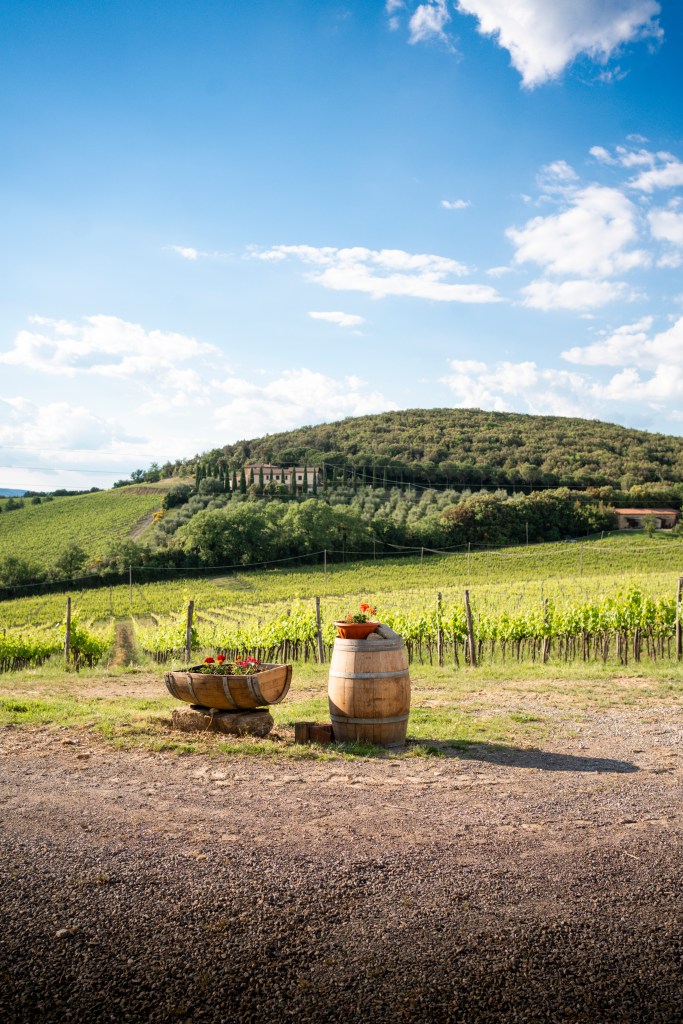
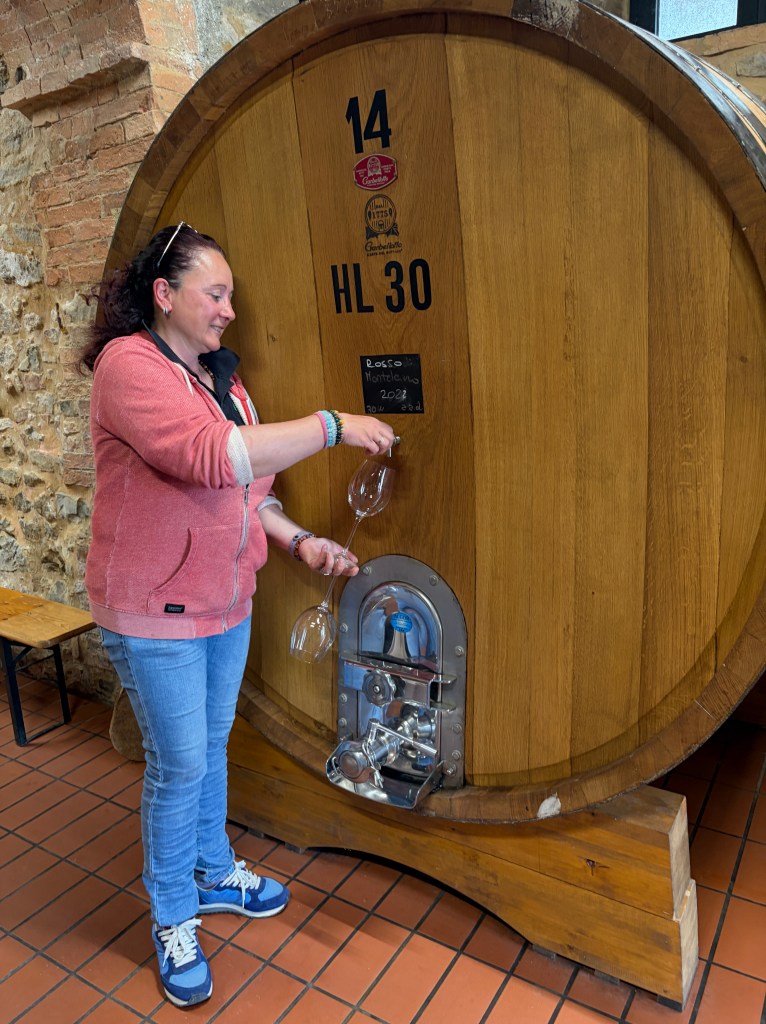
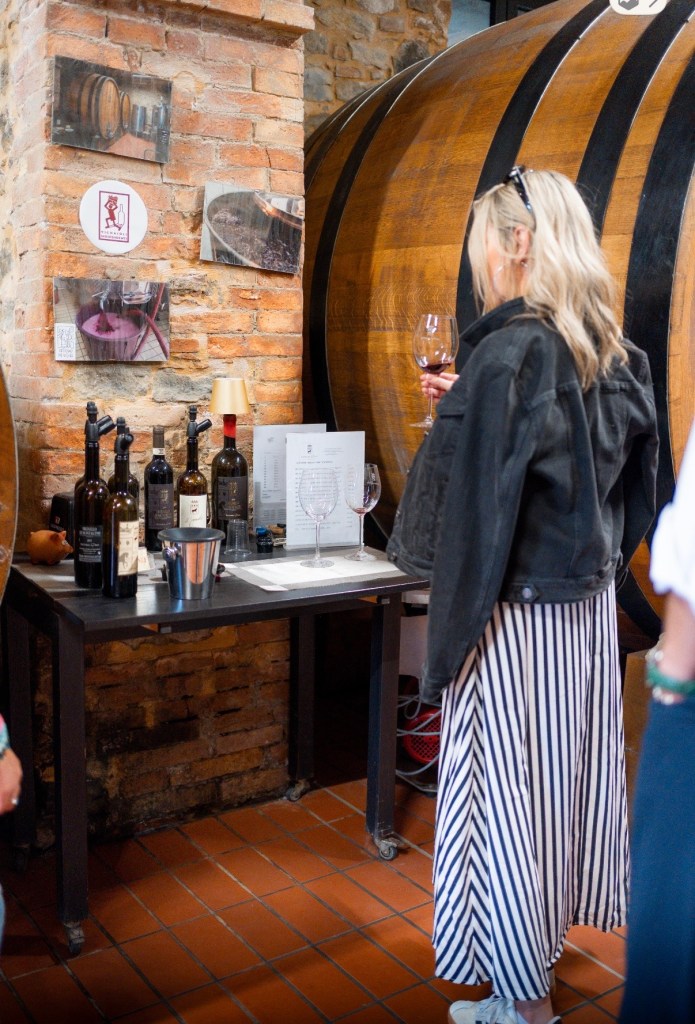
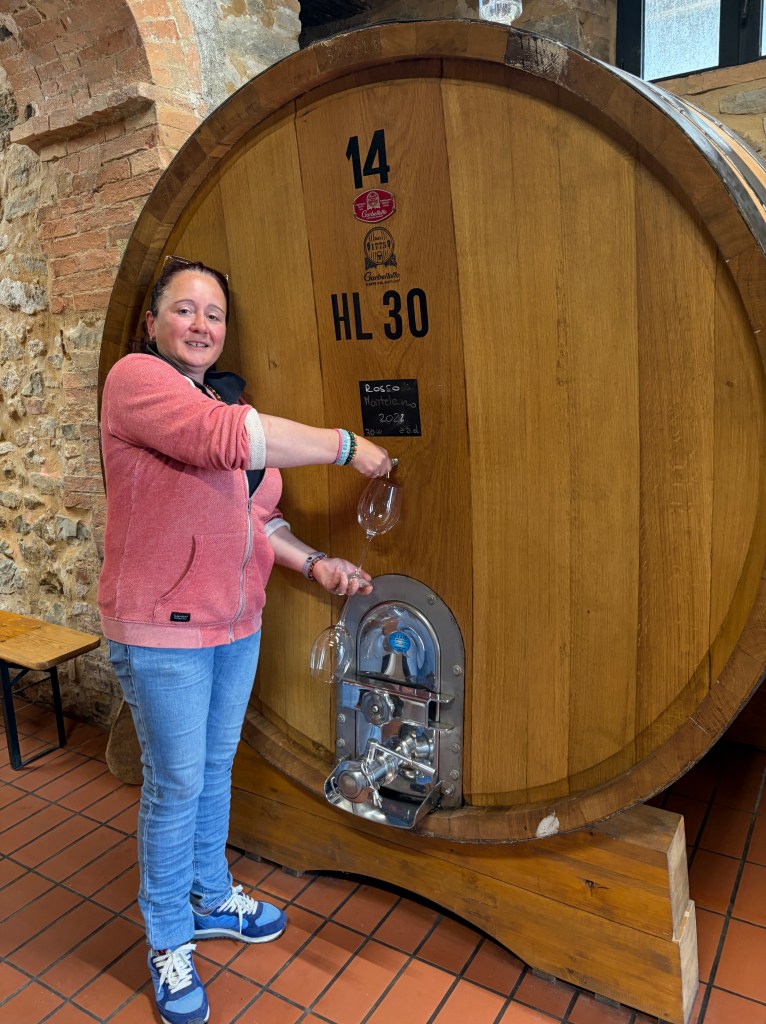
That pretty much tells you what you need to know about Fattoria del Pino. There is no formal tasting room, no carefully choreographed winery experience — just a table, and a few barrels, and Jessica herself: boots on the ground, hands in the soil, fully immersed in every corner of her seven-hectare estate.
And if you’re visiting, one piece of advice: keep an eye on the goose.
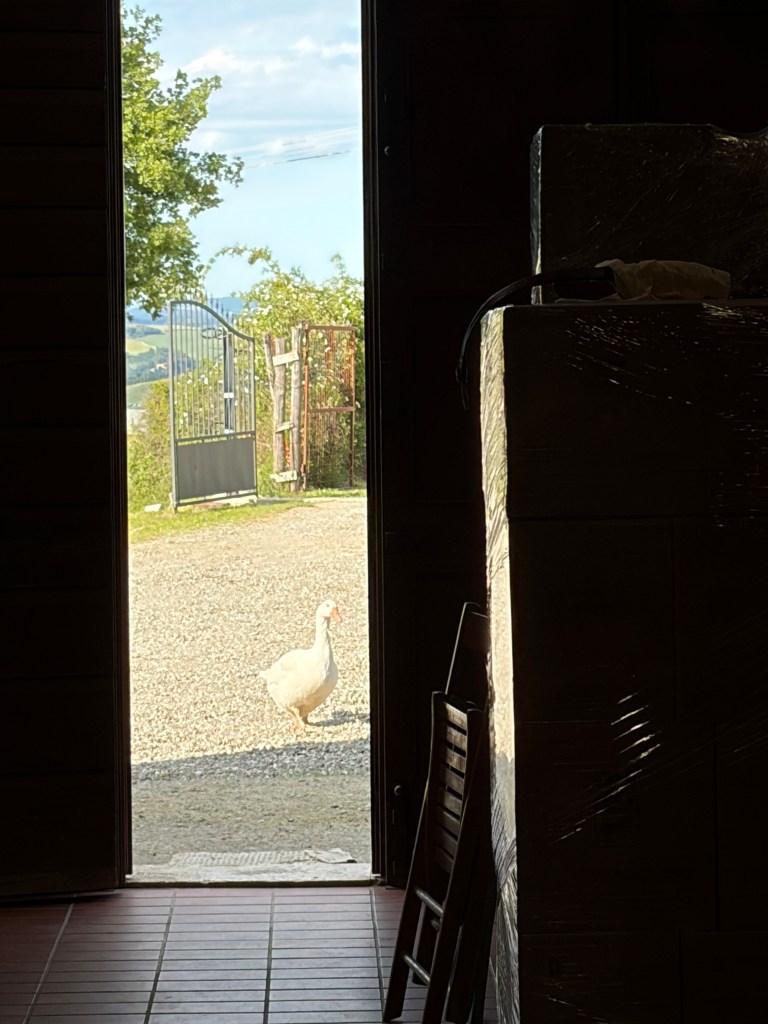
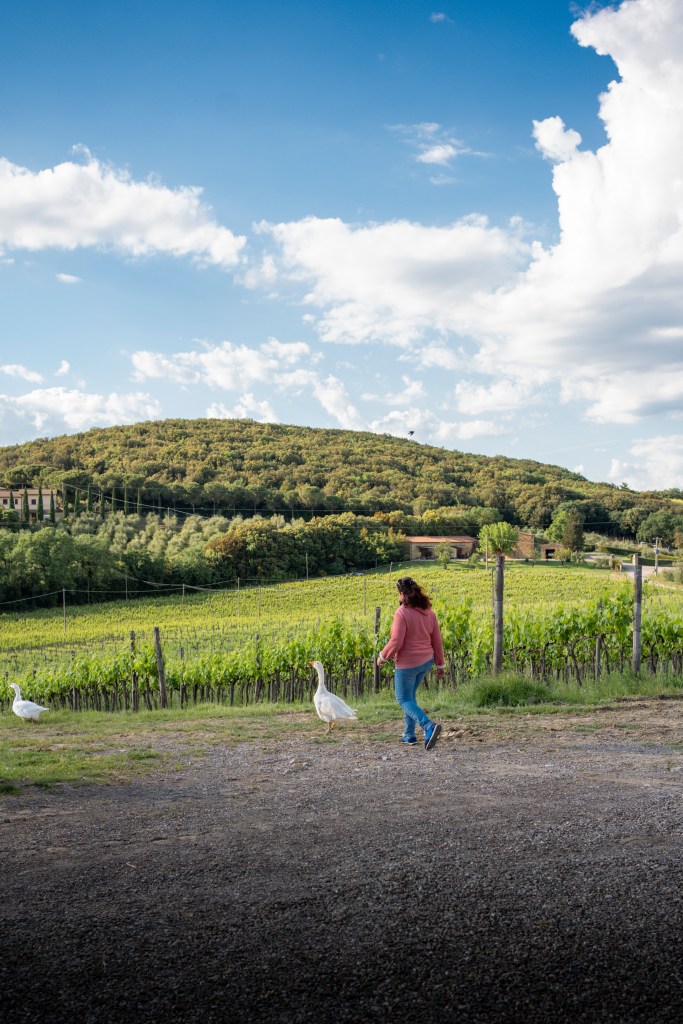
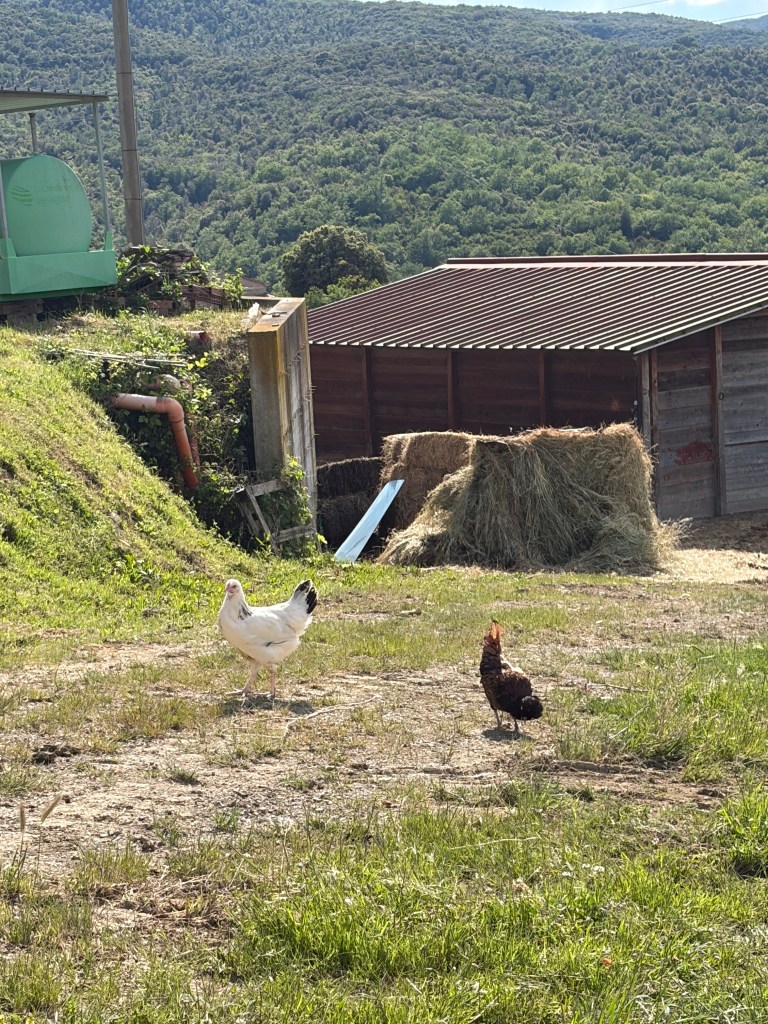
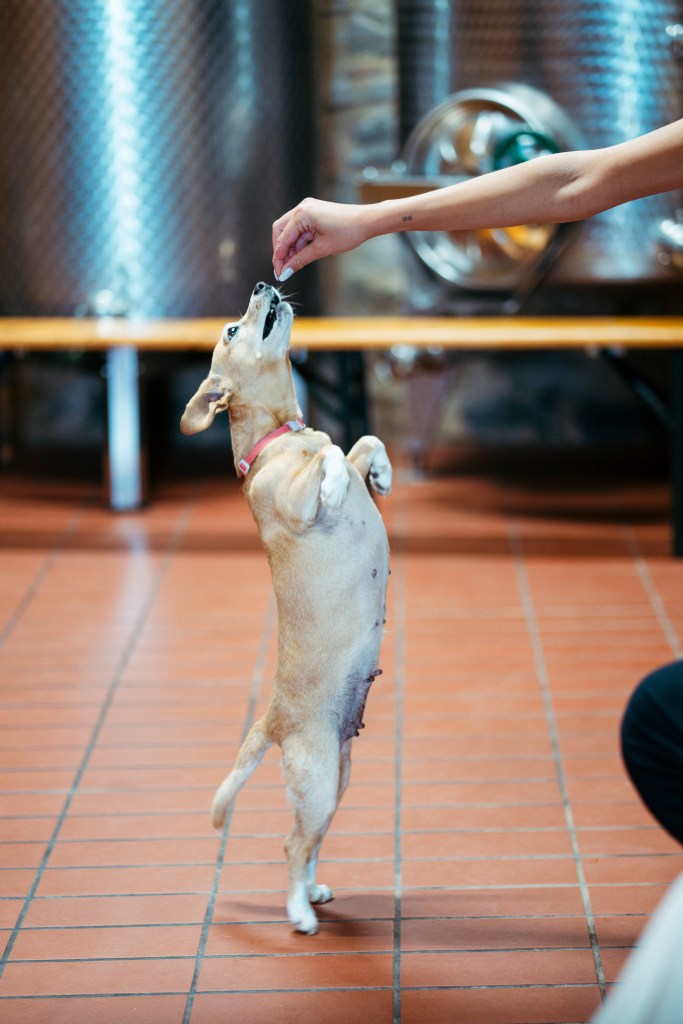
Alongside the vines are chickens, horses, ducks, and Safira, Jessica’s loyal dog and constant companion. Together they roam what feels less like a winery and more like a living ecosystem. Every animal has a place. Every vineyard row has a purpose. Every detail reflects Jessica’s unwavering connection to the land.

A Vineyard Built Her Way.
Fattoria del Pino may be young by Montalcino standards, but its story is remarkable. While many of the region’s estates measure their histories in centuries, Jessica planted her Sangiovese vines in 2000 and released her first vintage a decade later. She didn’t inherit generations of winemaking knowledge. Instead, she learned directly from her vineyards, selling grapes in the early years while studying and understanding the needs of her young vines.
Growing alongside her vineyard taught her to trust nature, follow her instincts, and develop a philosophy rooted in patience, observation, and respect for the land. Today, her seven hectares are planted exclusively to Sangiovese Grosso. Farming is organic, chemical-free, and intensely hands-on.
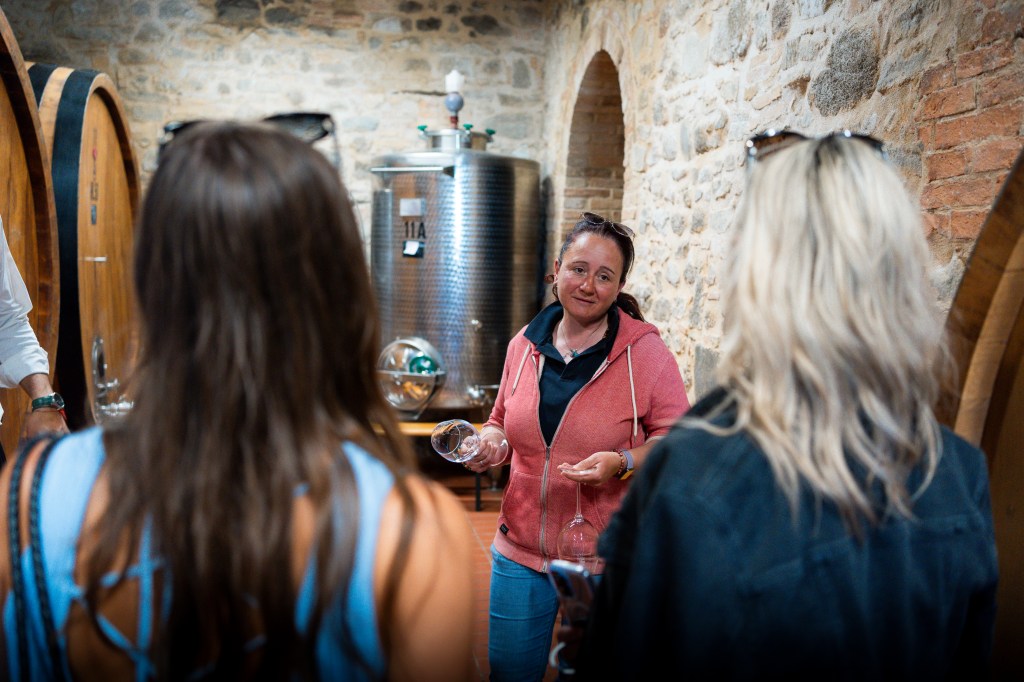
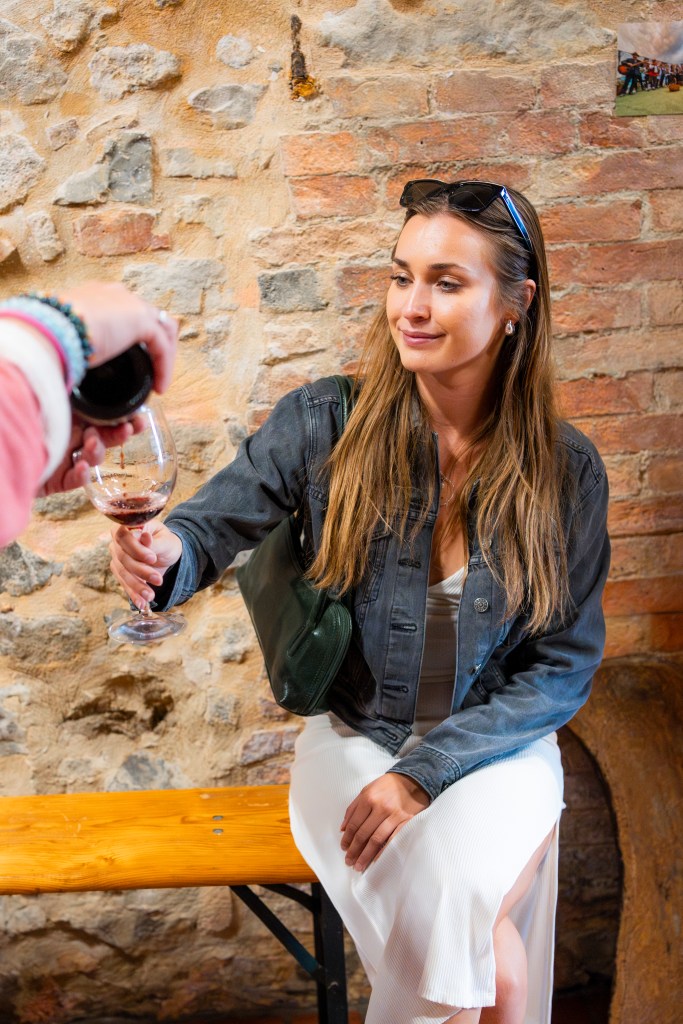
Among Jessica’s wines is a classic style Rosso di Montalcino as well as a Brunello di Montalcino. The wines are made in small quantities, and Jessica does almost everything herself. She hand-bottles her wines. She operates her own labeling machine tucked away in a back room. She rarely leaves the property because there is always work to be done. It’s her passion, her magic, and simply how she lives.
Where the Magic Finds Its Way into the Bottle
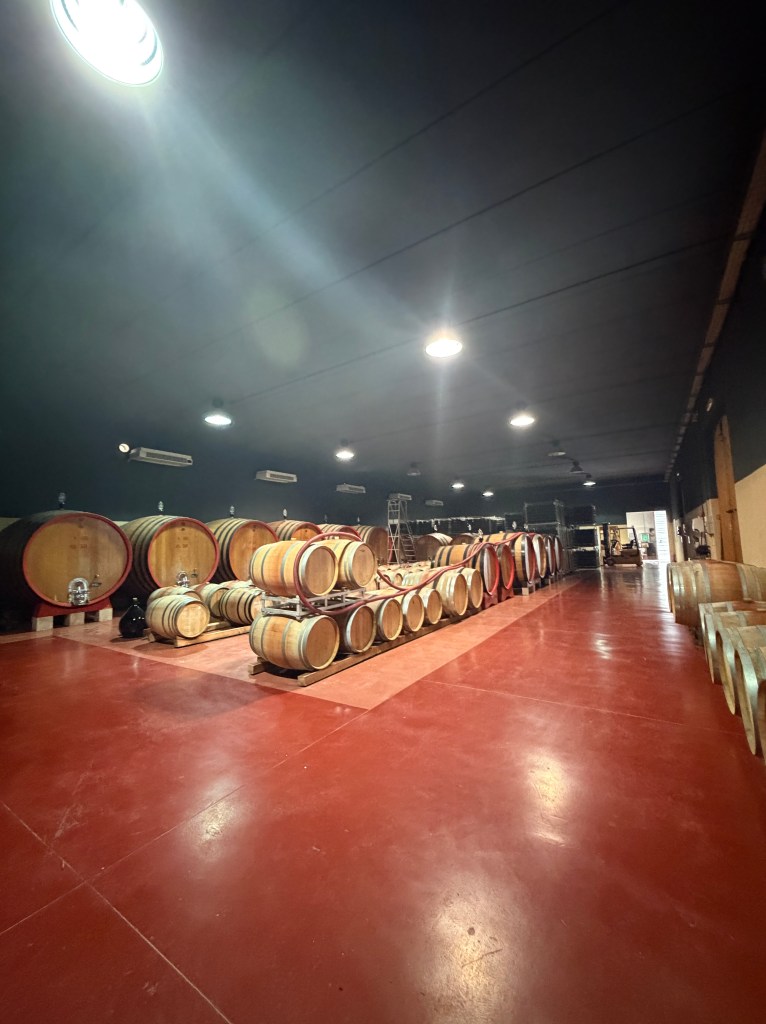
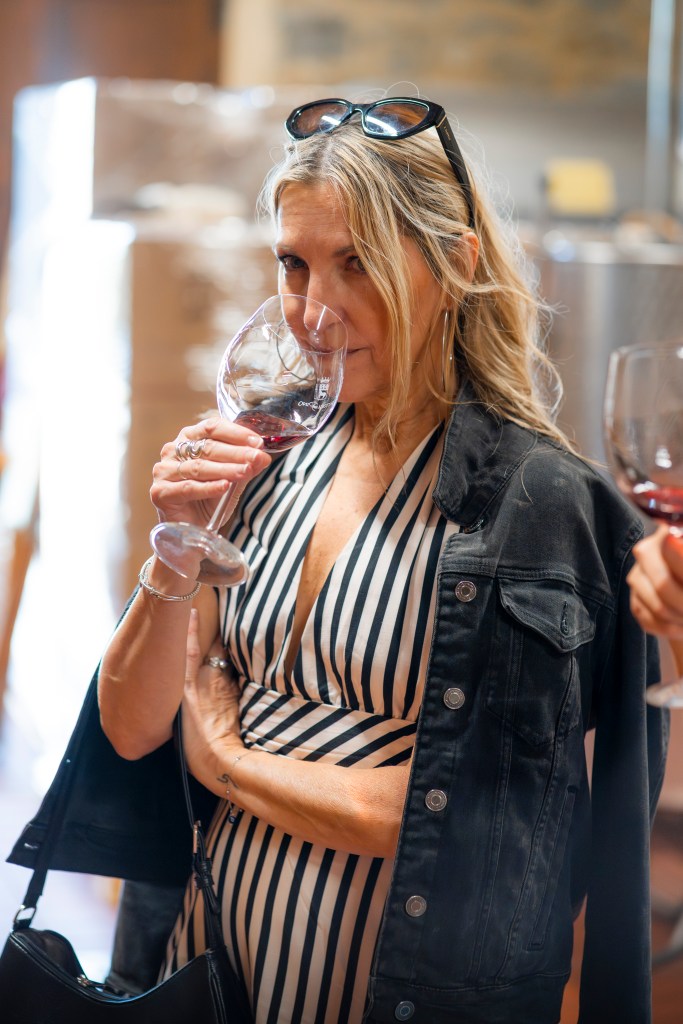
As we tasted from barrel and bottle in her cellar, she shared the philosophy behind her winemaking. Gravity moves the wine naturally through the winery. Stainless steel preserves energy and freshness. Large Slovenian oak barrels gently soften the wine without overpowering it. She believes wine should mature with the rhythm of the seasons. Apart from controlling temperature during fermentation, she allows nature to guide the process.
Her wines ferment spontaneously, remain unfiltered, and are racked under a full moon before aging continues. Every decision feels deeply considered. Every decision feels unmistakably Jessica.
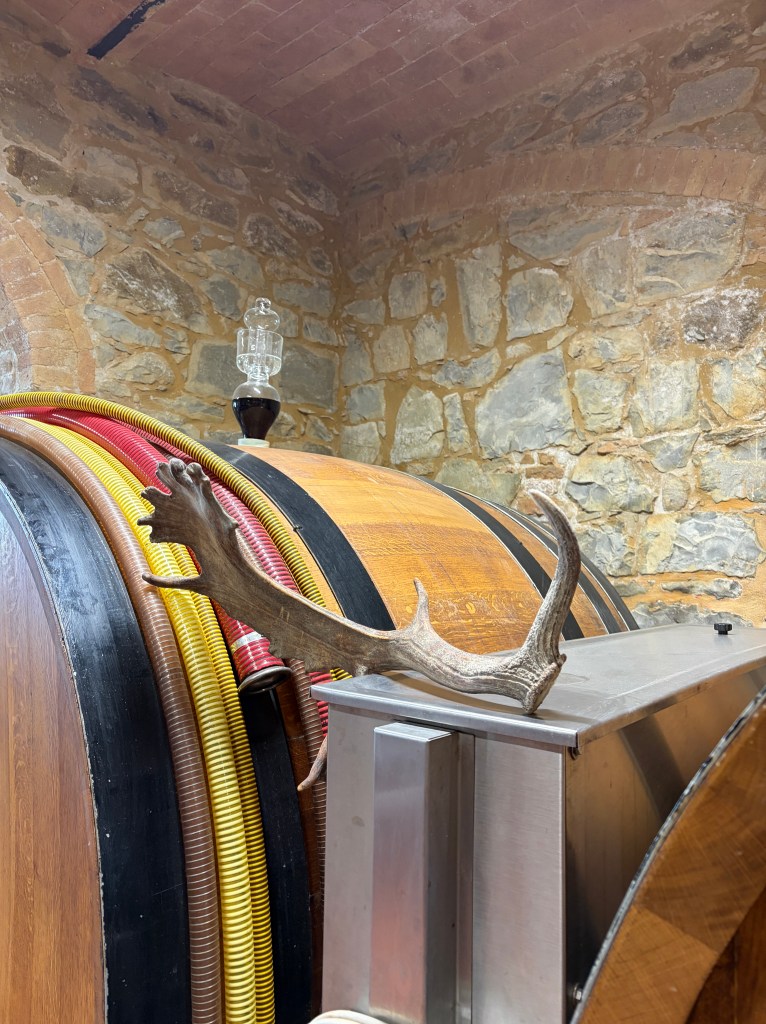
A fun fact was learning that the distinctive barrel tops used in fermentation are thought to be based on a design attributed to Leonardo da Vinci. Whether it’s science, tradition, intuition, or a little bit of magic, Jessica embraces all of it.
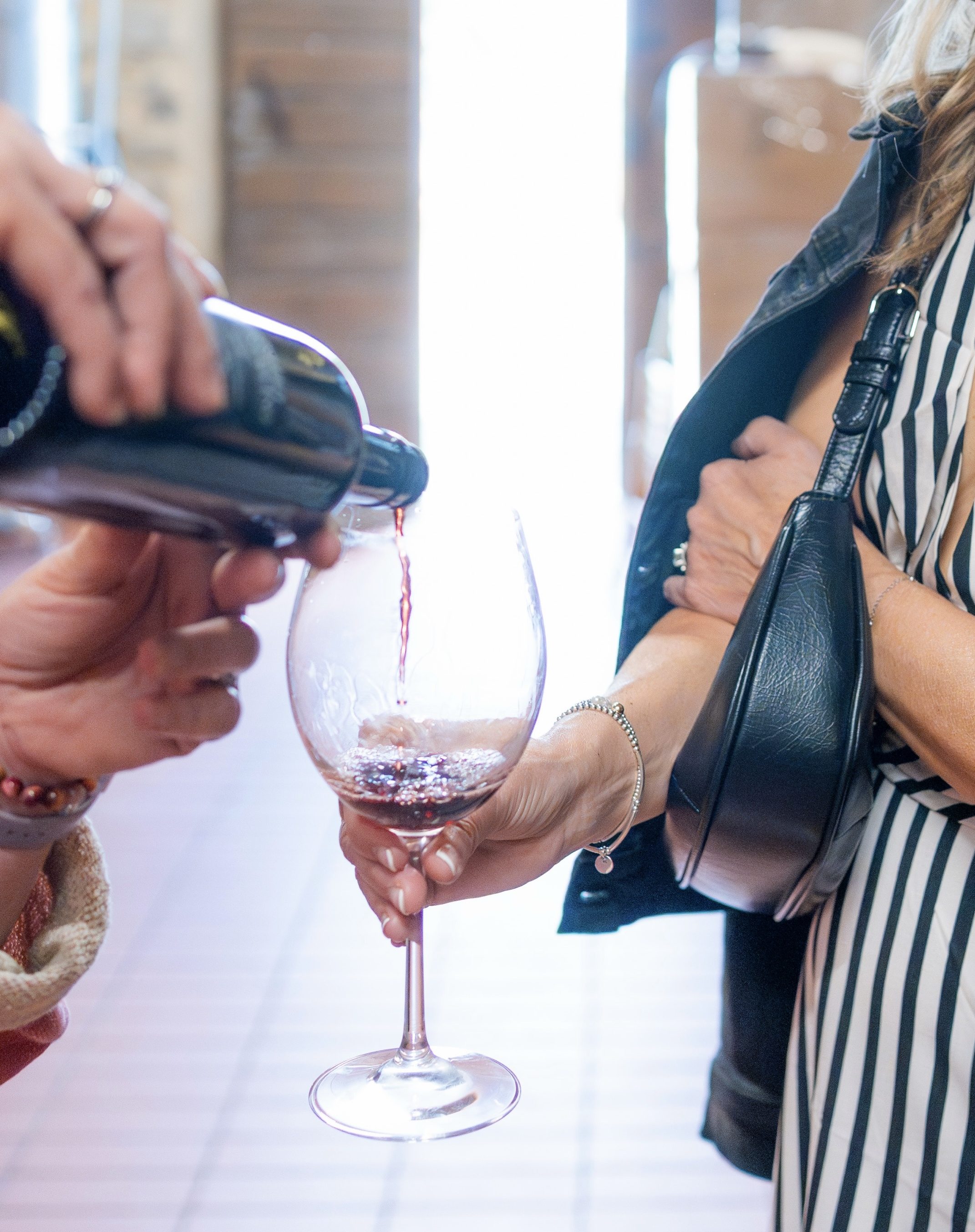
Every sip captures the beauty of Montalcino, but Jessica’s wines express something even more personal.
The Rosso di Montalcino is vibrant and expressive. The Brunello di Montalcino 2020, released only after years of patient aging, is elegant, refined, and remarkably balanced. Nothing feels rushed. Nothing feels manipulated.
These wines are a reflection of the woman who made them — authentic, independent, passionate, and completely devoted to her craft.
It’s easy to undrestand why Fattoria del Pino has earned such a devoted following despite being one of Montalcino’s younger estates. The wines are exceptional. But after meeting Jessica, it’s impossible not to believe that the real magic of a fabulous wine begins long before the bottle is opened.
Castello Di Potentino: An Etruscan Wine Story Written in Stone
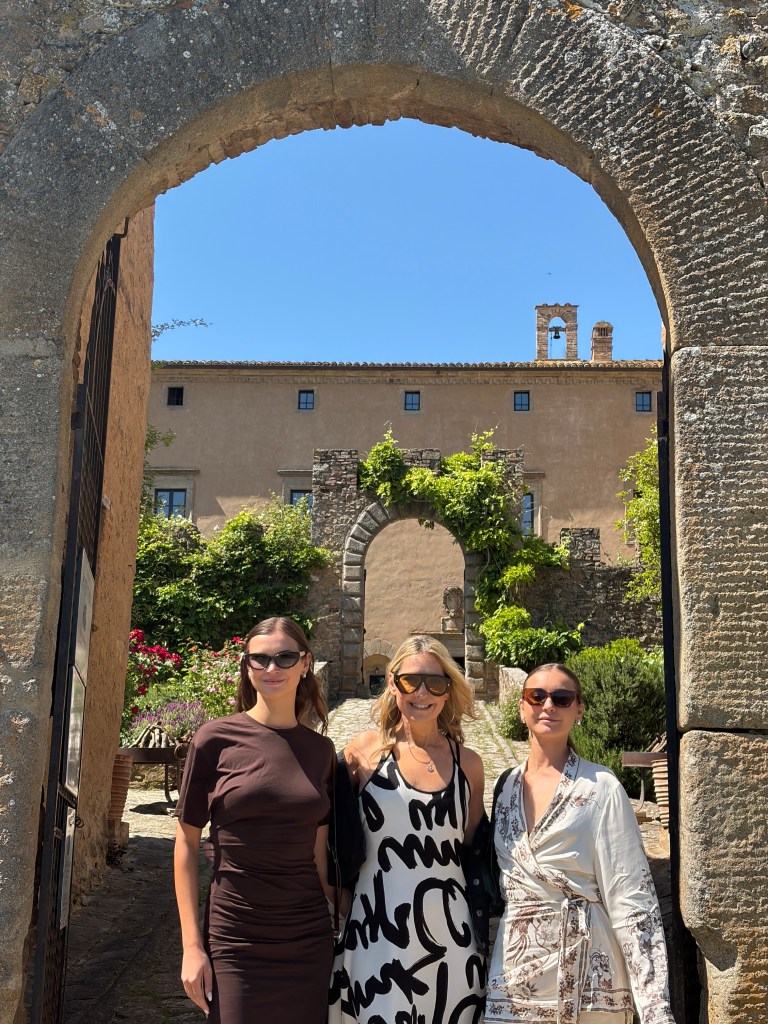
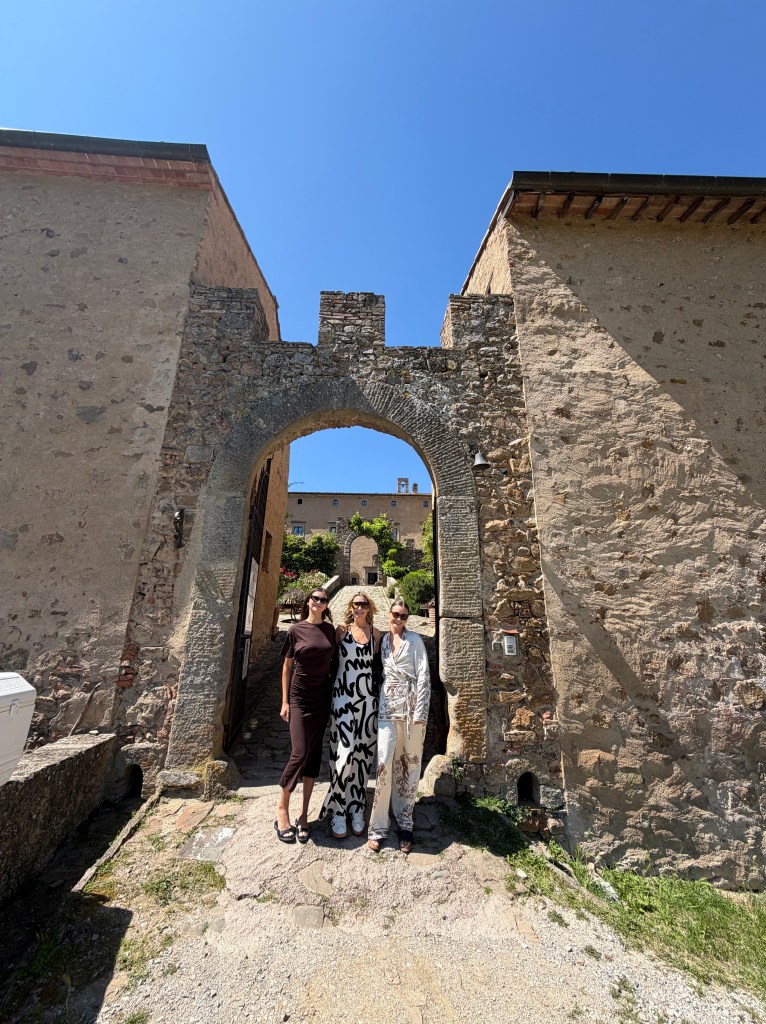
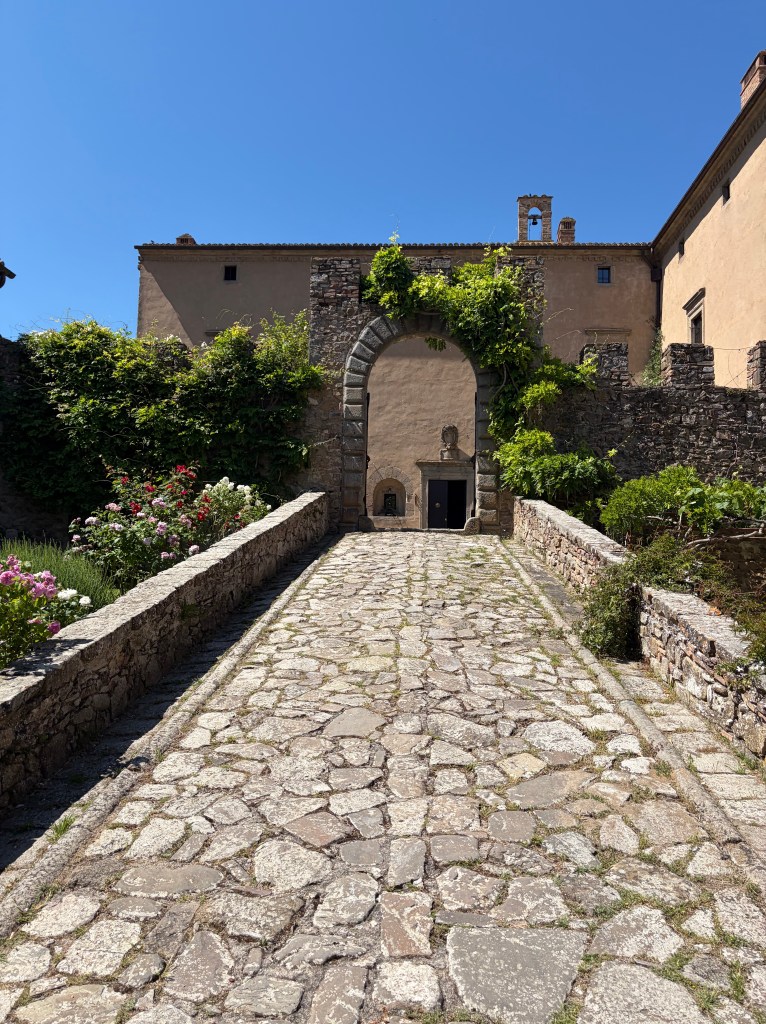
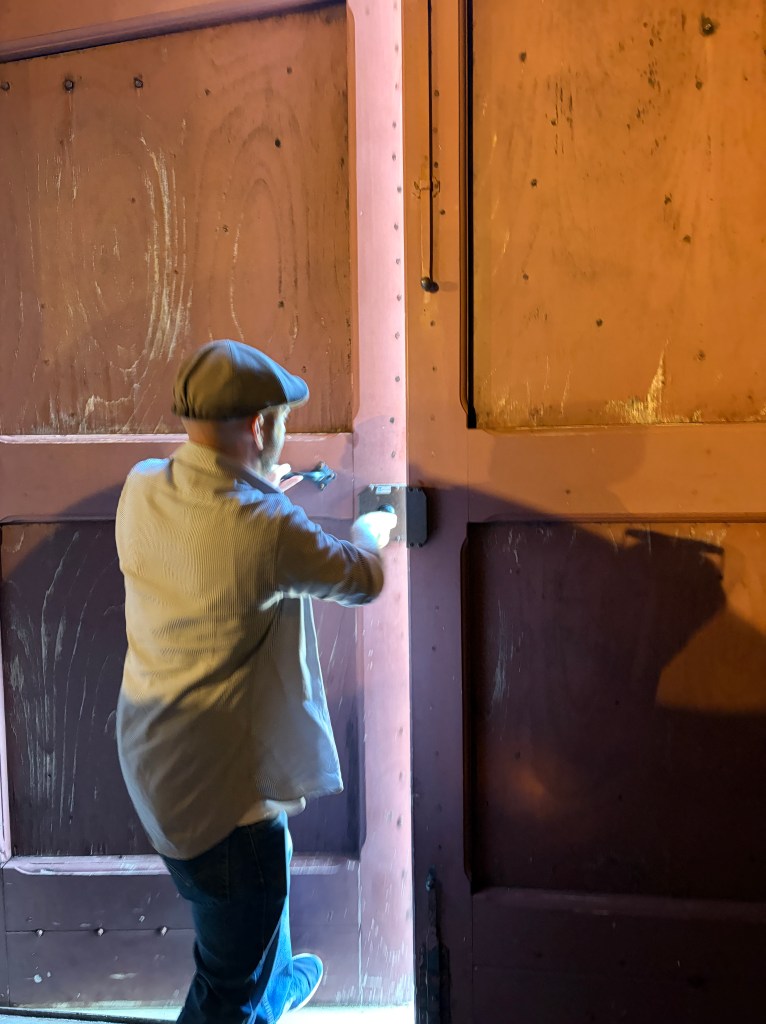
Beyond this ancient archway awaited an afternoon of delightful wines, fascinating stories, and the warm hospitality of Castello Di Potentino.
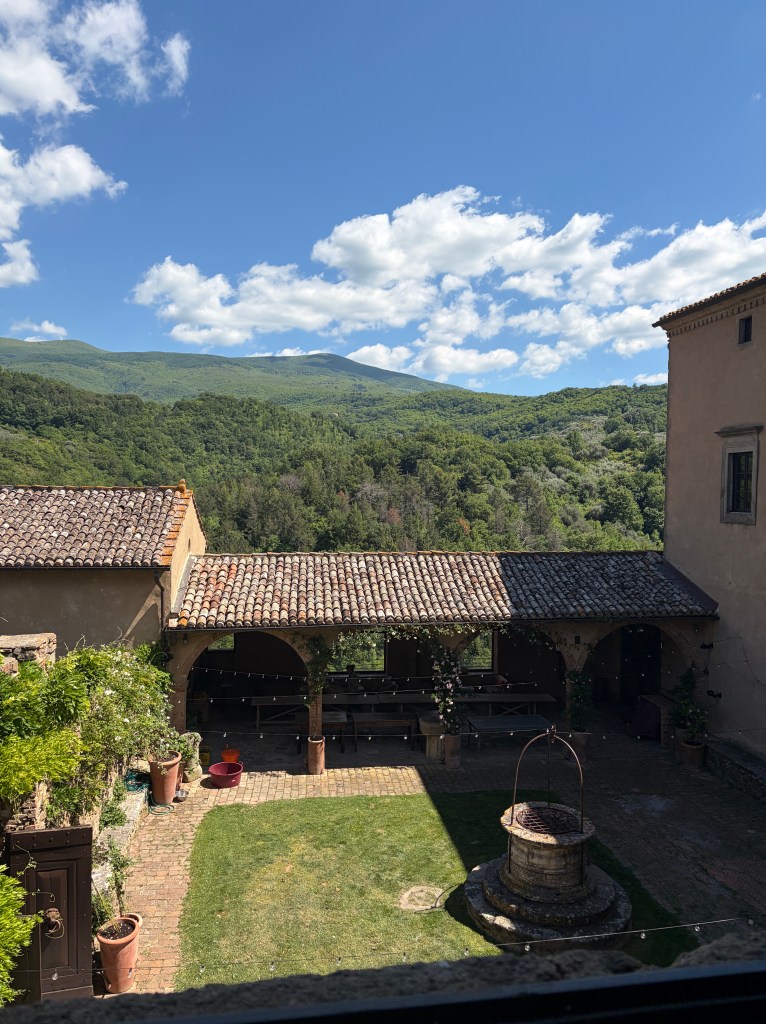
Tucked into one of Tuscany’s lesser-known corners on the slopes of Mount Amiata, Castello di Potentino feels like something from another time. First documented in 1042 but built on even older foundations where the Etruscans — among Italy’s earliest winemakers — chose to settle. This medieval castle rises from a valley known as La Conca d’Oro (the Golden Bowl).
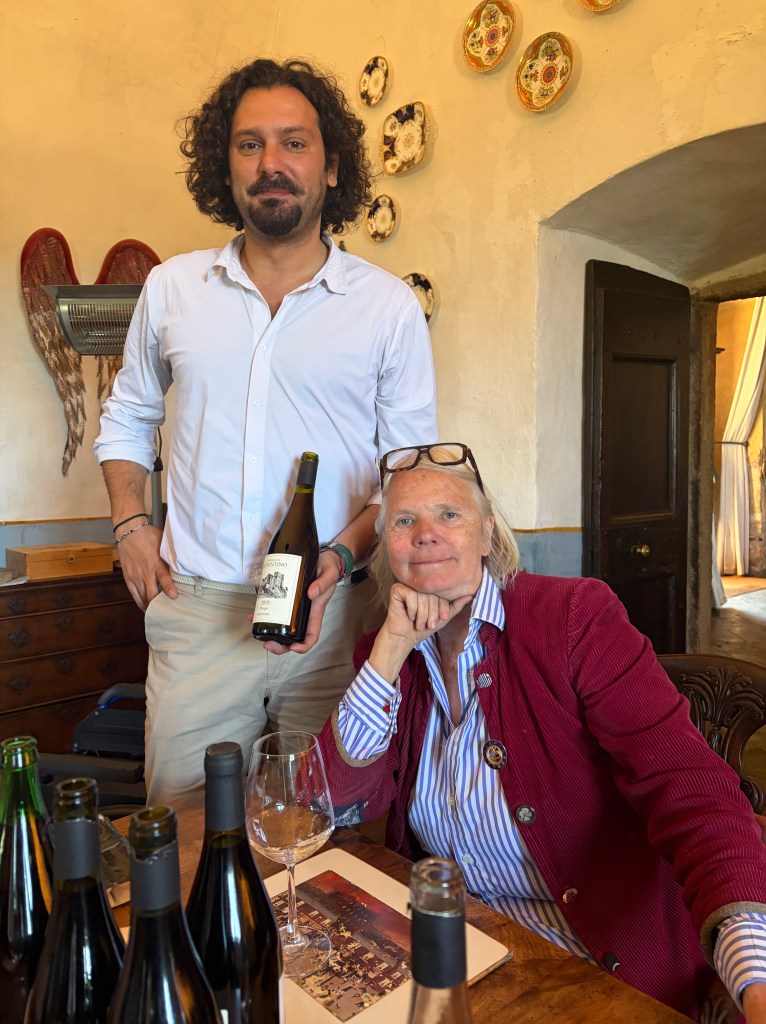
It was here that we met the remarkable Charlotte Horton.
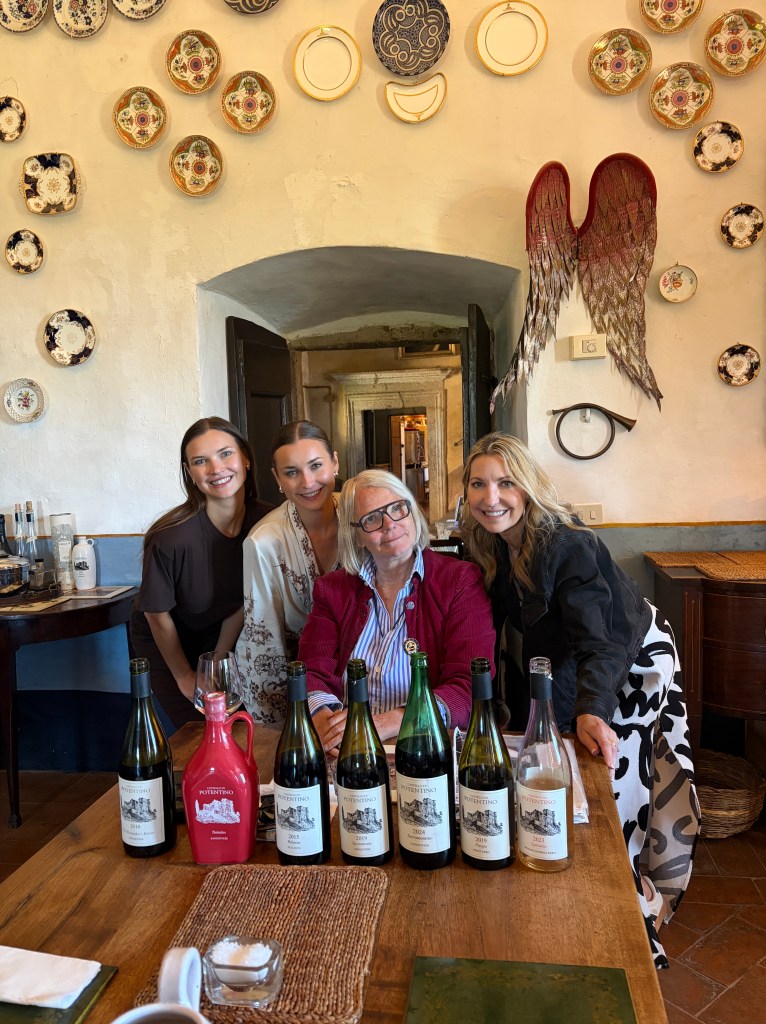
More than a winemaker and head of the castle, Charlotte is a fascinating storyteller, a steward of an extraordinary landscape, and one of its most passionate champions. As we sat inside the ancient castle tasting her wines, she effortlessly wove together geology, history, philosophy, biodiversity, and winemaking into one captivating conversation.
Her philosophy is beautifully simple: great wine begins long before the bottle. The winemaker’s role isn’t to impose a style, but to listen to the place — the vineyard, the climate, the soil, and the grapes — and allow them to tell their own story.
And nowhere has a more compelling story to tell than Mount Amiata.
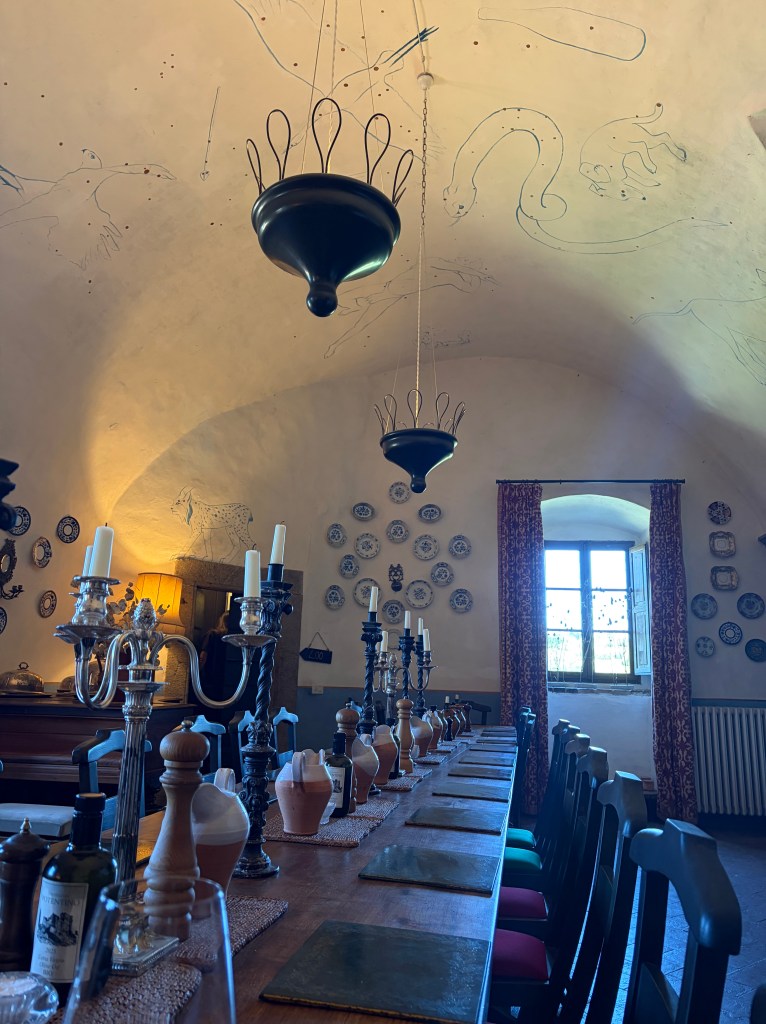
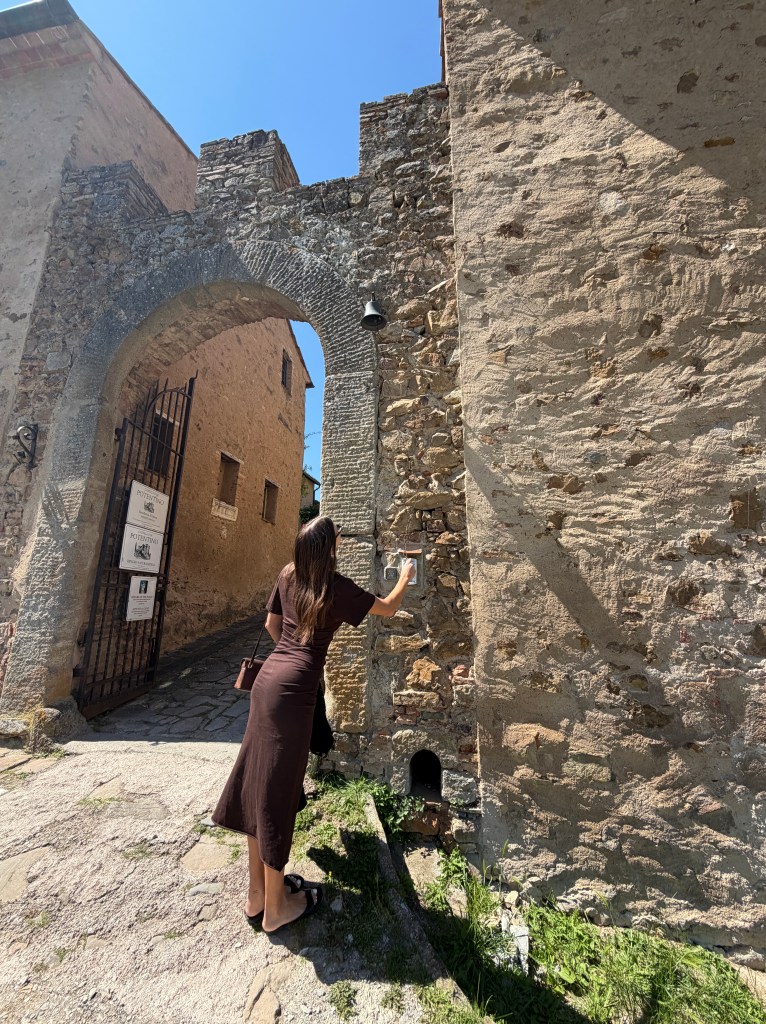
In the shadow of Mount Amiata.
An extinct volcano that last erupted hundreds of thousands of years ago, Amiata left behind mineral-rich volcanic soils that continue to shape everything growing in its shadow. Today this valley remains one of Tuscany’s rare pockets of biodiversity. Charlotte spoke passionately about protecting this ecosystem, allowing nature to remain an active collaborator in every vintage.
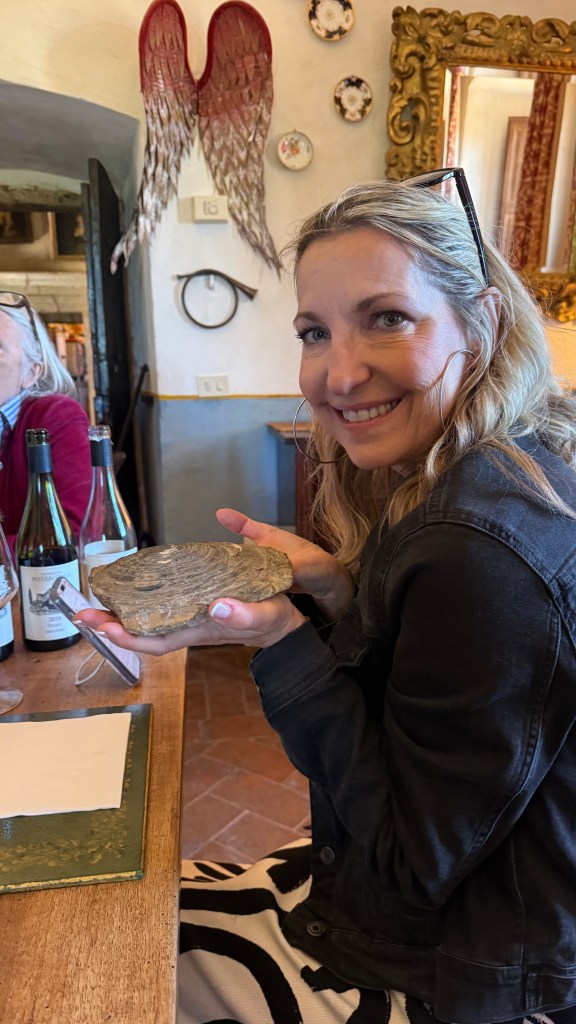
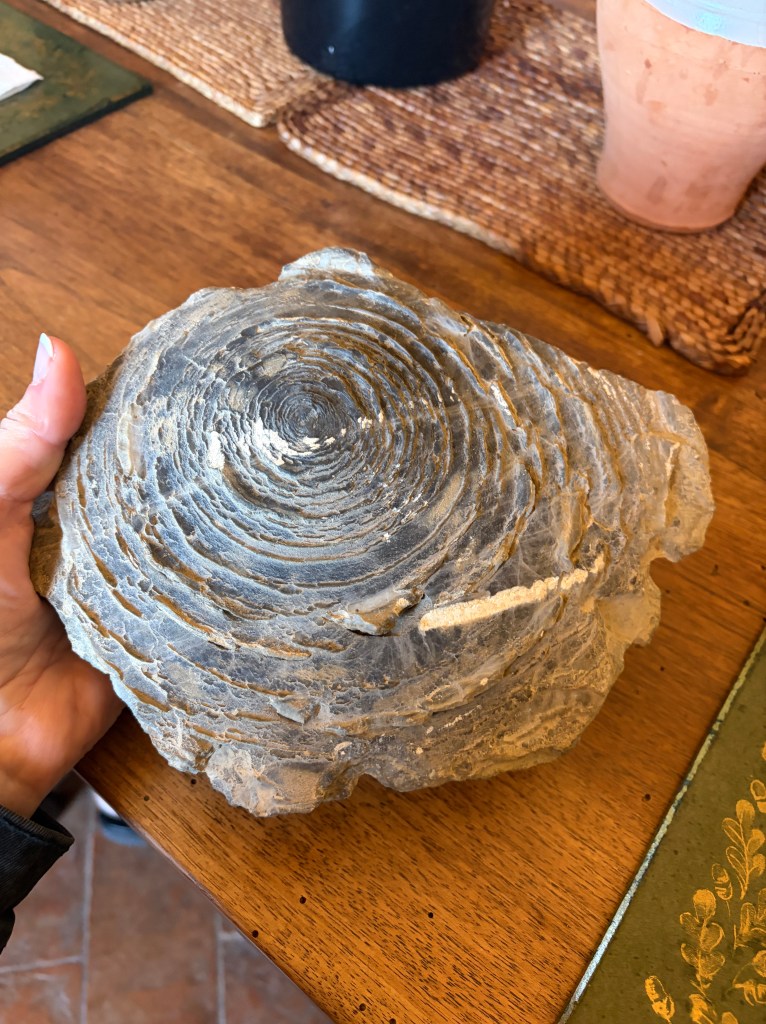
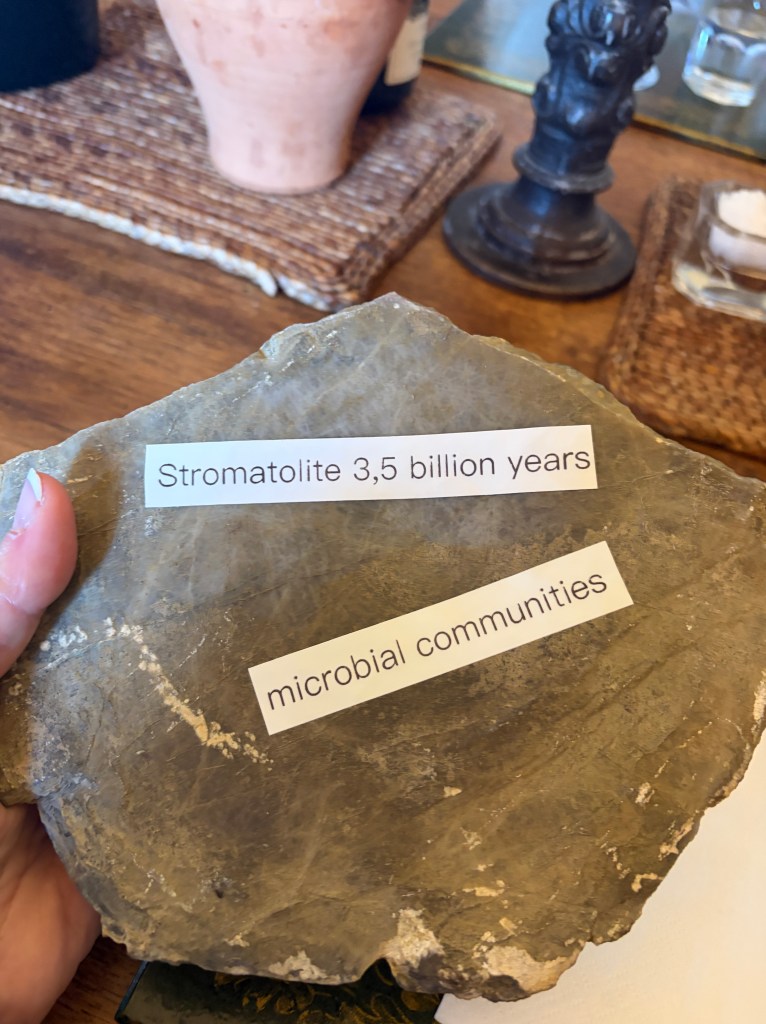
Even the stones have stories to tell.
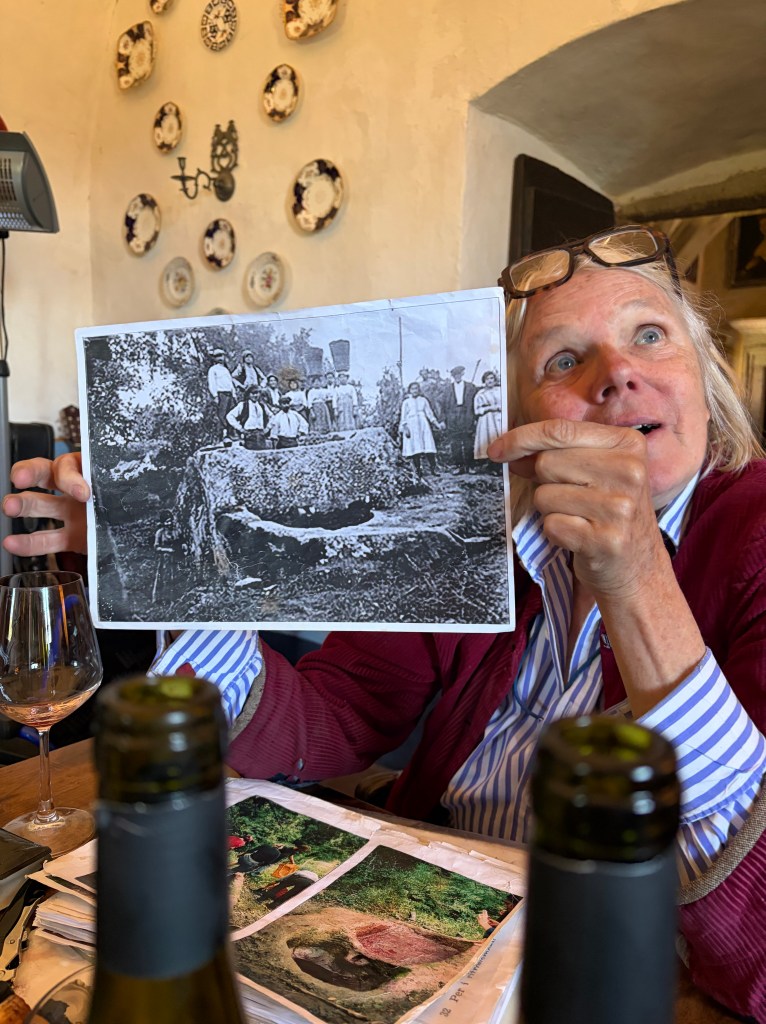
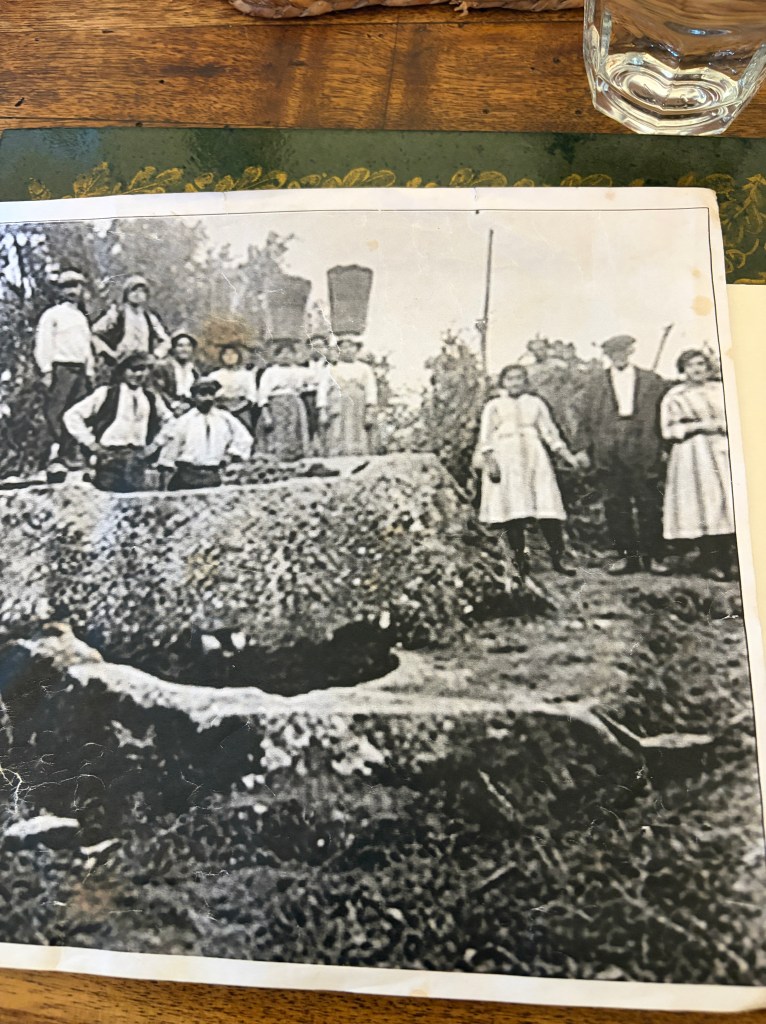
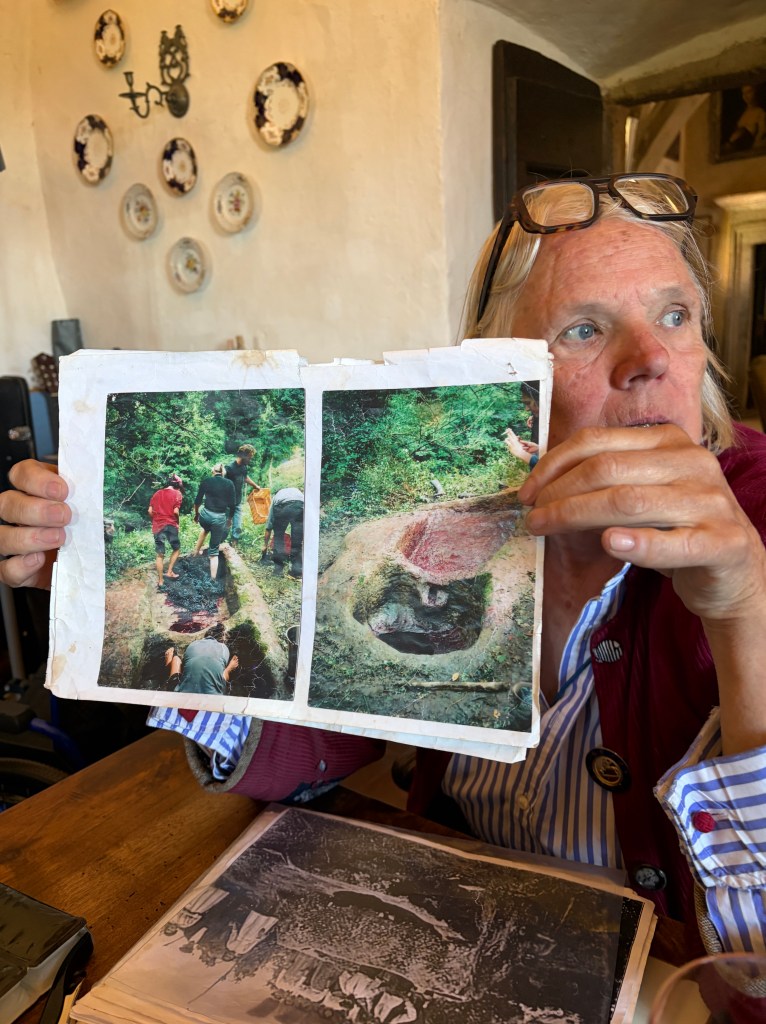
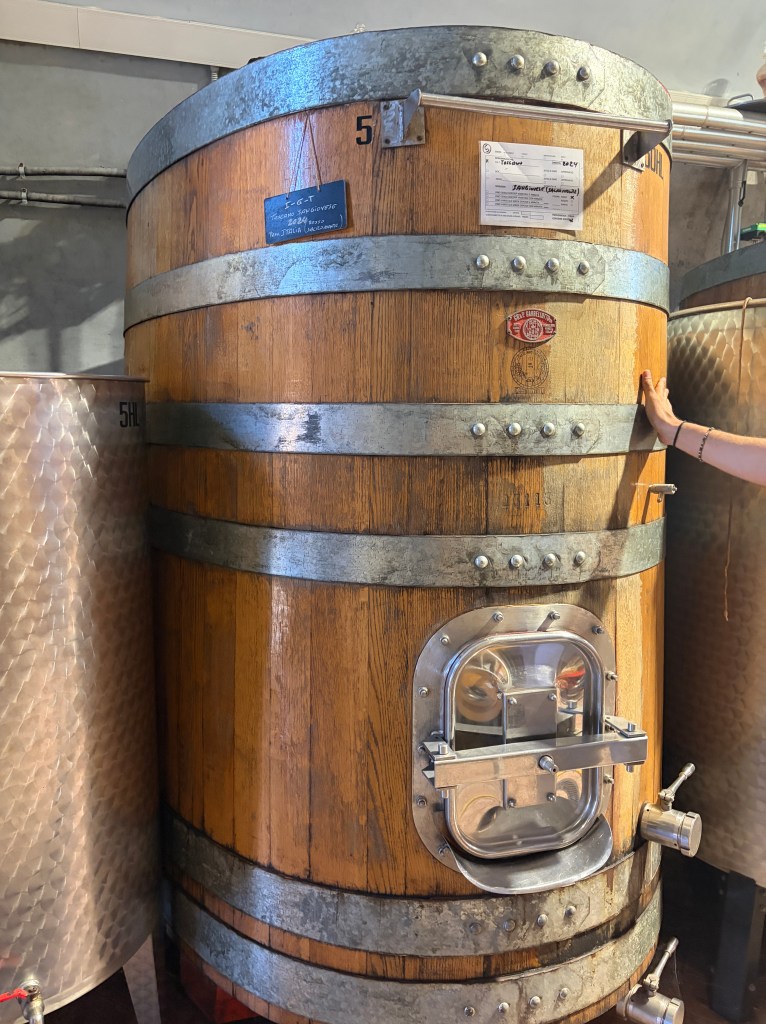
One of the things that makes Potentino so unique is its ancient stone winemaking heritage. Long before stainless steel tanks and modern wineries, grapes here were fermented in carved volcanic stone basins — an extraordinary Etruscan tradition found in very few places in the world.
Those same stones share the landscape with something even more astonishing: stromatolite fossils dating back an estimated 3.5 billion years, among the oldest known evidence of life on Earth.
At Potentino, history isn’t tucked away in a museum. It’s literally beneath your feet. Every layer of the landscape feels like another chapter waiting to be discovered.
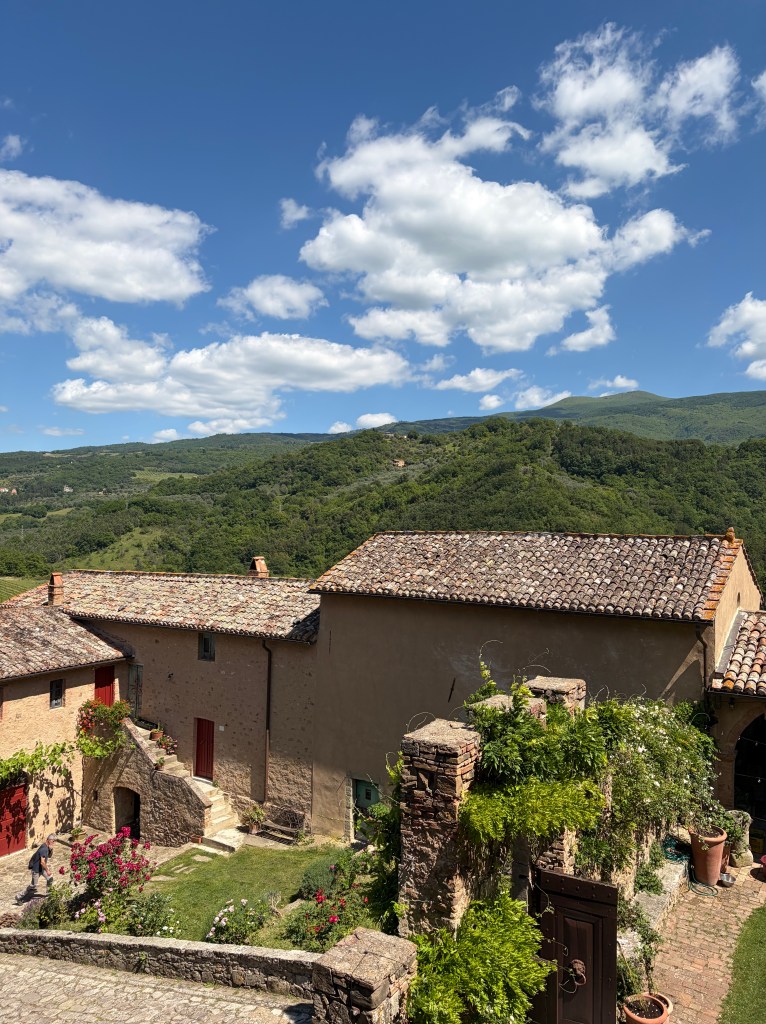
The wines reflect that same sense of place. Varieties like Pinot Nero, Sangiovese and Alicante (Grenache) flourish side by side in one small vineyard.
Rather than blending varieties, Charlotte showcases each grape on its own, using natural yeasts and minimal intervention so every bottle becomes an honest expression of both variety and vintage, not of oak or technique. As Charlotte put it, the wines are all about showing off the plants and what they’re capable of in this magical valley. This extraordinary terroir gives the wines freshness, energy, and balance.
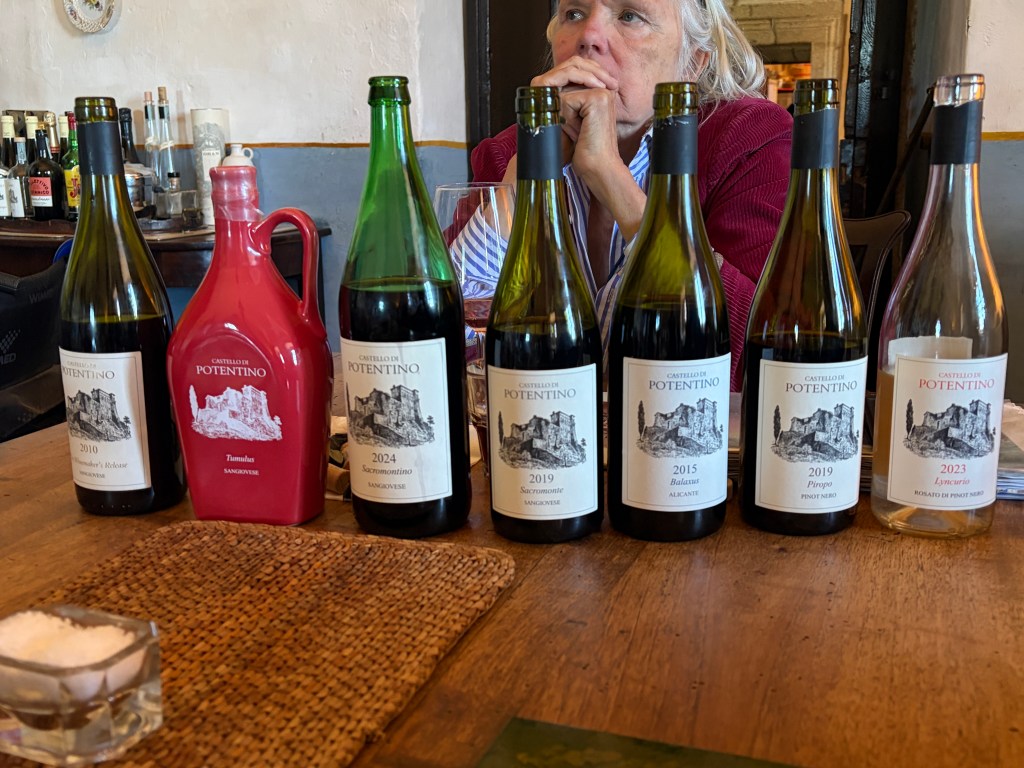
We sipped our way through a beautifully curated lineup of wines, and every one seemed to reveal another piece of the valley.
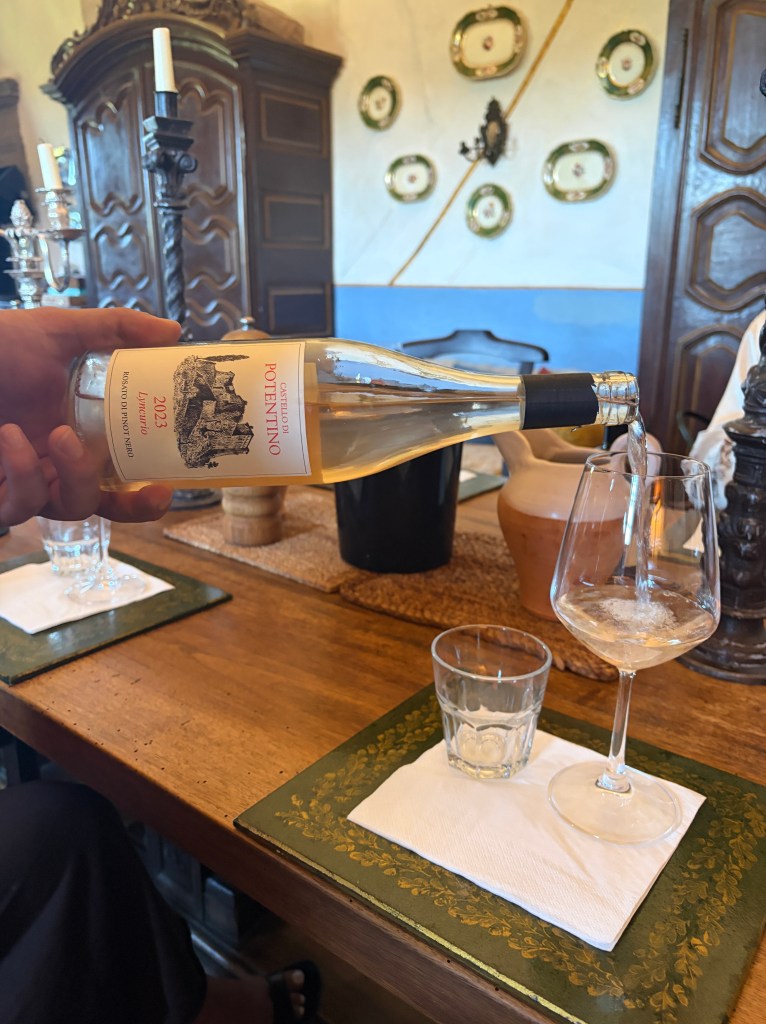
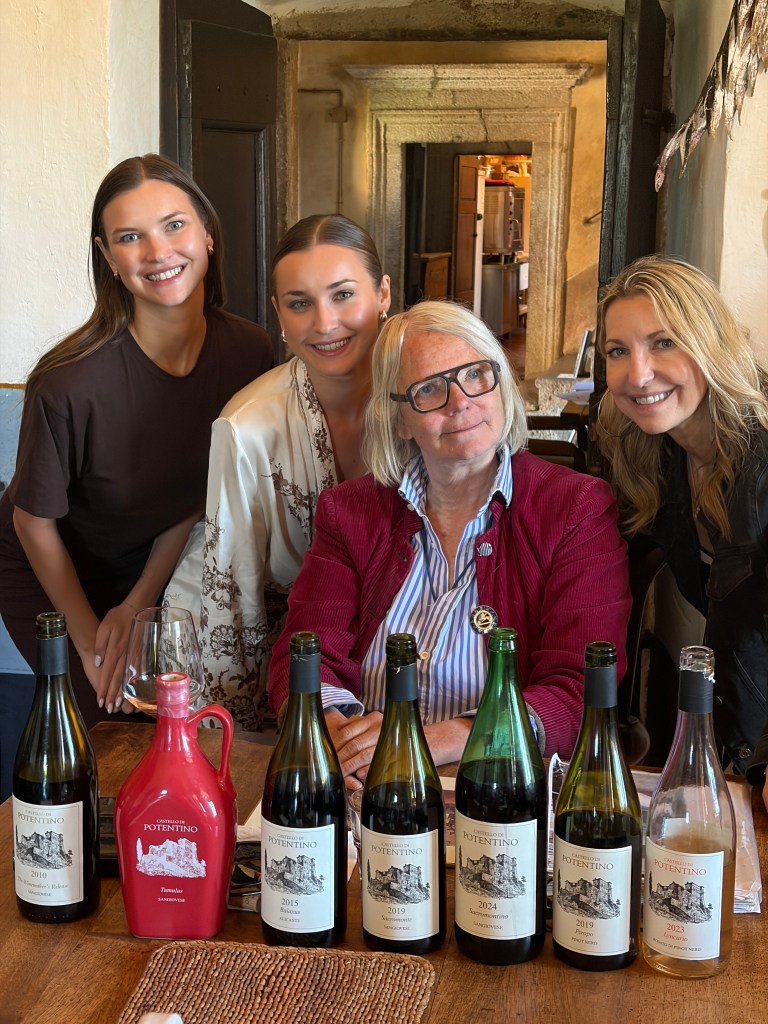
A 2023 Lyncurio Rosato Di Pinot Nero, vinified as a white wine, surprised us with delicate fruit, fresh-cut hay, almonds and a slightly salty (marine) finish. Charlotte described this wine as “bubbly without the bubbles,” and somehow that made perfect sense.
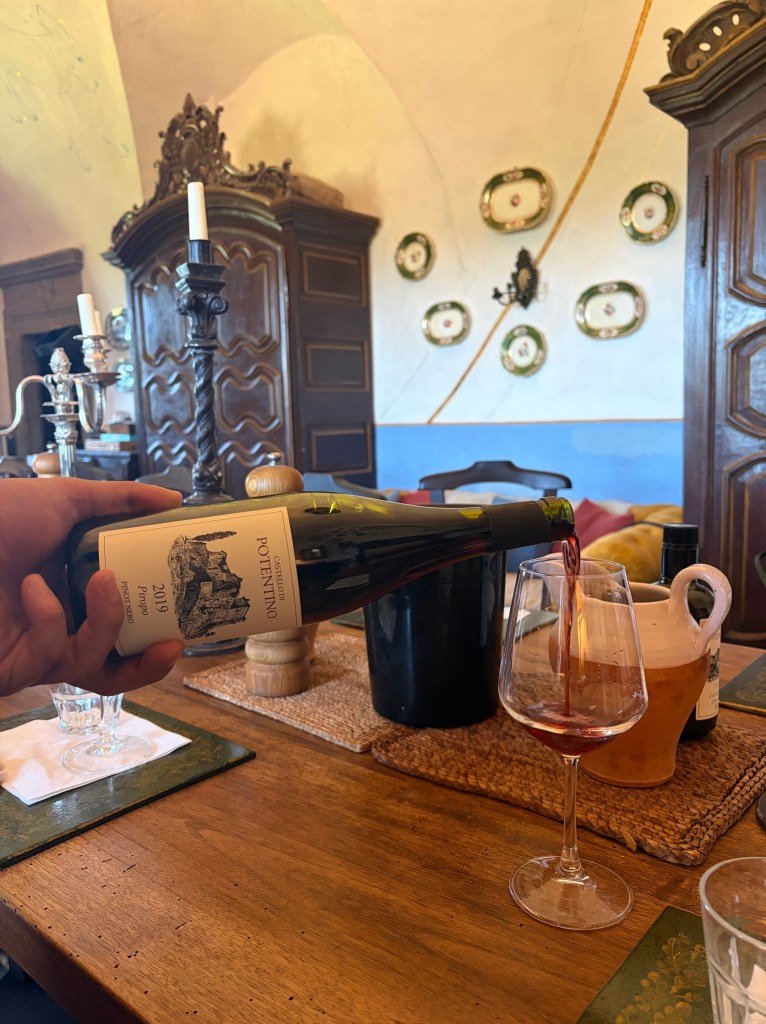
The 2019 Piropo Pinot Nero was equally captivating. It’s name represents a rare type of garnet that was used as a poetic metaphor for wine from Tuscany by Renaissance writers. Rather than describing it with traditional tasting language, Charlotte reached for geometry instead — a triangle with a spinning circle.
“Kaleidoscopic.”
It was the perfect description. Her wines don’t sit still. They evolve in the glass, revealing new colours and layers with every sip.
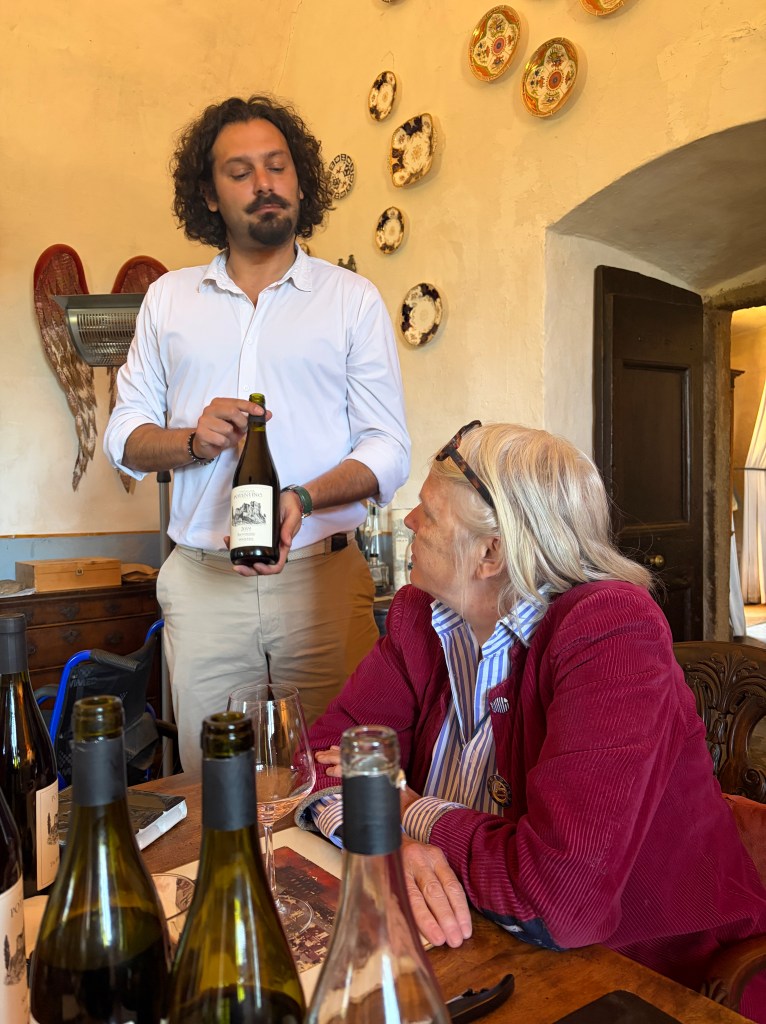
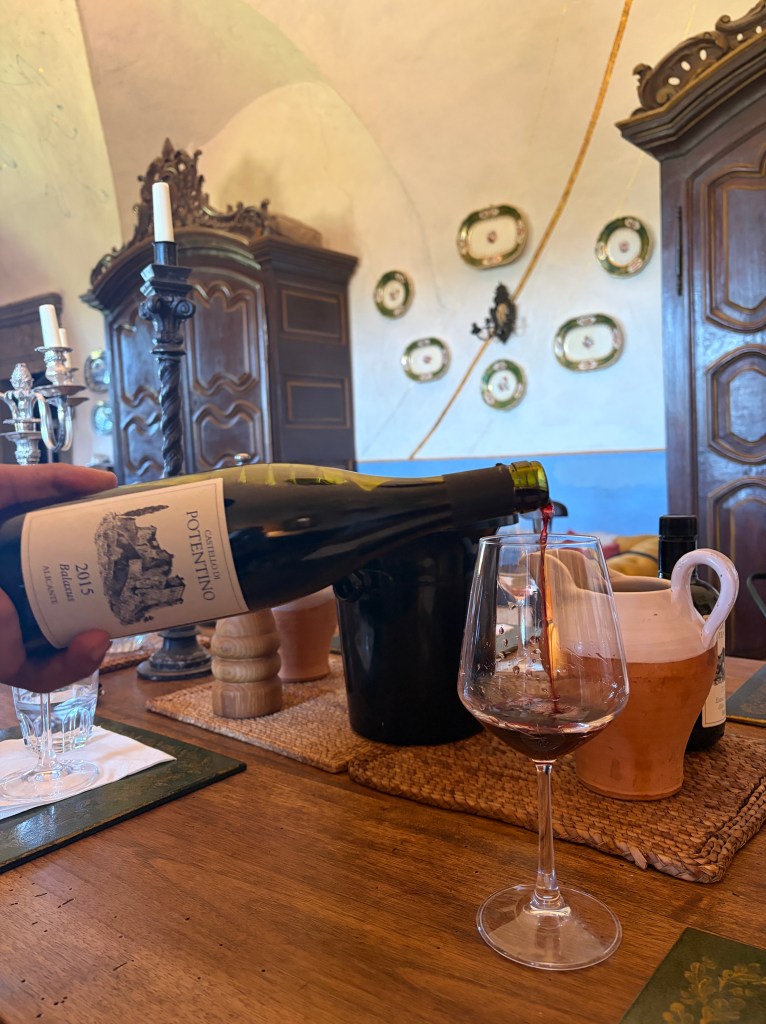
A beautifully aged 2015 Balaxus Alicante (Grenache) shows how gracefully wines from this hidden valley can evolve, offering elegant layers of dark fruit, tea leaves and gentle spice. I had a feeling it would be one of my favourites, and sharing that bottle with Charlotte made it more memorable.
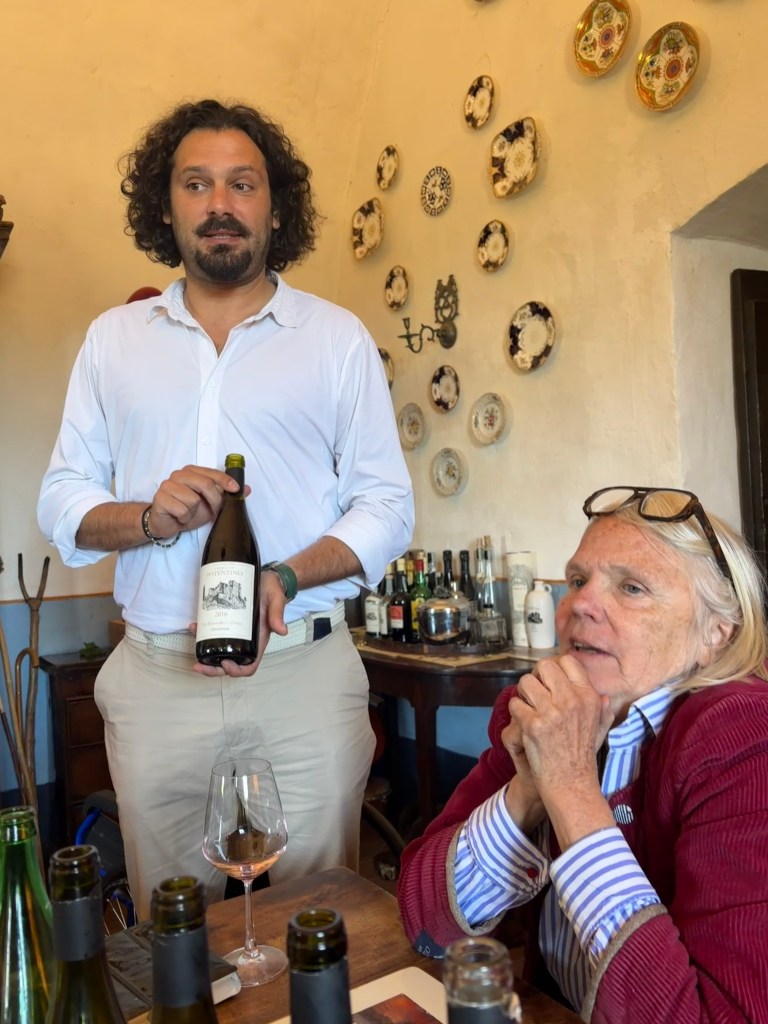
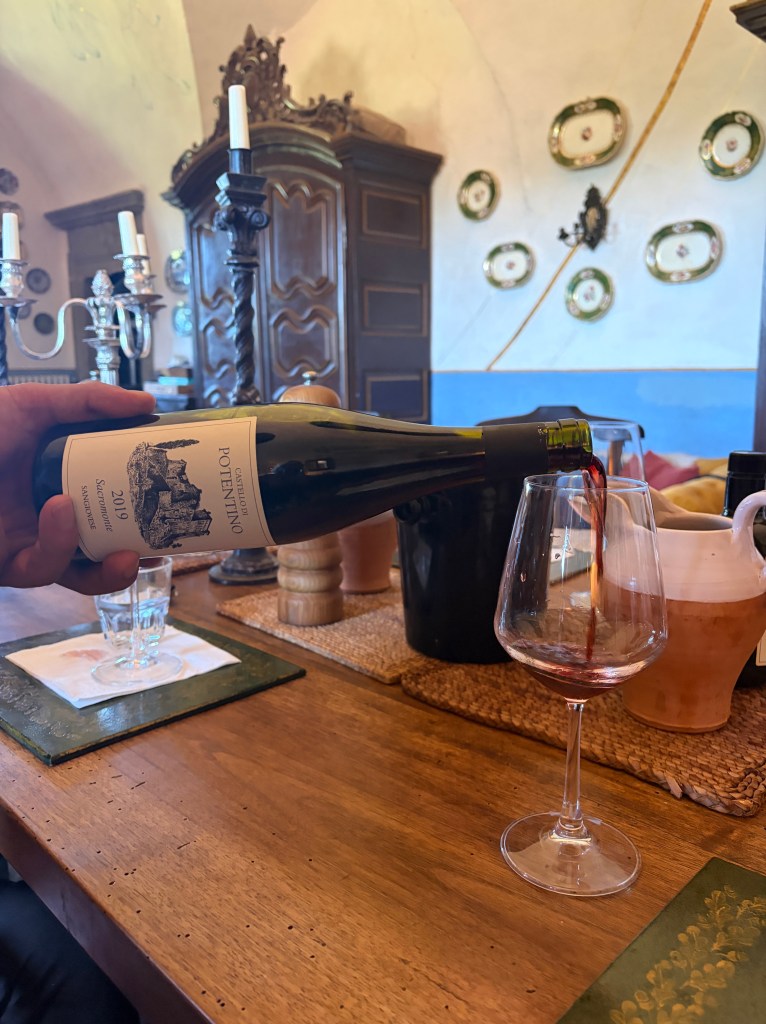
Then came four dramatically different expressions of Sangiovese.
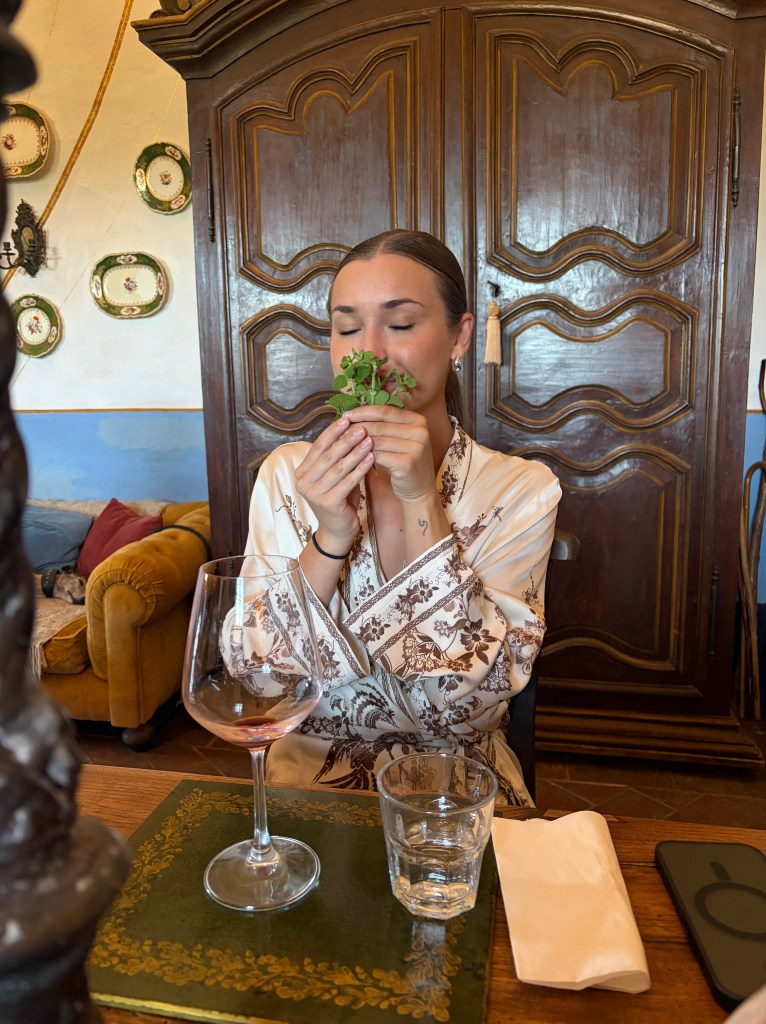
The elegant Sacromonte Ross di Sangiovese 2019 is a nod to Mount Amiata, the Sacred Mountain of the Etruscans, and beautifully expresses the volcanic soils that surround the castle. Elegant, floral, mineral and full of Mediterranean herbs like the unmistakable aroma of nepitella (mentuccia) — a uniquely magical Tuscan herb whose minty, earthy, balsamic character seemed to capture the surrounding hillsides in a glass.
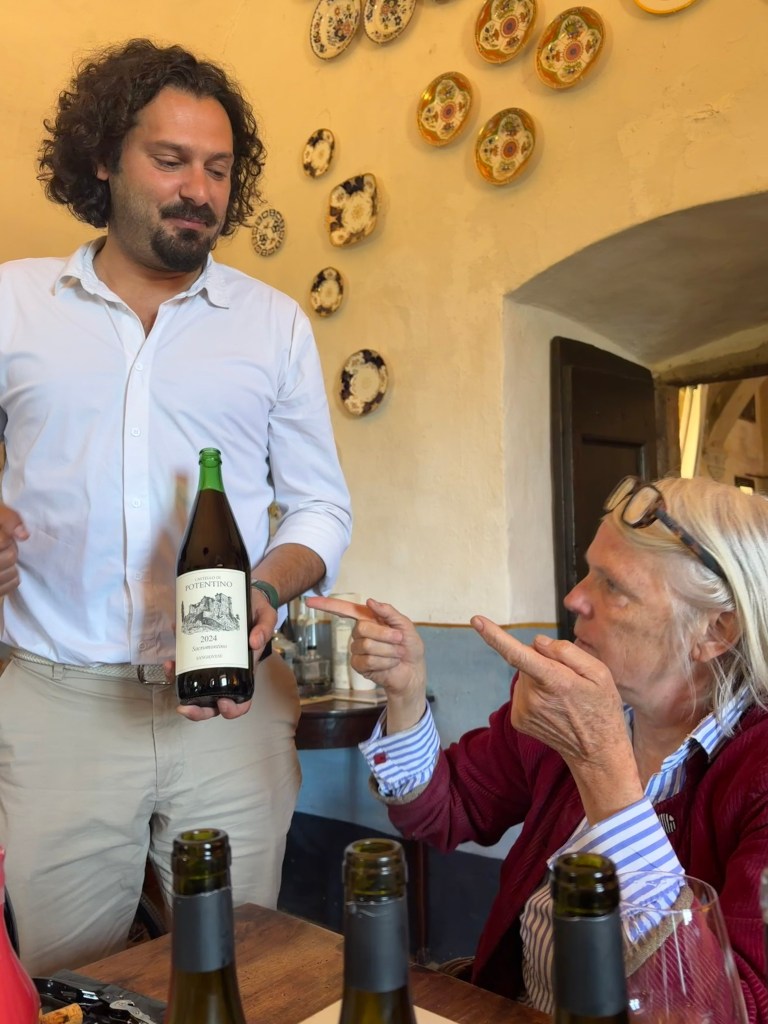
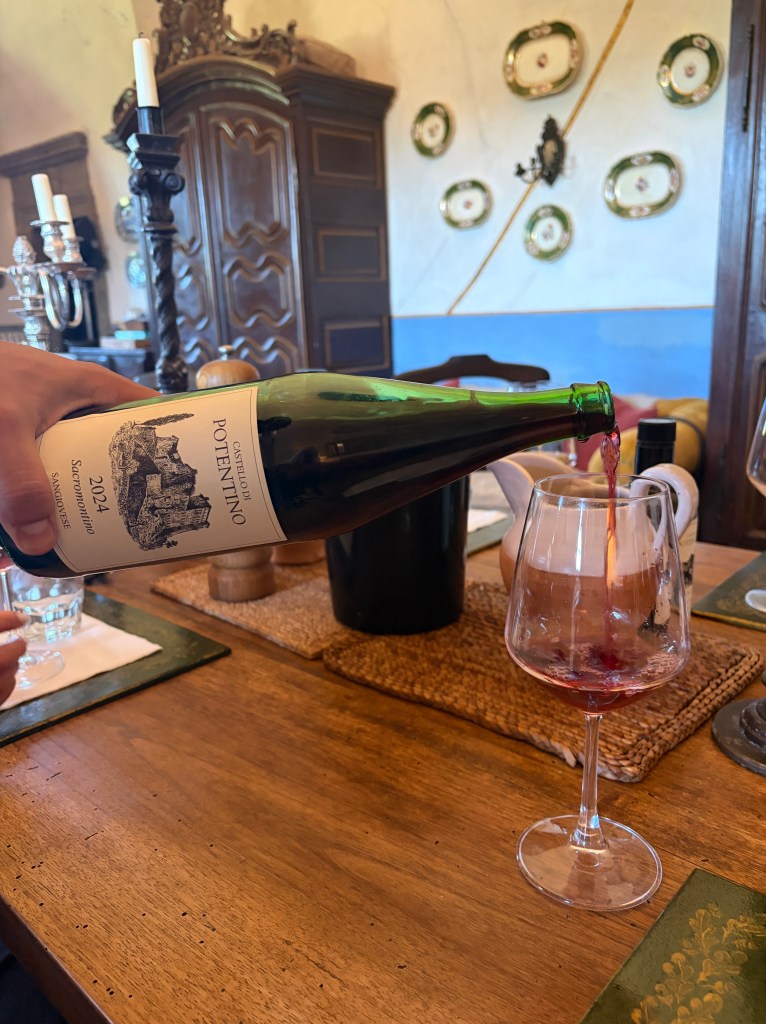
The next wine, a Sacromontino Sangiovese, Charlotte’s playful, youthful take on Sangiovese. Light, fresh and bottled with a crown cap, it celebrates the humble Italian house wines once made by grandfathers for family tables. It happily ignores convention, pushing boundaries and is all the more charming because of it.
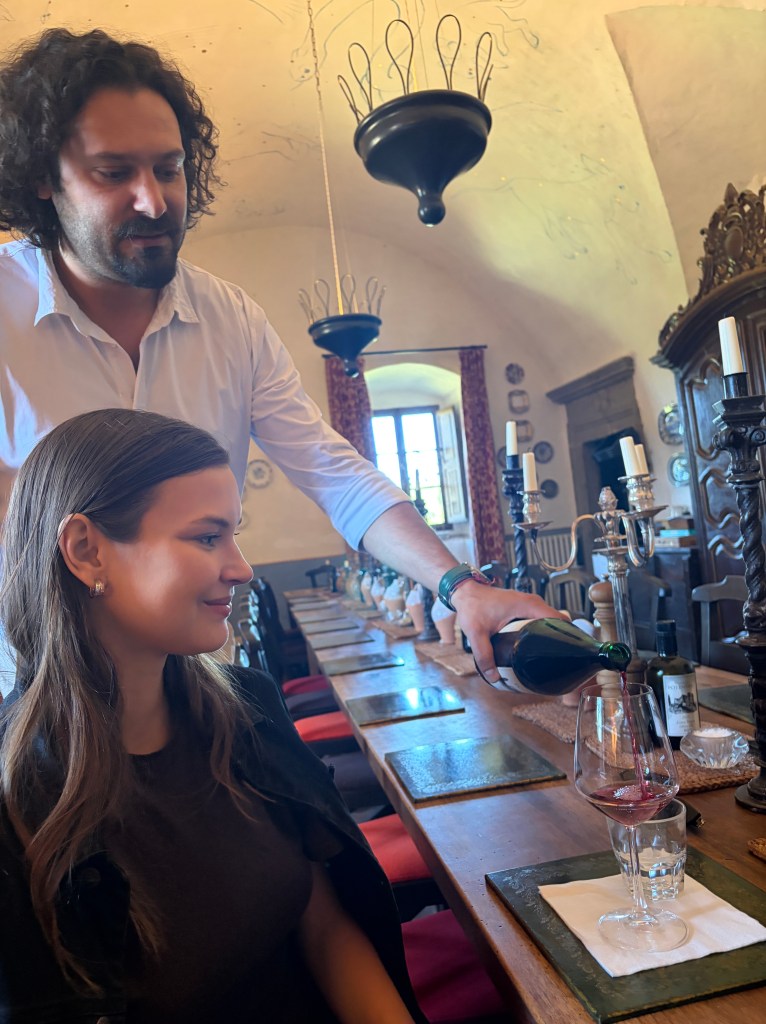
Then became perhaps the most unforgettable wine of the afternoon. Charlotte introduced it with three words: “Grapes. Feet. Stone.” Now that’s how you begin a wine story.
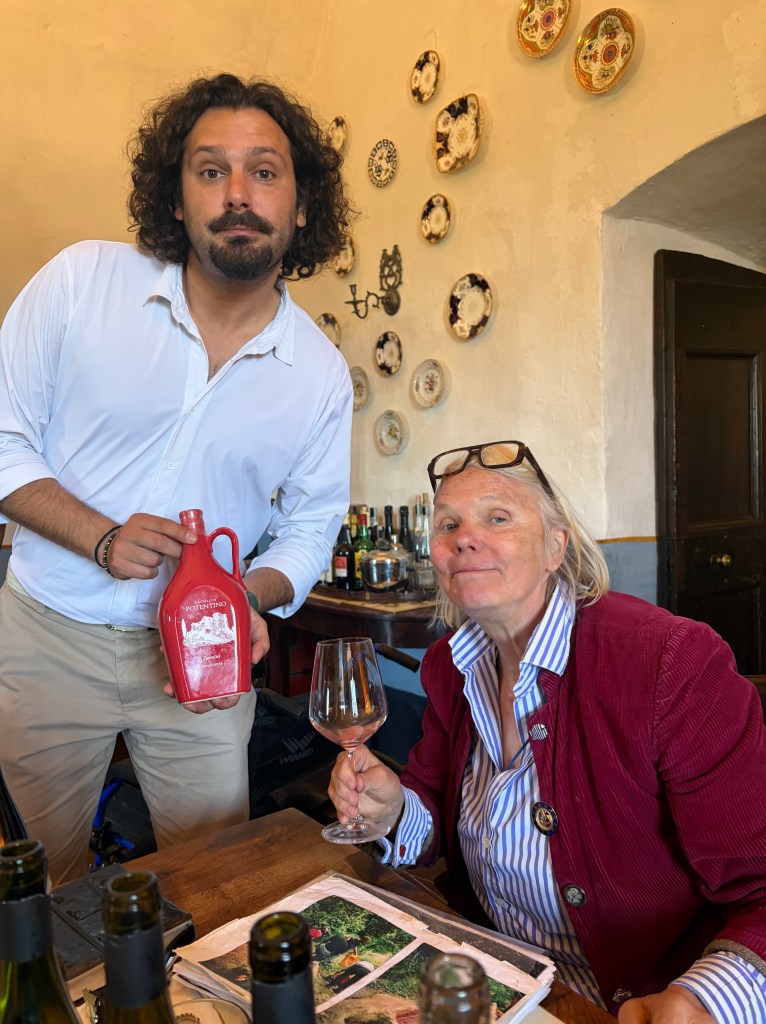
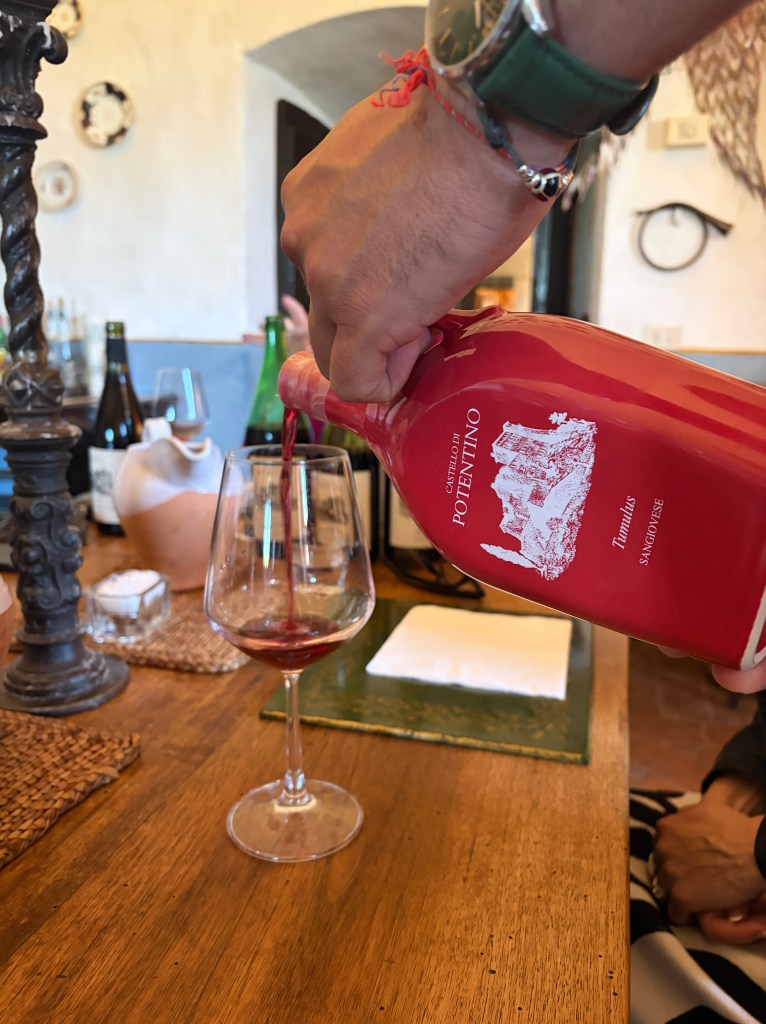
Tumulus, the Etruscan wine, is a Sangiovese unlike any other. As far as anyone knows, it’s the only wine in the world currently made in ancient volcanic wine stone-basins (called ‘pestarole’ or ‘palmenti’) found in Potentino. Inspired by the Etruscans, the grapes are crushed by foot before fermenting in the same wine stone basins used to make wine more than 2,500 years ago. The stone itself influences the wine enormously as part of the winemaking process. Minimal intervention, native yeasts and centuries-old tradition combine to create a wine that refuses to follow modern rules.
Charlotte affectionately describes this super natural wine as a wine that simply is what it is — alive, unpredictable, and completely itself. And because following convention isn’t really Potentino’s style, it’s bottled in a bright red ceramic jug.
My daughter summed it up a little differently.
“This wine rocks.”
Honestly… she wasn’t wrong.
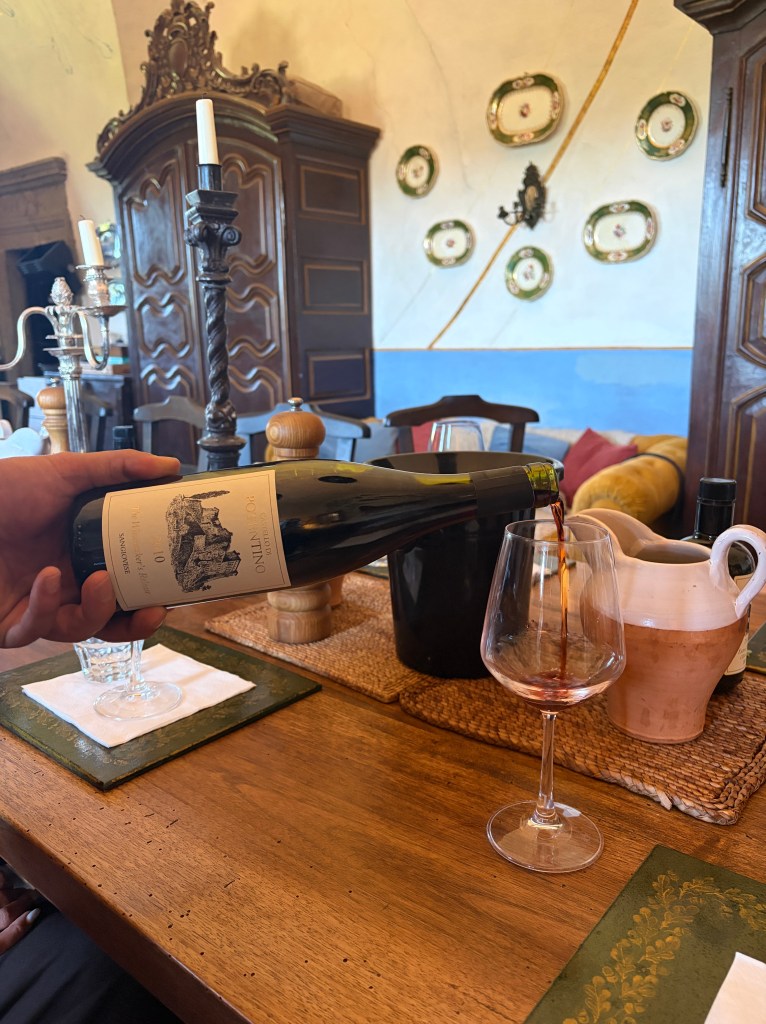
Our final wine was a rare treat: the The Winemaker’s Release — a 2010 Sangiovese that had already spent three years in wood before quietly evolving for another 13 years in bottle.
Its amber brown colour hinted at the journey it had taken. Charlotte pointed out its “rail tracks” of tannin — a beautifully structured wine she declared was simply waiting for a great steak.
The Winemaker’s Release is produced only in excellent vintages and remains tucked away in the Potentino cellars until Charlotte decides it has reached the right moment of evolution. The wine is a celebration of the mysterious processes that occur as time quietly works its magic inside the bottle after the barrel.
As the tasting unfolded, Charlotte shared what became one of my favourite concepts from the entire trip: the future memory of taste.
Winemaking, she explained, is an act of imagination. Every decision, from the vineyard to the cellar, is made while envisioning a flavour that won’t exist for years.
In that sense, she said, making wine isn’t so different from composing music or writing poetry. It’s a kind of liquid storytelling.
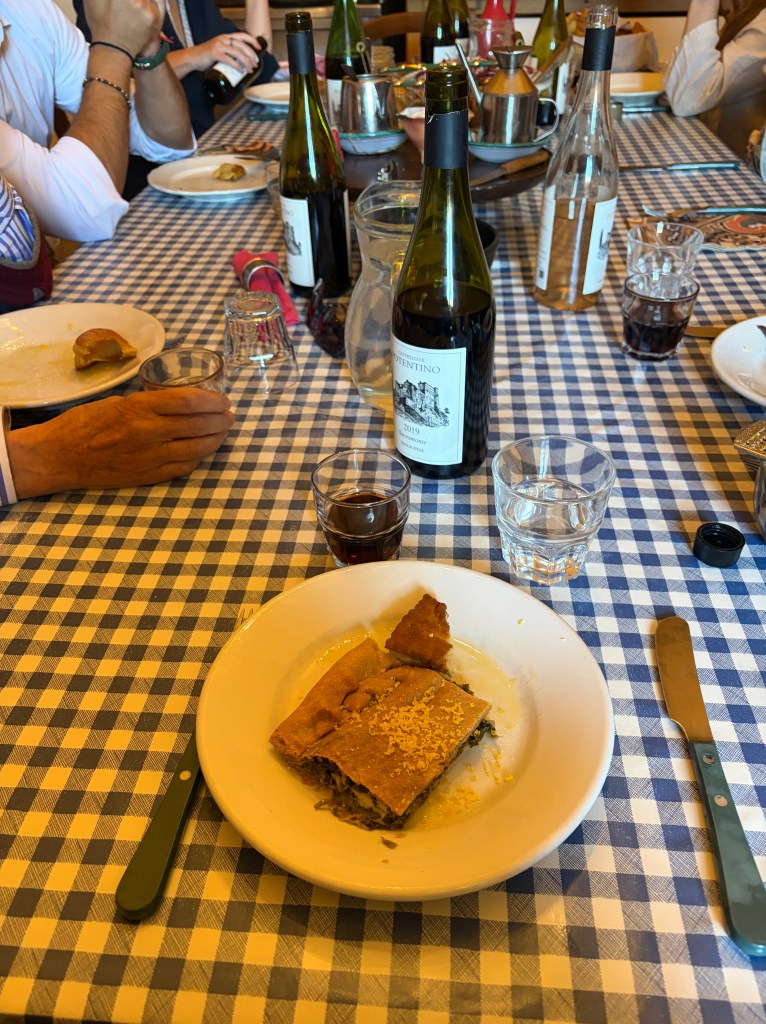
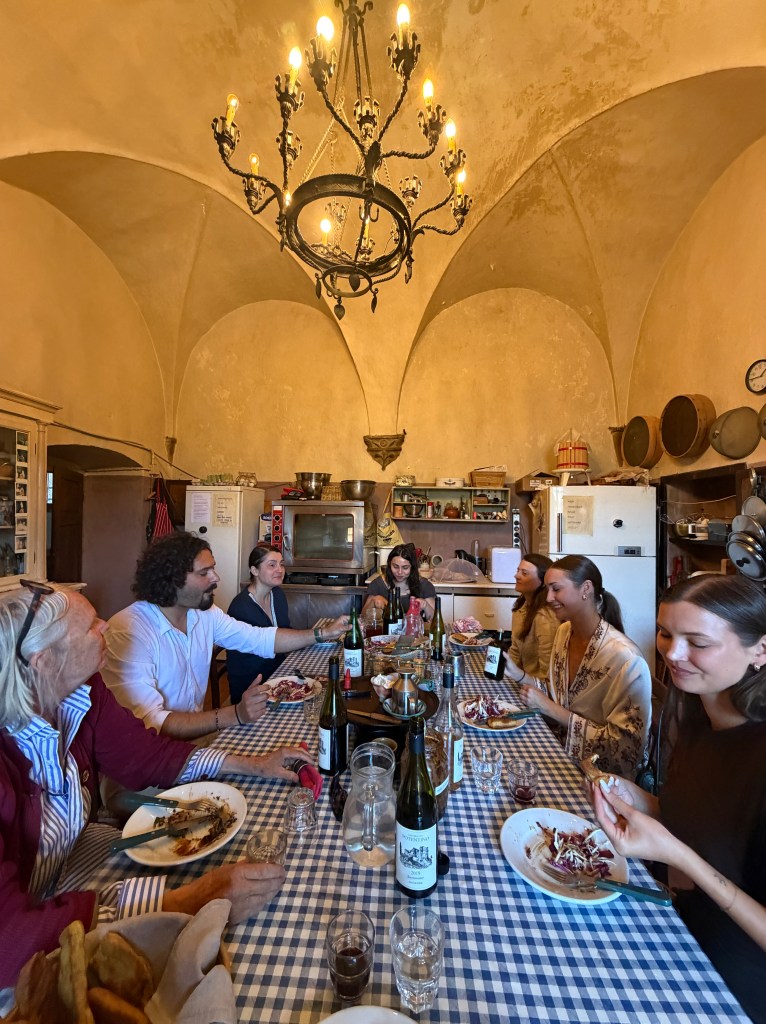
By the time lunch arrived — local breads, cheeses, savoury pie, espresso and, of course, more wine — it no longer felt like we’d simply tasted a collection of bottles.
We enjoyed a fabulous lunch with Charlotte and the wonderful volunteers who call the castle home while helping with everything from the vineyards to daily life at Potentino. Their warmth and hospitality added another layer of authenticity to an already unforgettable visit.
We hadn’t just tasted remarkable wines. We’d been welcomed into a community and invited to see the world through a completely different lens.
A Castle Full of Stories
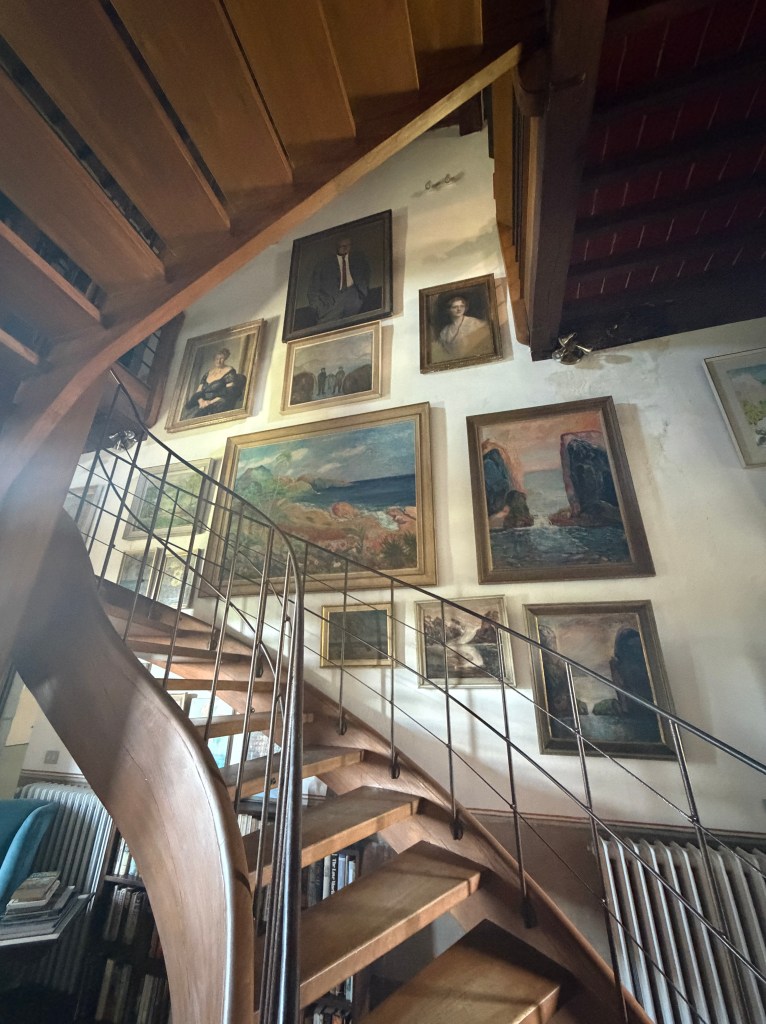
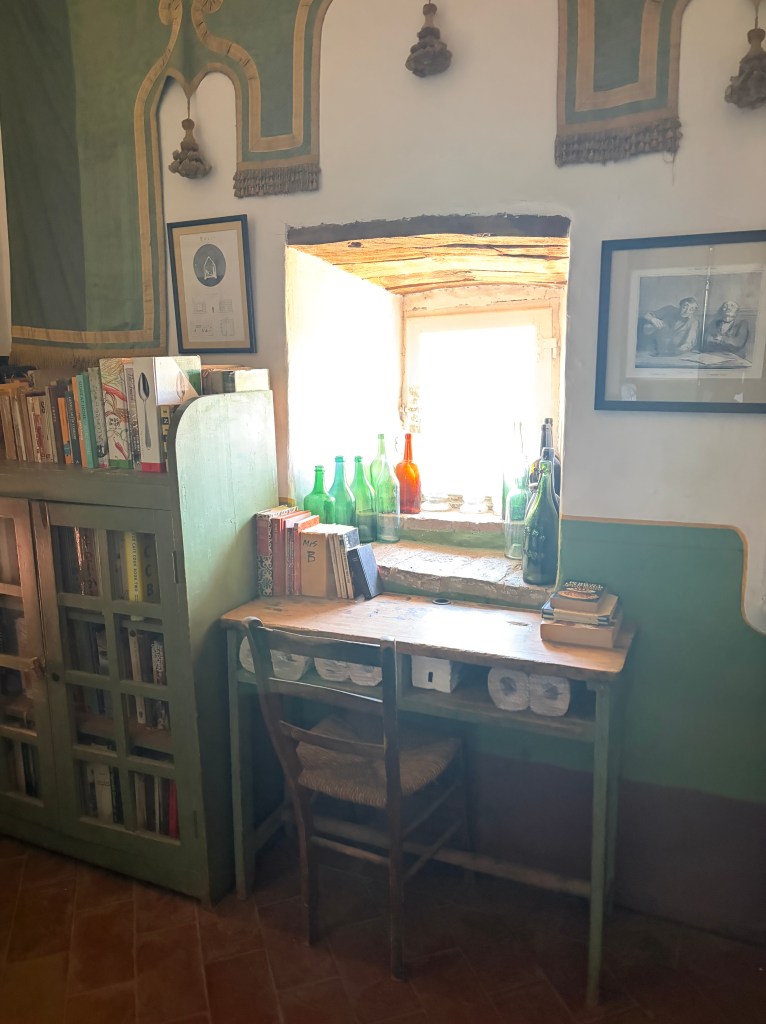
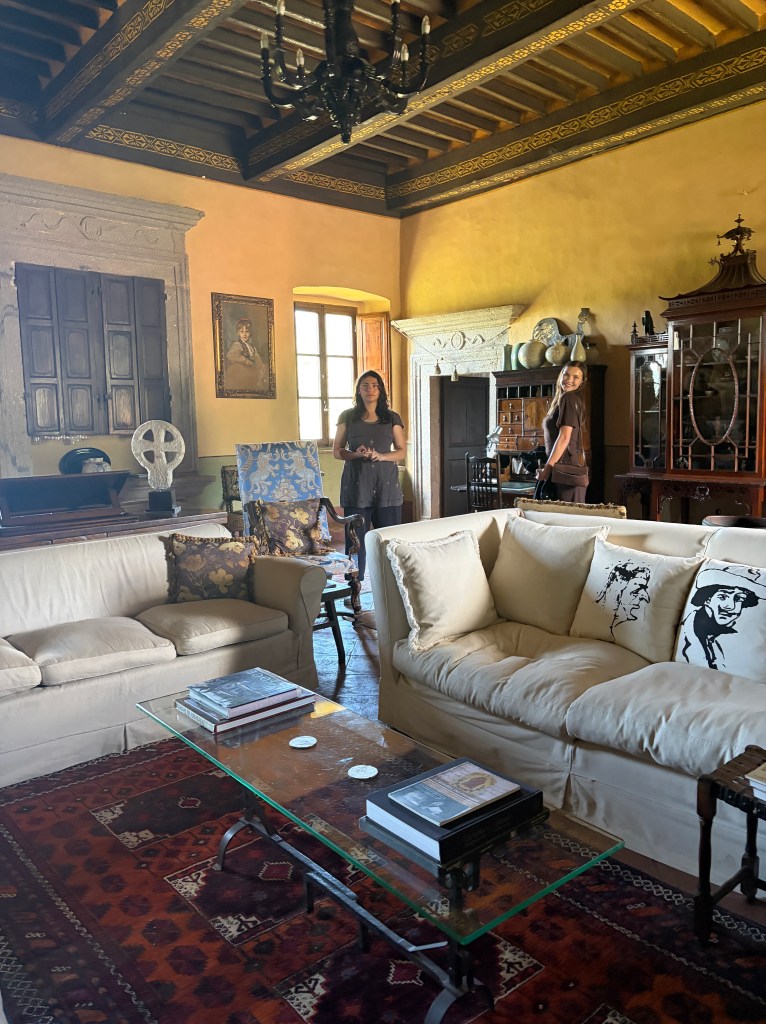
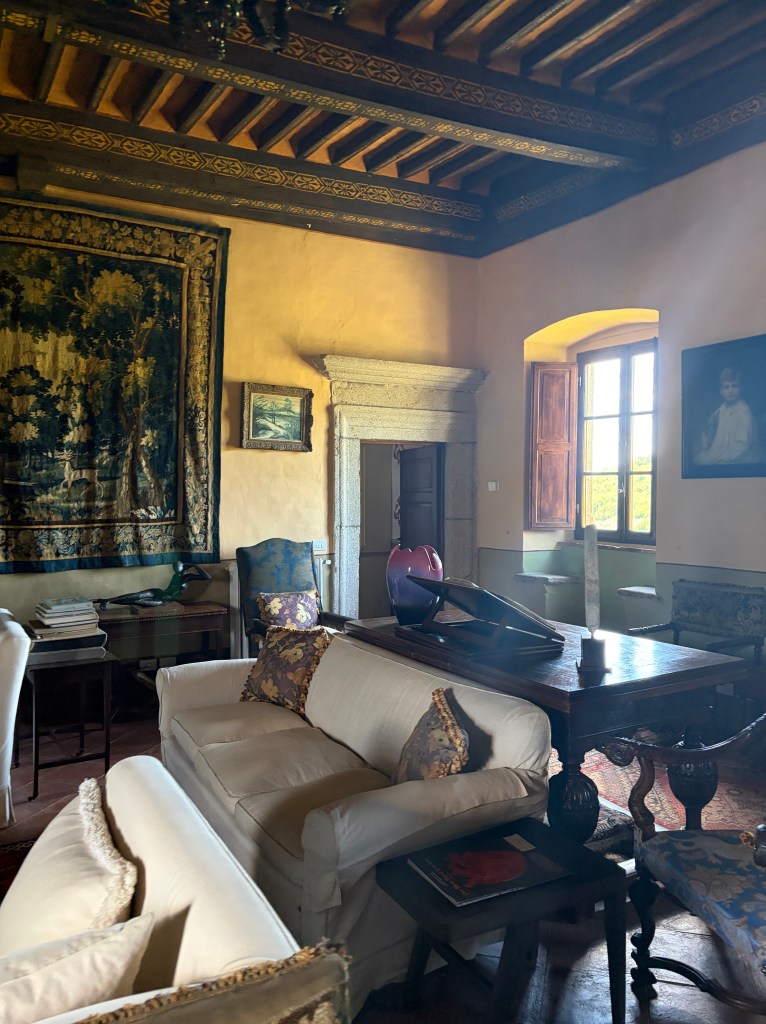
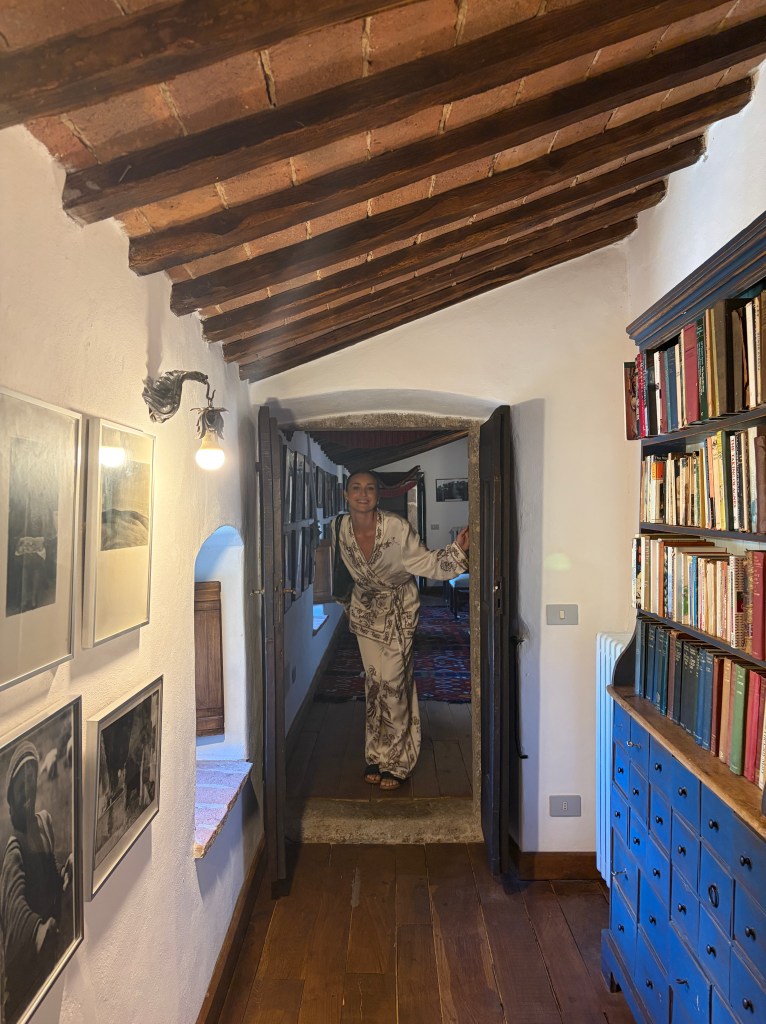
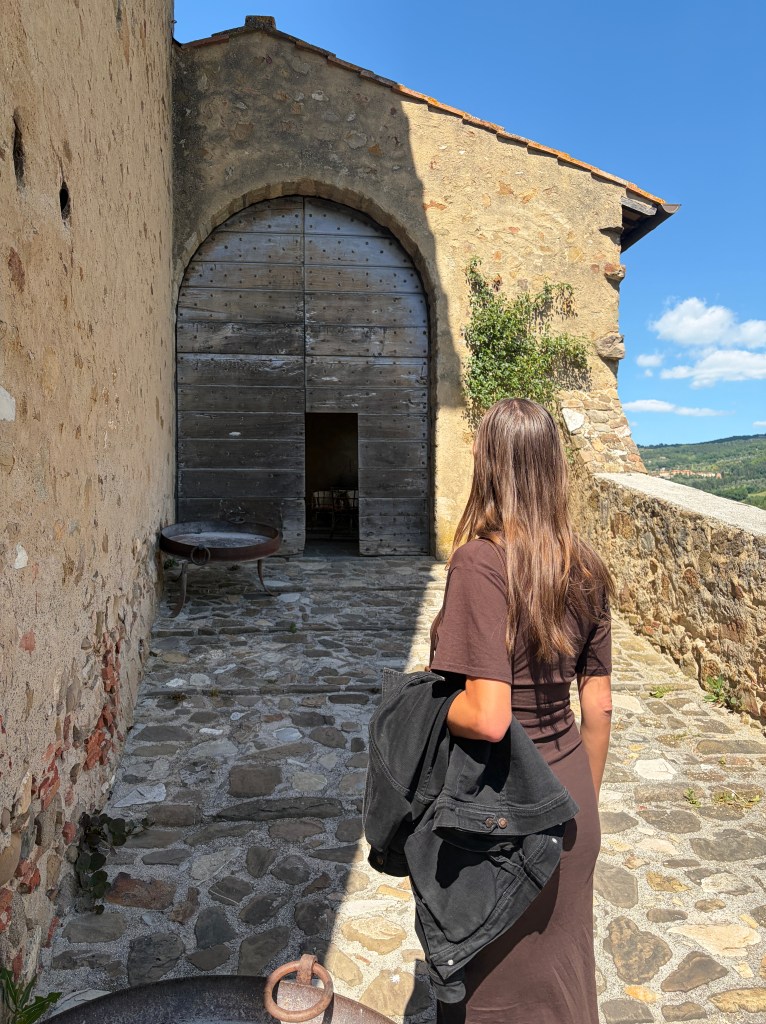
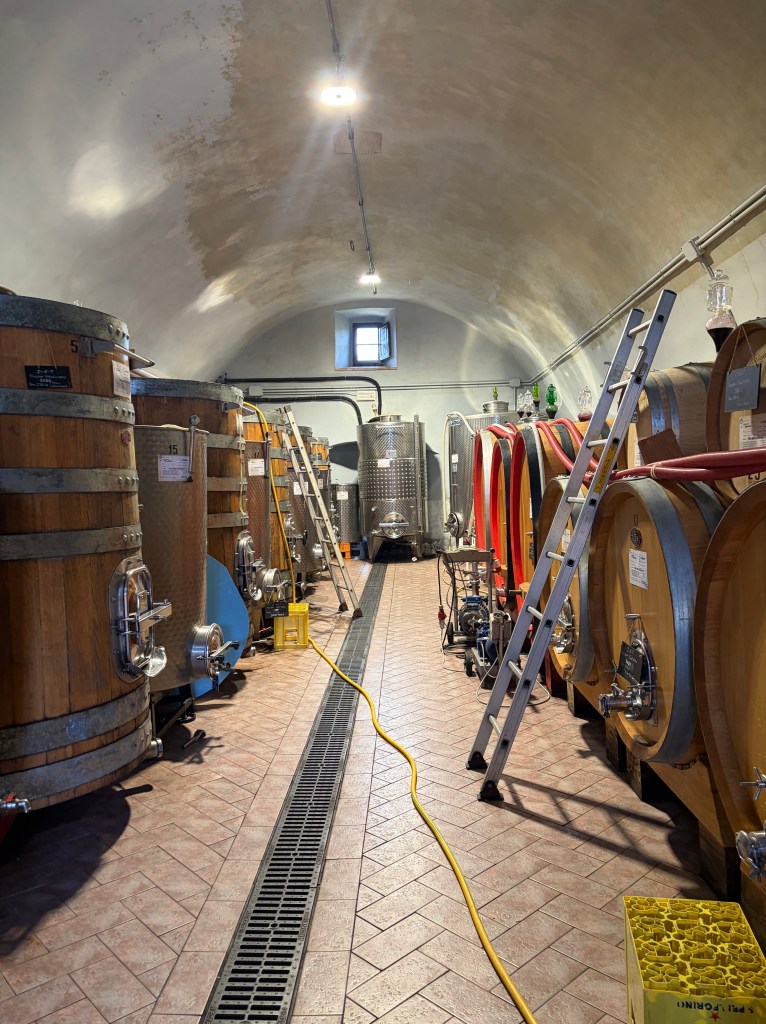
After lunch, we wandered through the castle itself, where centuries of history unfold room by room. Ancient stone walls, hidden corners, the wine cellar, sweeping valley views, and a few wonderfully friendly dogs made it feel less like touring a historic landmark and more like spending the afternoon in someone’s impossibly fascinating home.
It was enchanting in every sense of the word.
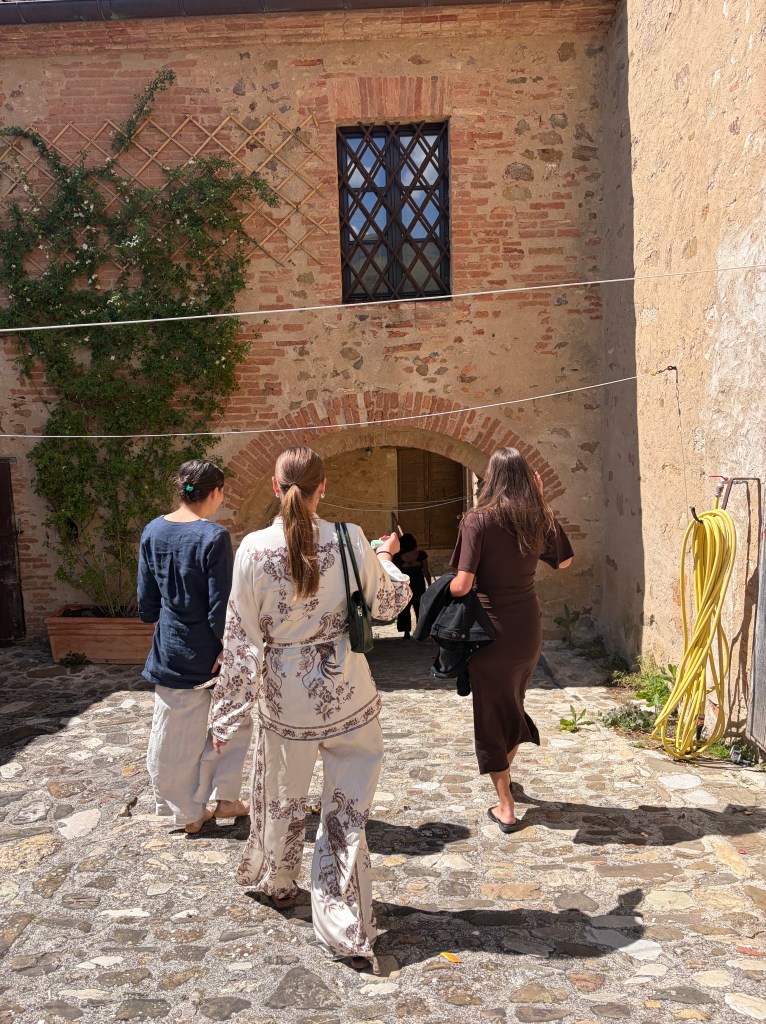
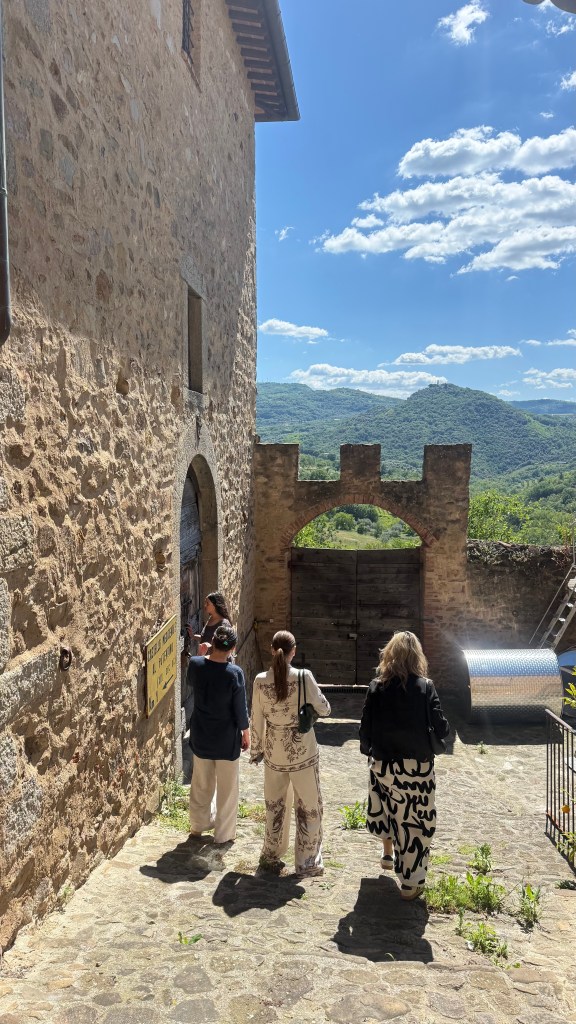
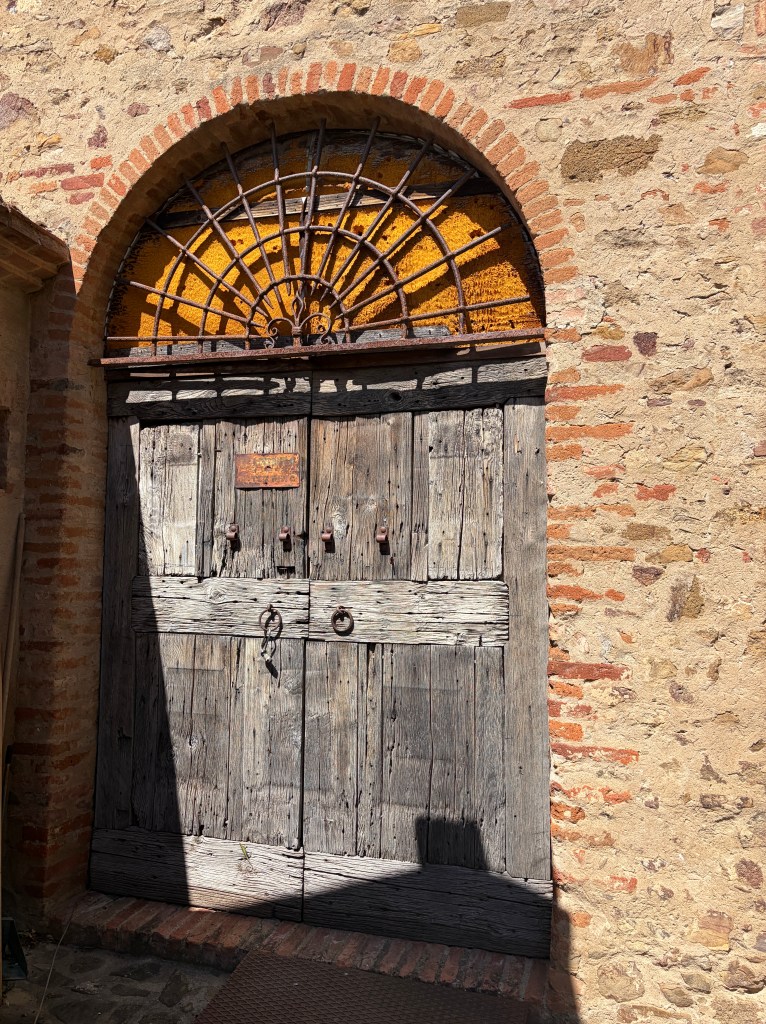
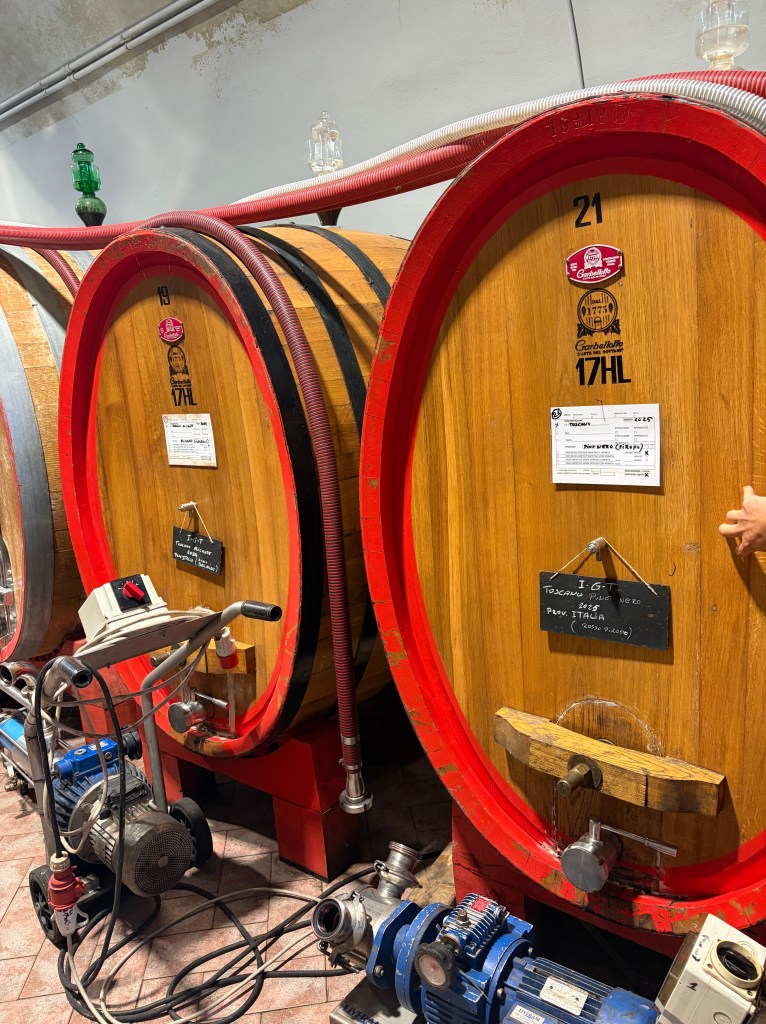
Charlotte has an endlessly curious mind and a remarkable gift for connecting ideas that most of us would never think belong together. Volcanic soils, Etruscan history, biodiversity, literature, imagination, music, memory, and wine all became part of the same conversation. Her latest passion is a historic vineyard designation project — the first of its kind in the province — to preserve Tuscany’s ancient wine heritage. Knowing Charlotte, I’m certain it’s only the beginning of another extraordinary chapter.
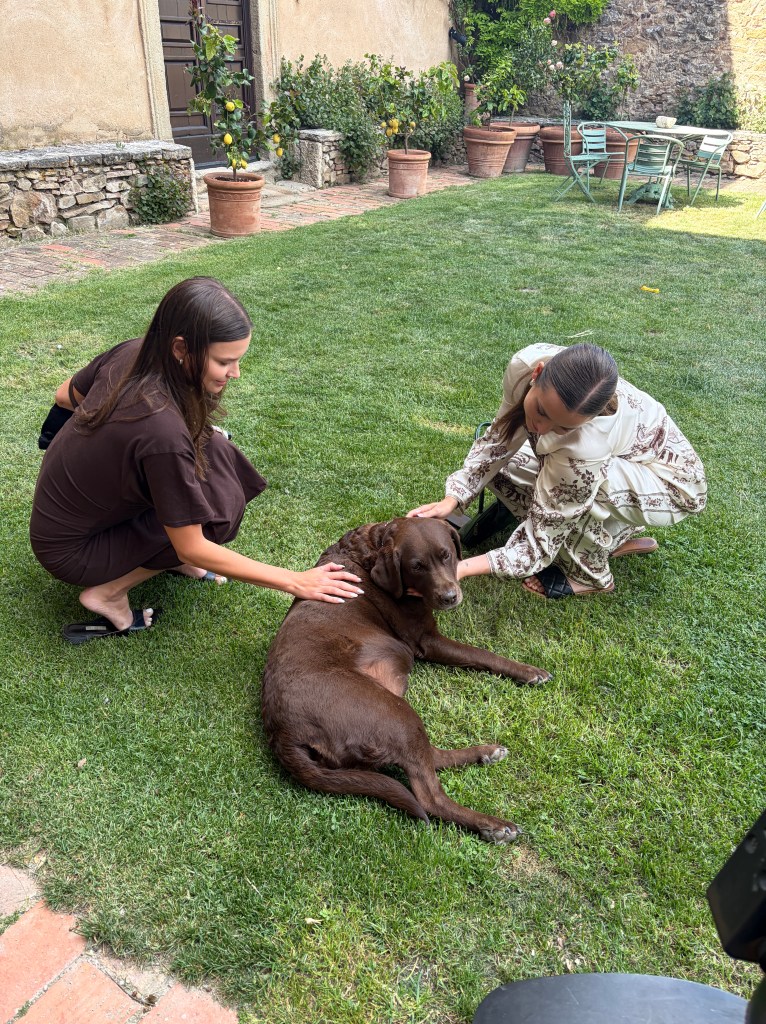
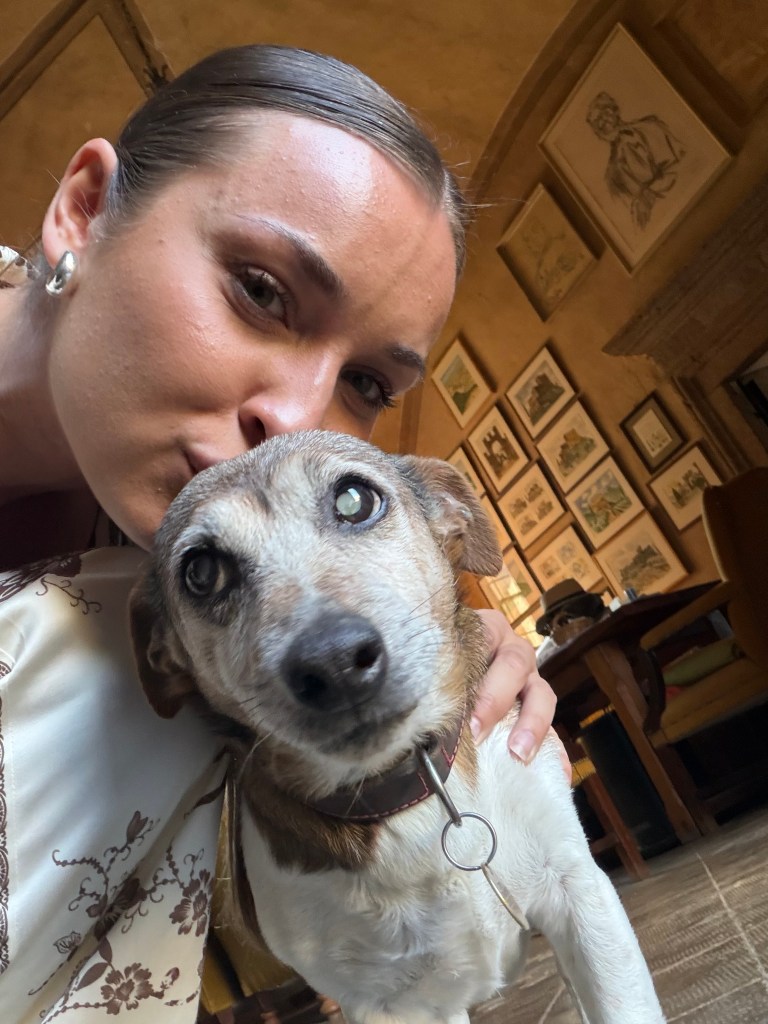
Castello di Potentino gave us everything: part wine tasting, part geology lesson, part journey into the fascinating world of the Etruscans… and of course, the beloved castle dogs.
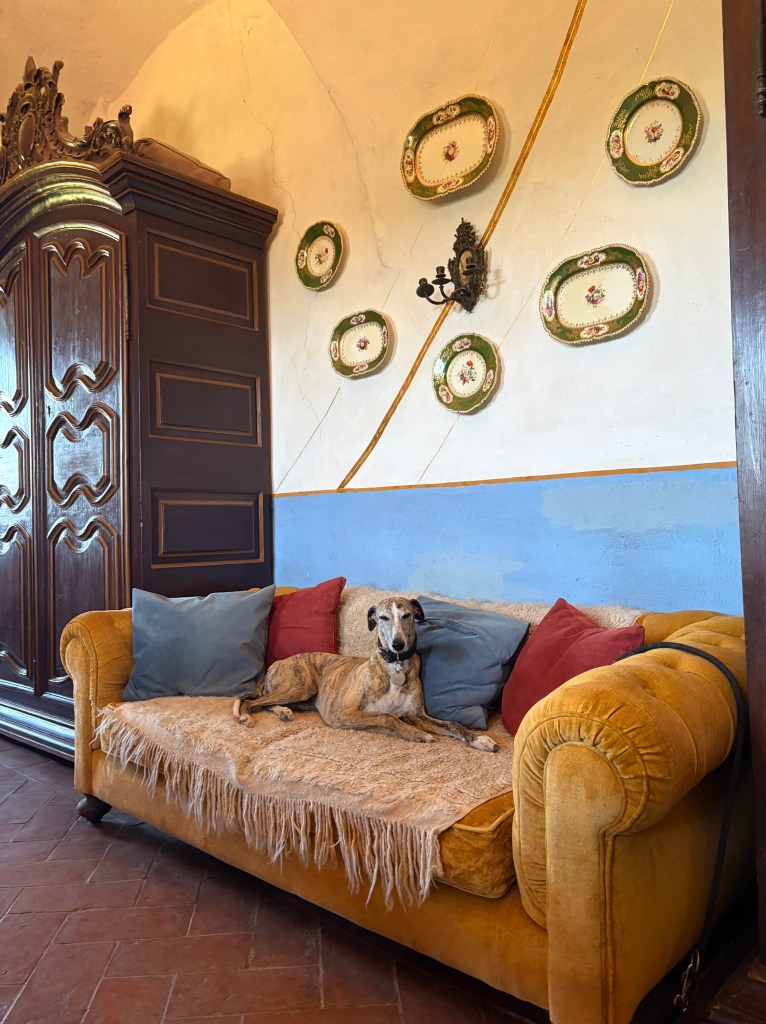
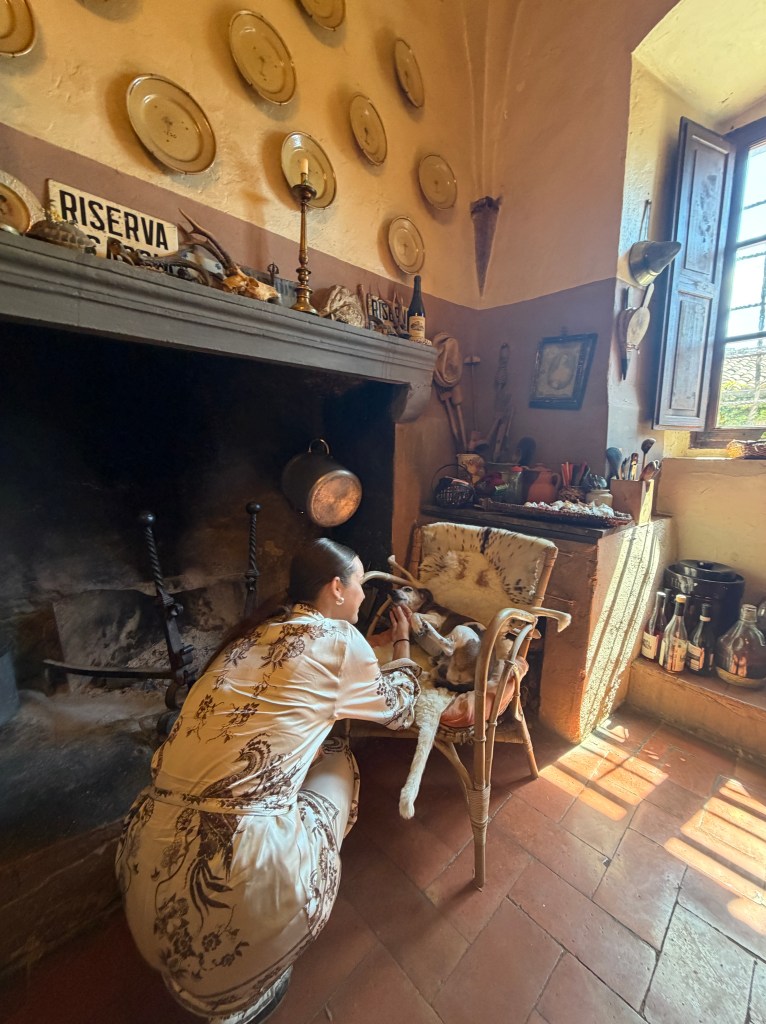
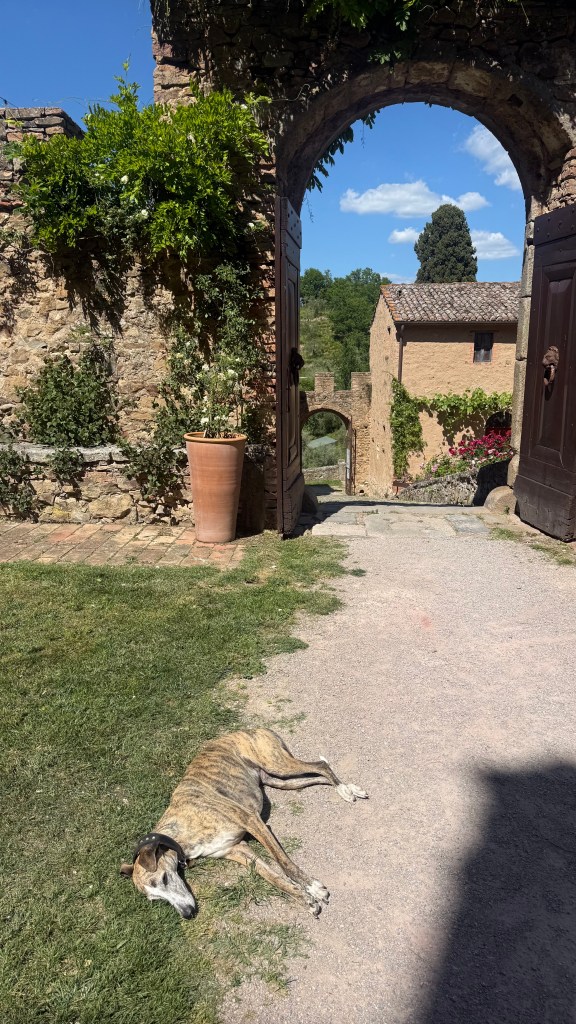
Thanks to Charlotte’s generous hospitality, my daughters and I left with far more than a memorable tasting. We laughed, lingered over lunch, explored every corner of the castle we could, and truthfully, we didn’t want to leave.
Some places stay with you because they’re beautiful. Castello di Potentino stays with you because it changes the way you see wine — not simply as something in a glass, but as a living expression of place, with every bottle telling a story that continues to unfold.
BAGNI SAN FILIPPO
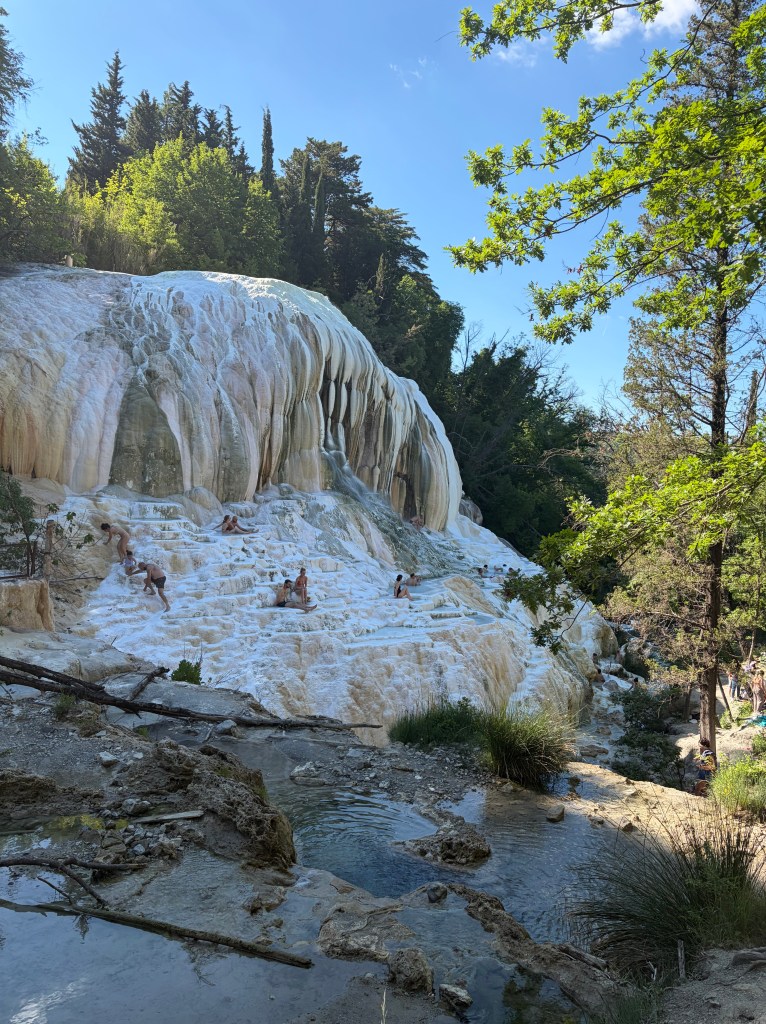
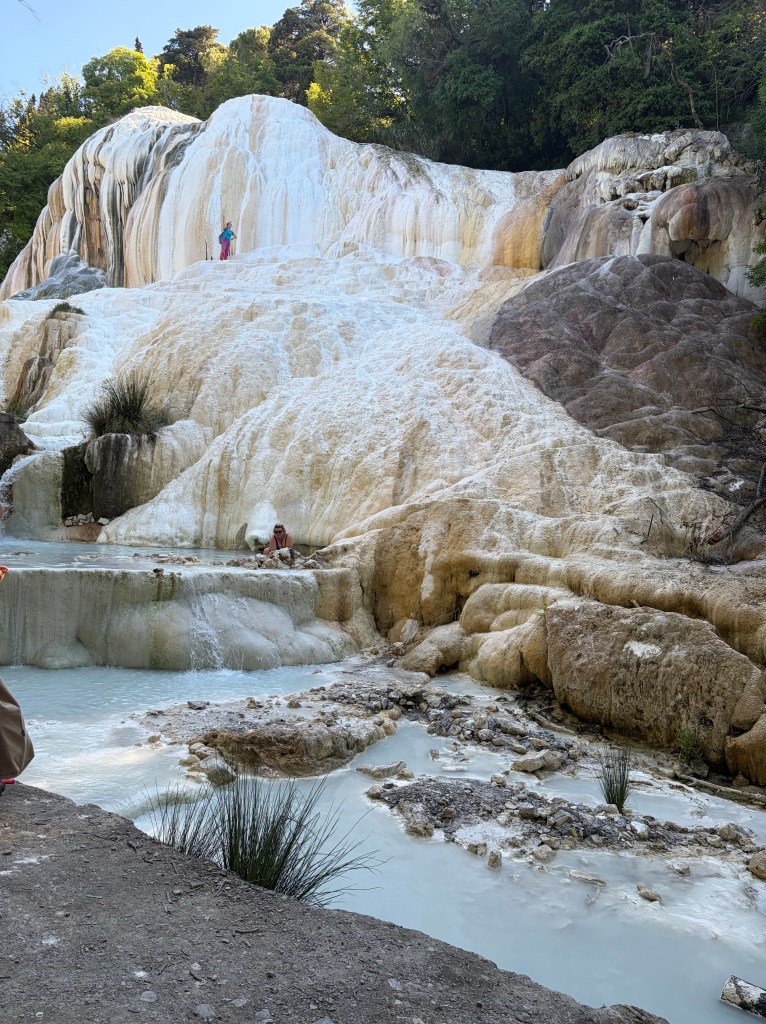
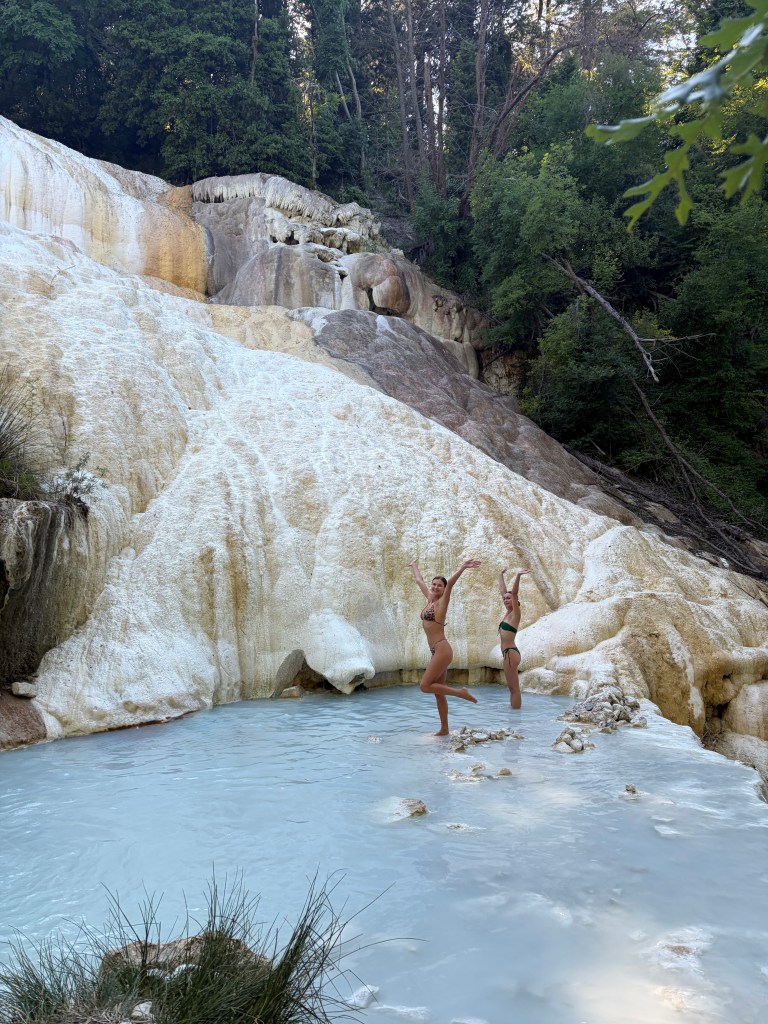
And if one magical stop wasn’t enough, our day ended with a soak in the natural thermal springs of Bagni San Filippo. After tasting wines shaped by volcanic soils and ancient history, it felt only fitting to experience another gift of the same remarkable landscape. Our day couldn’t have been curated more perfectly. Tuscany has a wonderful way of connecting everything.
La Torre alle Tolfe: Coming Home to Tuscany
Every great journey needs a place to come home to. For us, that place was La Torre alle Tolfe.
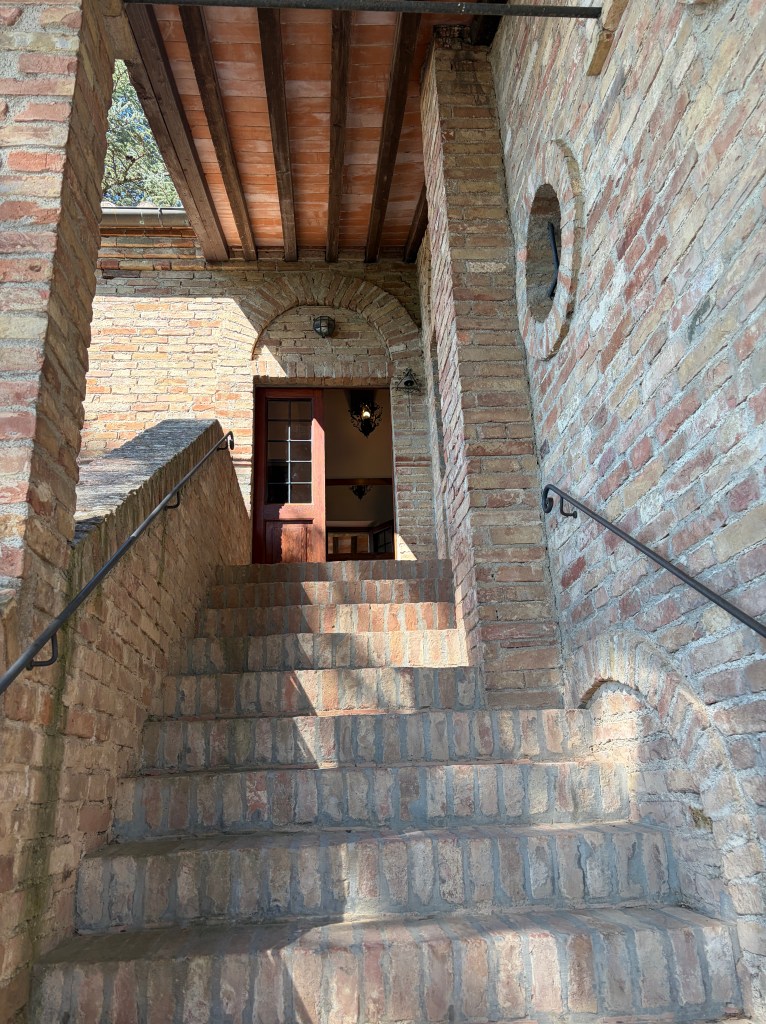
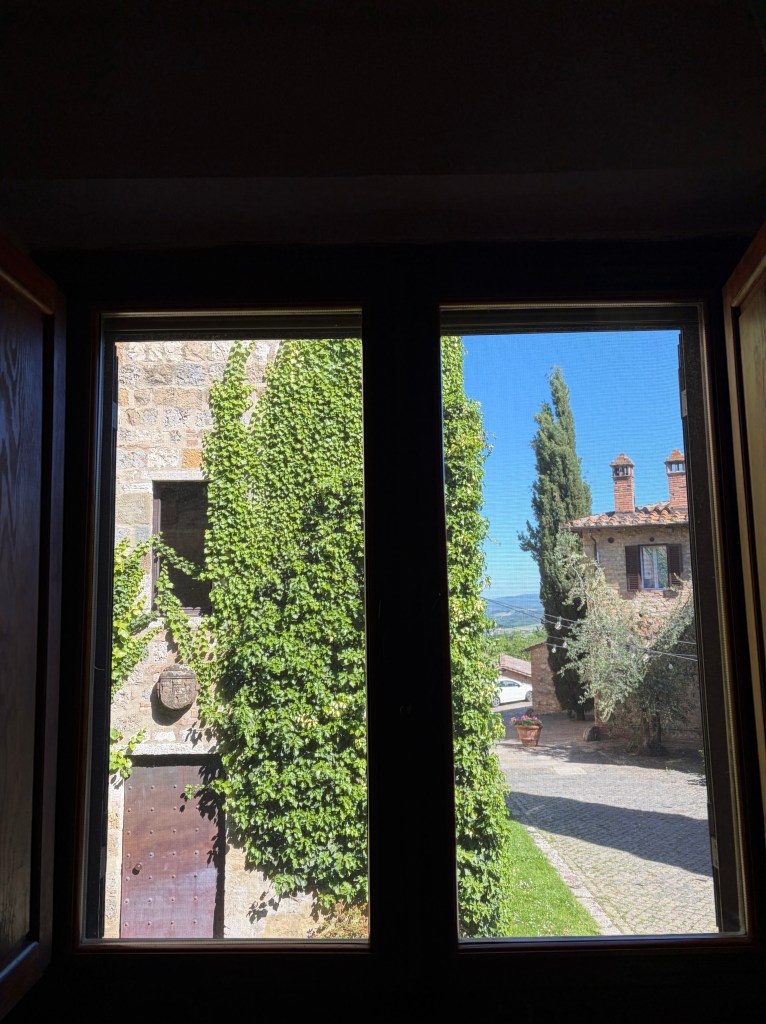
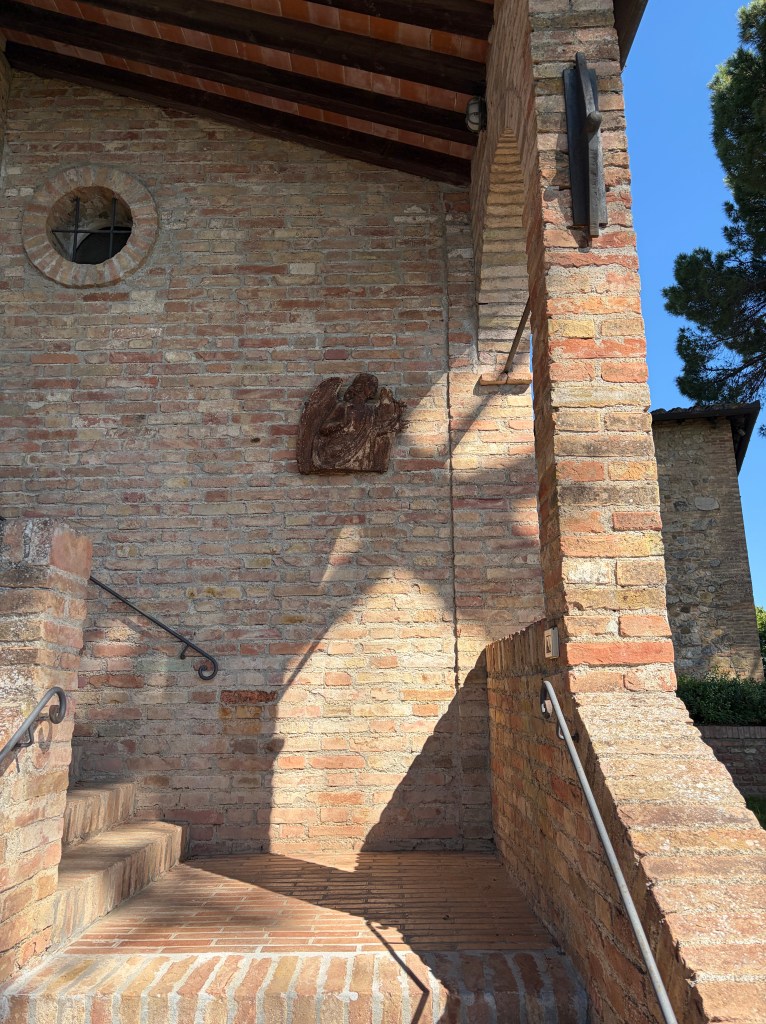
Just outside of Siena, this beautiful medieval borgo became the heart of our Tuscany wine adventure. Surrounded by vineyards, olive groves and rolling hills, staying here felt less like visiting Tuscany and more like becoming part of it.
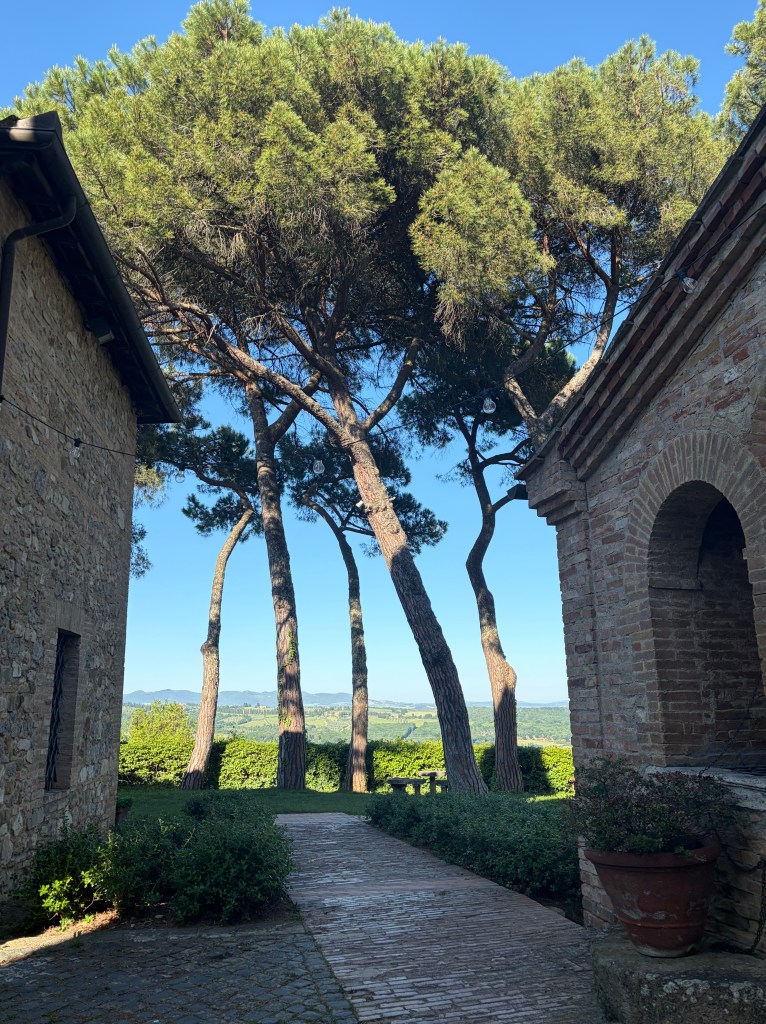
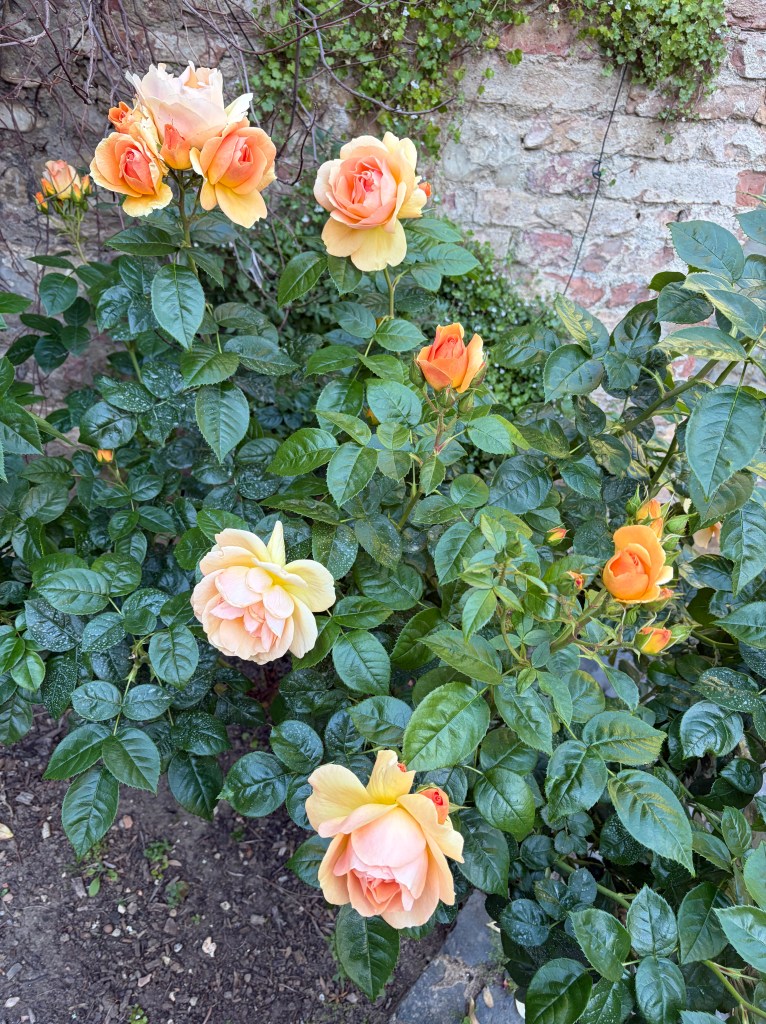
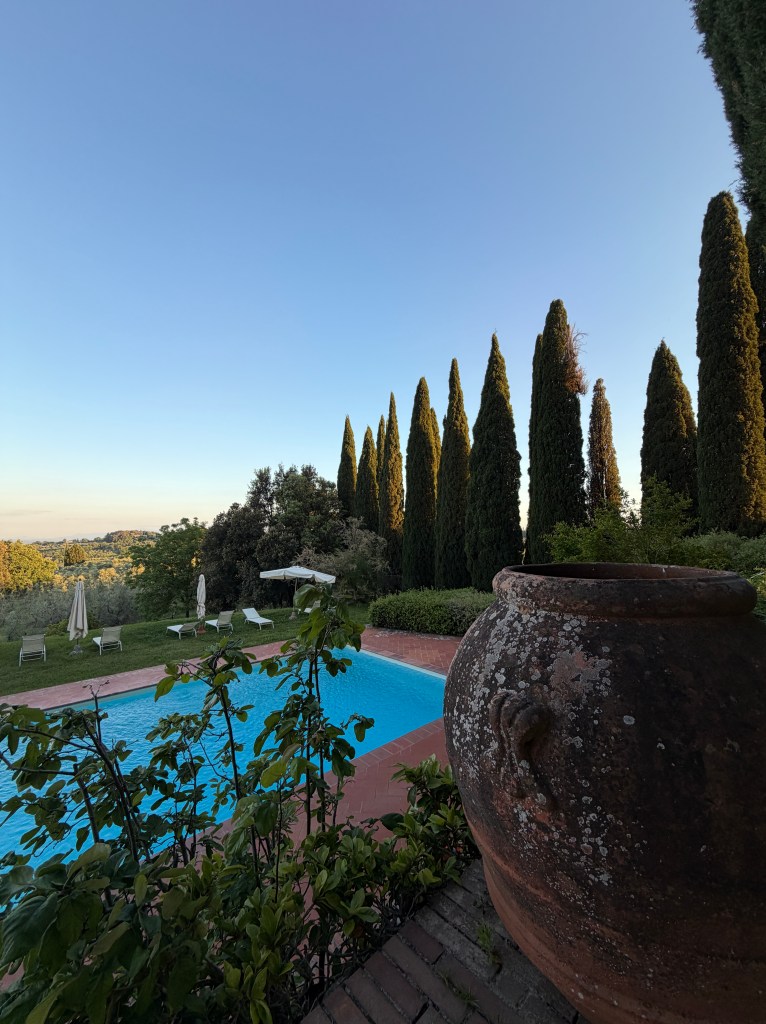
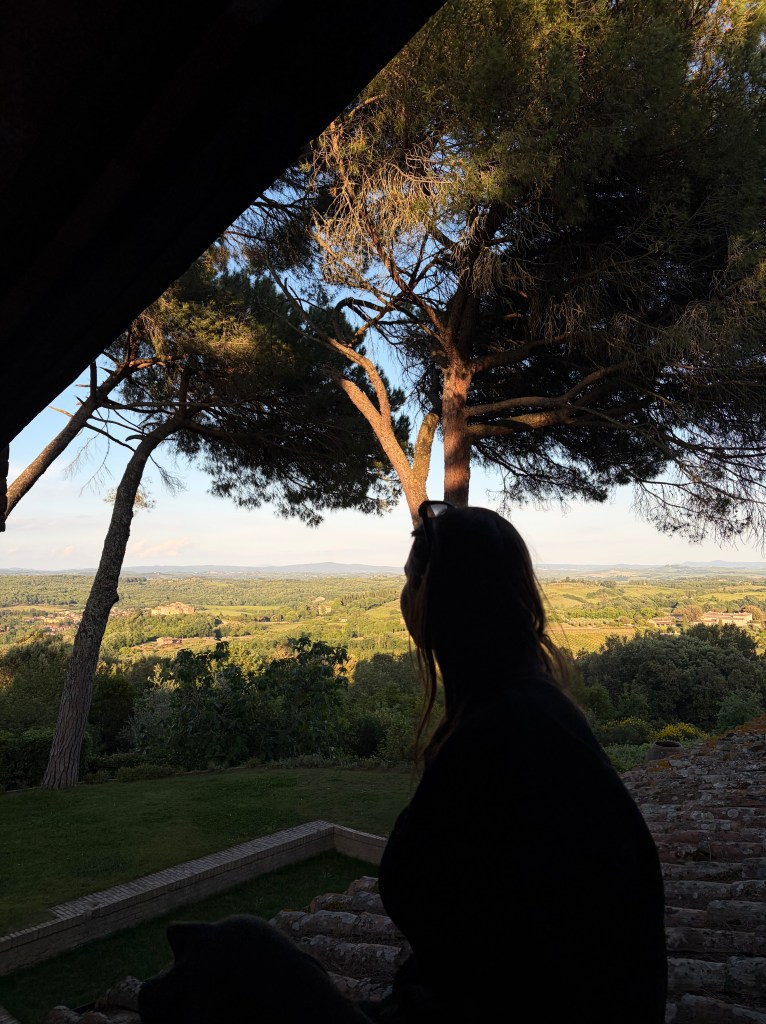
Mornings began with golden sunrises over the vineyards. Evenings ended with spectacular sunsets, a glass of wine, and the quiet rhythm of country life. For one unforgettable week, every winding road we explored led us back here.
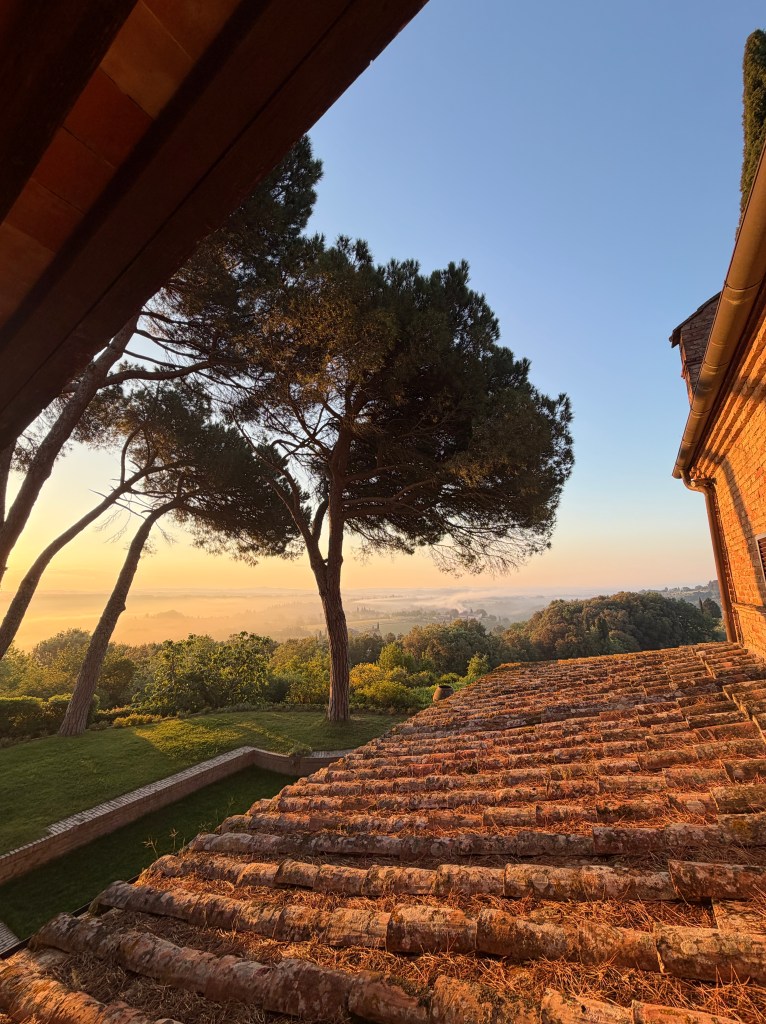
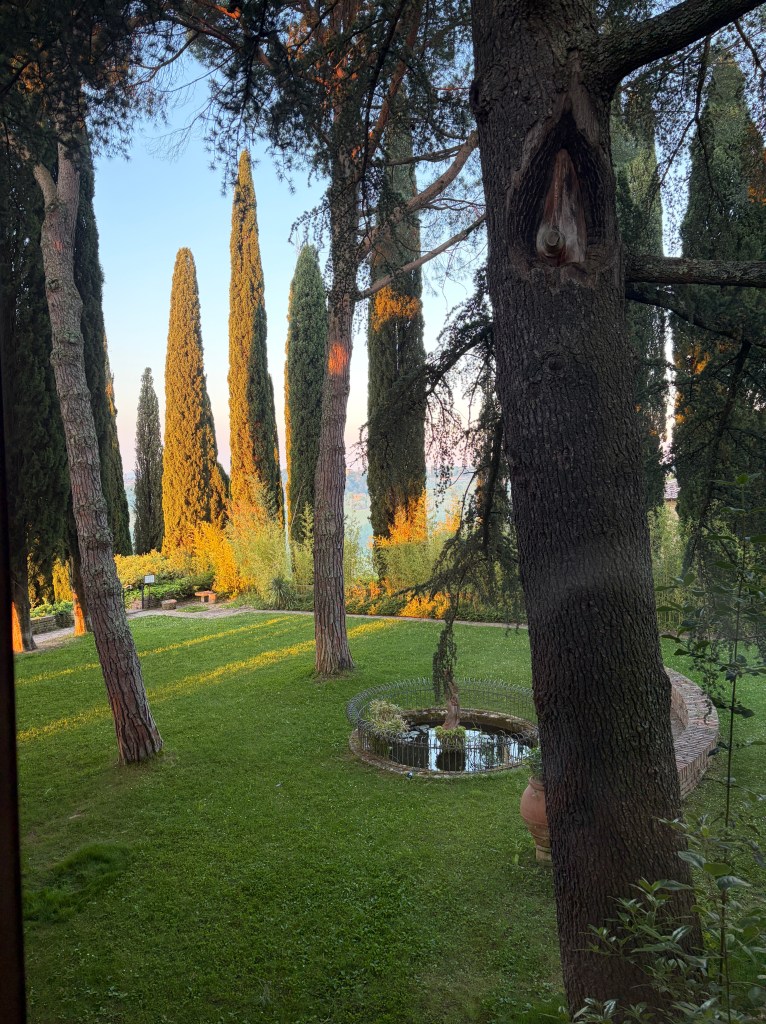
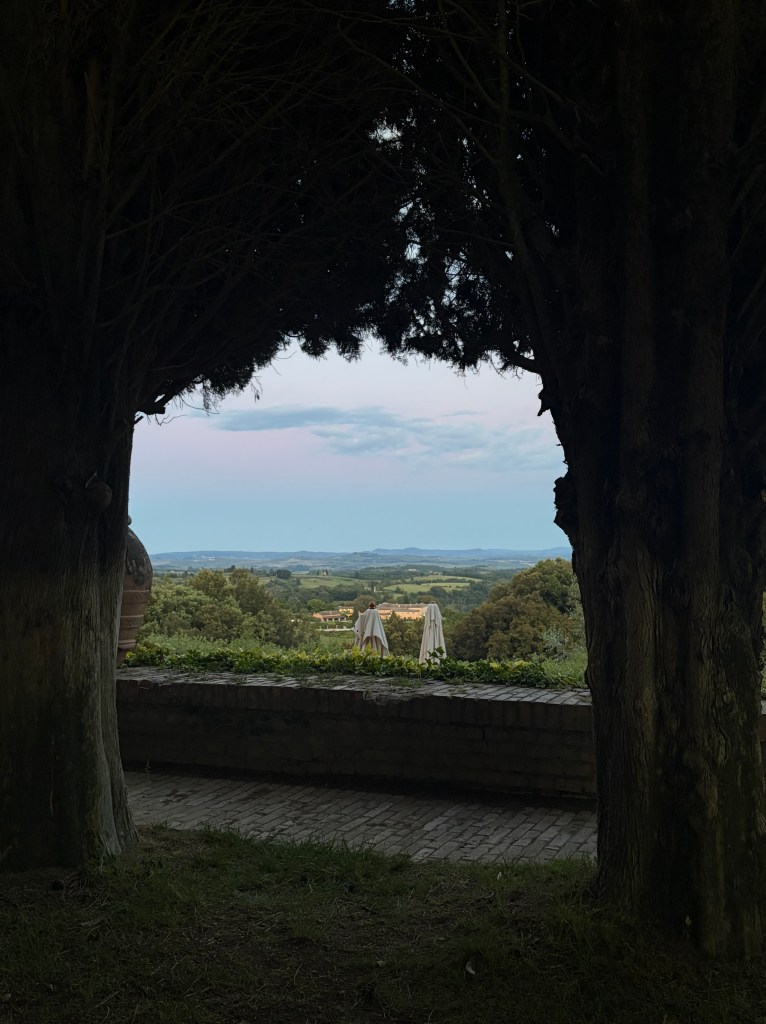
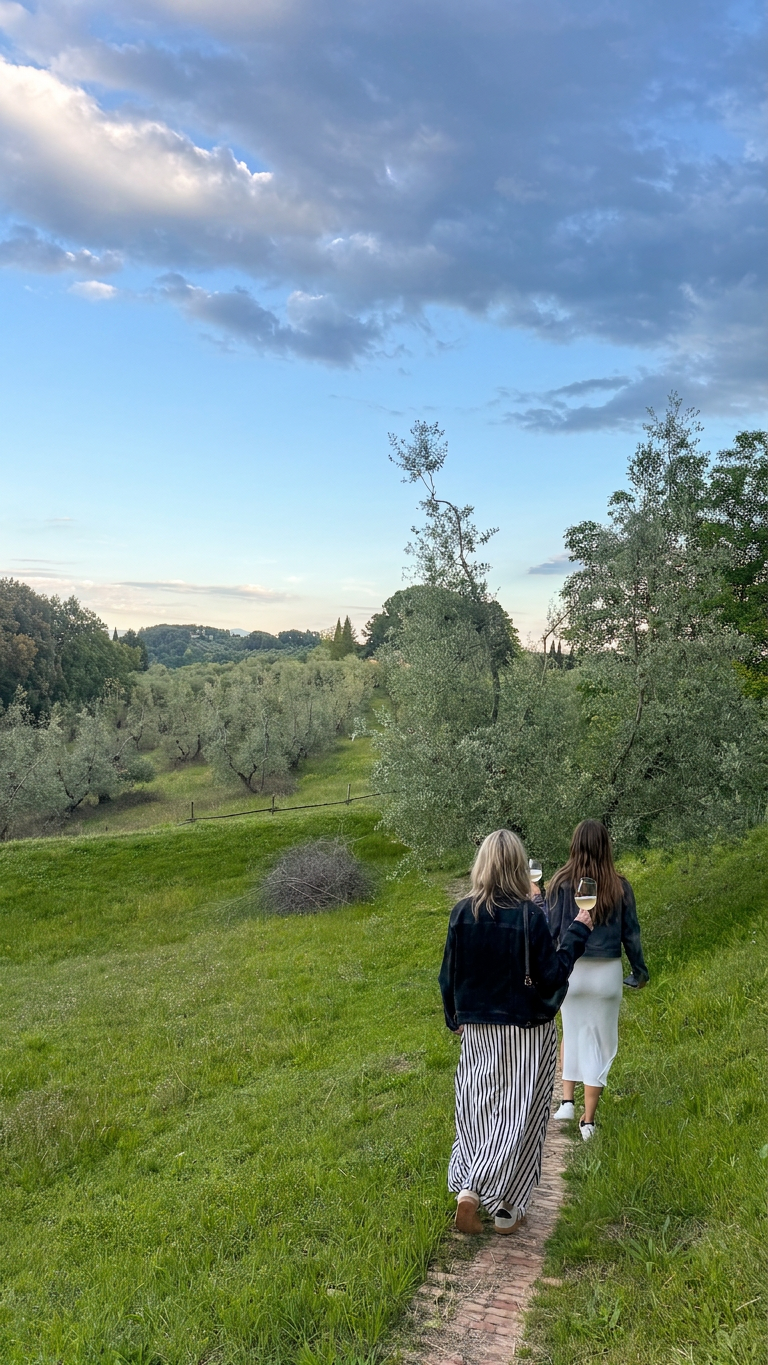
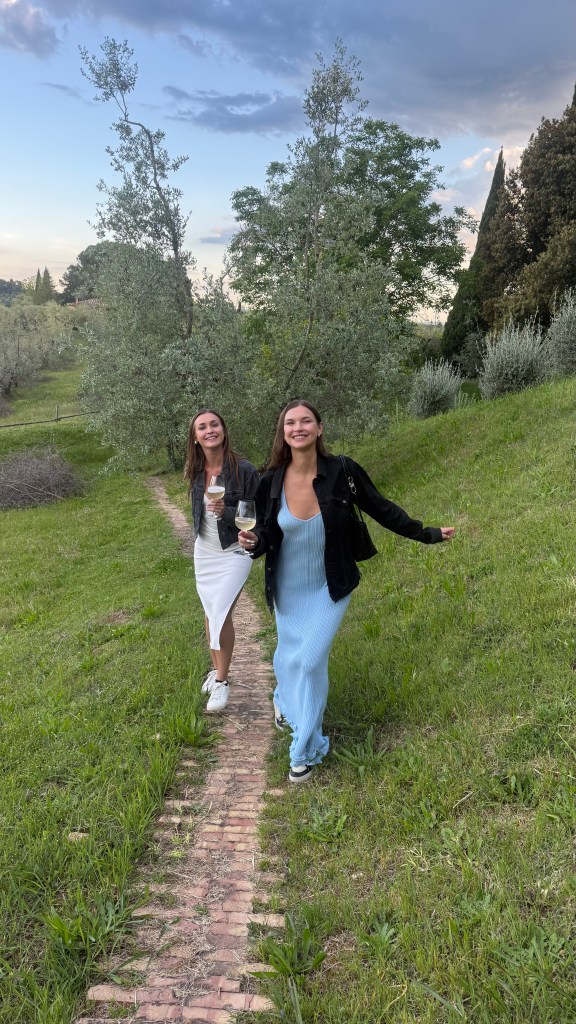
We stayed in the charming Limonaia apartment, a beautiful two-bedroom retreat with breathtaking views in every direction and the added bonus of being closest to the gorgeous pool. There was something magical about waking up beside a medieval tower, spending the day discovering Tuscany, and returning each evening to the peaceful rhythm of life at La Torre alle Tolfe.
A Winery in Our Backyard
One of the greatest luxuries of staying at La Torre alle Tolfe was that our next winery visit required no transportation at all. We simply walked out our front door.
Our tour began beneath the medieval tower that gives the estate its name. According to local history, Charlemagne sent a French knight named Tolfo dei Gricci to build a lookout tower to help defend Siena. The area eventually became known as Le Tolfe, and the tower still stands today as a reminder of its remarkable past.
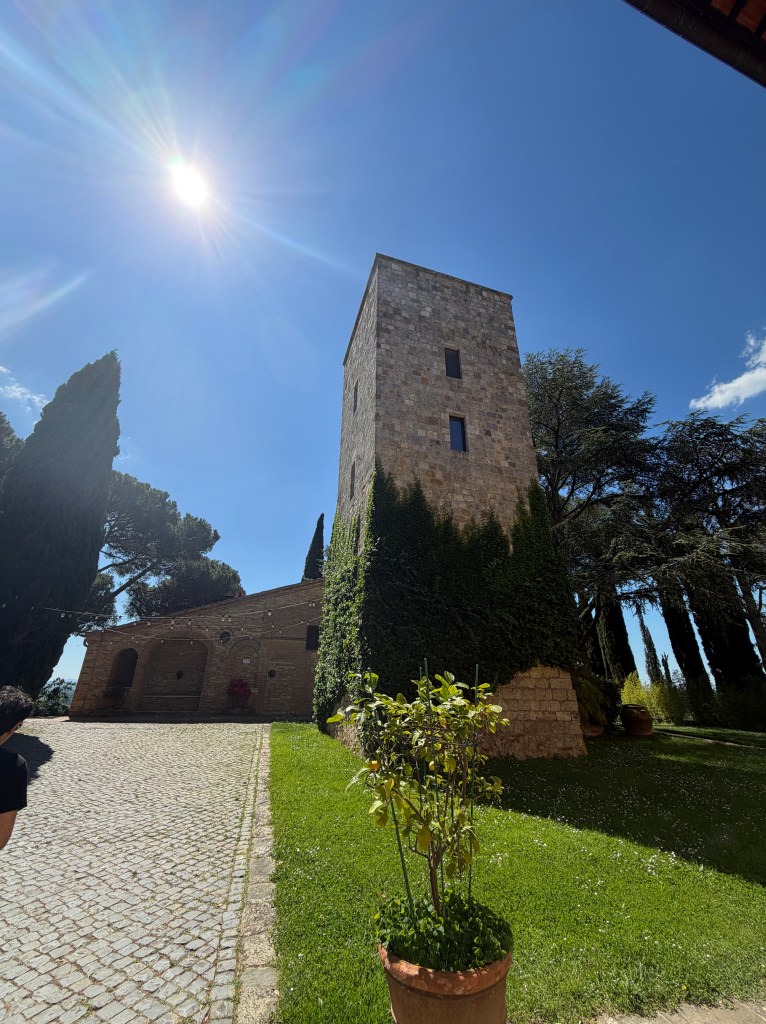
Wine has been made on these hillsides since at least 1316, and likely much earlier. The estate has belonged to the Castelli family since 1953, when Luigi Castelli and his wife Lunella purchased and began restoring the property. Their first commercial wines were released in 1974, and today the estate is led by granddaughter, Mania Castelli. Unfortunately, we missed meeting Mania in person, but we did meet her dogs!
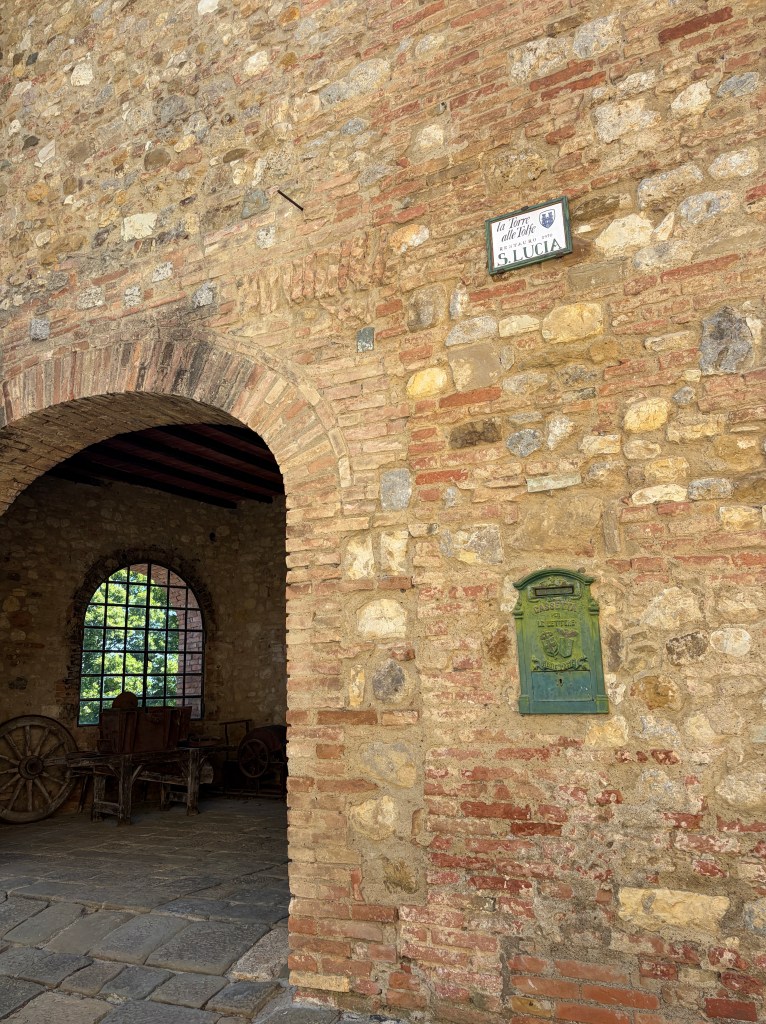
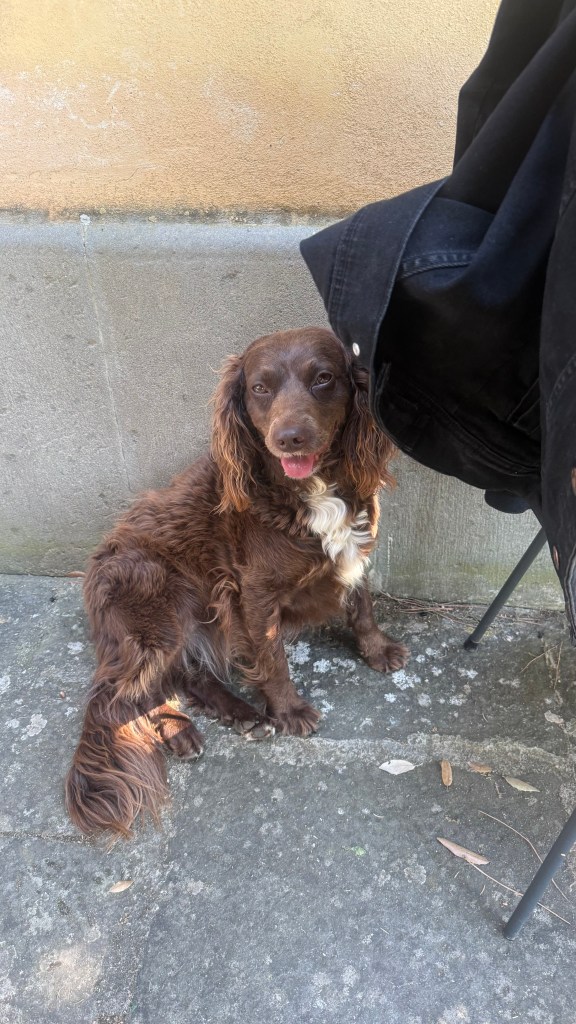
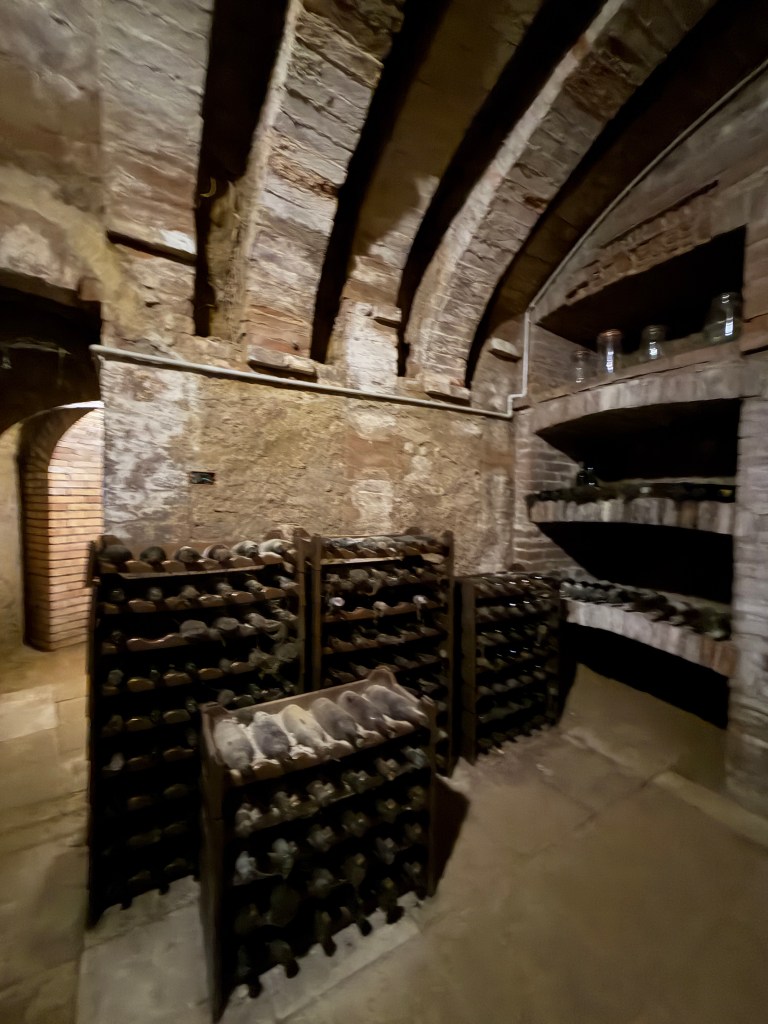
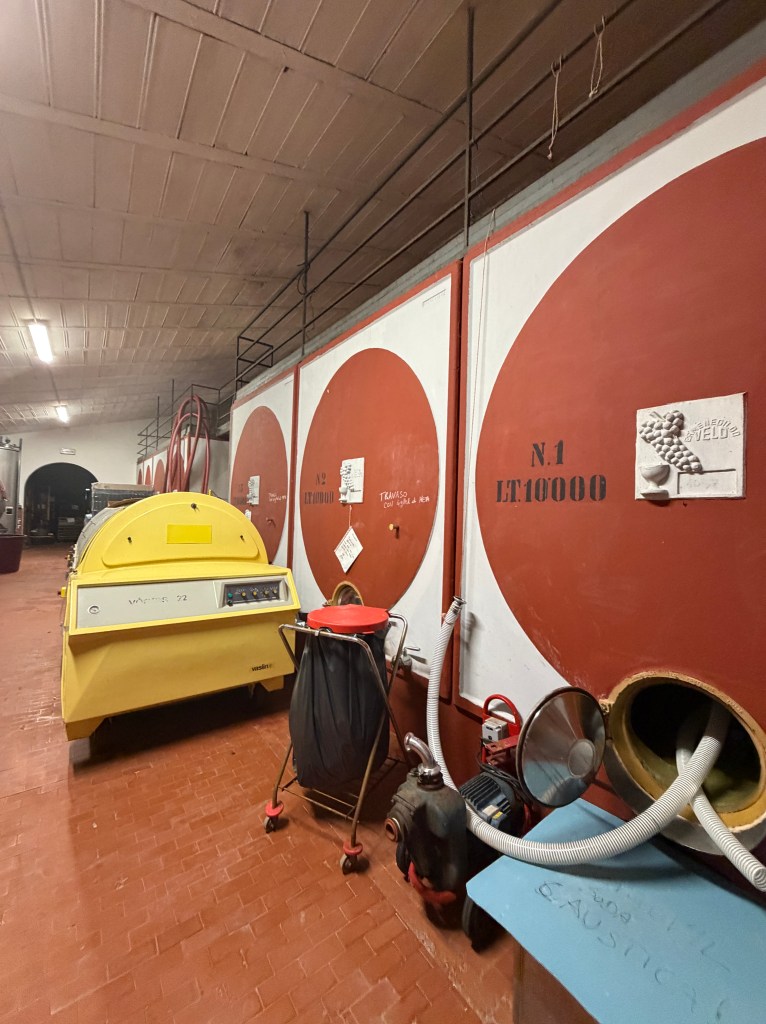
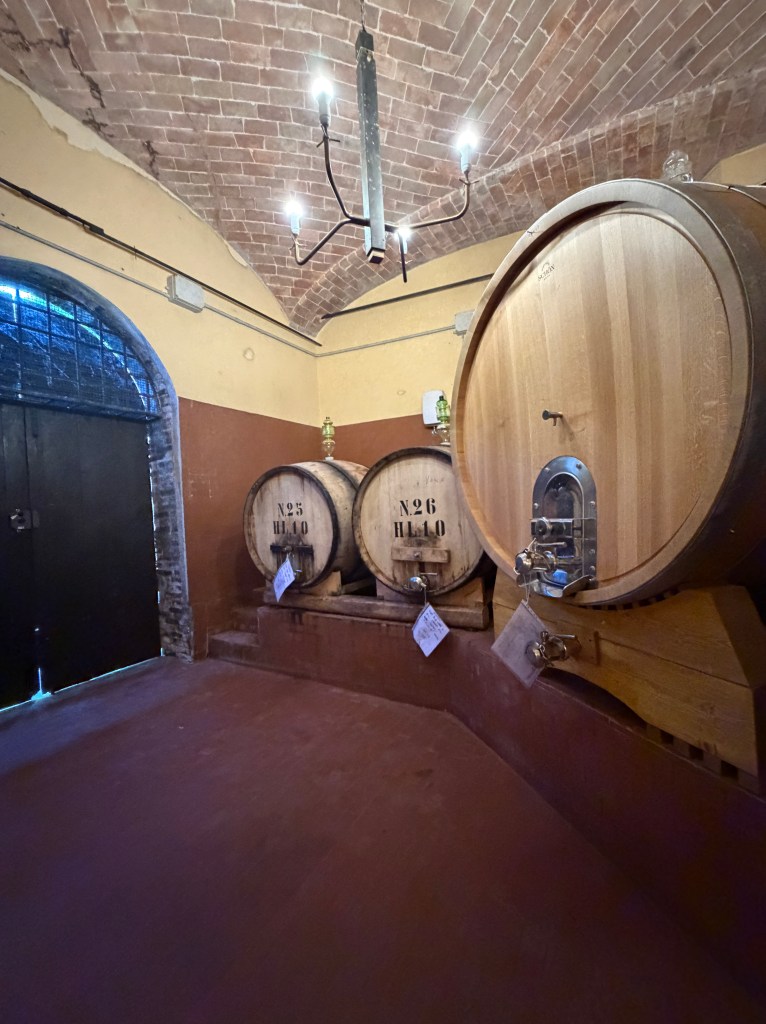
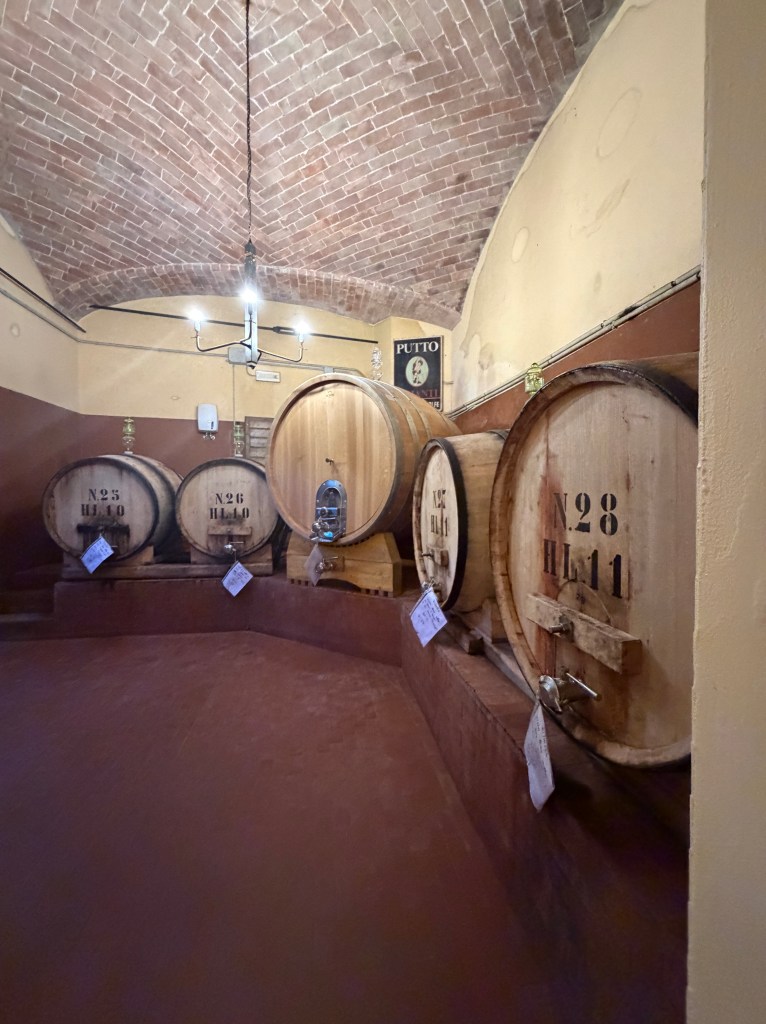
Our tour led us underground to the ancient wine caves of La Torre alle Tolfe where a solitary knight stands guard over a hidden doorway, adding yet another layer of mystery to the experience.
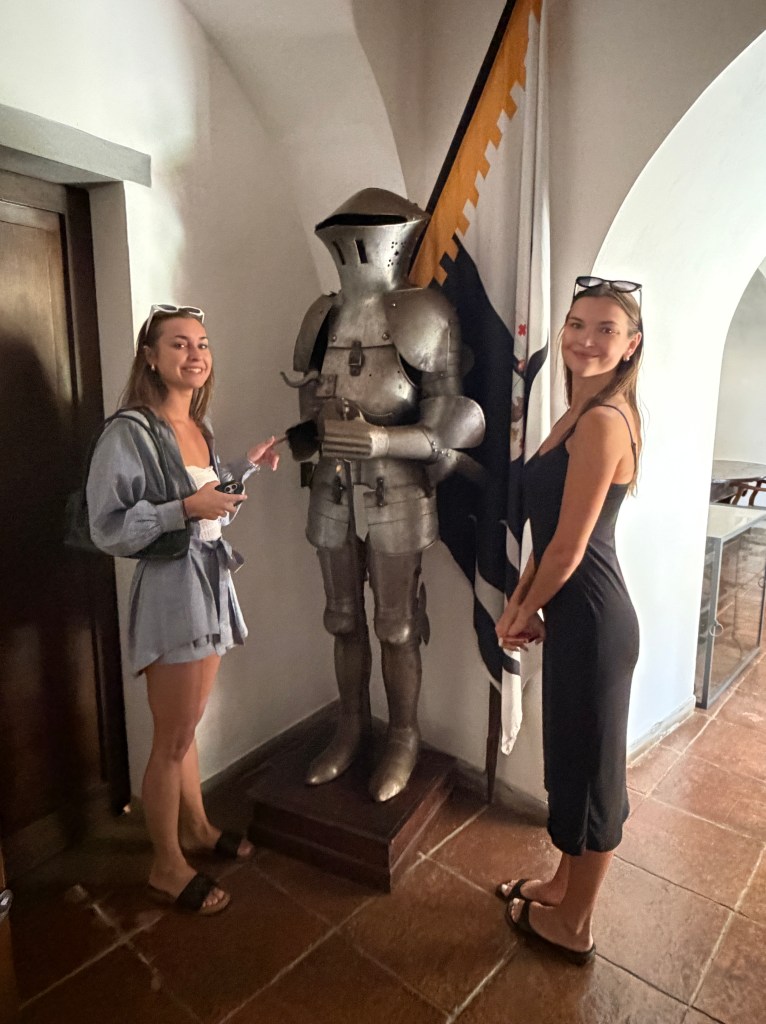
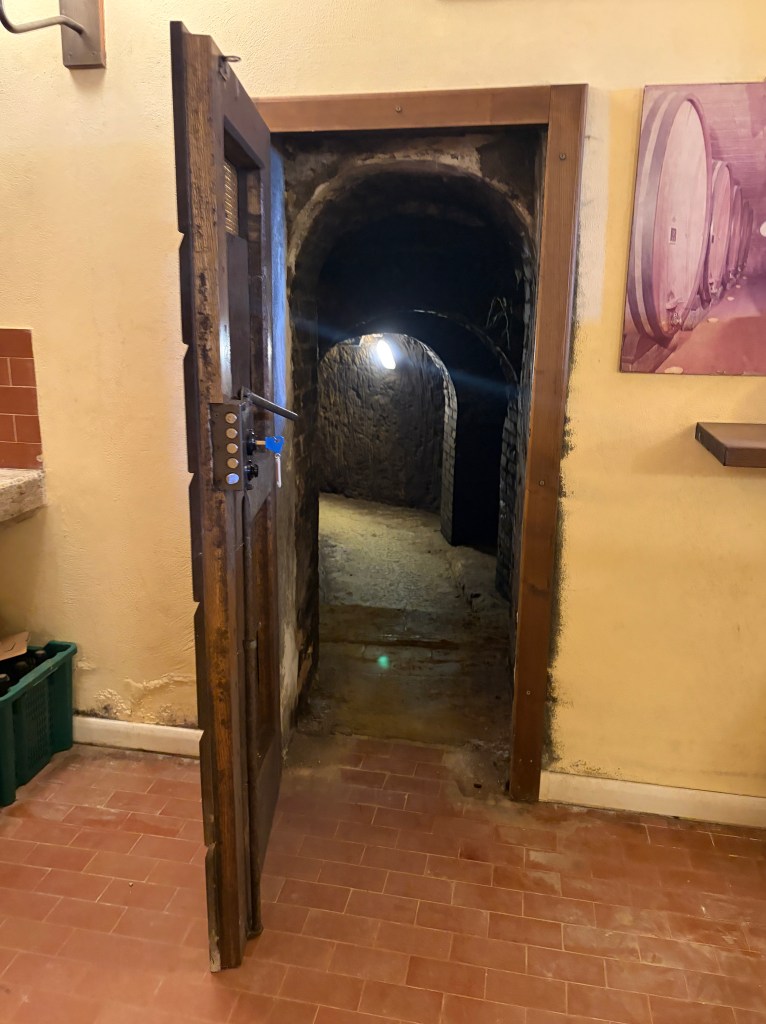
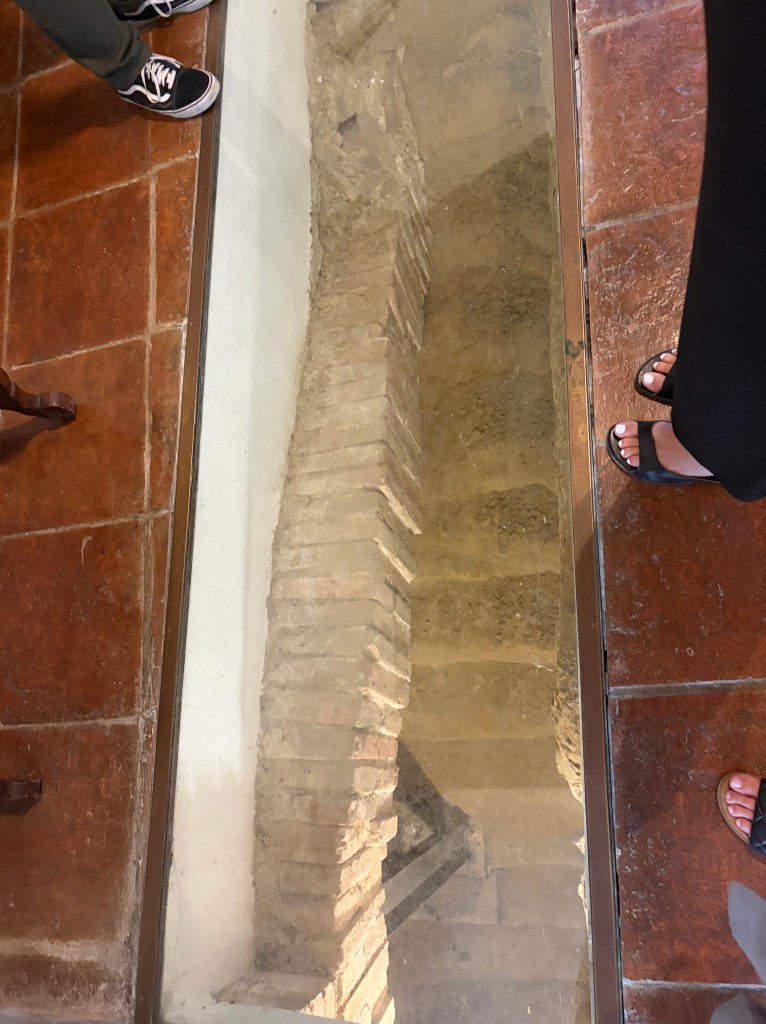
Narrow stone staircases led us into cellars dating back to the 1300s, where dusty bottles, hidden chambers and centuries-old stonework made it feel like we had stepped through a portal in time.
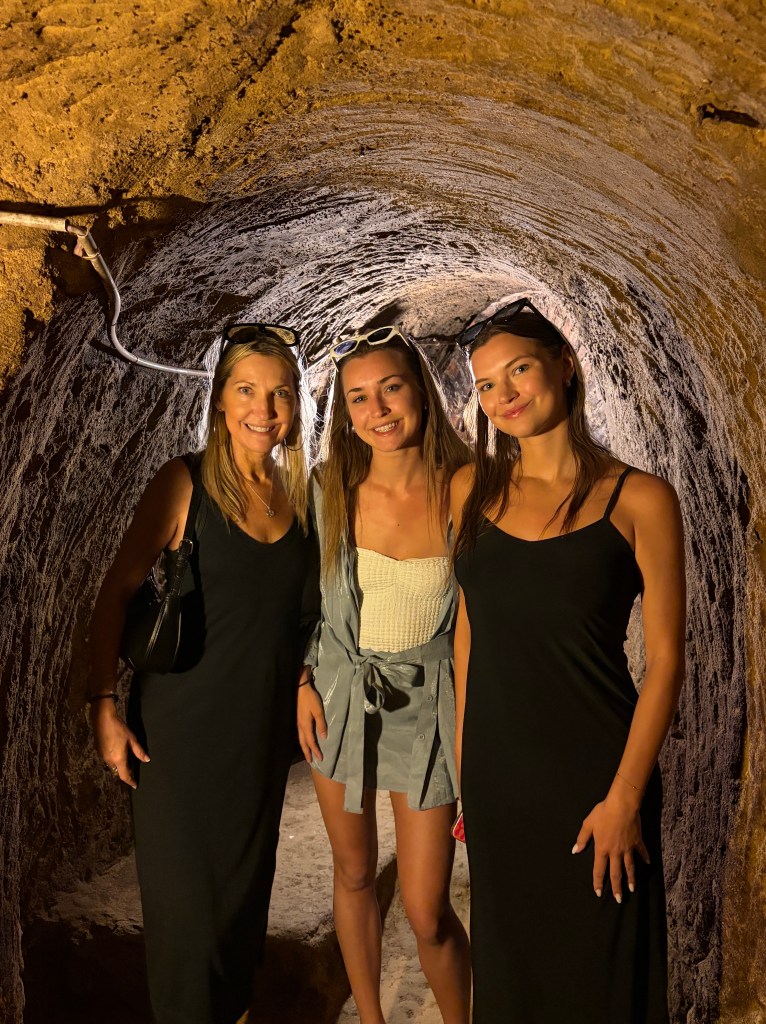
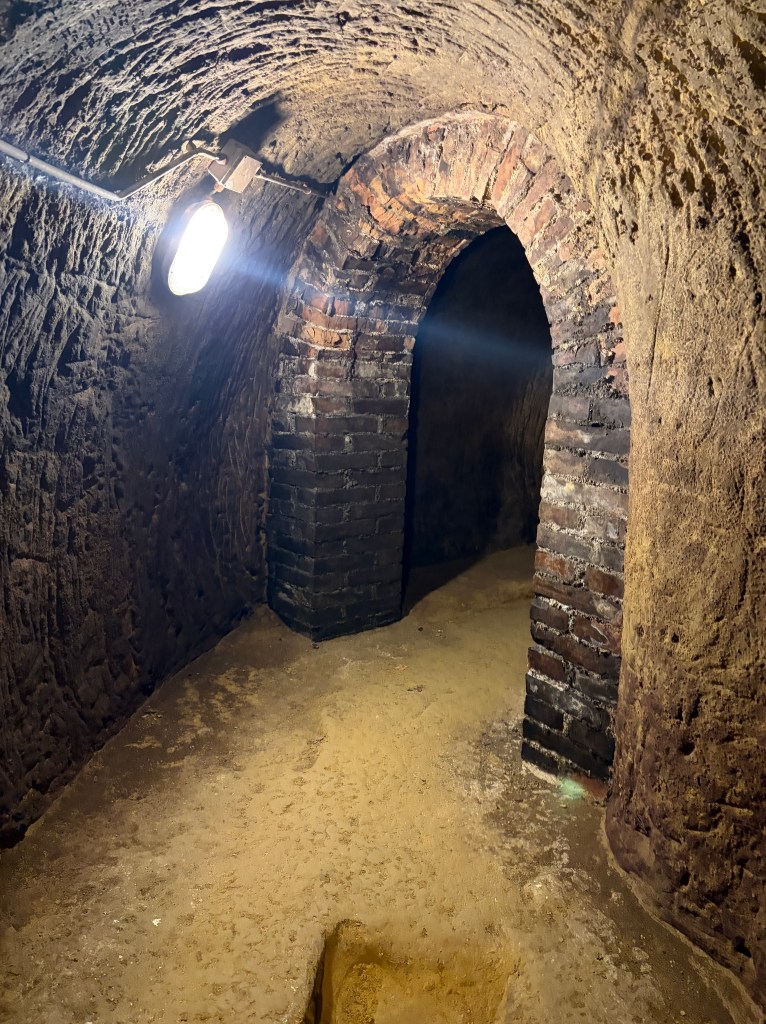
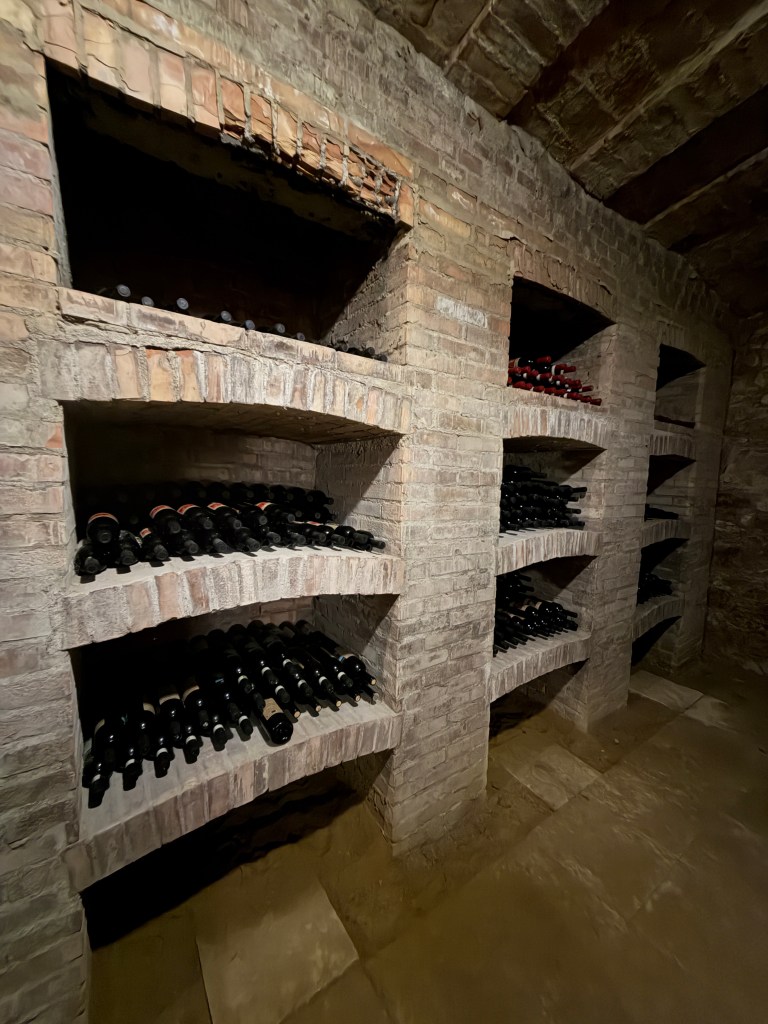
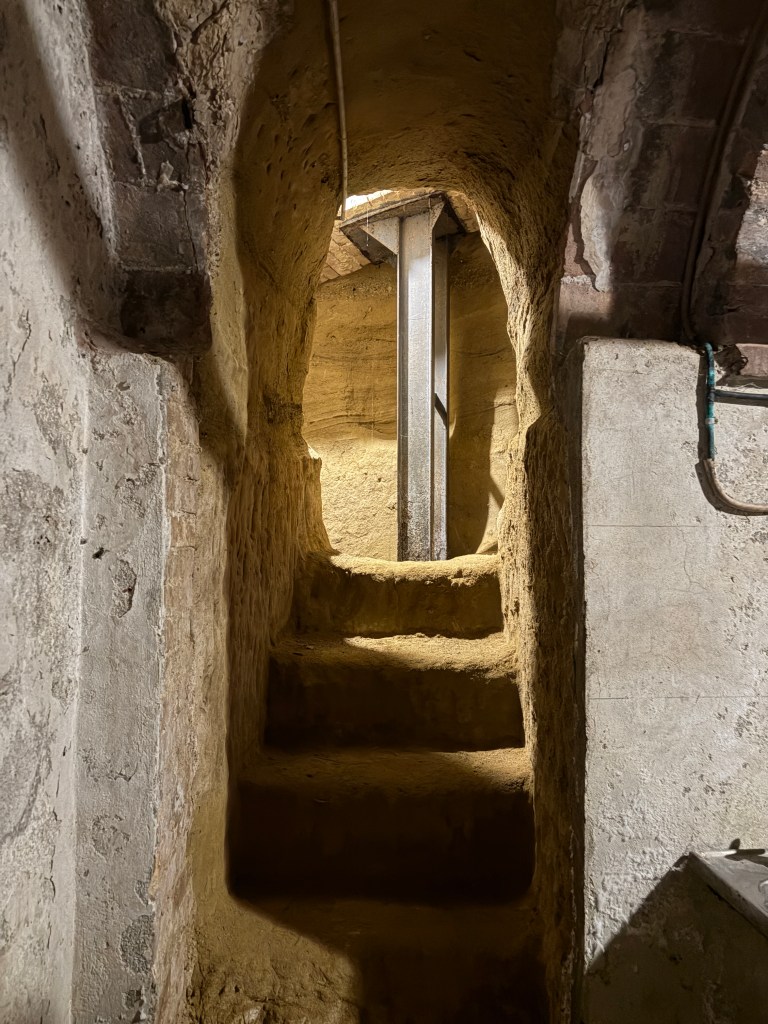
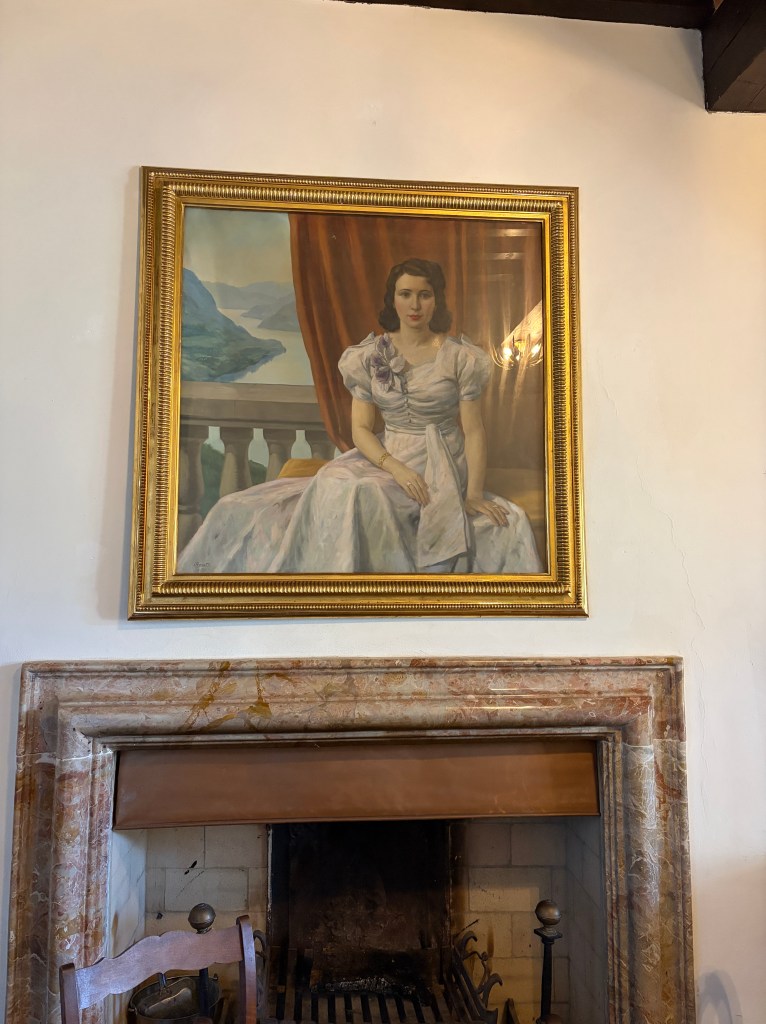
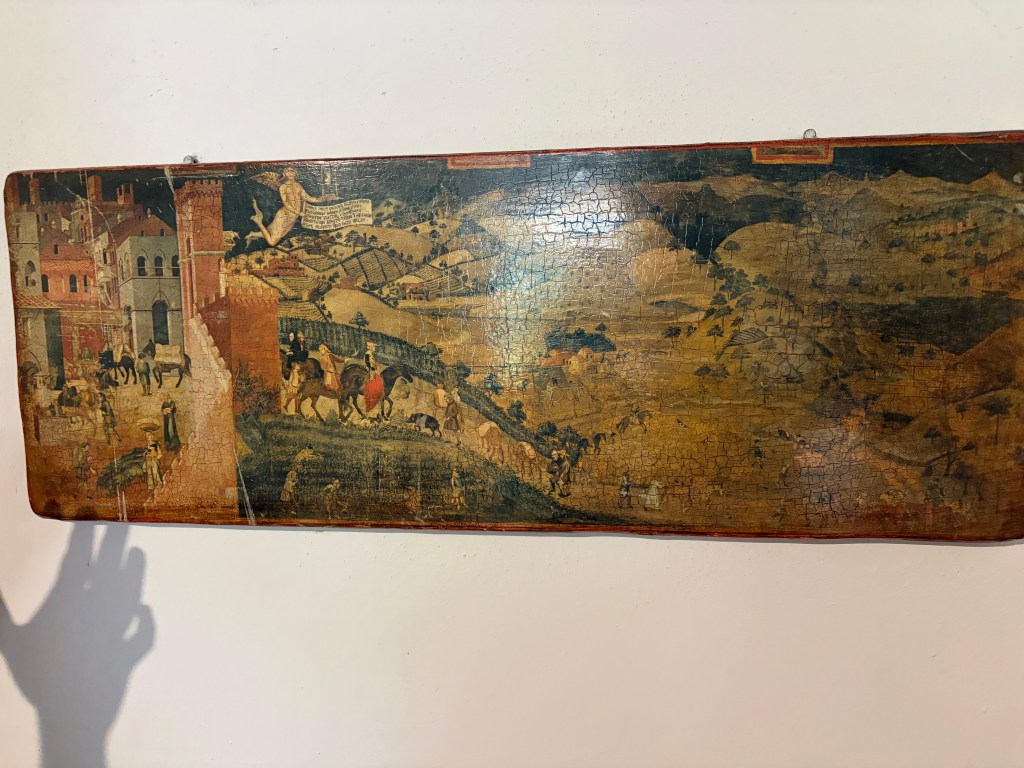
Back above ground, historic photographs line the walls, including images of Lunella Castelli, whose strength and character inspired the estate’s two rosé wines that proudly bear her name.
Chianti, Deconstructed
Instead of blending Tuscany traditional grapes together into a classic Chianti, La Torre all Tolfe has created something different: “Chianti Deconstructed”.
The winery produces single-varietal wines from the traditional grapes usually blended into Chianti — including Sangiovese, Canaiolo, Ciliegiolo and the rare Colorino — allowing each grape to tell its own story.
Wood is used sparingly. French oak is intentionally avoided because its vanilla influence can overpower the fruit. Instead, select wines are aged in custom-made Italian chestnut barrels, an older regional tradition that adds texture and complexity while preserving the wine’s sense of place. It also ages the wines faster.
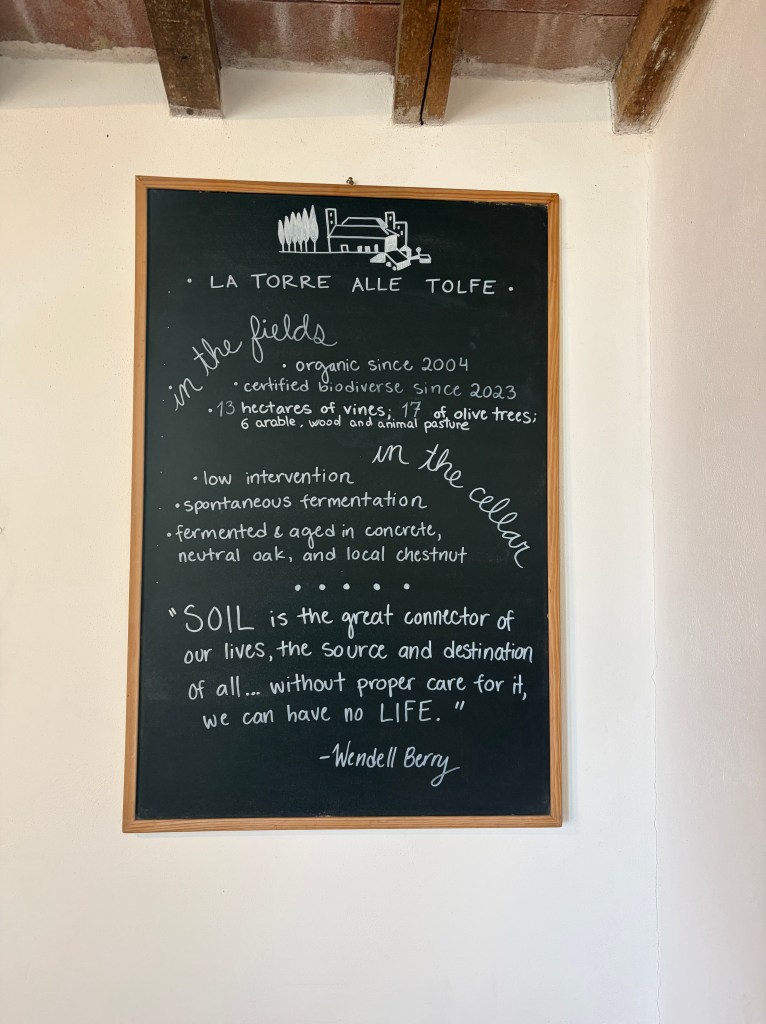
Soil is the Great Connector of our lives – the Philosophy of La Torre alle Tolfe
We were in excellent hands with our host, Sep, whose enthusiasm, knowledge, and friendliness made the tour and our tasting both educational and entertaining.
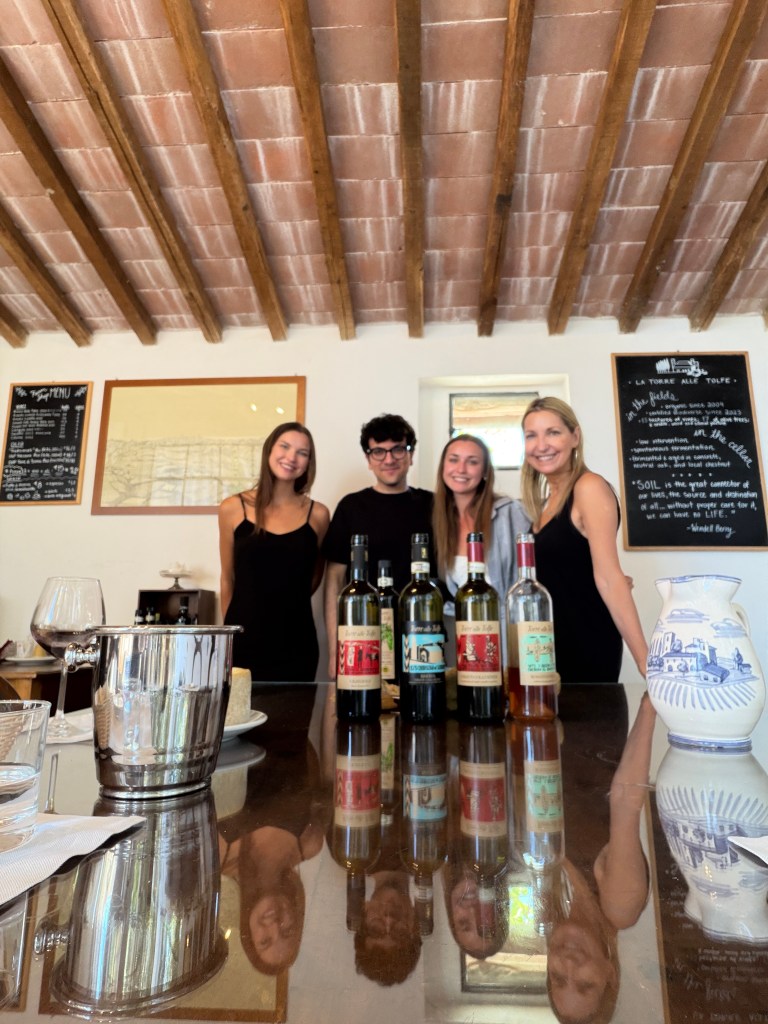
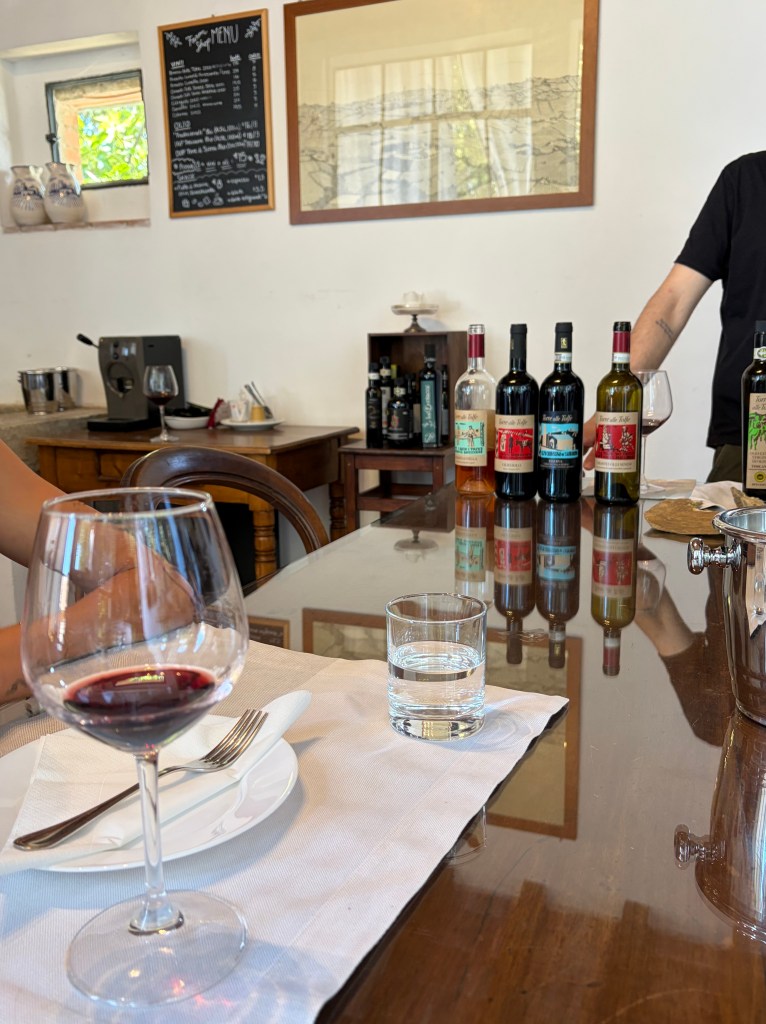
Then we settled around the tasting table, where we experienced the estate’s wines one by one, each offering a different expression of these Tuscan hills.
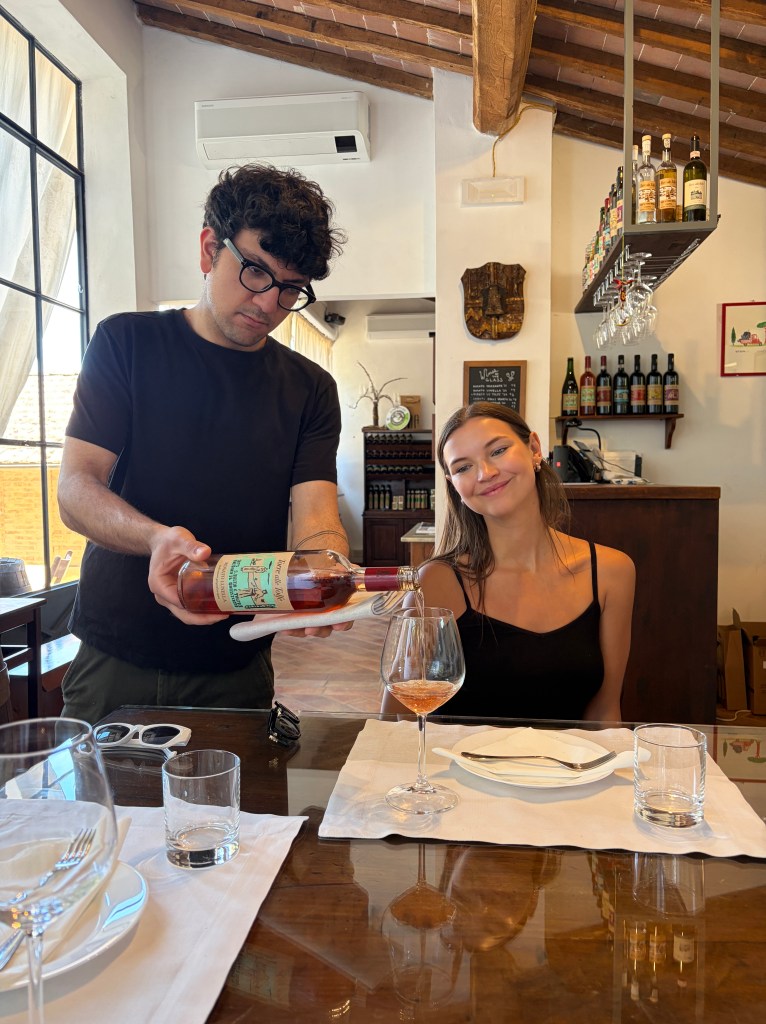
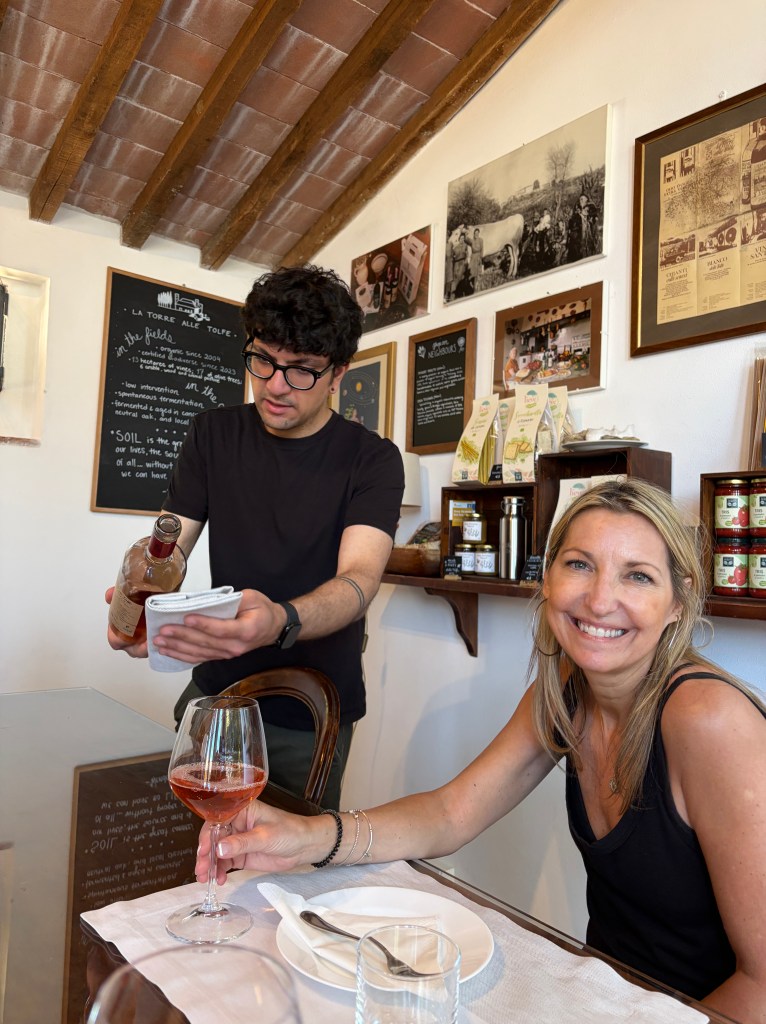
We began with Rosato Lunella 2024, named after family matriarch Lunella Castelli. Bright and fresh, this rosé felt like Tuscan summer in a glass. We immediately reserved a bottle to enjoy poolside following our tasting.
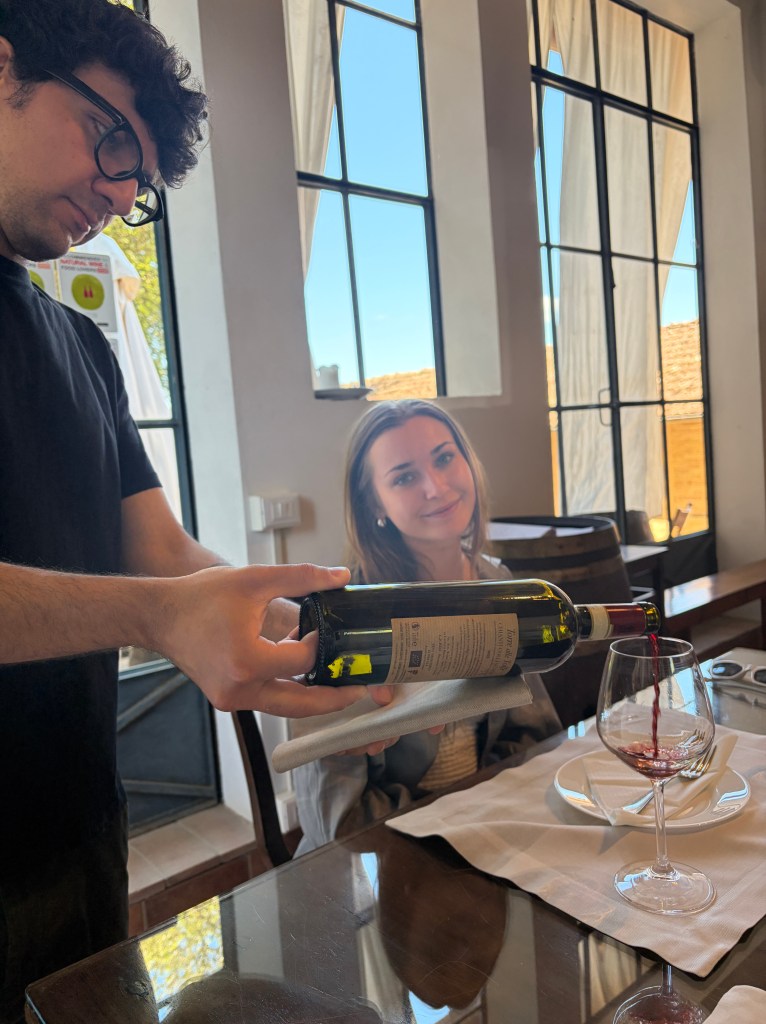
From there we explored Sangiovese through two very different lenses. The Chianti Colli Senesi 2022 and the Chianti Colli Senesi Riserva revealing an entirely different side of the grape aged in traditional Italian chestnut barrels.
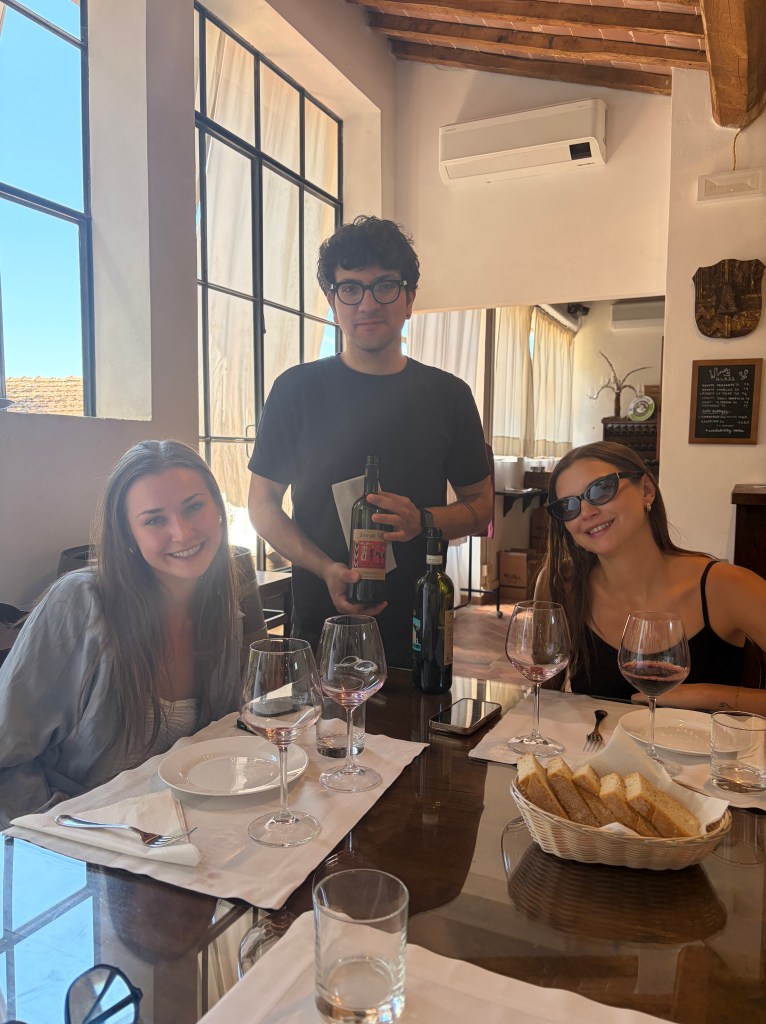
One of the biggest surprises of the afternoon was the Ciliegiolo Rosso Toscano IGT. Richer and more generous than Sangiovese, with beautiful black cherry flavours and silky texture, it made a convincing case that this historic Tuscan variety deserves far more attention than it receives.
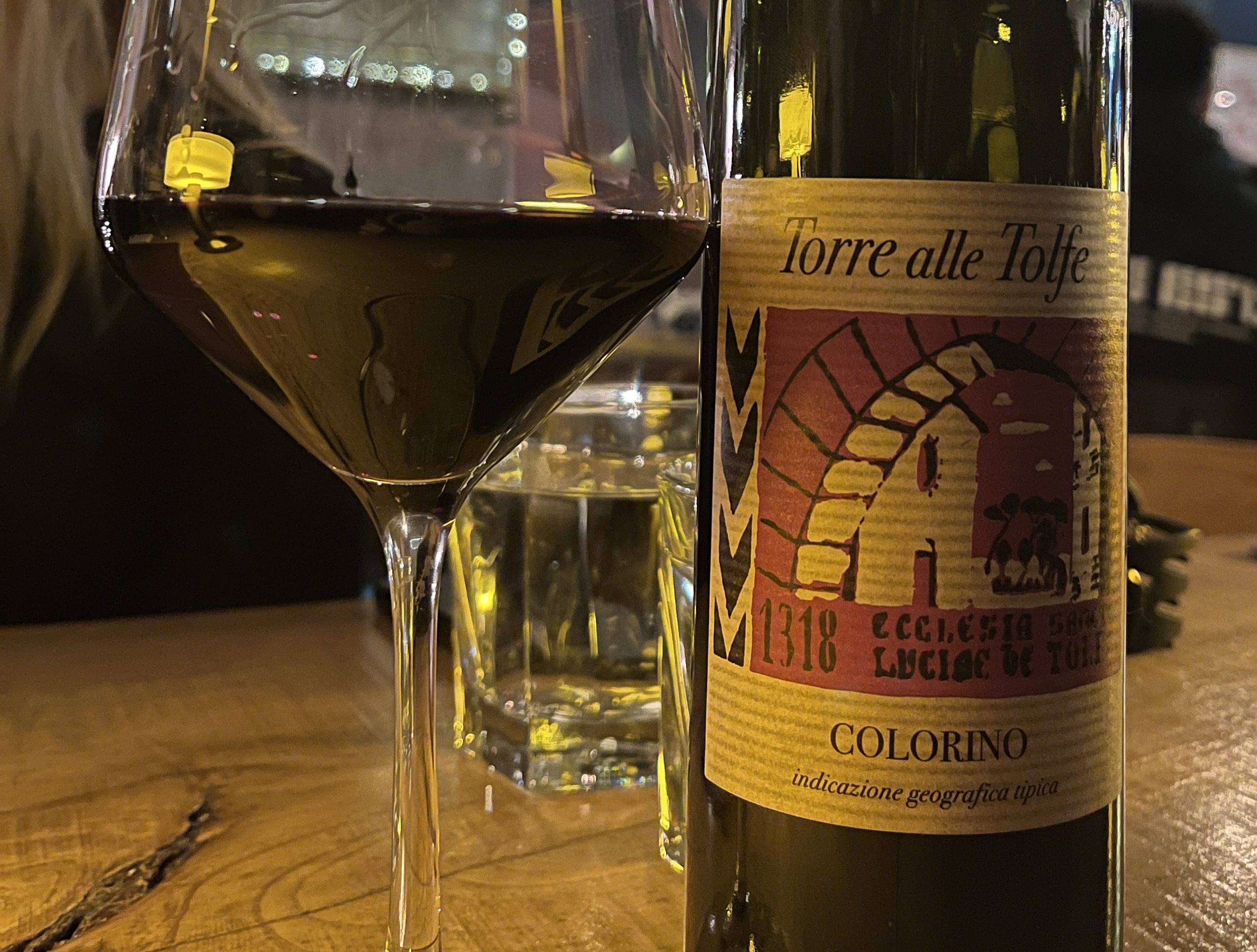
The Wine That Brought Me to Tuscany – Colorino.
That single glass of Colorino quietly shaped our entire Tuscany itinerary. Now, months later, I was standing just steps from the apartment we’d called home for the week, tasting the very wine that had brought me here. Travel doesn’t often come full circle quite so perfectly.
Sometimes the best journeys really do begin with one glass of wine.
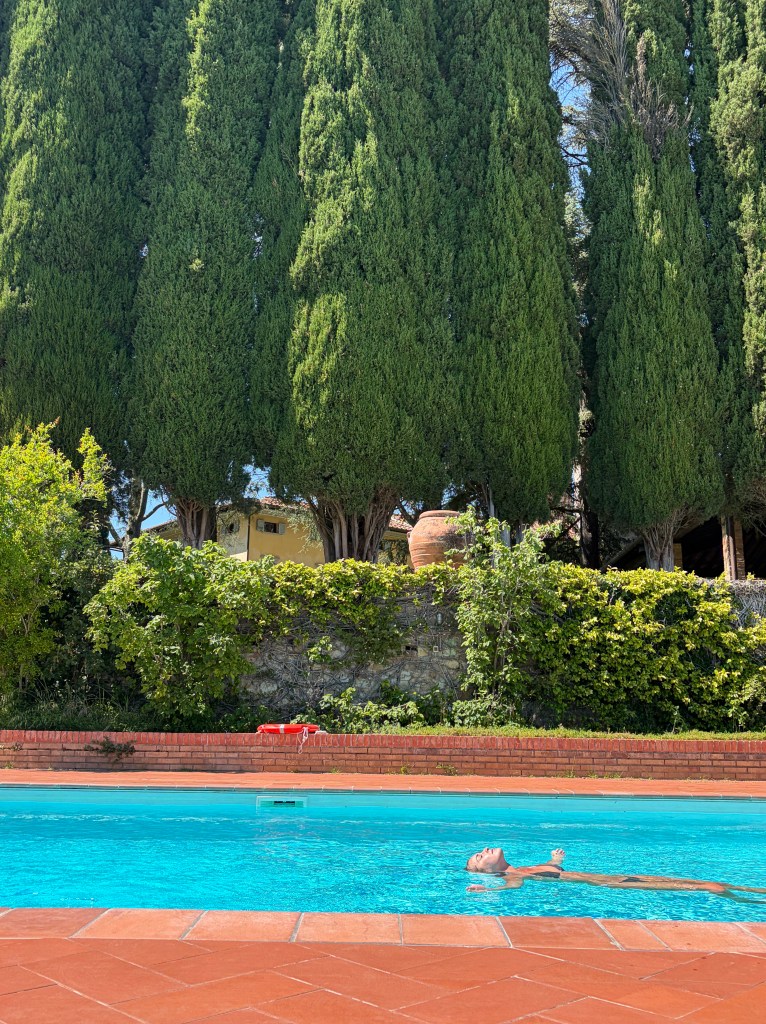
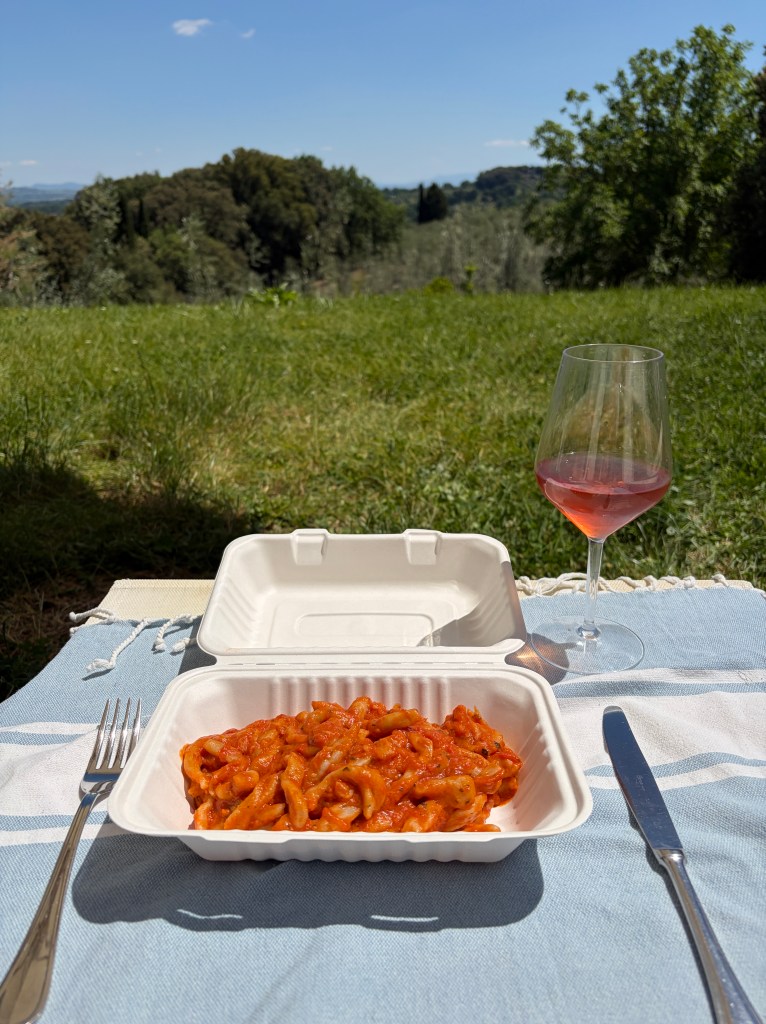
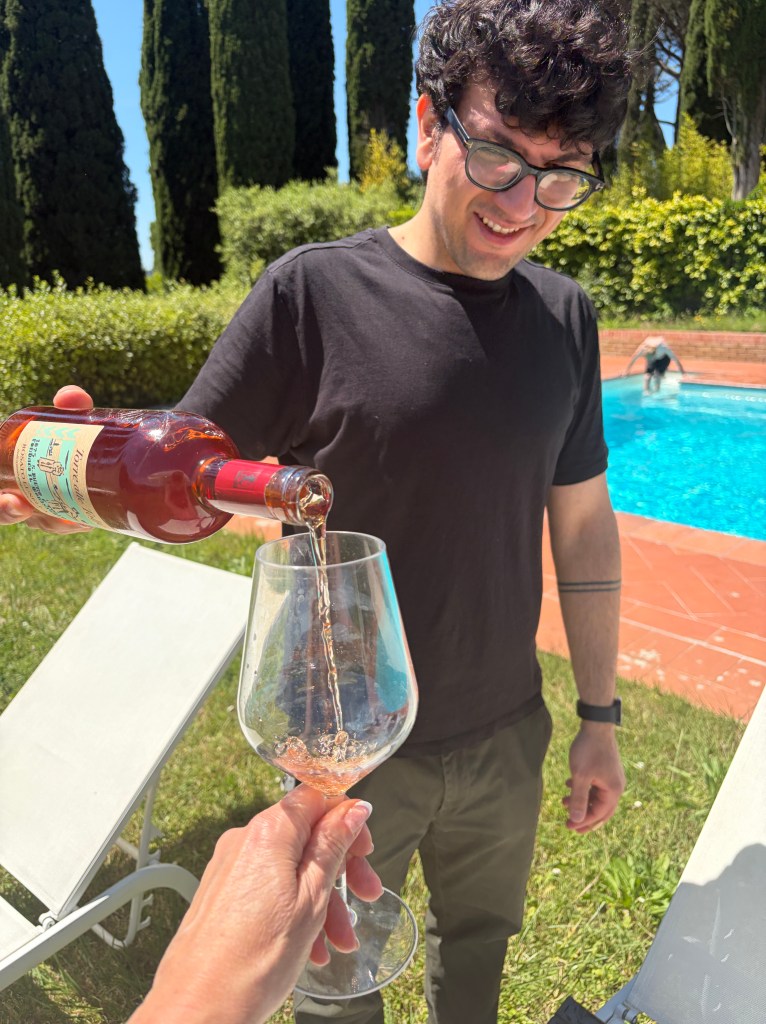
La Torre alle Tolfe wasn’t simply one of the wineries on our Tuscany wine playlist. It became the place where every day began and every evening ended.
For one unforgettable week, La Torre alle Tolfe wasn’t just where we stayed — it was home.
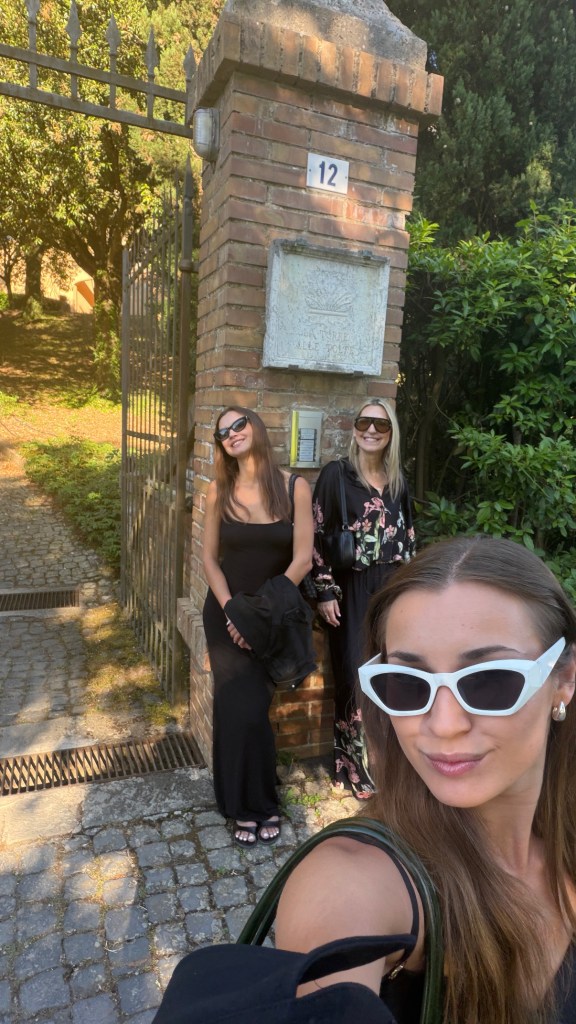
Bookends of a Tuscan Dream: Florence & Siena
These two remarkable cities became the bookends of our Tuscany wine adventure, each offering a completely different glimpse into the heart of Tuscany.
Florence: Renaissance Beauty and Wine Windows
Siena: Where History Still Lives.
Hooked on Tuscany
I’m still smiling about this unforgettable Tuscany wine adventure. Yes, the vineyards were spectacular. The wines were among the finest I’ve ever tasted. And the rolling hills, cypress-lined roads, medieval villages, golden sunsets, and impossibly beautiful landscapes were everything I’d imagined.
But what stays with me most is the feeling.
The feeling of discovering places where centuries of history still shape every bottle. Meeting passionate winemakers who pour their heart and soul into their craft. Lingering over long lunches, laughing around tasting tables, and ending each day beneath the Tuscan sky with a glass of wine in hand.
Most of all, it was the joy of experiencing it all with both my daughters.
Together we explored Florence’s historic wine windows, wandered Siena’s winding streets, stood among ancient vineyards, met remarkable people, and created memories that will always be worth more than any bottle we brought home.
Every winery gave us something different — a scientific DNA curiosity, a timeless love story, a trailblazing woman, a family legacy, a hidden gem where nature and winemaking exist in perfect harmony, ancient Etruscan wine stone traditions, and a medieval borgo. Together, they created a journey we’ll never forget.
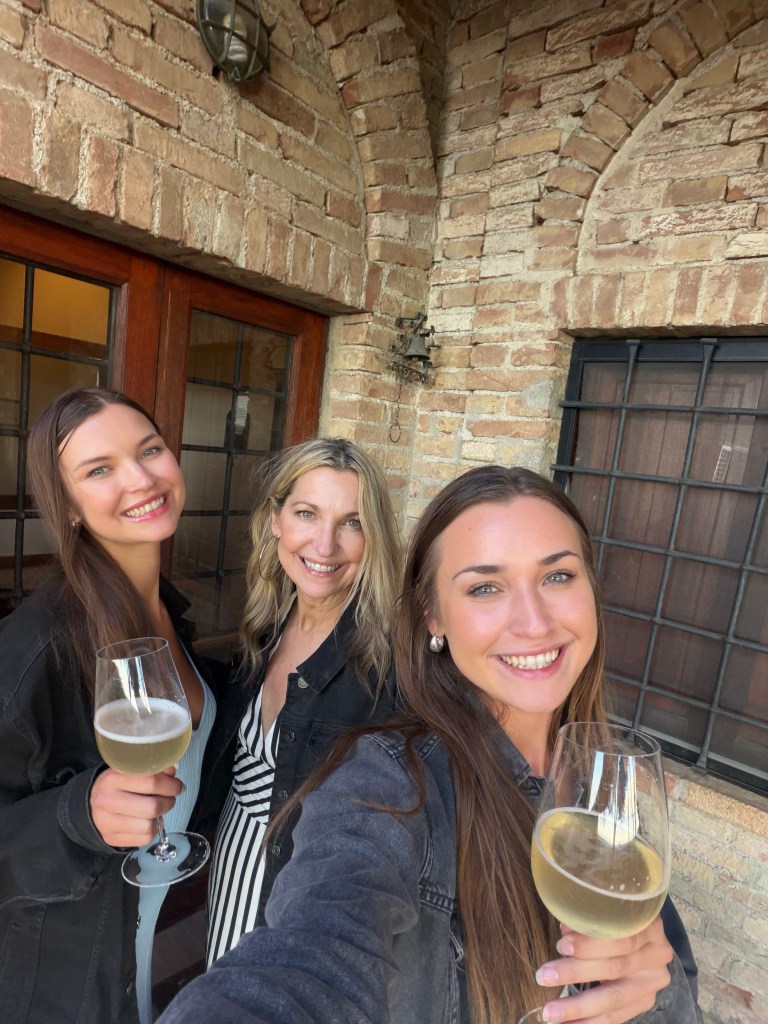
My heart is full. Three glasses, forever.
Mom-and-daughter magic.
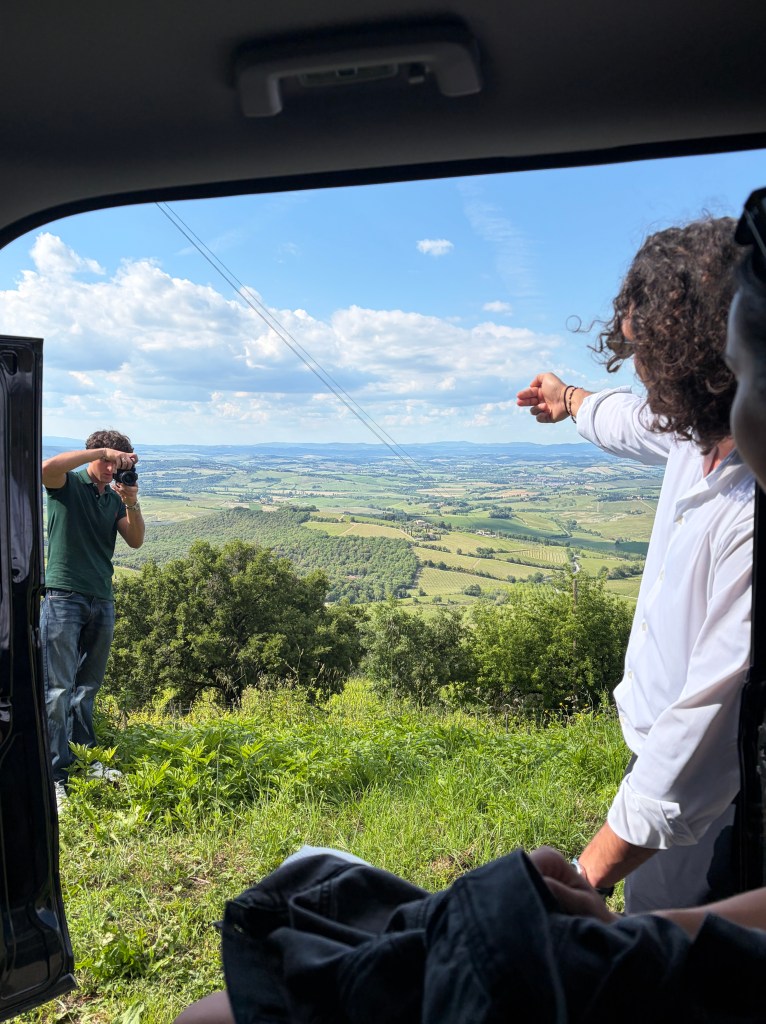
A special thank you to Niccolò Bianchi for so beautifully capturing this adventure through his photography. His images tell the story far better than words ever could and allow us to relive this incredible journey again and again.
I came to Tuscany chasing the story behind a bottle. I left with the stories of the people and places that made it.
Would I do it all again? In a heartbeat. I can’t wait.
Until next time, Tuscany.
If you’re dreaming of your own Tuscany wine adventure, here’s my itinerary to inspire your own playlist of unforgettable moments.
Our Tuscany Wine Adventure at a Glance
Florence – 2 nights Airbnb (for a link to our fabulous Airbnb, DM @mywineplaylist)
- Historic center exploration
- Chasing Wine Windows
- Tuscan food and wine discoveries
Siena – 4 nights La Torre Alle Tolfe
Driver & Wine Tour Guide: Ema DiWine
- Wine Tour Day 1
- Pick up in Florence
- San Gimignano
- Terre di Sovernaja
- Brancaia
- Check-in at La Torre alle Tolfe
- Wine Tour Day 2 – Montalcino
- Donatella Cinelli Colombini
- Molino di Sant’Antimo
- Jessica Pellegrini
- Pizza Night at La Torre alle Tolfe
- Wine Tour Day 3
- Castello di Potentino
- Bagni San Filippo thermal pools
- Evening in Siena
- Wine Tour Day 4
- Pool Day at La Torre alle Tolfe
- Evening in Siena
- Wine Tour Day 5
- La Torre alle Tolfe tasting/tour
- Poolside, more wine
- Transfer to Florence Airport


