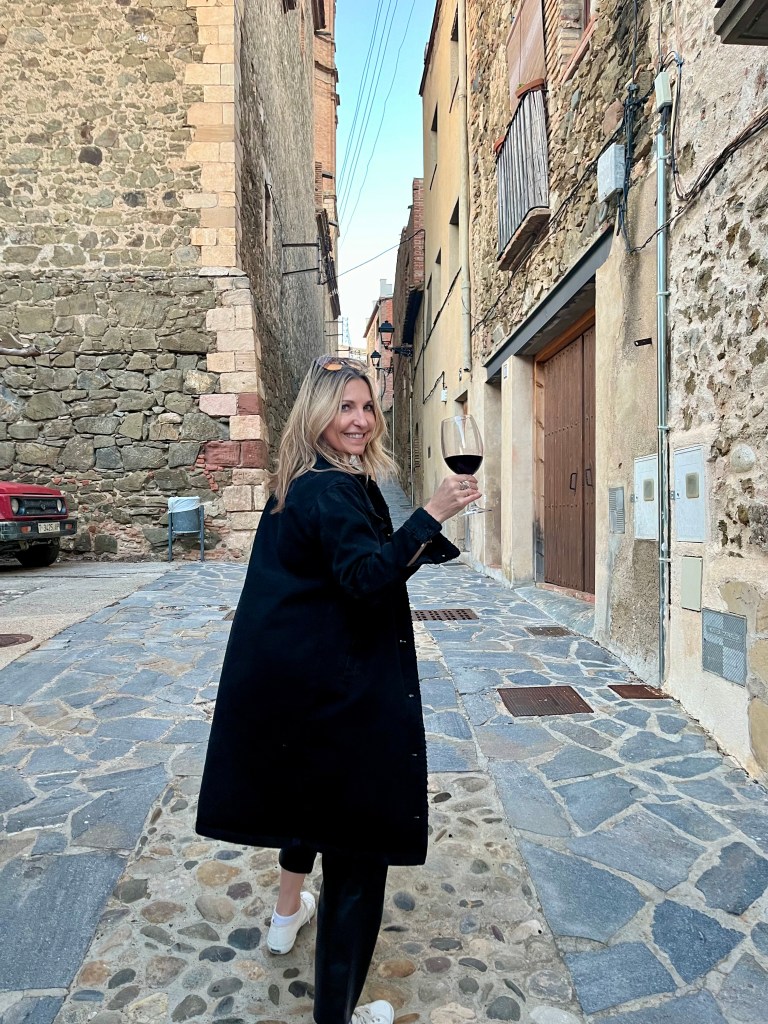
From the monks who settled at the foot of a stairway to heaven to the hippies who arrived centuries later to make a great bottle of wine, these are the legendary stories of Priorat.
Just a 2-hour drive from Barcelona is the storied wine region of Priorat. It’s one of Spain’s little known wine regions yet classified as one of the only two DOQs in the country, the other being Rioja. The wines are extremely sought after by those who know; however, they’re still relatively new, making their mark in 1989/early 1990s. Tourism in Priorat is not as popular as Rioja but the wine lovers who trickle in are treated to a very special place where great wines grow.
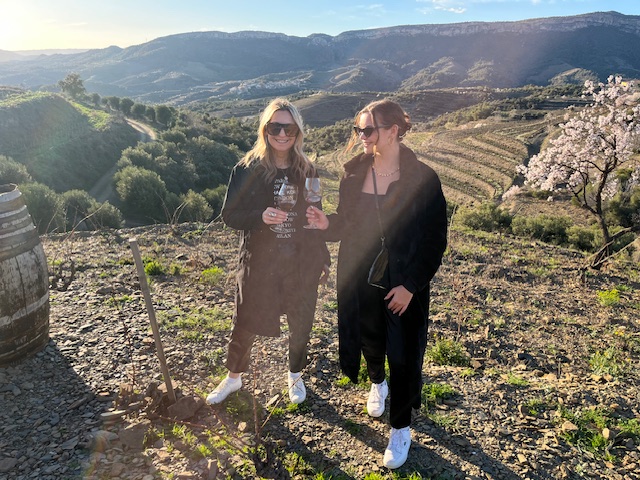
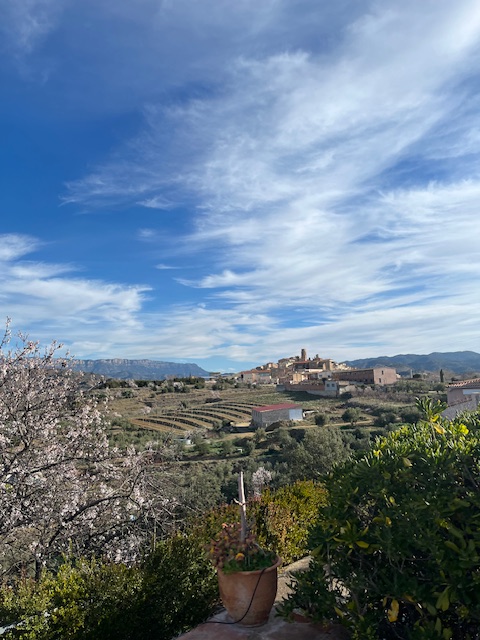
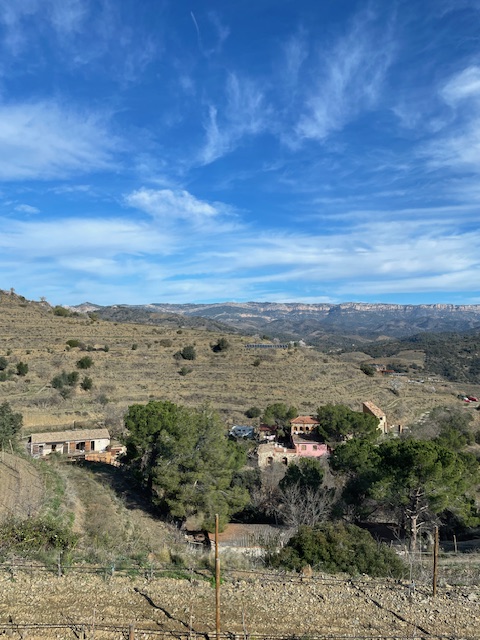
My daughter and I set out to explore this divine wine region in February. The winding and twisting road up the hills to Priorat, only 20 km from the Mediterranean Sea, is very scenic with rugged terrain and breathtaking views. The Montsant mountain range is the majestic backdrop to this small wine region and also shelters the vineyards. Priorat is made up of 12 small villages, very rural and each with a distinct character. The area is in the center of another wine region known as Montsant. Locals say that Montsant circles Priorat like a donut. While the grape varieties are the same, the terroir is not. There are a few winemakers that have roots in both regions and are creating exciting, amazing wines, like wine rock stars, Sara Pérez and René Barbier. More to come on that.
In Priorat the vineyards grow on steep slopes of grey and black slate and quartz, the soil is called llicorella (a metamorphic rock that combines clay and volcanic ash). Winemaking in Priorat is not easy but the people that make wine here are so passionate about their region and its possibilities. The vines do their part and work hard to survive, rooting through cracks in the rock and deep into the ancient soil to tap into water. The conditions are tough on the vines resulting in low yields. This journey, however, creates a special terroir signature in the wines that the region is famous for. Here, quality not quantity is the focus.
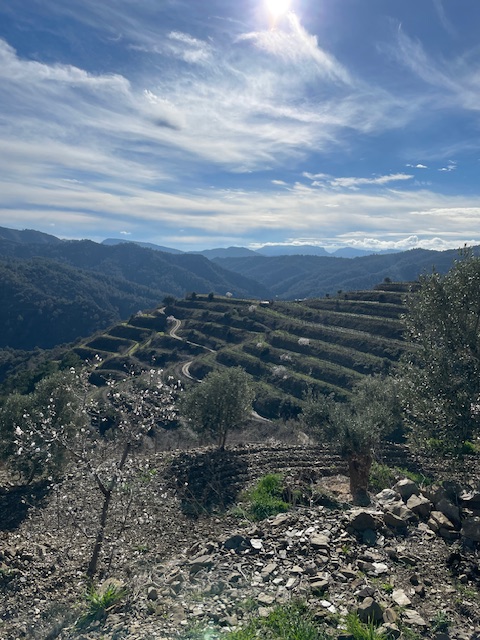
All grapes are hand picked in Priorat due to regulation and the terroir. It’s almost impossible to get machinery on the steep slippery slopes and many use horses or mules to work the vineyards. The grapes varieties, Garnacha (Grenache) and Cariñena (Carignan) reign in Priorat, with a little Cabernet Sauvignon and Syrah. The rare white Priorat wines are made from small parcels of Garnacha Blanc and Macabeu.
Fun fact: Macabeau is also one of three dominant grapes in the production of the Spanish sparkling wine, Cava.
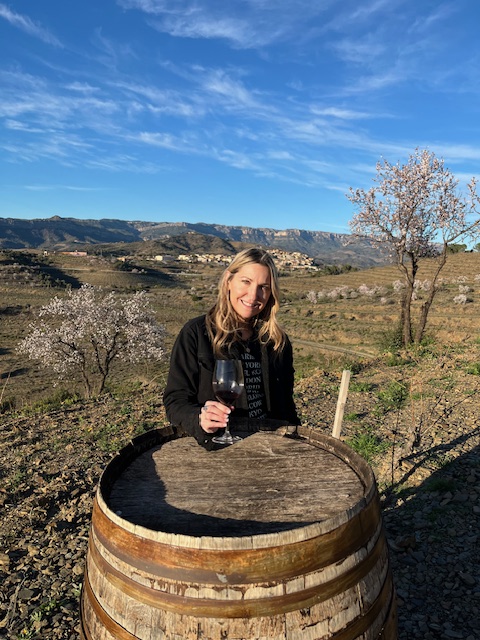
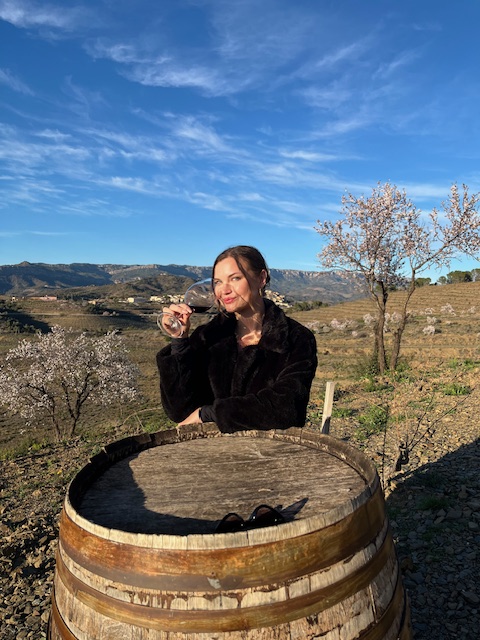
Typical Priorat wines are big, bold and velvety reds with high alcohol. They are deep, dark, and structured, with notes of sun-dried red and black fruits, rich baking spices, licorice and tar. There is also an intense minerality, especially graphite, that comes from the slate soil. The wine philosophy that has evolved in Priorat is that it is more important to make wine of the terroir. Grenache is the star but Carignan holds its own as a single varietal. We tasted 100% Carignan wines at each of the wineries that we visited and every time it was our favourite. I am now a big fan of this varietal and came home with a few bottles of Priorat Carignan.
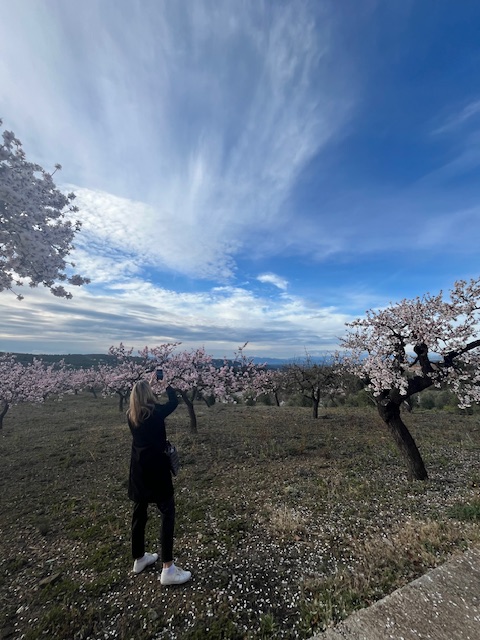
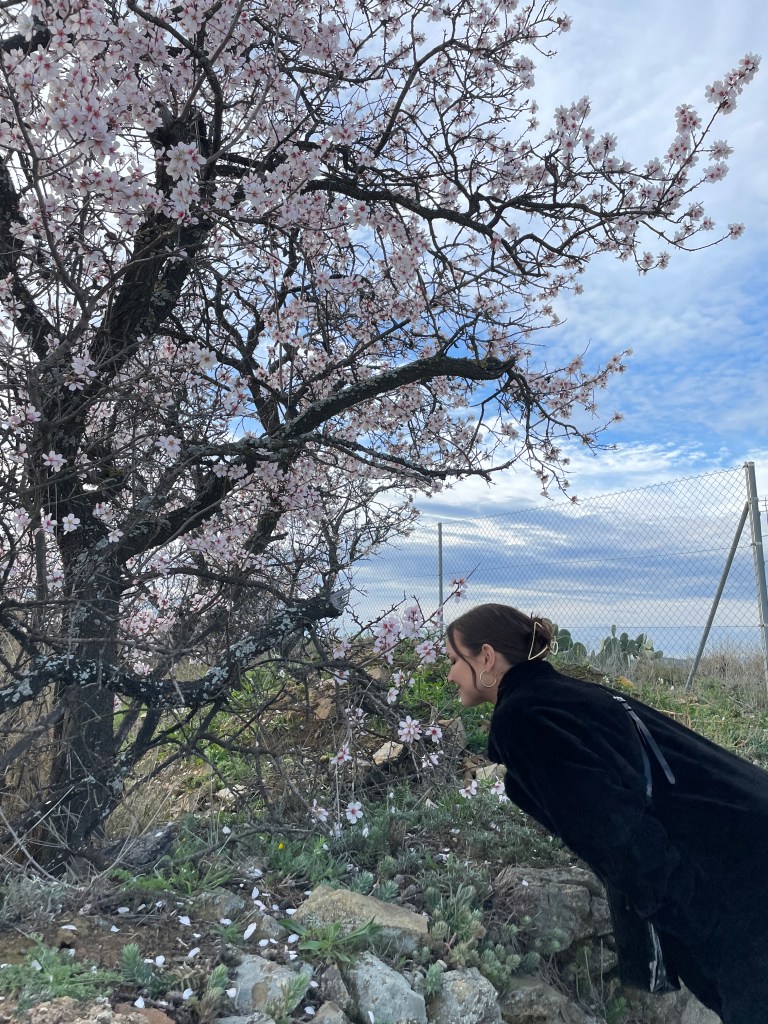
Priorat has its own microclimate with long hot dry summers and cold winters. There is very little rainfall and as modern irrigation is not common in this biodynamic region, a few vineyards use solar powered water mines to naturally capture the winter snow and pool the water as a way to irrigate the vineyards in the summer when required.
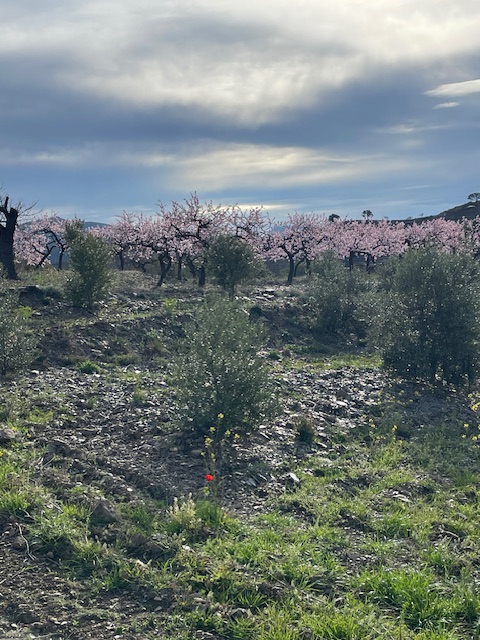
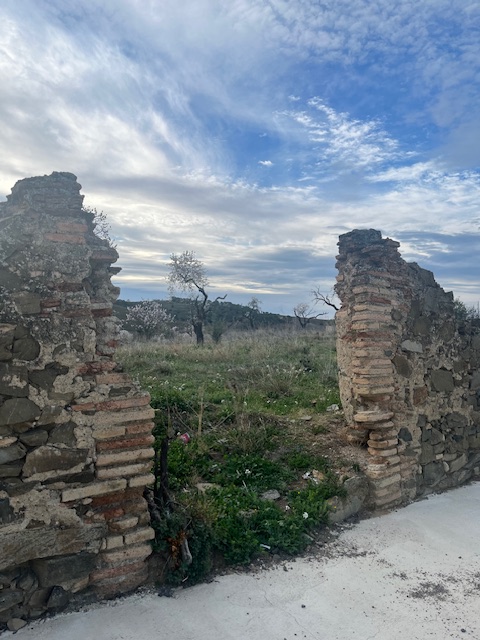
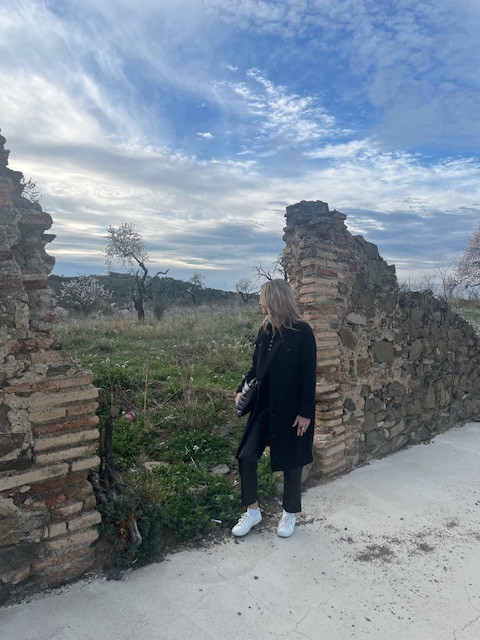
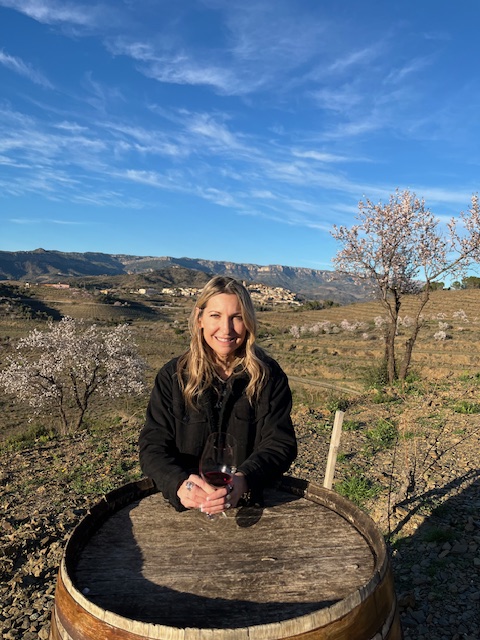
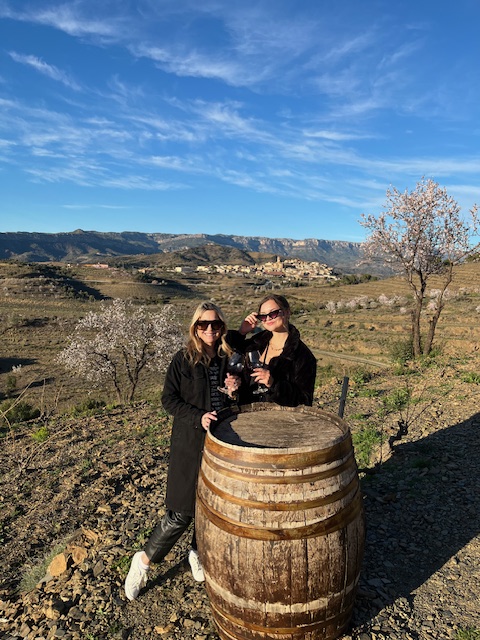
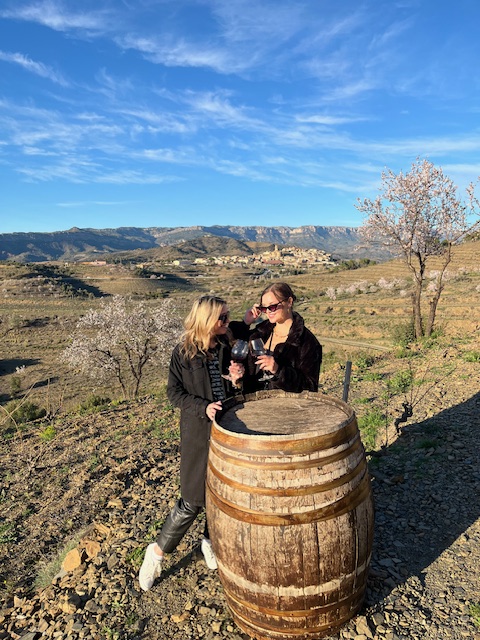
Winter in Priorat means cooler weather and empty vines but we were blessed with blue skies and sunshine every day. It was absolutely gorgeous and the blossoming almond trees with one little red poppy pictured here gave us a sneak preview to Spring in Priorat. We heard that it snowed in the region two weeks later.
Everyone loves a good comeback story. Priorat’s is one of the best.
Newcomers are captivated by the magic of this place, where angels climb ladders and wine runs through people’s veins – TurismePriorat.org
Where there are monks there is wine. Priorat’s winemaking history dates back to the 12th century when the Carthusian Monks established a priory, the Monastery of Scala Dei from which the region gets its name. Priory = Priorat in Catalan and Priorato in Spanish. While this region is tough with the soils, the land was rich with olive trees, hazelnut and almond trees, and vines. The monks established viticulture with two indigenous grape varieties Garnacha and Carignan which prospered for several centuries.
Priorat has a moment. An interesting fact is that when phylloxera hit the vineyards of Bordeaux in the 1860’s many wineries used grapes from Priorat to continue producing the wine. Unfortunately, in time phylloxera also hit Spain and most of the vineyards in Priorat were wiped out. This was devastating to the region and many of the vineyards were abandoned. Following WWI only a few families remained producing wines in the region until the late 70s when the hippies arrived.
The ‘Clos’ Movement – René Barbier, determined to reclaim Priorat as a quality wine region, led the charge inviting a group of friends/visionary winemakers to scoop up the abandoned vineyards. Álvaro Palacios, the youngest of the group at 16 years old (Clos Dofi), Daphne Glorian (Clos Erasmus), José Luis Perez (Clos Martinet), Carles Pastrana (Clos de l’Obac) and René Barbier (Clos Mogador) himself became the original “five Clos”. Each had their own vineyard that they named a “clos” meaning one place, enclosed by a wall, but they pooled their resources and shared one winery. In 1989, they collectively put Priorat on the world wine map. The five winemaking friends released their first vintage together – one wine bottled under five different labels. It was distributed in different countries and became an overnight success with wine critic Robert Parker taking notice. In 1992 they started making their own wines and inspired other winemakers to come to the region. A few of the five have since dropped the “clos” in their name specifically Clos Dofi (now Finca Dofi and l’Ermita) and Clos Martinet (now Mas Martinet).
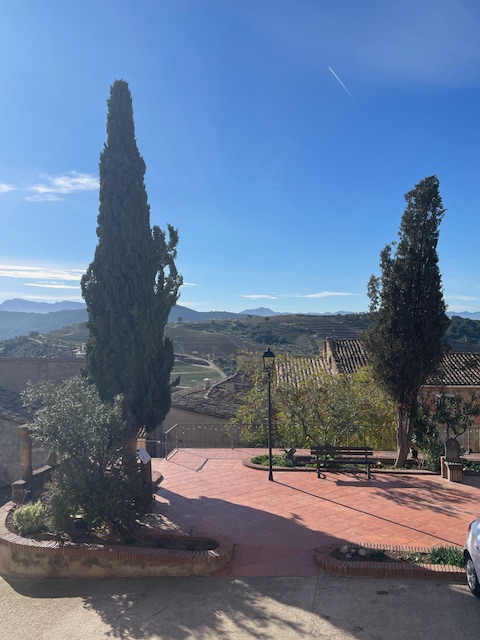
We stayed in the hilltop village of Gratallops in the heart of the Priorat region.
This tiny village with a population of just over 250 people is where Priorat’s wine renaissance began and where the wine cellars of “gang of five” still exist today. The name “Gratallops” means “scratching wolves” in Catalan and is based on the story that an abundance of wolves inhabited the area before there were people.
Gratallops is an authentic, sleepy Spanish town with a slow pace of life, cobblestone streets, and rustic architecture – very picturesque. The quiet village vibes would be interrupted only by a rooster crowing in the morning, the church bells throughout the day, or a “surprise” announcement 😊. We were awoken one morning by strange music playing on a loud speaker outside of our window, followed by an announcement in Catalan, that concluded with the same music. We learned that this is a thing in Spanish villages. Public announcements are made on loud speakers in the morning to communicate things like items for sale, special events, emergencies, garbage collection, and lost animals.
True story: the horses of one of the wineries, Clos Mogador, escaped the vineyards and were found roaming the village on the first morning we were there. Life in a village – you got to love it!
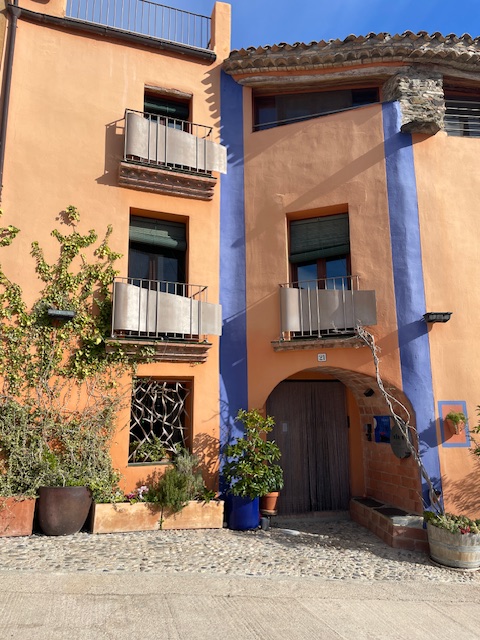
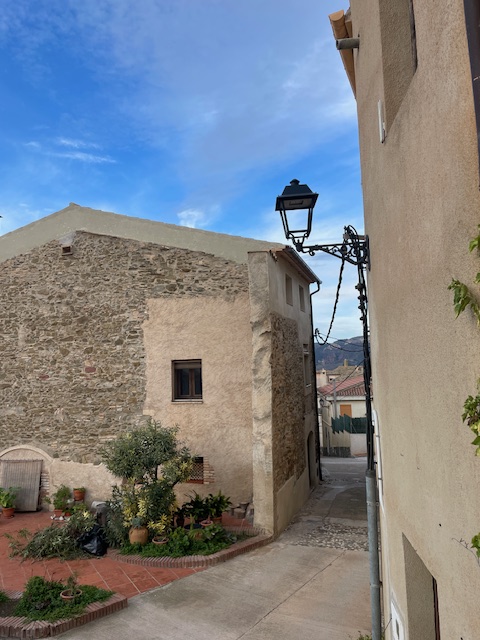
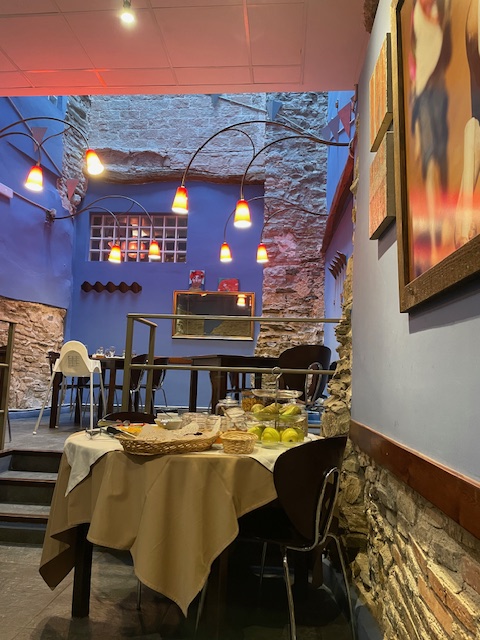
At the top of a steep hill, and on a very narrow cobblestone street that made the sensors on my compact car rental beep all the way up, is the Hotel Cal Llop – an enchanting village hotel which became our home base for 3 nights. We were welcomed by the owner, Christina, and her adorable pup, Lupita. Our room (blue room #4) was rustic and cute, a little medieval-feeling with its stone walls but warm and cozy, and very comfortable. The balcony views from our room of the Priorat landscape, including the famous vineyard of Alvaro Palacios (one of the original 5), were absolutely glorious as were those blue skies.
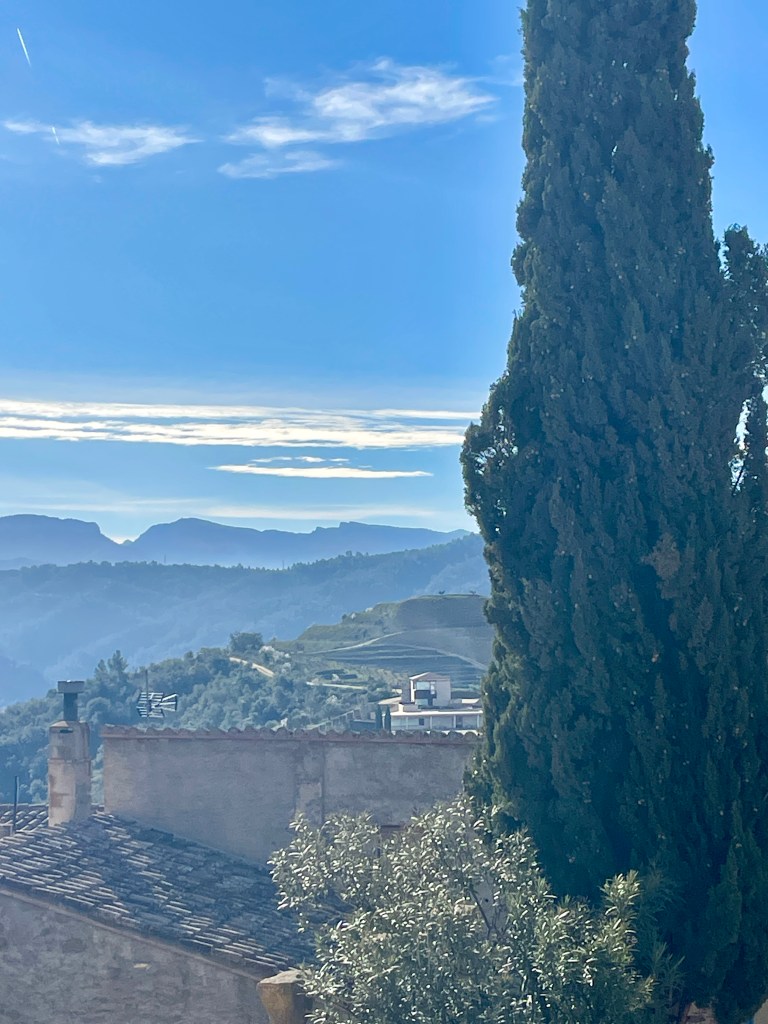
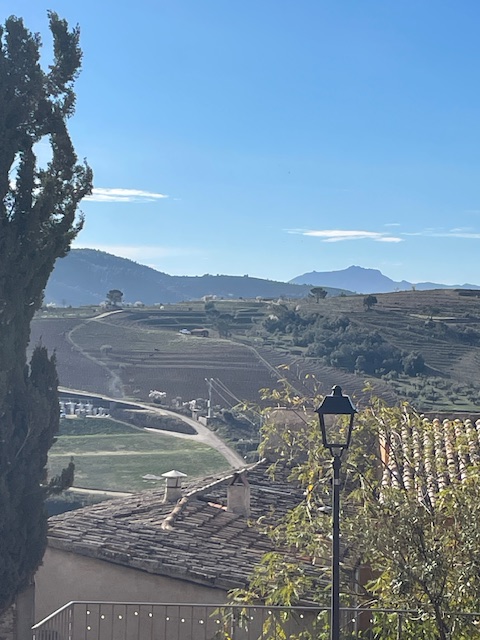
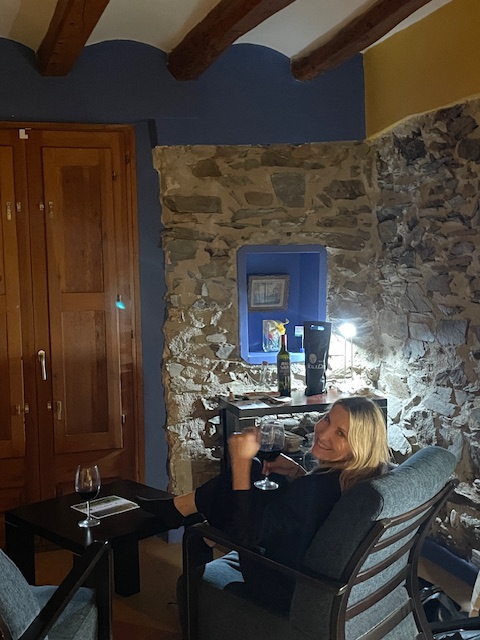
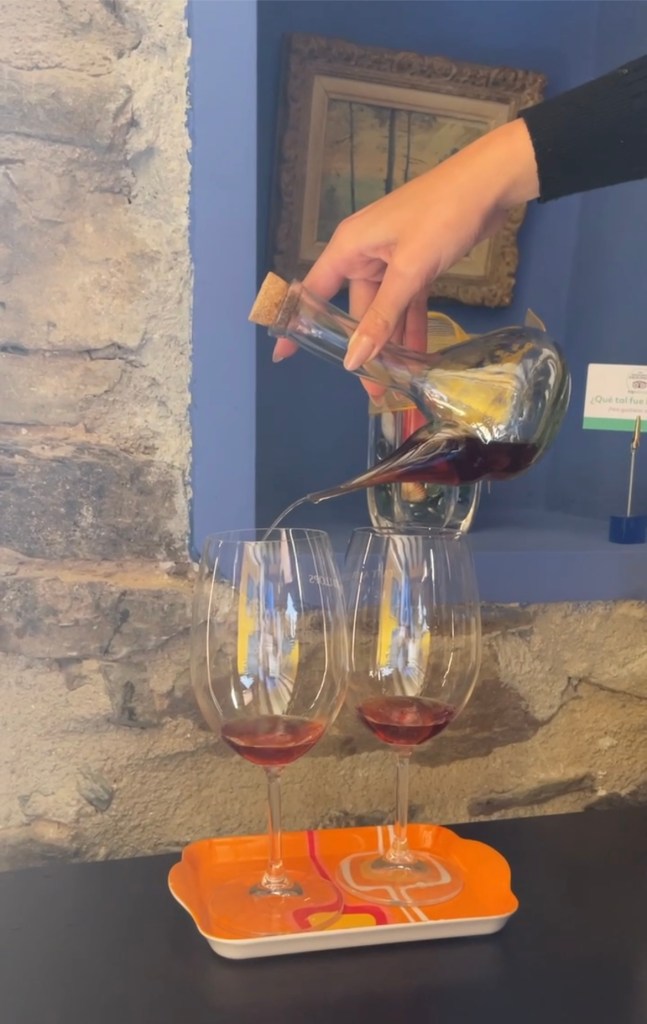
We enjoyed a local sweet wine in our room compliments of Christina. It was served in a traditional glass porrón which is an ancient Catalonian invention for sharing wine. It allows everyone to drink wine from the same utensil without touching it with their lips. Of course we had to try it but in the end we preferred to sip from our own glass :).
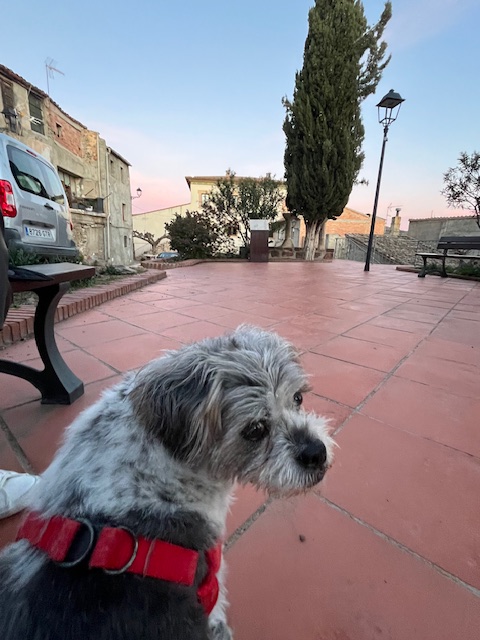
It was off season so the restaurant in the hotel was closed but a wonderful breakfast was still prepared for us by the loveliest ladies in the dining room each morning. We enjoyed sunsets in the village after a day of wine touring by roaming the cobblestone streets or in the village courtyard across the road from the hotel. It was so peaceful.
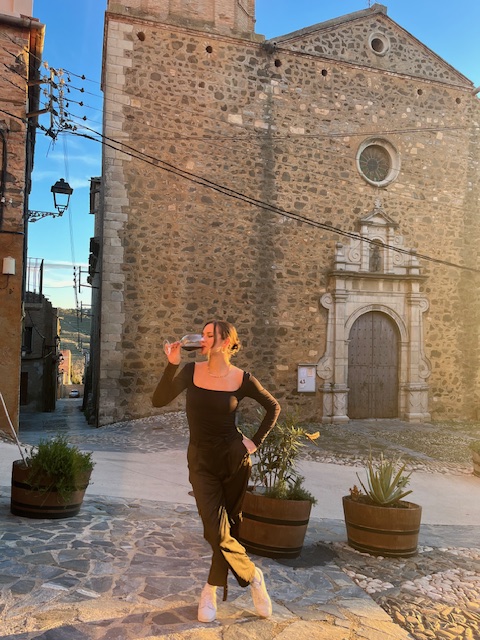

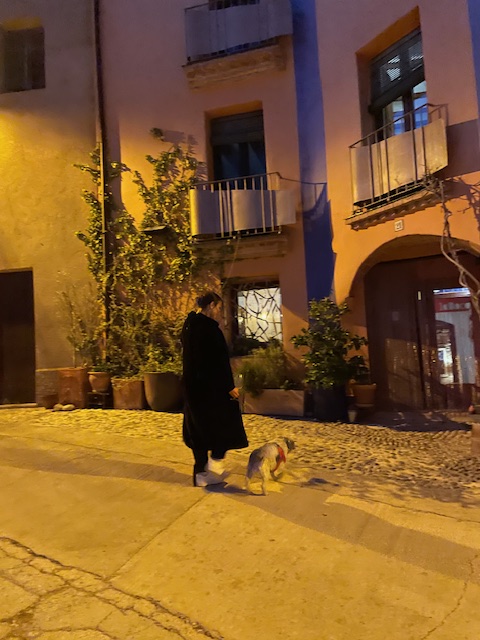
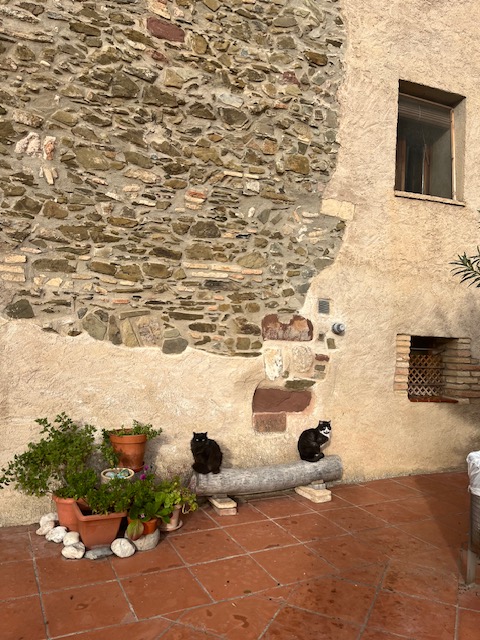
It felt like we were the only ones in the town, the lone wolves, except for a gang of black cats and Lupita, the hotel pup. She was an angel and would greet us in the morning and welcome us back to the hotel when the sun went down.
Where to start a Priorat Wine Tour? From the beginning …
The Cartoixa (Carthusian Monastery of Scala Dei) represents the birthplace of wines and wine-making in the DOQ Priorat region.
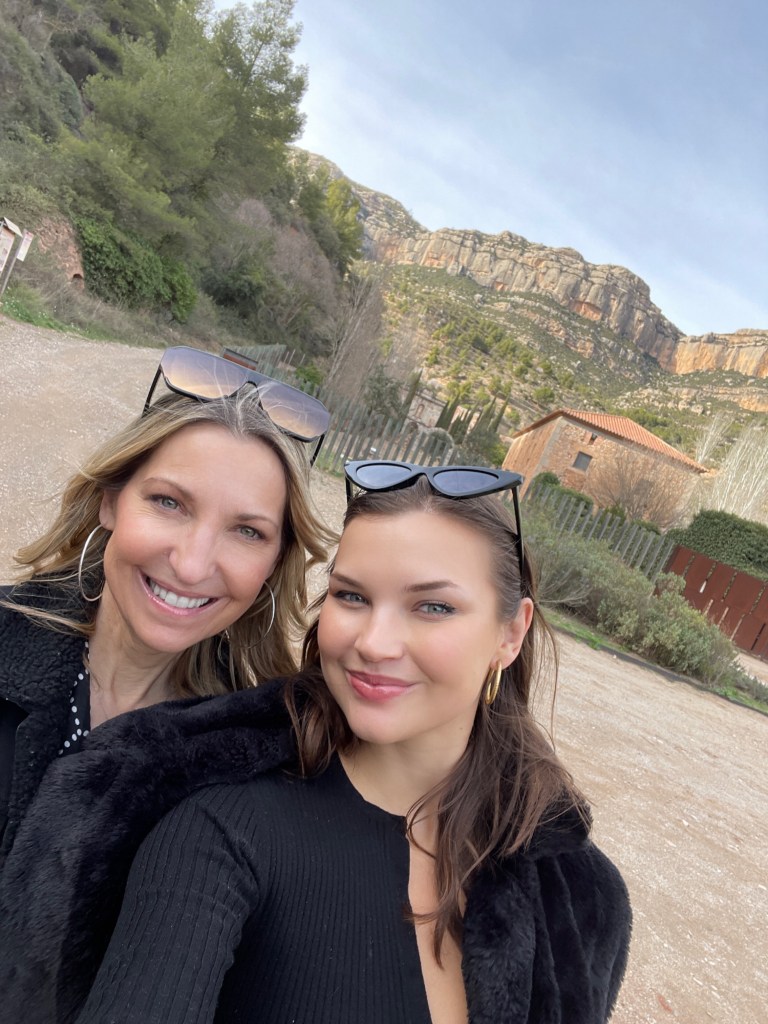
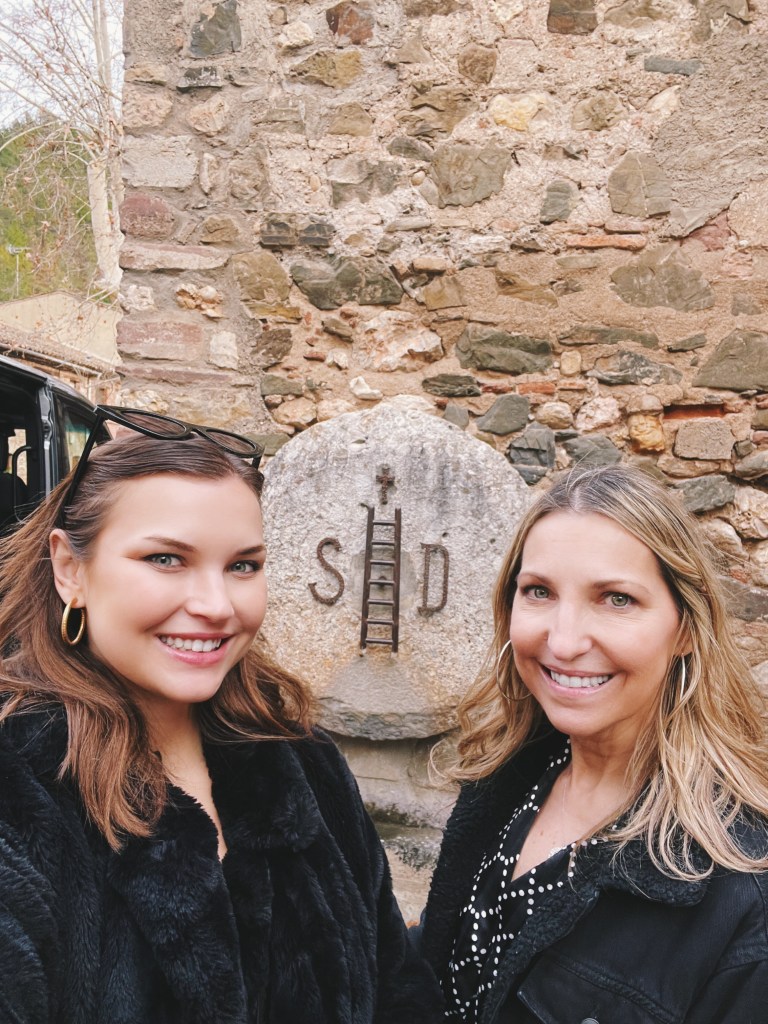
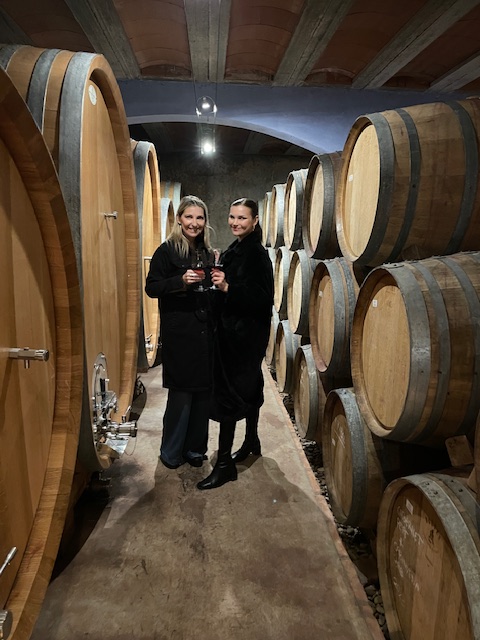
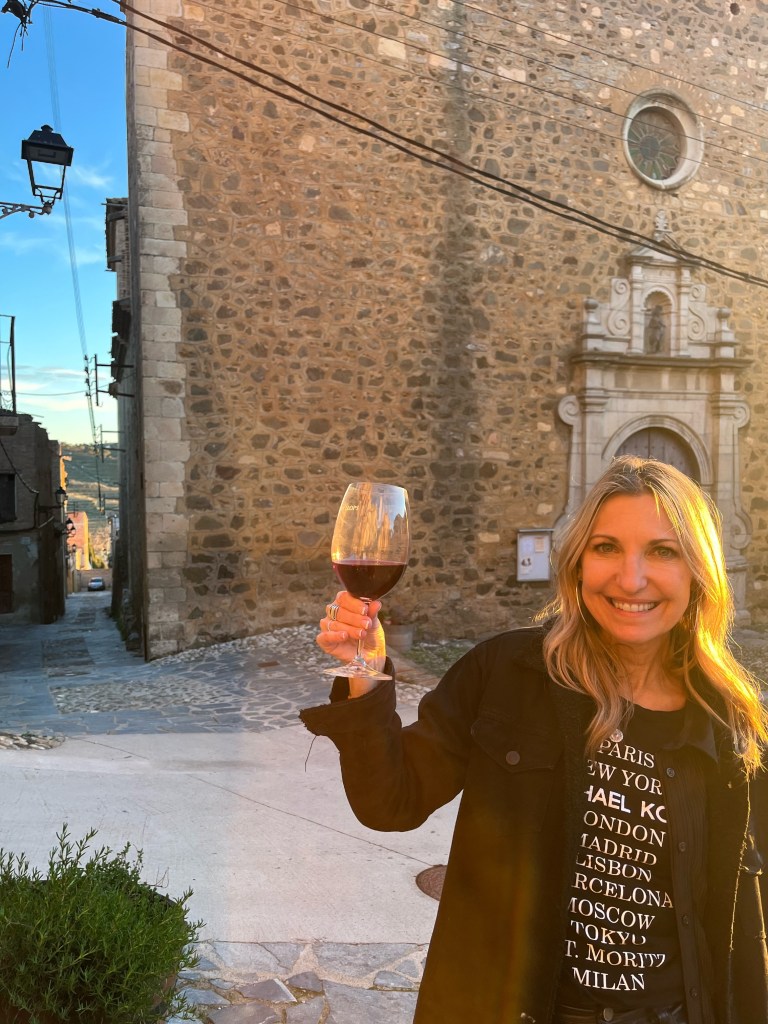
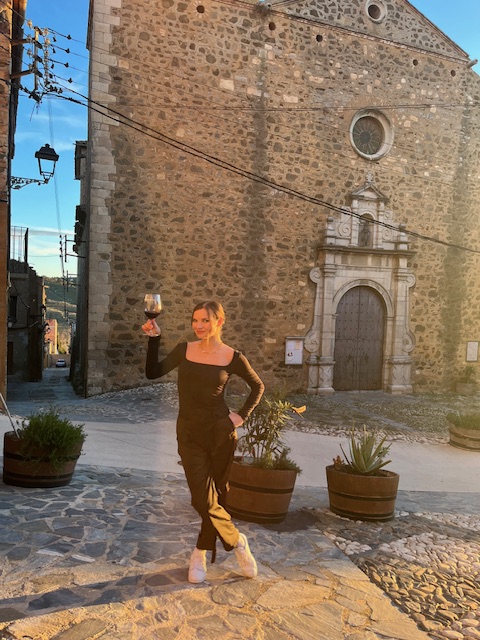
Here we are at the monastery (pictured behind us) but this is the closest we got! It closed early at 330pm right when we arrived and sadly wouldn’t let us in. So we went to Cellars de Scala Dei for a taste of history and wine instead.
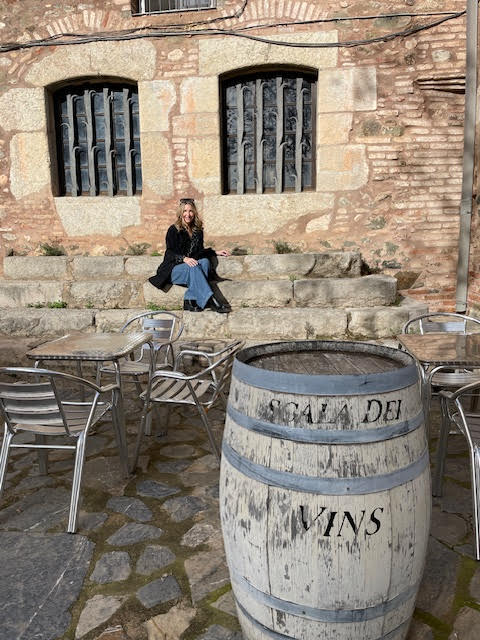
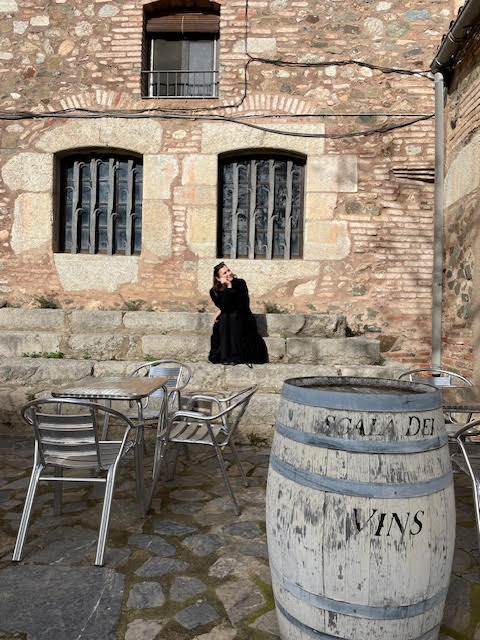
The name Scala Dei means the ladder of God. Legend says that the monks found a shepherd sleeping under a fig tree who claimed that he dreamed he saw angels ascending to heaven on a stairway. The Monks slept under that same tree to witness the moment for themselves and from that day on they settled and named the region.
Our lovely host, Berta, took us on a tour of the oldest winery in the DOQ Priorat.
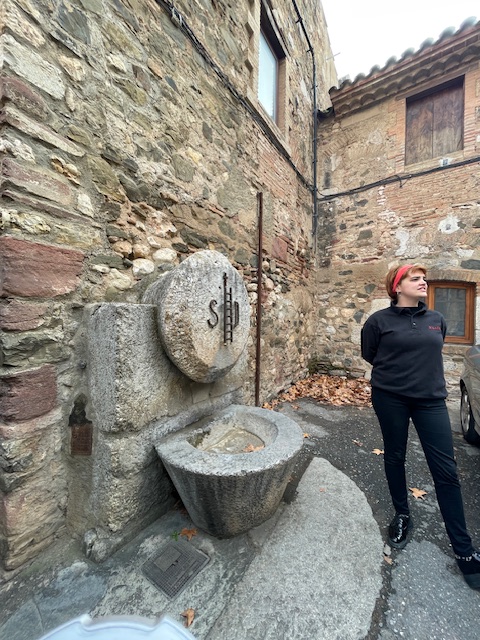
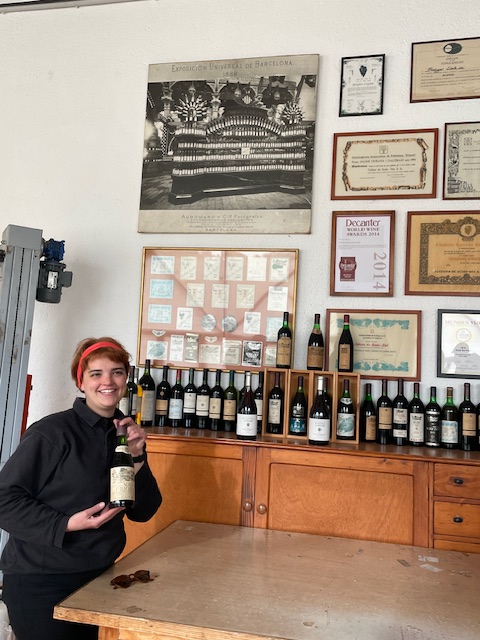
Cellars de Scala Dei estate was founded in the 19th century. Their ancient winemaking facilities were formerly the stables of the monks. With a nod to its namesake, the cellar’s crest is God’s ladder with seven steps representing each of the 7 villages that made up Priorat at that time. They sold wine by the gallon and had some international success winning a gold medal in a blind rating in 1878 and again in 1888. But phylloxera at the end of the 19th century forced the owners to give up. In 1973 four families joined efforts to make Scala Dei great again and in 1974 they made very first ever “bottled” Priorat wine – the Cartoixa Scala Dei.
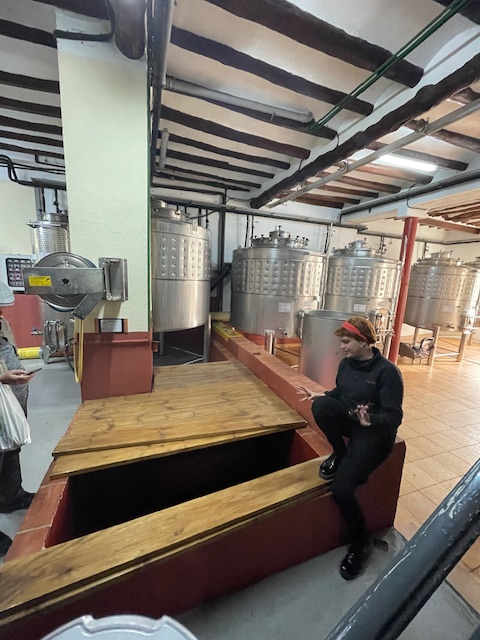
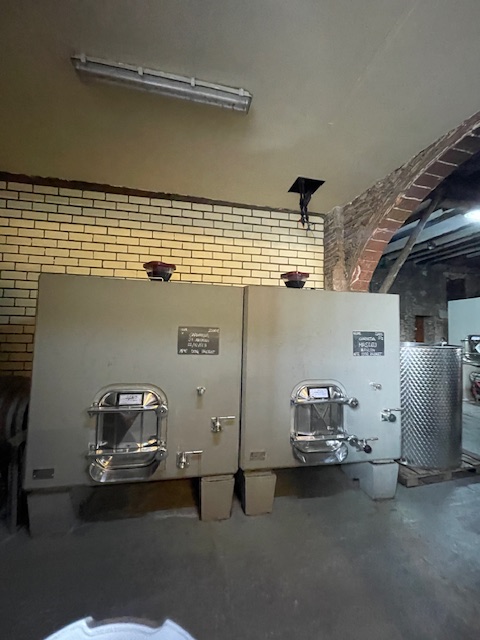
Scala Dei wines are fine and elegant. While llicorella is the terroir, limestone and red clay soils dominate in this area of vineyards. The wines are lighter and more transparent with a freshness, bright fruit, and spice. Grapes are hand harvested and brought to the cellars in boxes for final selection. Grapes from ancient vines are fermented in open in-ground vats called lageres (pictured above on the left) and vinified in cement vats on the right.
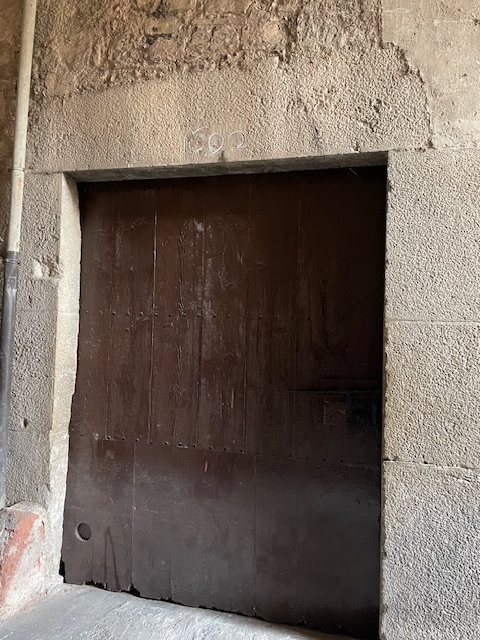
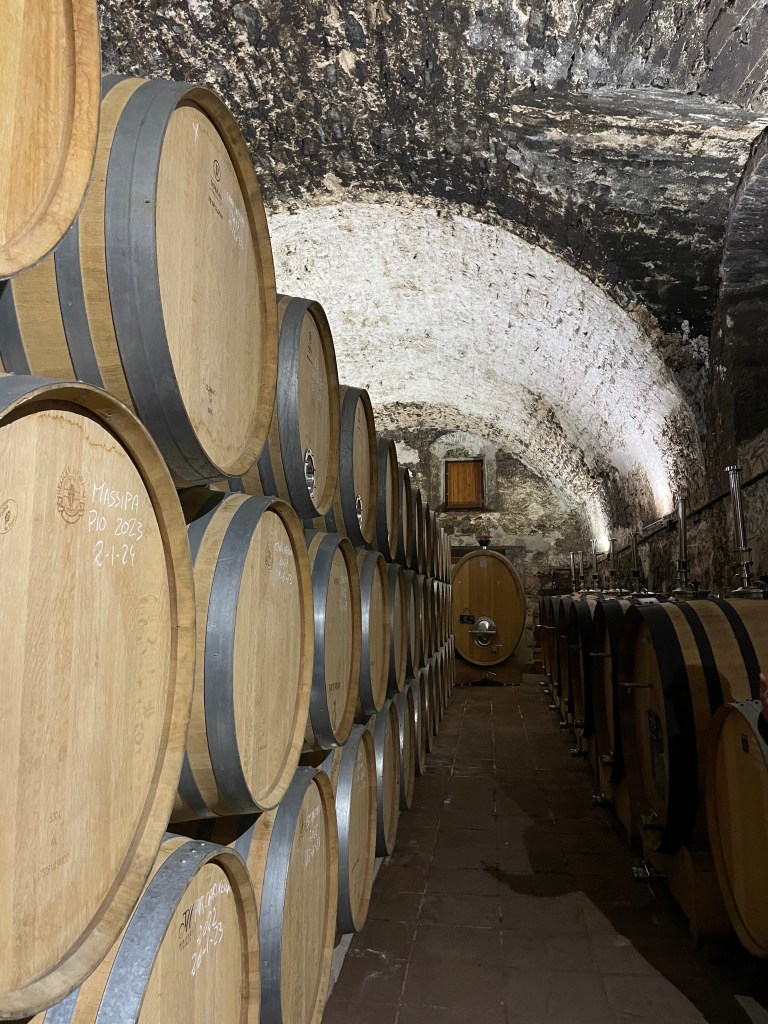
Entering the barrel room we see the year 1692 carved over the door revealing its ancient existence. Here the aging takes place in large capacity French oak barrels, or foudres. This gives the wine less wood exposure resulting in less wood or oak flavours in the wine. The barrel turnover is 3 new barrels every year. The ancient vine reds go in the oldest barrels which doesn’t add aromas to the wine but helps it age well.
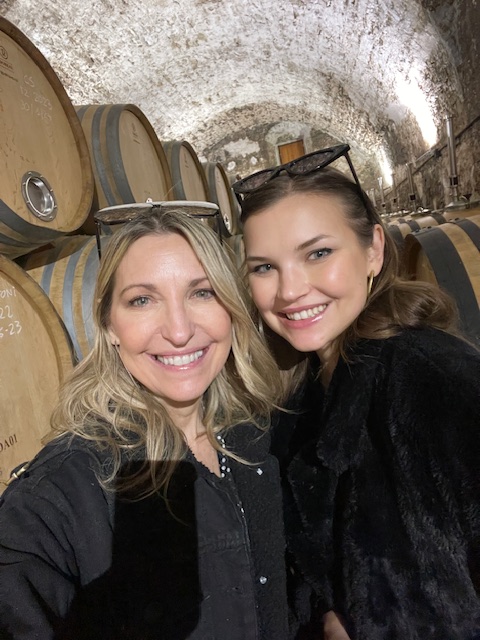
We end our tour in the tasting room where Berta poured 4 wines for us to try and gave us some great Priorat wine tasting tips on see, swirl, smell, and sip. The first is an interesting observation in that the colour of Grenache looks transparent when it pours but gets its colour in the glass. Secondly, the nose presents the wine. We learned about the frankness of a wine where the smell/nose is similar to the taste. We experienced that in the 2019 Cartoixa Scala Dei. The first sip is the entry to the house of the Priorat wine. You think you know the wine but you really don’t until the second sip when you find out more, and so on, as it opens.
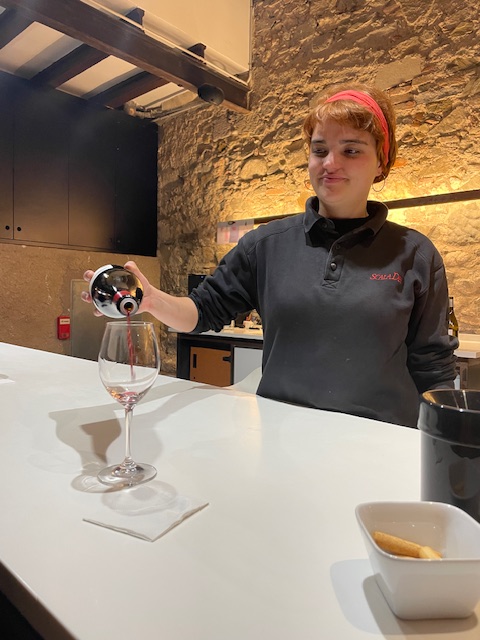
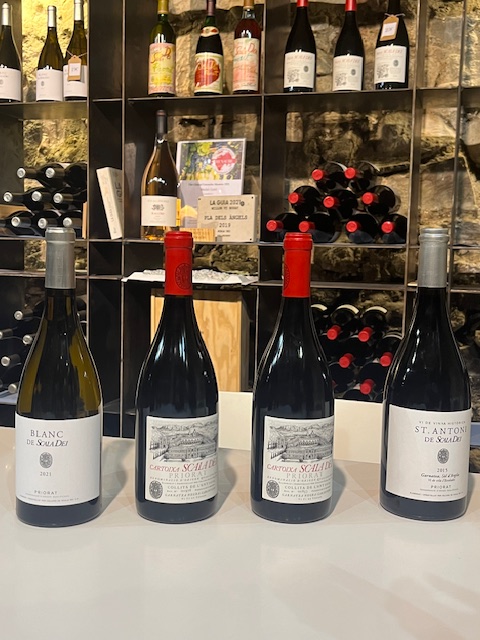
We had fun tasting the line up of Scala Dei wines in this way. We first met the Blanc de Scala Dei made from Garnacha Blanca and Macabeo in small production.
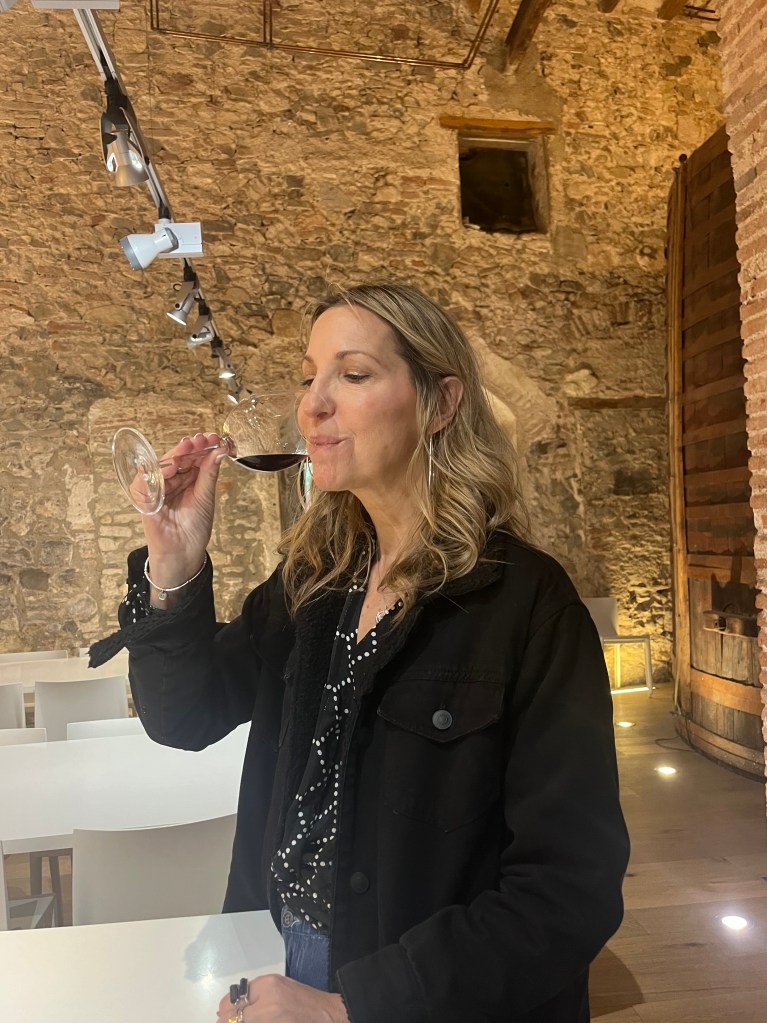
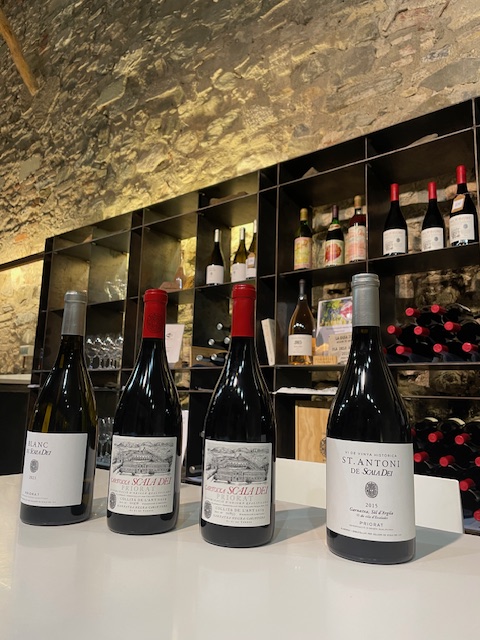
I was excited to try the reds. We compared two vintages of the historic red Cartoixa de Scala Dei, famed since1974. Berta poured the just-released 2021 (60% Garnacha/40% Carignan) and a 2019 (80% red Grenache/20% Cariñena). The younger 2021 wine was made with modern mixed fermentation expressing oak on the nose, short tannins and red and black fruit. This vintage introduces more Carignan than previous years. The 2019, with more Grenache (80%) and Carignan (20%), delivers a velvety feeling on the tongue and longer tannins. It’s balanced with a herbal spice on the taste and the smell. Berta tells us that means it is pretty frank (it tastes and smells the same).
A real treat was sipping the St. Antoni de Scala Dei 2015, a 100% red Grenache single vineyard wine, inspired by the monks who left records of their ancient winemaking practices for wine lovers of the future. This St. Antoni presents as a typical Priorat full bodied, high alcohol, revealing red fruit and long graceful tannins.
We chatted with Berta about the temperature of wines. I always say that I like my red wines at castle temperature (15-17°C). Berta shares that a high alcohol wine or wines high in tannin like the St. Antori should not be chilled. When wine is too cold it actually increases the alcohol and make them unpleasant to drink. On the other hand, wines with high acidity should be more chilled.
Another fun fact: when you feel tannins they are interacting with the saliva protein of our tongue. If you add another protein like meat and cheese the tannins will feel smoother.
Clos Magador – opening the door to a hippie adventure

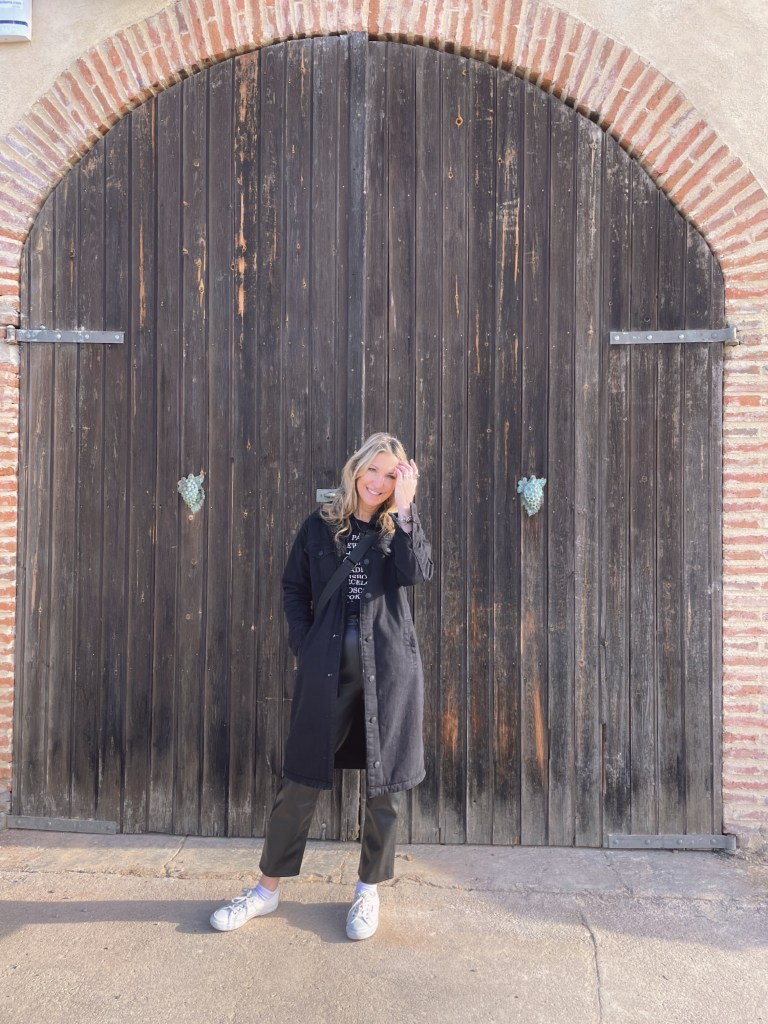
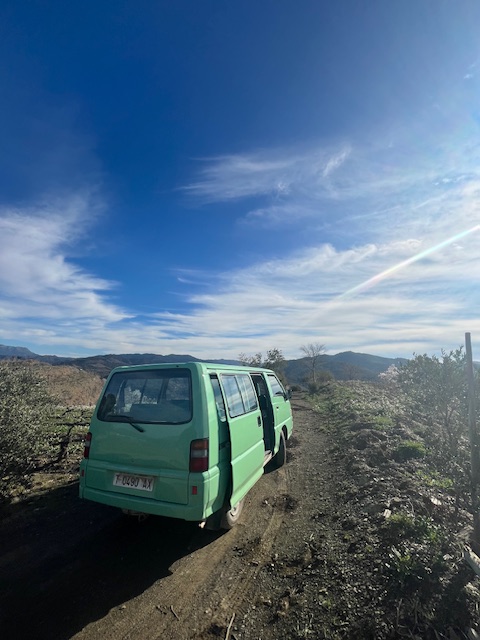

It was a gorgeous day to walk from our hotel in the village to Clos Mogador cellar door where we met our guide, Josep. We had an adventurous day exploring the terraced vineyards in a bright green hippie van and hearing stories of when René Barbier and his friends came to Priorat to make a bottle of wine. Josep says that they were a crazy bunch of people who had a great time. There is a great article in Wine Spectator Magazine from 2014 that tells the story of these Hippies, dreamers, and academics and I have linked it here.
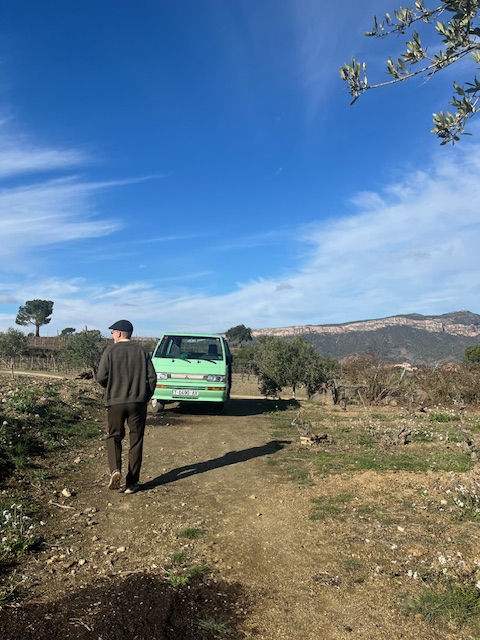
This group of wine pioneers revitalized the area by restoring the old terraced vineyards that the monks had built. They also planted French grape varieties such as Cabernet Sauvignon and Syrah to blend with the old vine Garnacha. In 1992 following the release of their collaboration Clos wine, the small band of visionary winemakers went on to pursue their own labels. Cabernet Sauvignon wasn’t doing that great and many turned their focus back to the indigenous vines of Grenache and Carignan.
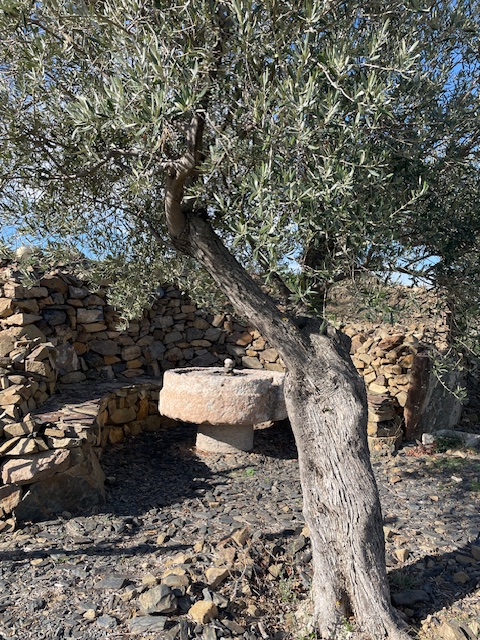
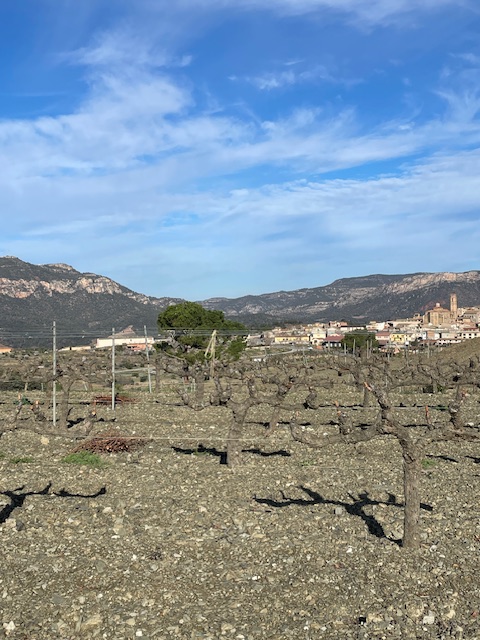
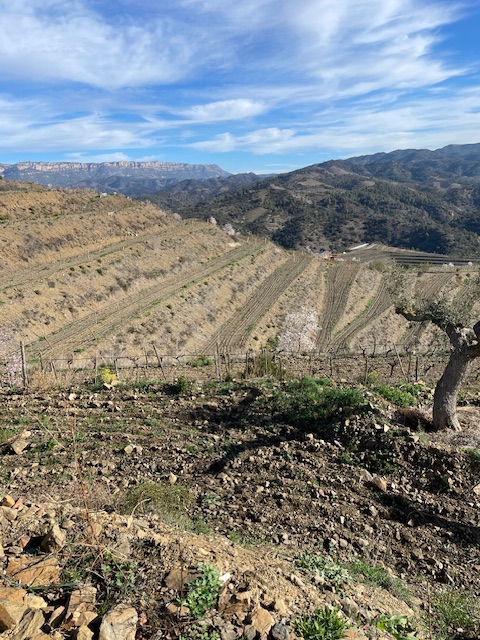
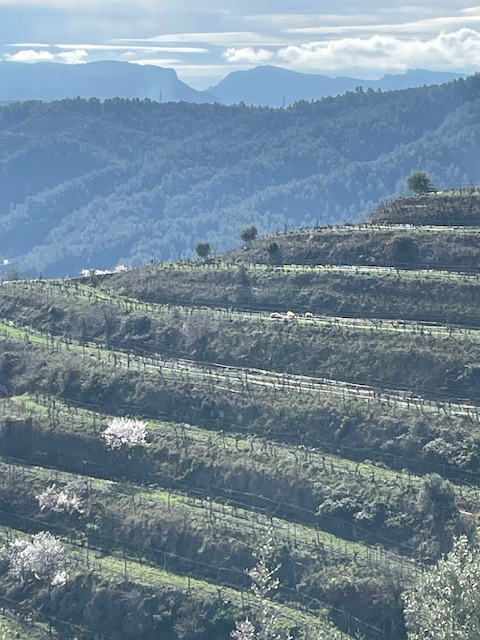
In Clos Mogador’s vineyards, the Grenache and Carignan are planted on sun-exposed slopes and there still remain smaller plantations of Cabernet Sauvignon, Syrah and others. What’s extra special about this area is the abundance of olive trees growing among the vines. These are the small, flavorful arbequina olives indigenous to Priorat and make very good olive oil.
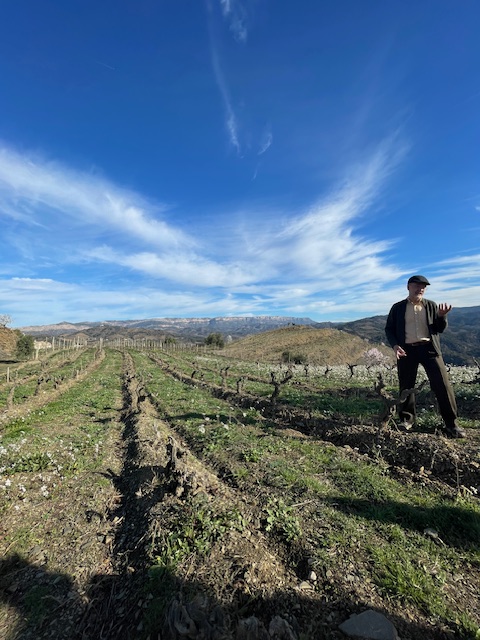

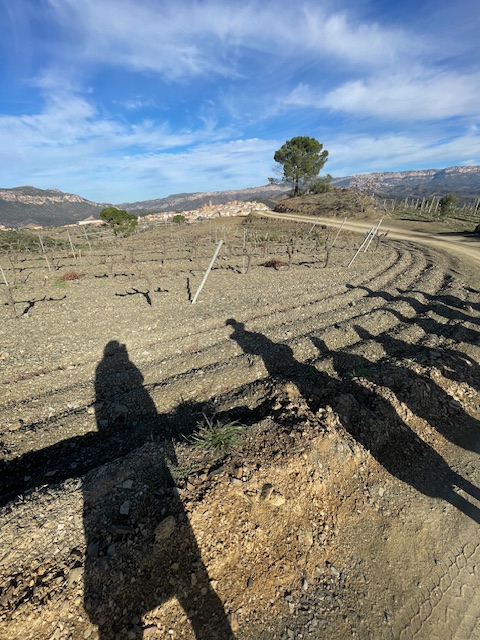
Josep is a fantastic storyteller. He knows a lot about the region, the people that live there, the wines and plants and herbs. He would stop the van discovering herbs along our path and share with us to smell and taste. These herbs are not only delicious but make up the green cover and biodiversity that is so important for the vineyard. He also pointed out the sheep roaming the terraces (also contributing to biodynamic farming), the solar-powered water mines, and shared the funny story of the lost horses in the village that I mentioned earlier. He is so passionate about the region and the role he has at Clos Mogador. It was one of the best tours I have ever been on!
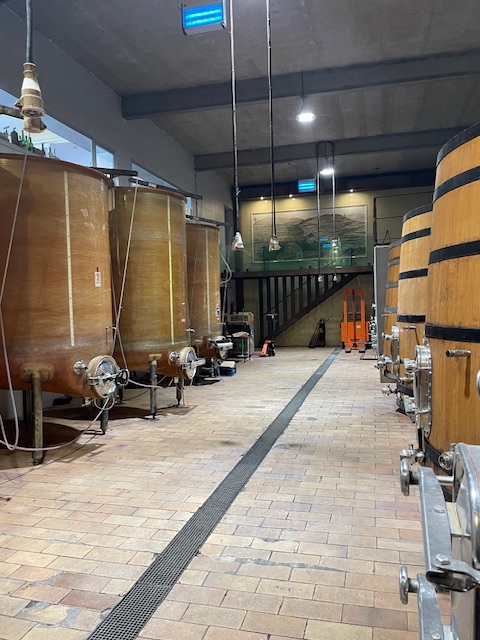
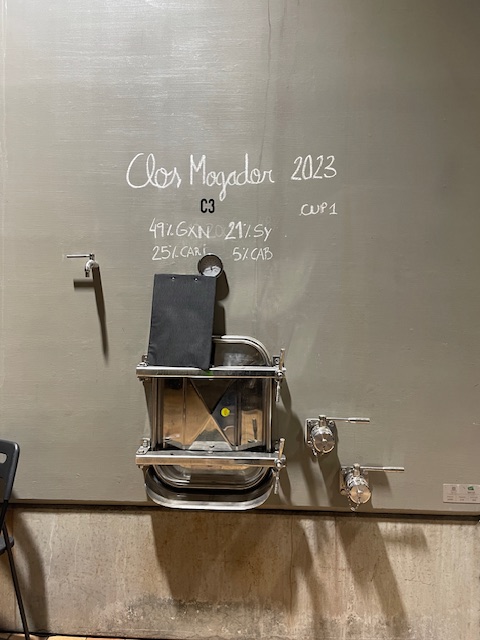
We returned to the cellars to learn about the winemaking process at Clos Mogador which is now managed by René Barbier’s son, René Barbier! René Barbier Jr. has been working with his father since 1992 and while being respectful to the legacy of the family clos he is making a few changes of his own. René and his brothers have been incorporating innovative biodynamic farming methods in the vineyards. The wines are now made with indigenous yeasts, they’ve moved from small new wood oak barrels to all foudre which are larger, older wood barrels, and fermenting the wine in concrete, less oak. Clos Mogodar has also been decreasing the percentage of Cabernet Sauvignon in the wines.
Josep says that Clos Mogador and the Barbier family are not industrial, rather artisanal winemakers.
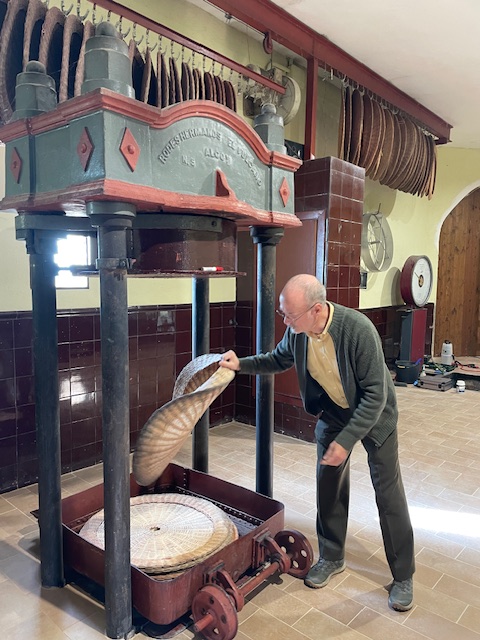
A very interesting thing about Clos Mogador is that the grapes are pressed in an antique olive press that is over 100 years old (pictured above). Josep shared that the leftover fruit skins of the pressed wine are used by the village bakery to make bread for the winery. Of course the press is also used to make olive oil from the arbequina olives growing in the vineyards. The shared pressed wine and olives make this olive oil very special. At this point I am already dreaming about it and the bread to come.
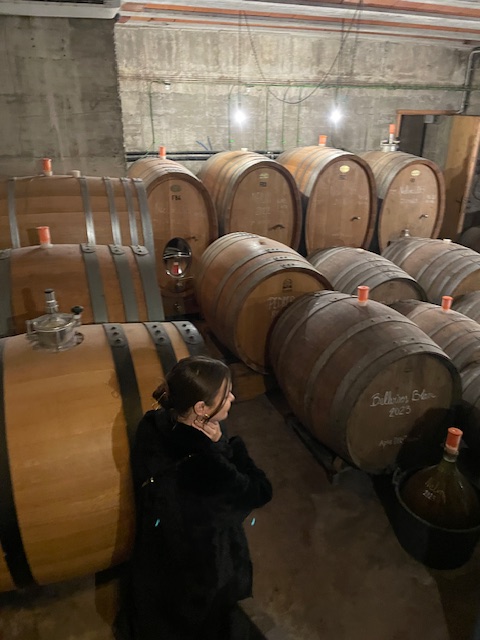
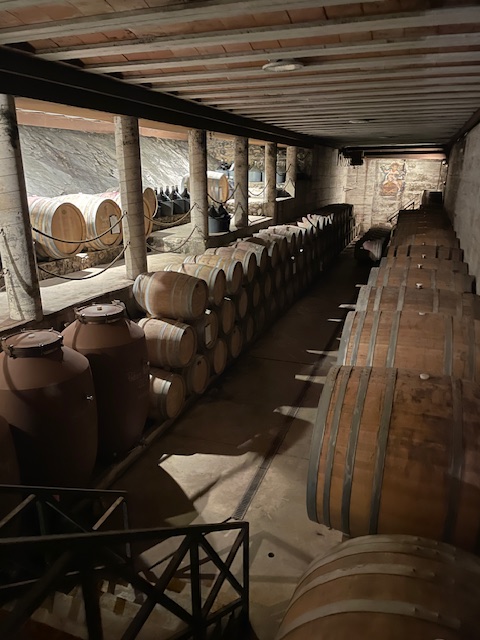
Biodynamic practices following the lunar calendar and its moon phases continue in the ageing process. Josep shared that the Nelin white wine for example sits in stainless steel for months through the moon movements until it is time. There are many ageing methods at Clos Mogador as you can see pictured above. Depending on the vintage the wines are fermented in oak barrels, steel, concrete vats, demijohns, eggs or amphoras.
A small section in the barrel room is dedicated to experimentation with a project always on the go. Josep tells us that René believes the region has not yet reached the peak of Priorat wines.
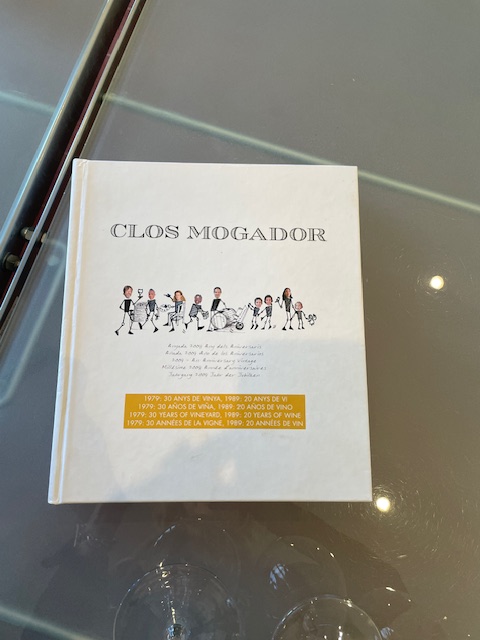
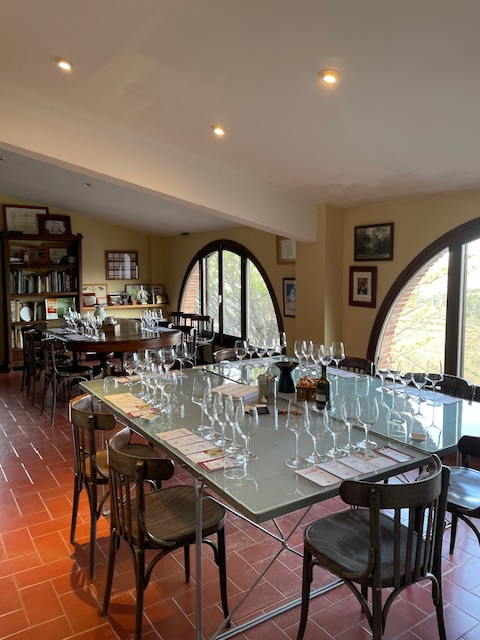
All in the family. The story of the Clos Mogador family in hardcover illustrates the family closeness and winemaking passion that runs through the veins of the Barbier family. Everyone plays a role and we were about to learn all about it in the tasting room. We enjoyed a tasting of six wines accompanied by the winery’s organic olive oil and that special wine bread we learned about earlier.
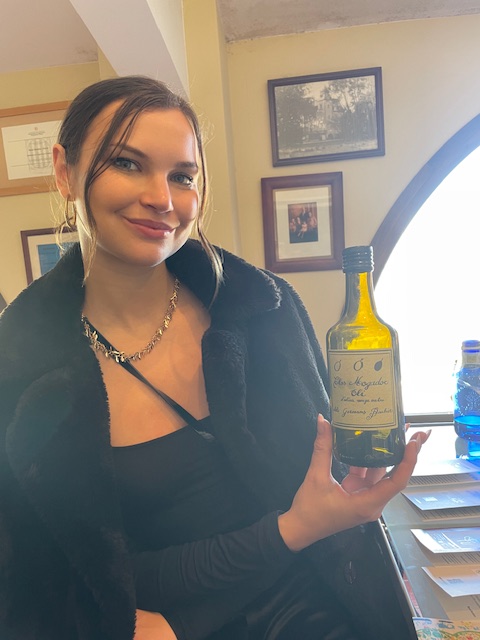
We learned about the Priorat’s wine classifications of which there are four. Vi de Vila (from the 12 village zones); Vi de paratge (from a small defined area); Vinya Classificada (single vineyard) and Gran Vinya Classificada (great wine, equivalent to Grand Crus). The first to use the Gran Vinya Classificada qualification was Álvaro Palacio’s most famous and expensive wine, L’Ermita.
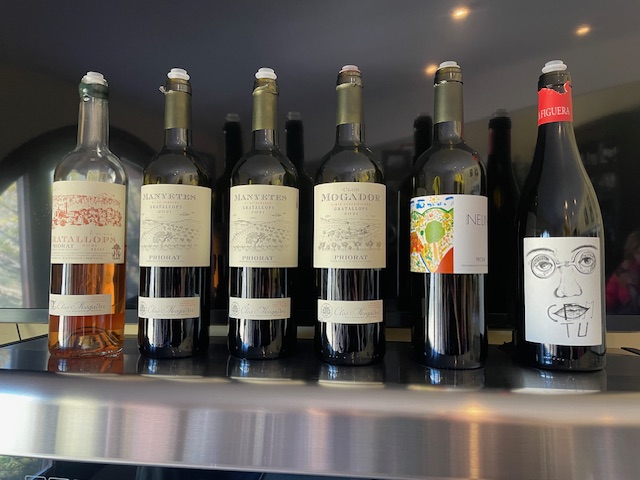
A taste of Clos Mogador
Vi de Vila Gratallops Priorat 2021 Rosat – this is the 2nd year of the Rosé wine made by René and his brother Christian who set out to make a Mediterranean, gastronomic wine. Grenache gives the Mediterranean character, Carignan with its freshness gives the acidity and softening of fruit and alcohol content. Macabeo provides the backbone to withstand the long fermentation and ageing process which happens in an old wood foudre that holds the memory of the previous vintage .
Nelin 2021 – the White Priorato – is how the Barbier family interprets a Priorat white wine. René Jr. wanted a white wine that complemented food innovations emerging in the culinary scene. Nelin combines Garnacha, Macabeo and Escanyavella. It also combines multiple aging methods from wood to cement vats to clay pots and even some stainless steel in the end. 2021 was a good year, the most abundant in history for white varietals. I love the label – the playful artwork was designed by René’s daughter!
Clos Mogador Gratallops – this is the reason René Barbier (senior) moved to the Priorat region. It exemplifies what the family is trying to achieve with their winemaking. Composed of Garnacha, Cariñena, Syrah, and Cabernet Sauvignon, this deep purple-colored wine likens to a Grand Cru produced in France. It represents an old-world style with balance. Rene’s desire over the years has been to vinify fresher wines, with a much lesser impact of oak and more prominence of Grenache and Carignan. The Clos Mogador 2021 is all delicacy on the nose with fresh fruit, aromatic herbs and a satiny texture on the palate.
Manyetes Vi de Paratge Gratallops 2021 – is 100% Carignan recently bottled in June 2023 it aged one year in oak barrels + 4 demijohns and another 8 months in demijohns. The tasting experience impressed from the first sip giving a dialect of tannic/elegant tannins. The wine opens up like a V, each sip with a unique expression. In time it shows you more. There is a minerality like rain fall and graphite pencil shavings in this wine with freshness. We loved it. A bottle of Manyetes came all the way home in my suitcase to cellar.
Fun fact: Josep highlighted that you can differentiate Grenache and Carignan through tasting – Grenache is horizontal and Carignan is vertical.
COM TU – this wine is a collaboration project of René Barbier with another group of five but this time outside of Priorat in the La Figuera region of Montsant. The area is also really great for Grenache but a fresher style due to the soil. The winemakers committed to selling Grenache grapes to the Barbier family for this project. As interesting as the wine is, the label and the story behind it may even be more special. Anderson, the youngest Barbier son (born in Haiti), and his mom Isabelle worked on it together. Naming the wine COM TU which means I am like you, you are like me, the label is a story of equality and love. The image has two eyes and within them a man and a woman of a different race, holding hands through the glasses.
What was very cool about tasting this line up of wines was that it wasn’t just about the wine region of Priorat, or the Clos Mogador estate, but the people behind it.
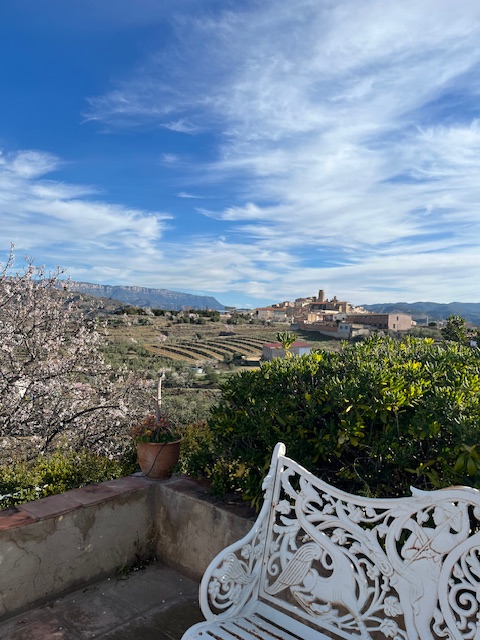
Roots in DO Montsant
René Barbier Jr. and Sara Pérez’s love story began as kids. Sara is the daughter of Josep Pérez, one of Priorat’s original 5 pioneers. Like René, Sara is the chief winemaker and has taken over her father’s winery, Mas Martinet. This second generation of winemakers, or the “new Priorat” described by locals, are creative, visionary winemakers who care deeply about sustainability in the region, returning to indigenous grapes and experimenting with traditional winemaking processes to restore balance and still make great Spanish wine.
Ten minutes down the road from Mas Martinet, in the DO Montsant Sara runs a separate vineyard that she named Venus. Venus is a reflection of beauty and femininity through wine. Sara is well educated, experienced and a powerful voice in Spain’s wine industry. My daughter and I were very excited to learn more…
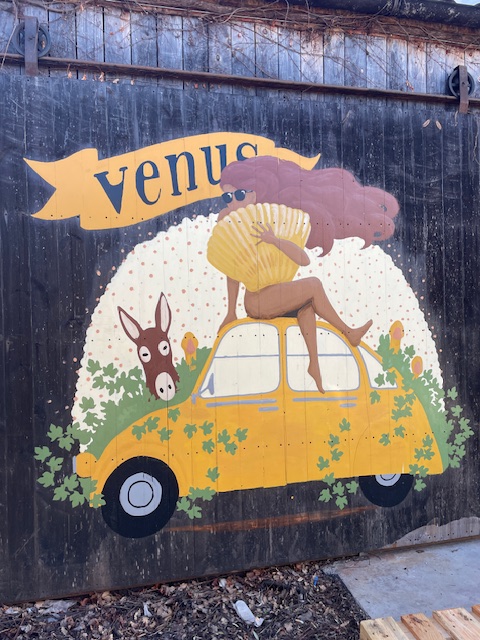
We drove up to Venus la Universal estate which sits just outside of Falset in the DO Montsant. This is also the family home of Sara and René and their four children, a beautiful pup, Lola, and their farm animals.
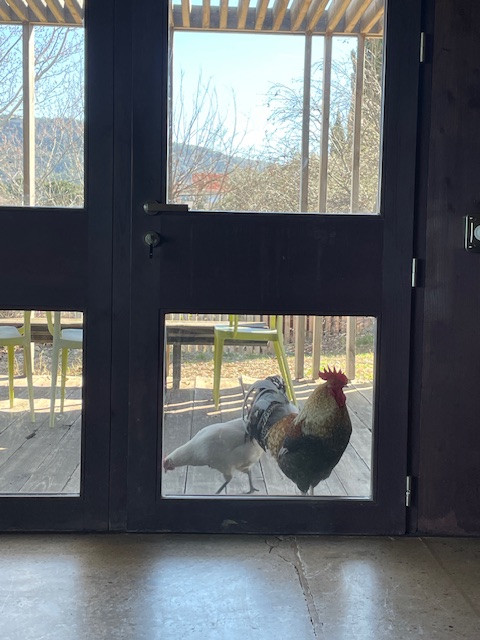
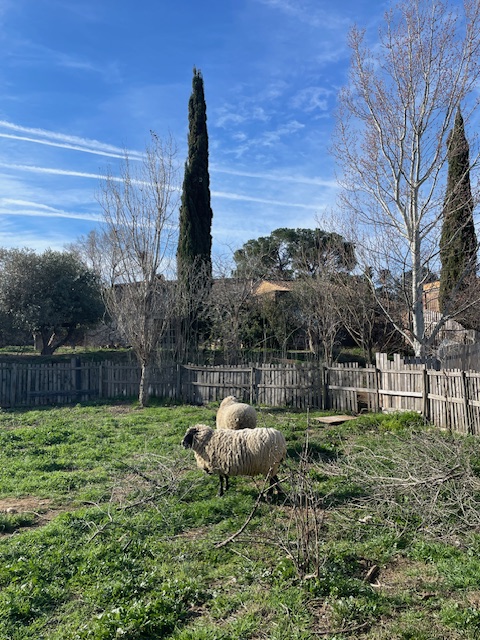
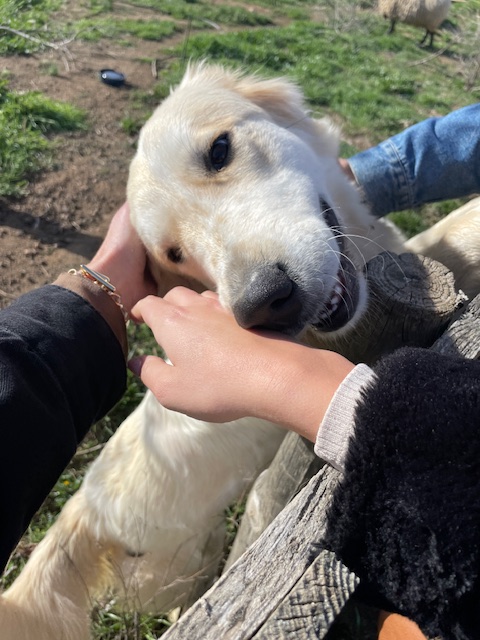
For Sara and René the wine must speak of the place, a story in a glass. Venus la Universal is where their personalities meet and here they have created a range of wines under two labels – Venus and Dido.
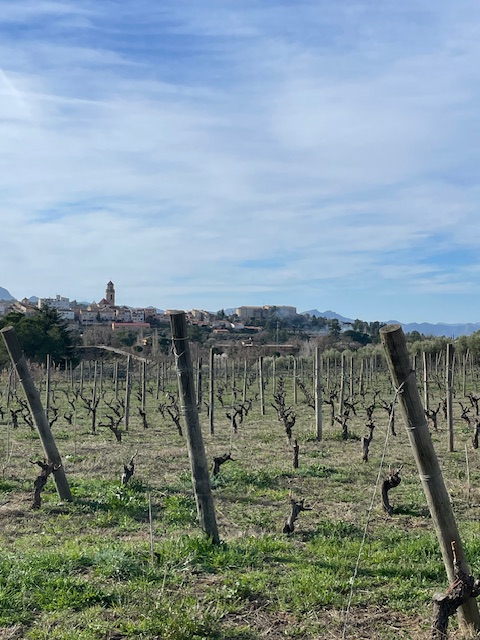
As in Priorat, the focus in this region is on the soil however the Montsant soils are very different from the llicorella/slate of the Priorat. Here limestone and red clay is prominent. It’s a fresher soil with more green cover as you can see in the Venus vineyard pictured above. Grenache and Carignan are the grapes planted at Venus. Our lovely host, Gemma, reinforced that the diversity of the soil and it’s freshness is everything here. The soils versus the age of the vines define the wine.
After a tour of the vineyards, we enter the Venus cellars. Concrete tanks, clay amphorae, large foudres and glass demijohns fill this room and speak to the couple’s creative winemaking style – less tannins, less oak, long fermentation.
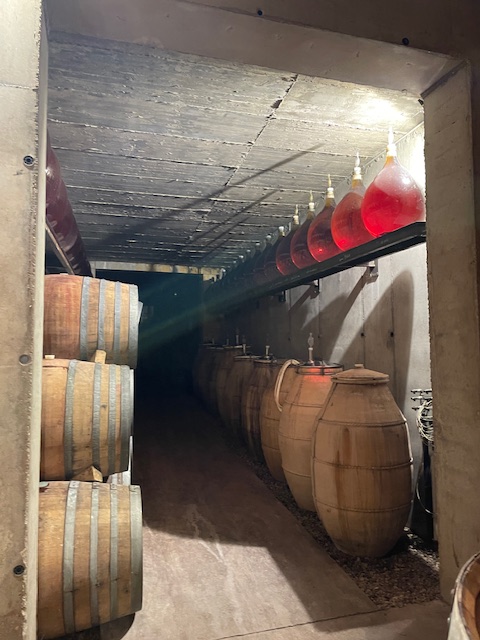
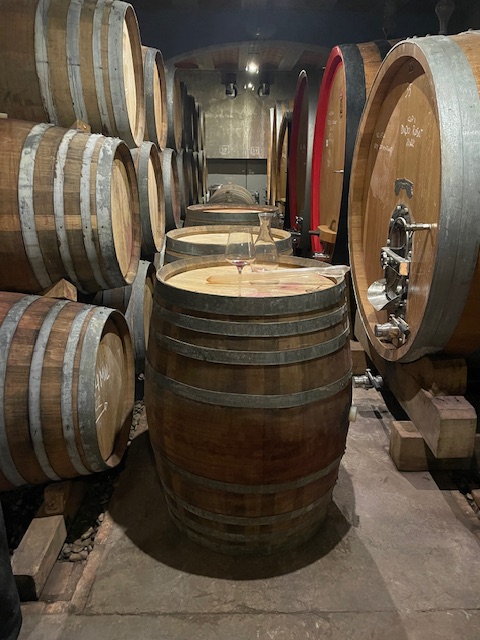
Sitting in the glass demijohns pictured above is the Venus Orange wine, not yet released. The orange takes time on the skins and therefore has the longest maceration and aging.

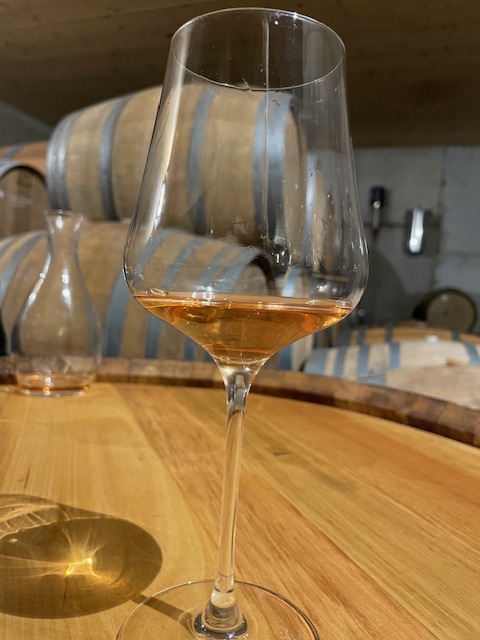
Gemma offered us a barrel-taste of the Dido Rosat another special project that has been released. This is made as a gastronomical rosé with a 6 varietal blend includes red, grey and white Grenache, Carignan, Syrah and Macabeao. Aged for 16 months in old foudres.
Sulphites are added only at the end of the process. One of Sara and René’s on-going projects is experimenting and researching new ways of working with less sulphites.
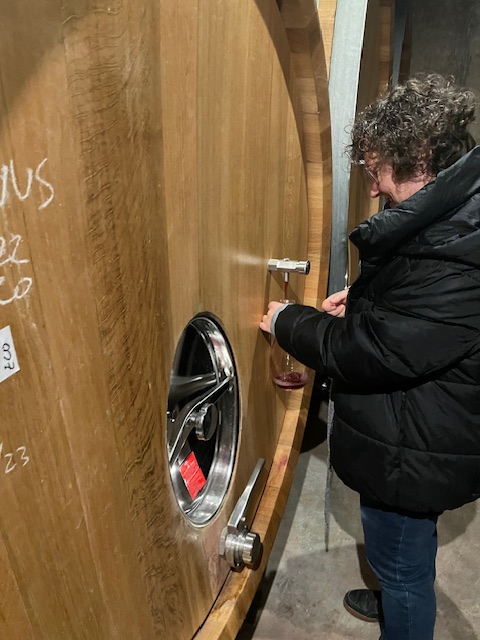
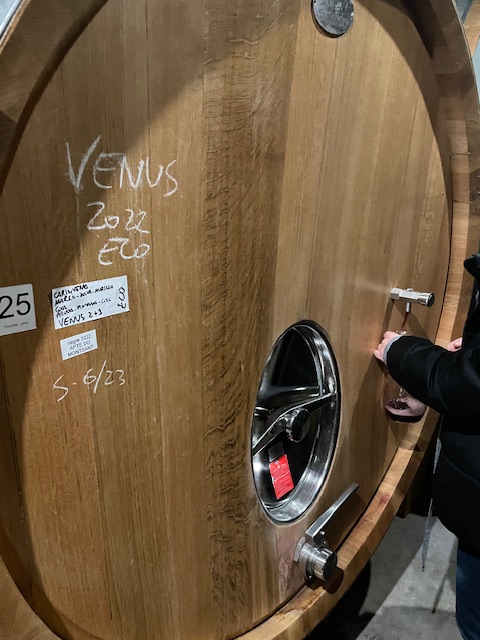
A real highlight was our barrel-taste of the upcoming vintage of Venus la Universal Red 2022 – Grenache and Carignan. This vintage will not be released for a few years. The winemakers hold the Venus wines for longer ageing. After they are bottled they stay in the winery for 2 years.
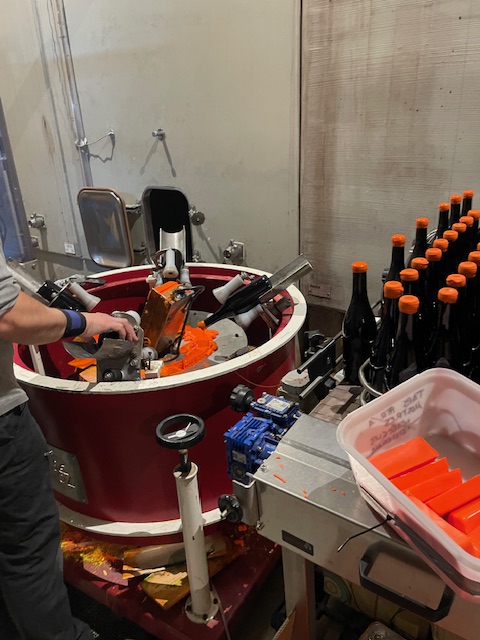
Leaving the cellar we could hear a busyness in the winery and we were delighted to walk right in to the bottling/labelling of the Dido wines. It’s quite fascinating to watch the dipping of the bottles in their signature orange wax and the label stamping. The bottling equipment seen here is shared with Clos Mogador, an example of efficiency and how resources are shared in the family wineries.
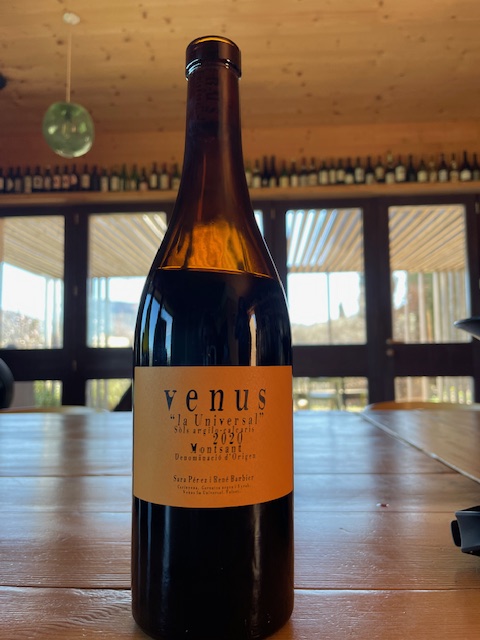
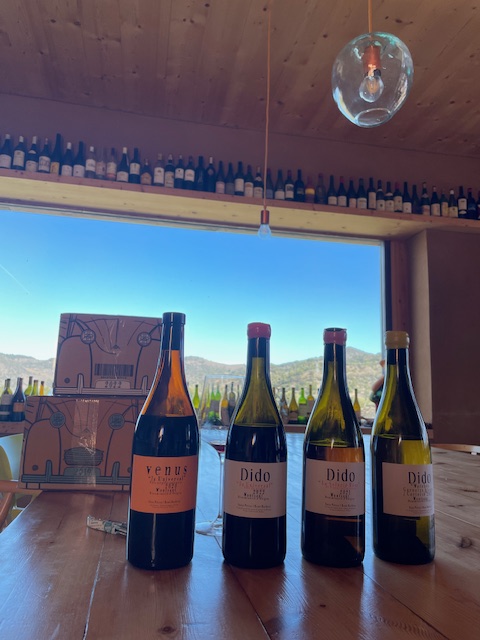
In the tasting room we learned the story of the Venus and Dido labels and tasted four of the wines. Venus being first as the namesake of the winery representing the life changing moments and femininity. The second label was created as Eneas, the son of Venus. Unfortunately this name was already taken by another so Dido (Aeneas’ beautiful lover and equal) arrived. Dido is the largest production in the winery.

At Venus la Universal Sara and René are inspired to make wines that they enjoy drinking together, specifically gastronomic wines with age, and that are affordable. The tasting room at Venus la Universal is a reflection of their love of wine. Empty bottles some of their favourites (from all over) that they have shared together, and with family and friends, line the room.
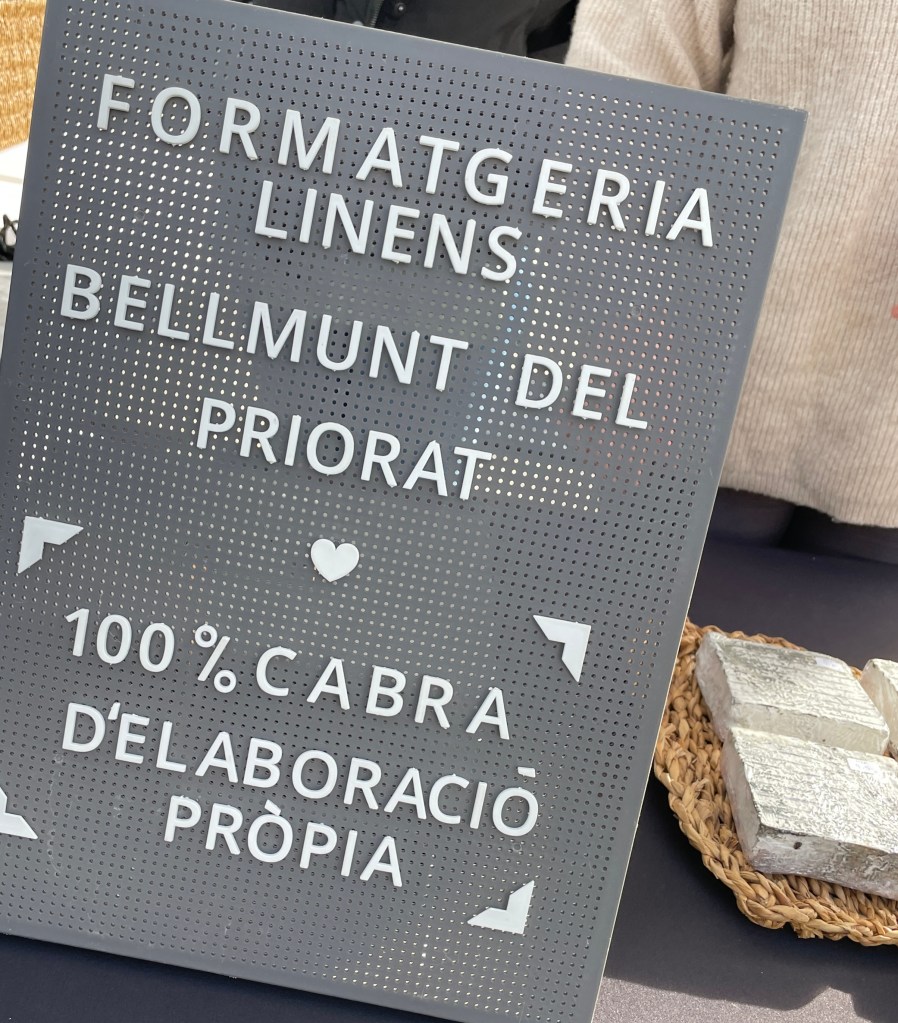
Leaving Venus, and feeling the femininity, we took the opportunity with our time in Falset to quickly stop at a local market and buy cheese from three local sisters renowned in the area for their fabulous goat cheese. They started their business after rescuing a baby goat that they found in the forest. When she miraculously recovered they got another goat to keep her company and then another until they formed a little flock and discovered a passion for making cheese. Check out the sisters’ Formatgeria Linens story here and if you are ever in the Falset area I highly recommend the “Phos” which is a semi-cured cheese with an ash rind. So so so good! They also deliver within the Iberian Peninsula. Thank you to Blanca from Travel Priorat for making this little market stop for us on our wine tour.
Back in Priorat with Laurel…
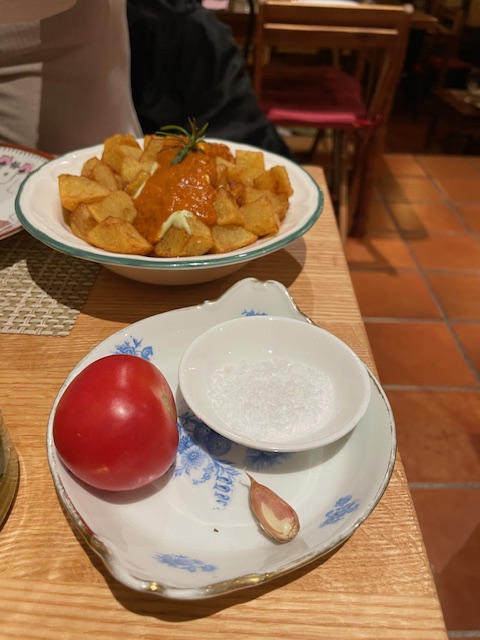
We enjoyed a bottle of Daphne Glorian’s Laurel at the Slate Wine Bar in Gratallops. Here we also enjoyed some of the traditional Catalan tapas – patatas bravas and pa amb tomàquet (or “pan con tomate”, tomato-rubbed toast).
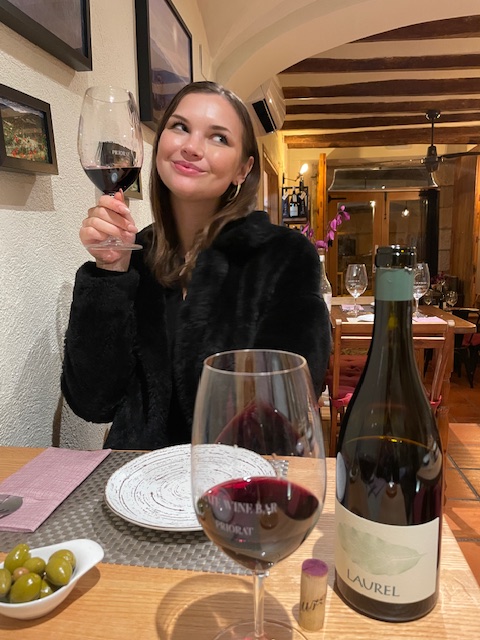
Laurel is made by Daphne Glorian- Clos i Terrasses, one of the famous 5 pioneers of Priorat. Her first 10 vintages were made at René Barbier’s Clos Mogador until she got her own cellar in Gratallops. Daphne lives in the United States but still runs the winery, located just steps from the Slate Wine Bar we were sitting in, although it is not open to the public for tastings. Her portfolio is small with just two wines – Clos Erasmus and Laurel.
Fun fact: Clos i Terrasses was the first winery in Priorat to receive the legendary 100 Parker points for one of its wines – Clos Erasmus.
The winery makes only 3000 bottles of Clos Erasmus each year. The remaining wine is released and incorporated into the Laurel. The 2021 Laurel is 75% Grenache, 20% Syrah and 5% Cabernet Sauvignon and has scored 95+ Parker points four years in a row. Laurel is a softer wine and approachable on release.
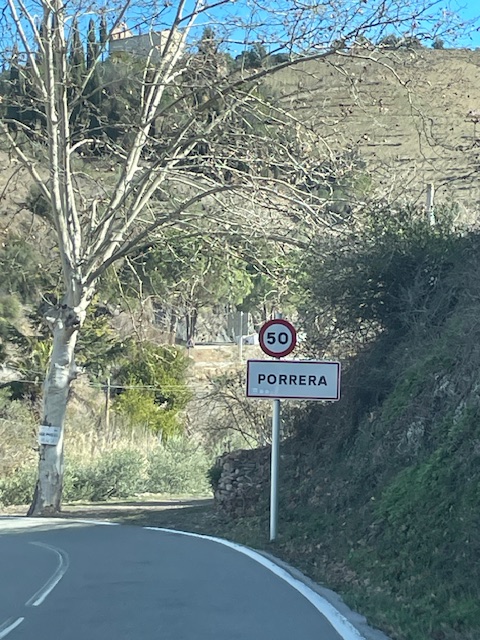
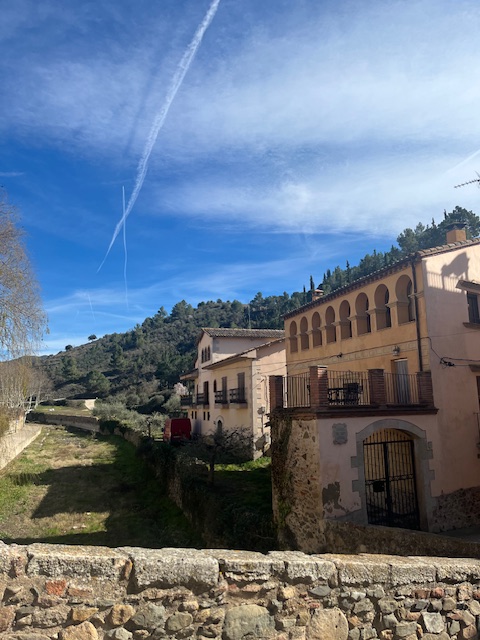
Now entering the village of Porrera, the largest of the twelve in Priorat.
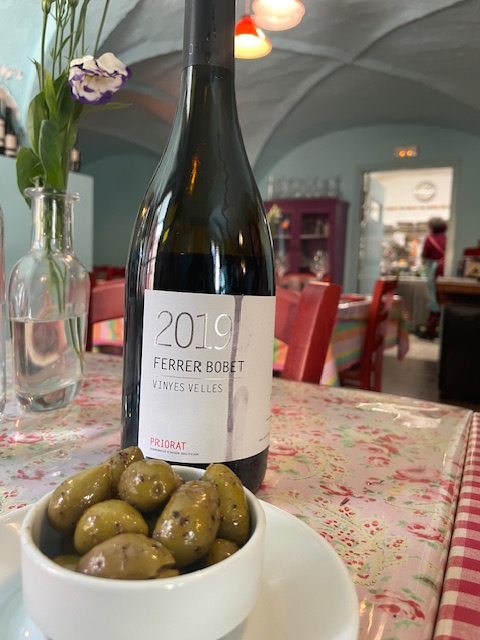
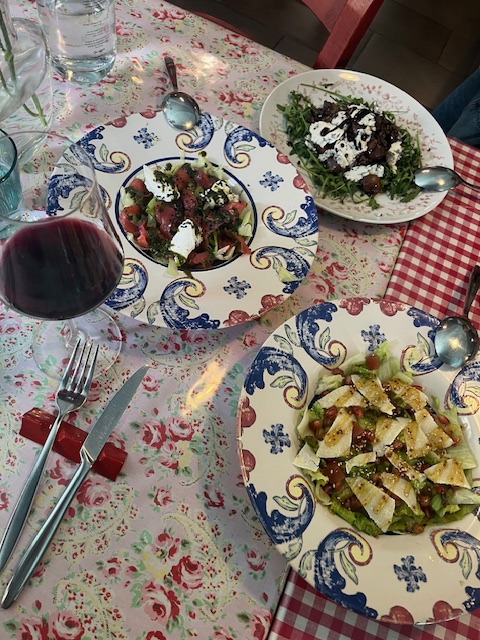
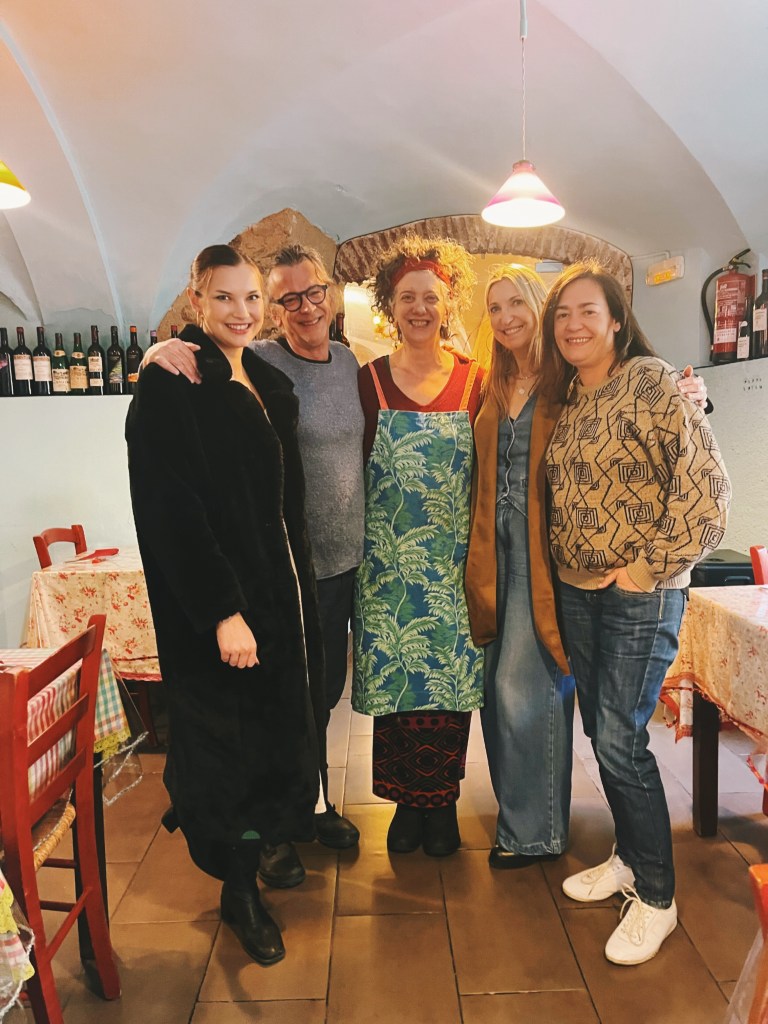
Our fabulous wine tour guide, Blanca, took us to a lovely place for lunch. Restaurant la Cooperativa is a cute little restaurant with a wine shop on the side. Everything is locally grown and prepared authentically. They have an impressive wine list representing all of the wine producers in Porrera and many others around Priorat and Montsant. We were welcomed by the owners Litus and Mia and felt like we were visiting their home. They were so friendly and the food was fantastic. Litus recommended a 2019 Ferrer Bobet Vinyes Velles which was wonderful. Located in the Porerra area, Ferrer Bobet is a stunning winery that we would have loved to visit if we had more time.
There are so many wineries in and around this village that were also on my list including Val LLach, Celler Joan Simo and Mervm Priorati and I wished that we had at least one more day in the region.
Our next stop would be Marco Abella with deep roots in Porrera and a very cool modern concept winery.
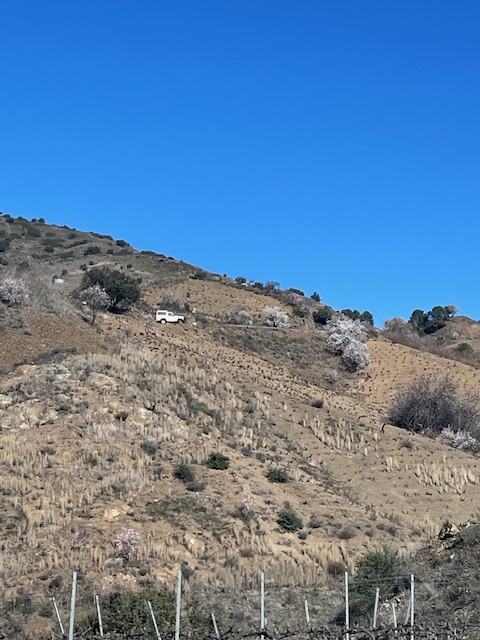
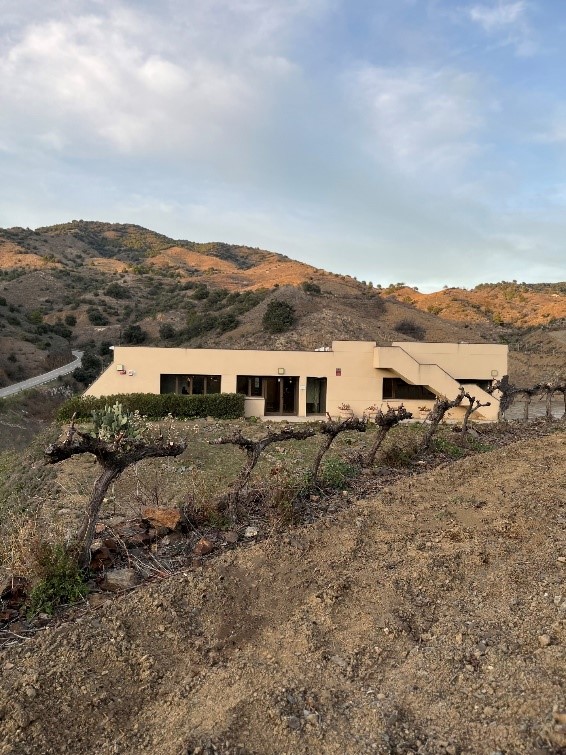
The Marco family is one of the original families of Priorat from 1497. When phylloxera destroyed the region, the family left for Barcelona but held on to their house and vineyards. Fast forward to 2005, the grandson of Ramón Marco Abella, David and his wife Olivia, return one century later to make wine and contribute to the worldwide prestige of Priorat wines. Grenache and Carignan are grown on their 7 different wine estates in the region.
The winery concept is built on three floors fusing traditional practices with modern facilities. Two of the floors are underground so that gravity is used for each of the stages of winemaking. This also more naturally achieves the temperature and humidity levels necessary for the correct aging and conservation of the wines.
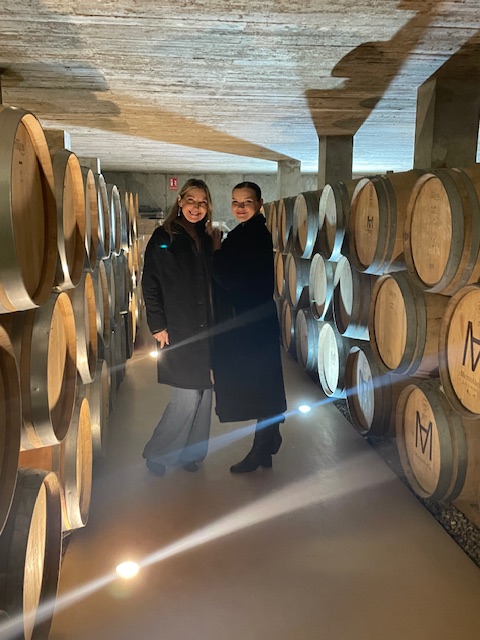
Here we are in the barrel room on the third floor at a depth of seven meters.
In the tasting room we enjoyed some of Marco Abella’s amazing wines. We started with the Priorat the Essence wine series – two of which won Platinum and Gold in the 2023 Decanter World Wine Awards.
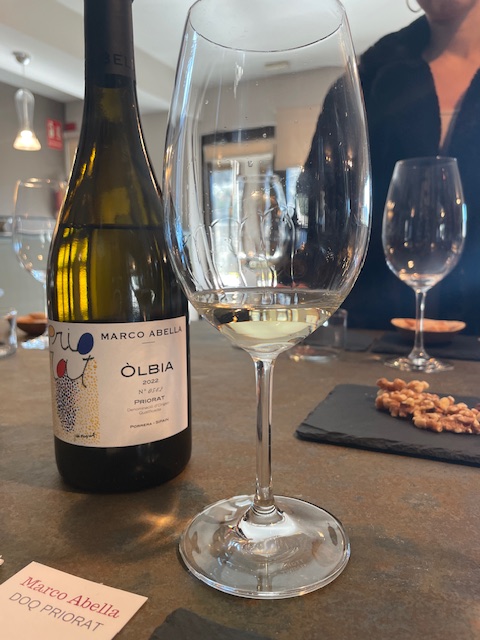

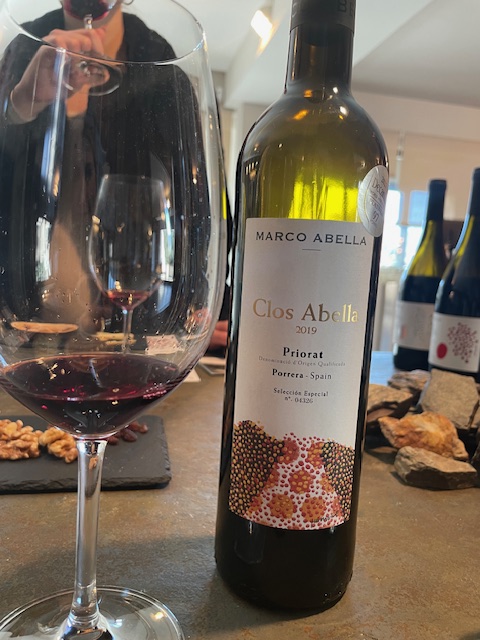
ÒLBIA 75% White Grenache, 25% Viognier was so interesting with sweet aromas and a completely different taste. The fabulous Mas Mallola Vi de Vila (Gold medal – Decanter 2023) is 70% Garnacha and 30% Carignan. It is born from the “La Mallola” plot, the highest of the Marco Abella estates, with ancient llicorella (over 300 million years old). The iconic Clos Abella 70% Garnacha/30% Carignan, is the first wine made by Marco Abella and the most awarded (including Platinum medal – Decanter 2023) and recognized world-wide. It comes from the old vines belonging to the family since the 15th century.

Our lovely host, Laura, treated us to a taste of the Roca Roja and the Roca Grisa (The Collection) limited production wines of different varietals from the same vineyard.
Roca Roja – 100% Grenache born from the rusty reddish slate in the upper part of the “La Mallola” plot. It’s fine and elegant, complex and persistent on the palate, with notes of red fruits, flowers and subtle minerality. It is the purest, freshest and most elegant expression of Grenache.
Roca Grisa – 100% Carignan from the greyish slate in the upper and facing east part of the “La Mallola”. This wine also presents finesse and elegance. Its special characteristic is its intense and unique minerality.
Of the two the Roca Grisa Carignan was our favourite and had to come home with us as did a couple bottles of the Mas Mallola.
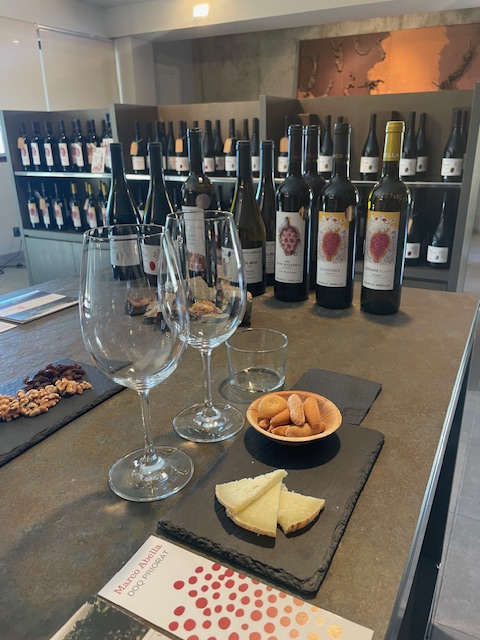
We also loved the artwork on the Marco Abella labels. The art was inspired by the famous Spanish artist Josep Guinovart who was a close friend of the family. It links the winery’s vineyards and terroir with its contemporary spirit.
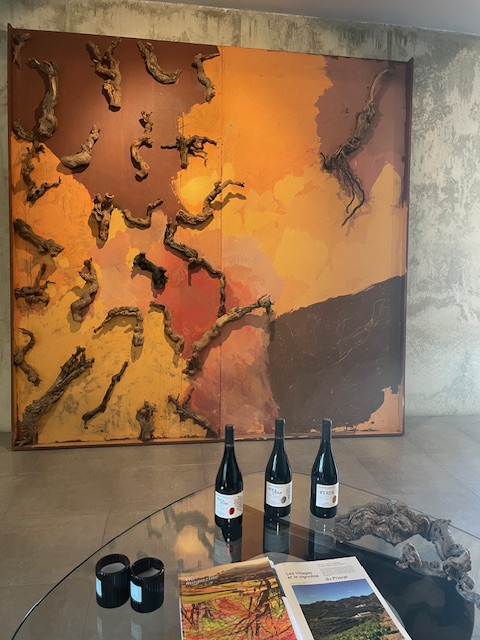
Lunch and wine at Buil & Giné
Buil & Giné sits on a hilltop with panoramic views of the vineyards and the local villages of Priorat. We stopped in for lunch and a bonus wine tasting. Restaurant Amics is the on-site restaurant that offers creative Priorat cuisine prepared by chef Marc Pi. We really enjoyed the food and the friendly service. It was a lovely lunch.
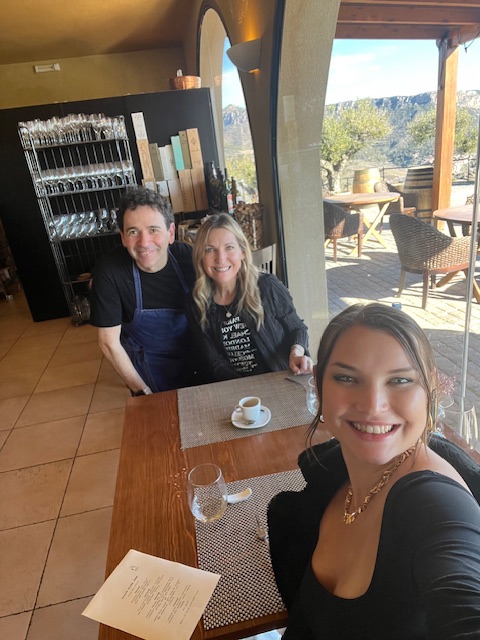
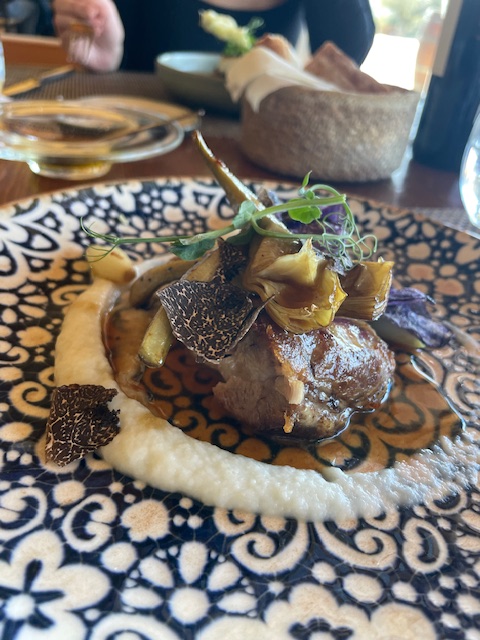
We then popped down to the tasting room to try a couple of the Buil & Giné wines.
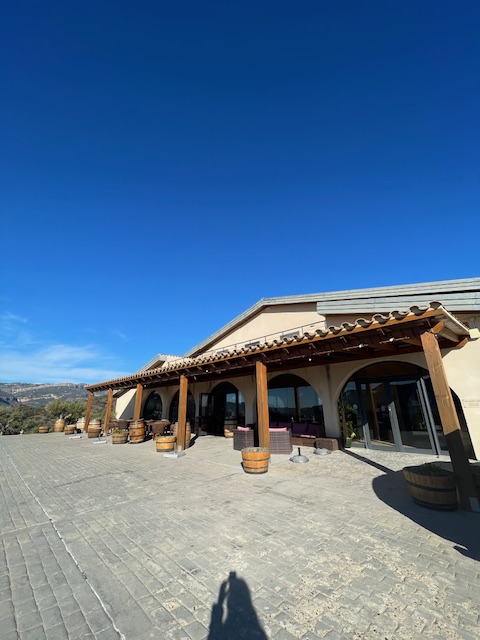

We tasted the Joan Gine a red blend of Garnacha, Carinena and Cabernet Sauvignon. It’s named after the winemaker’s grandfather and is described as the soul and origin of Buil & Giné .
Giné Giné is a Garnacha and Cariñena blend made from vineyards in different areas of the Priorat. It was the first wine bottled by this winemaker in 1997 and is a nice, affordable Priorat. We loved it for its value and taste and because 1997 was the year my daughter was born. We felt that was a sign 😉
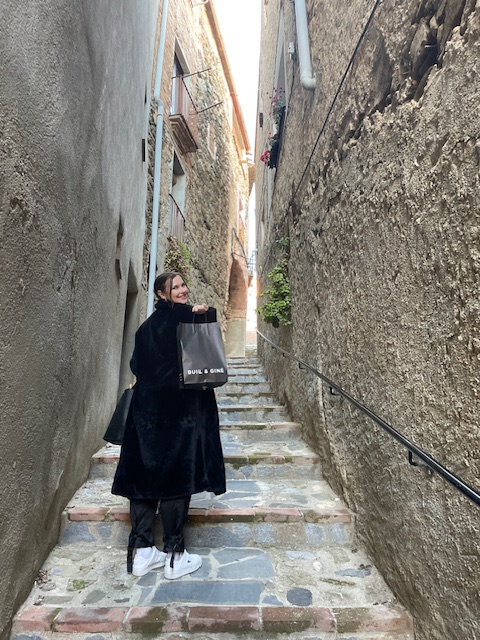
A Devinssi Wine Tasting with a view
Celler Devinssi is a small artisan wine producer in Gratallops. The name “De vins, sí” translates in Catalan to “about wines, yes”. Winemaker, Josep Roca, knows all about wines and experiential wine tourism. Our host, Jordi, picked us up in a dusty winery van and we headed up the narrow twisting winery paths to the top of Devinssi vineyards.

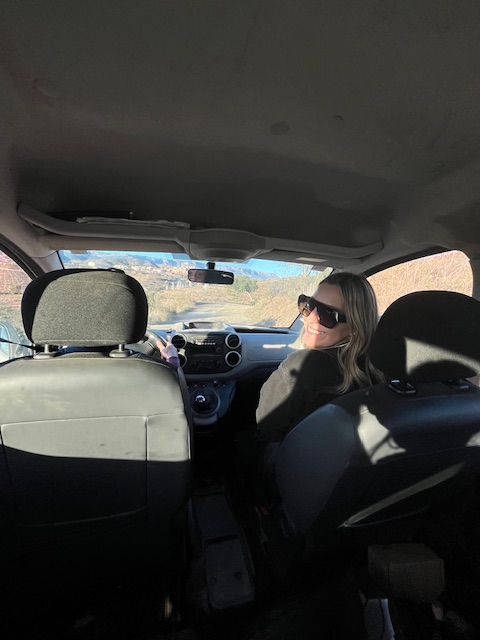
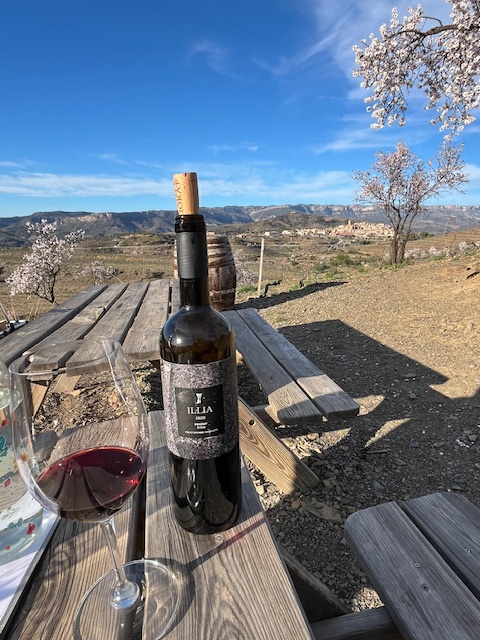
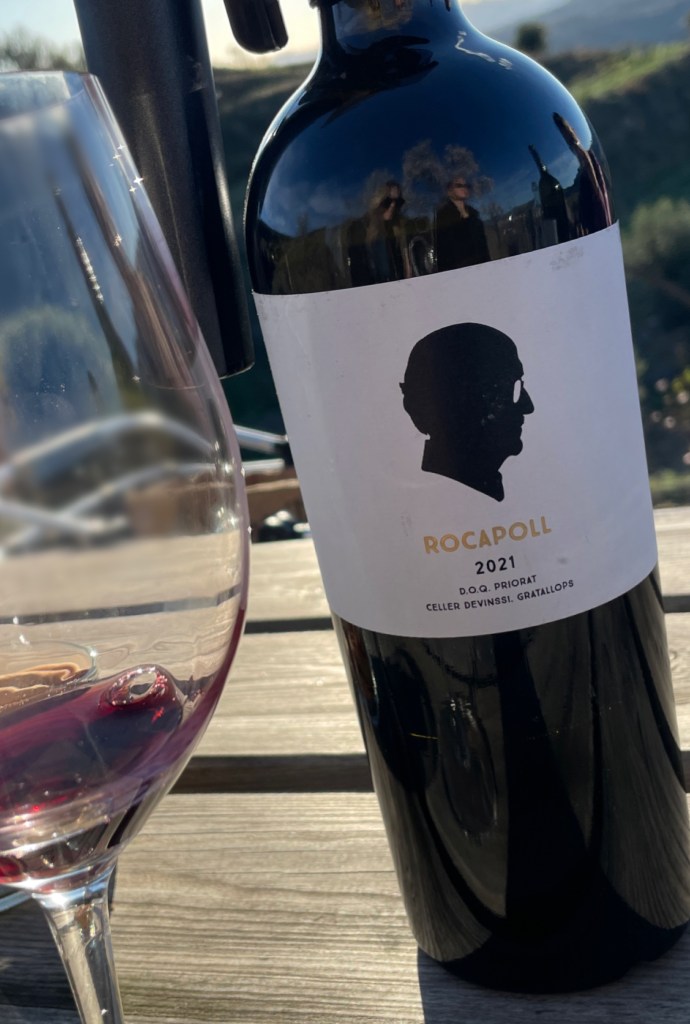
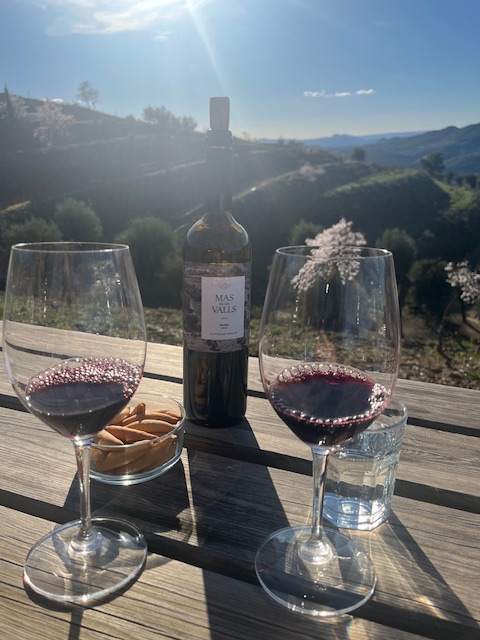
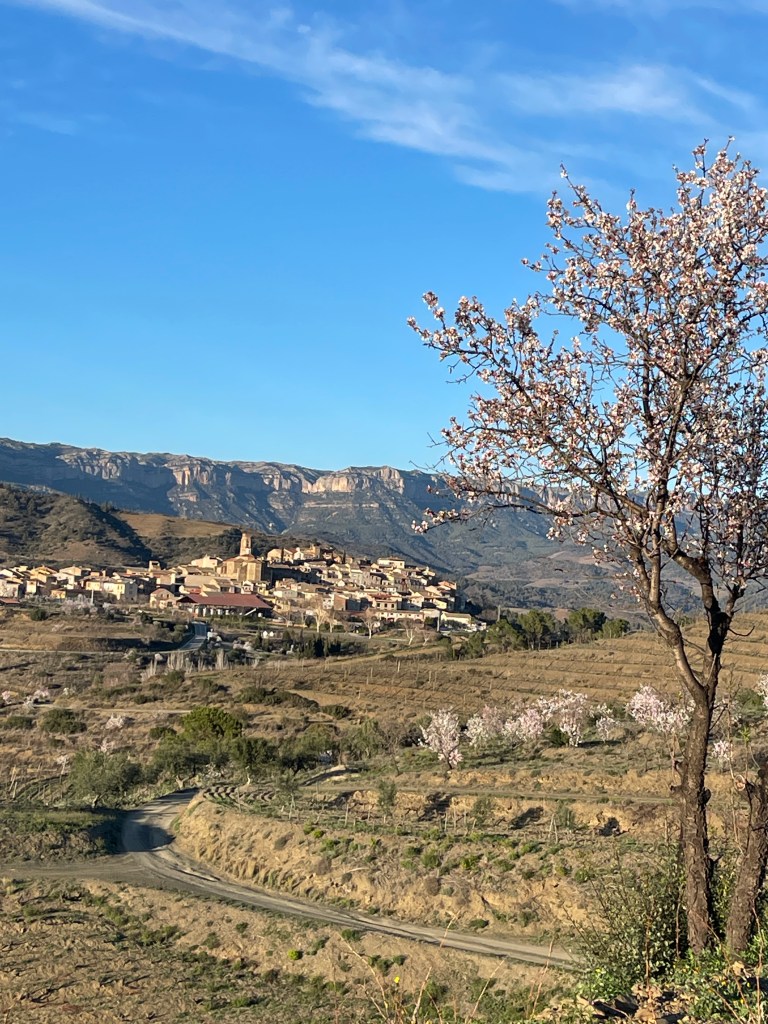
Seated at a picnic table with a fabulous view, we enjoyed a tasting of 3 Devinssi wines – the Il.lia, Mas de les Valls Tinto and the small batch Rocapoll Vi de Vila. The Rocapoll wine made from 100% Carignan grown in a hundred-year-old vineyard with only 600 bottles produced per vintage.
It was beautiful and we loved being in the vineyards. Even in the winter the blue skies and views are breathtaking overlooking the vineyards and the village. Thank you Jordi for a wonderful tour and conversation.
The truth of Costers


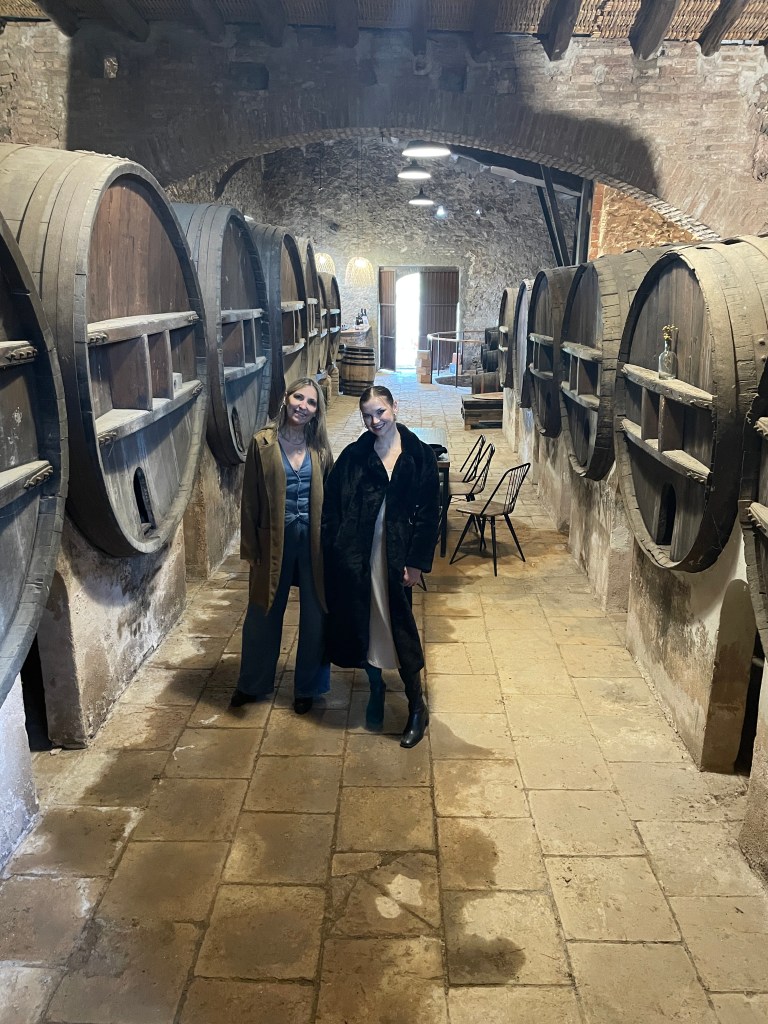
We end our three day wine tour in a place where 15th century Monks lived and made wine. This is now the winery of Costers del Priorat located near El Molar in the southern area of Priorat.
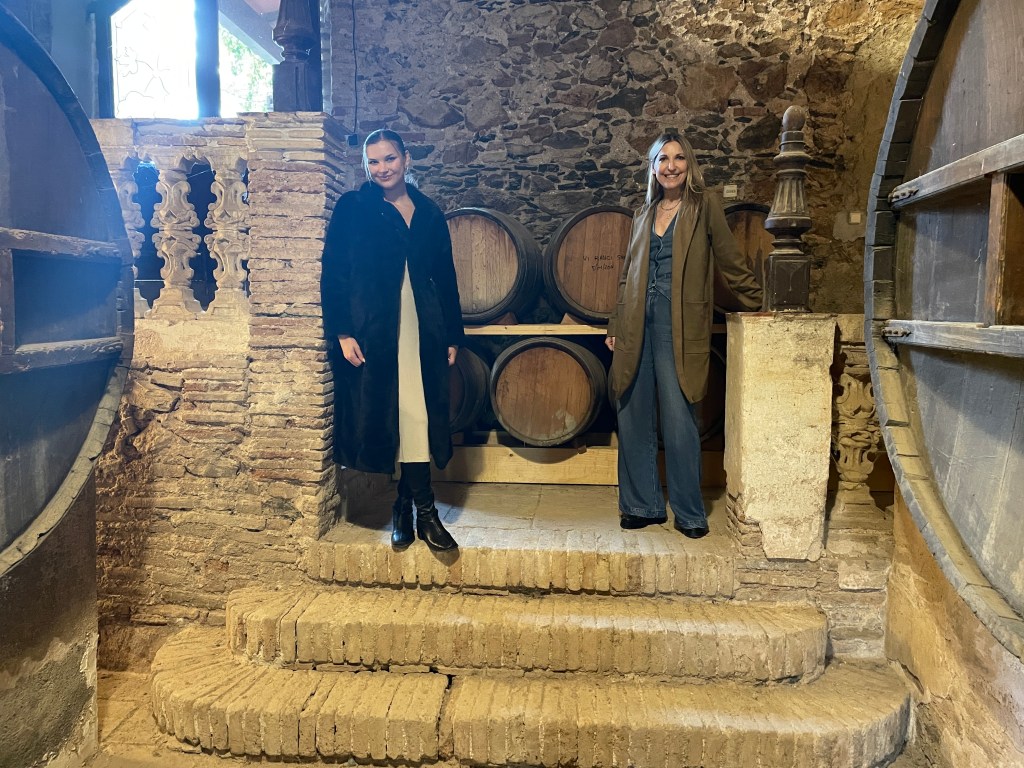
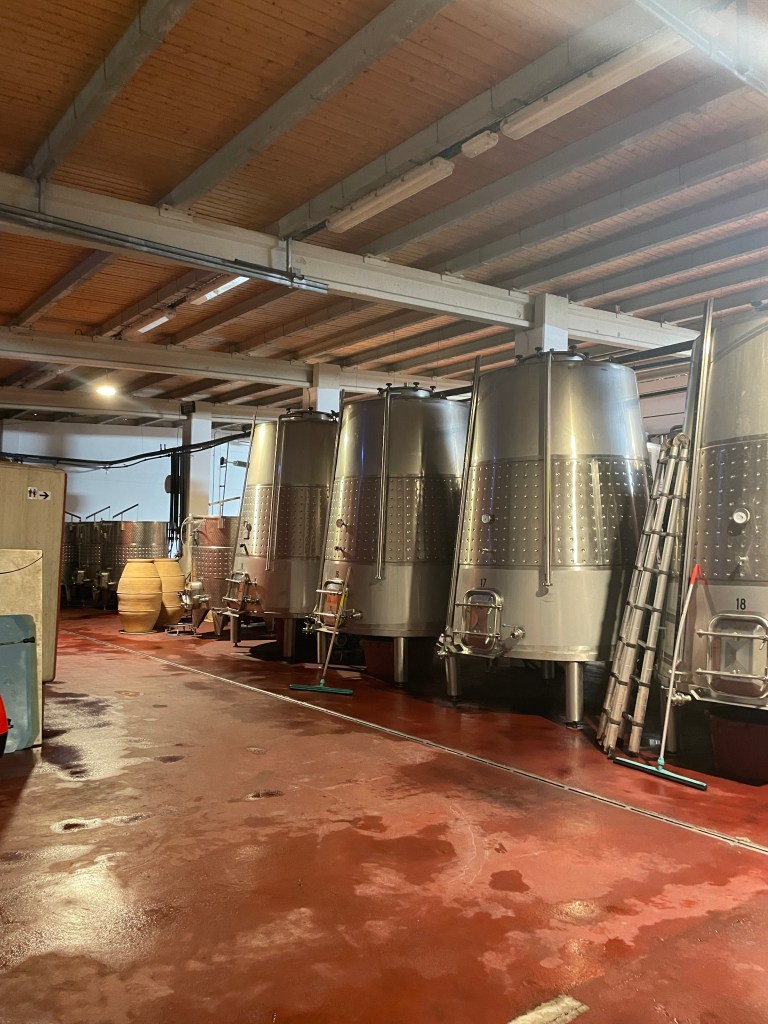

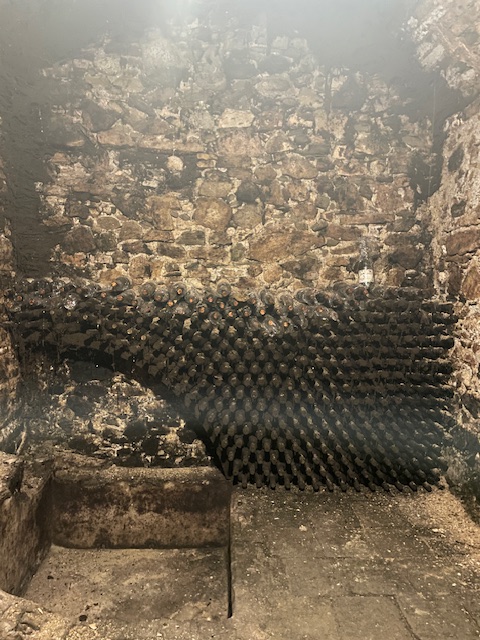
The winery has integrated some of the old underground constructions for its modern wine-making area and cellars. The Monks farmhouse is now the maceration room at Costers del Priorat with its modern wine-making equipment and the ageing cellars of the winery are where the Monks used to make their wine.
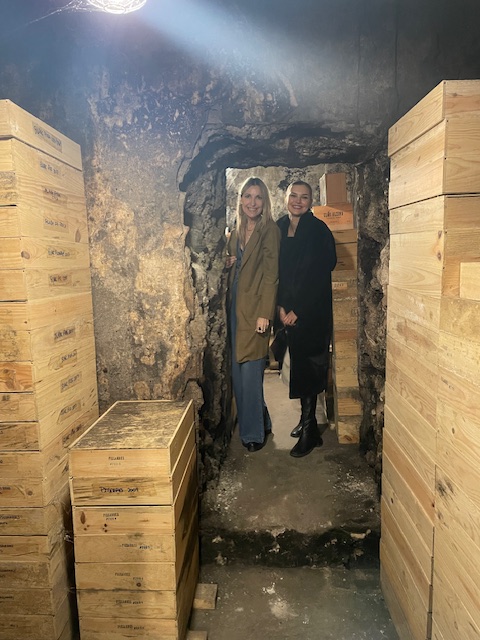
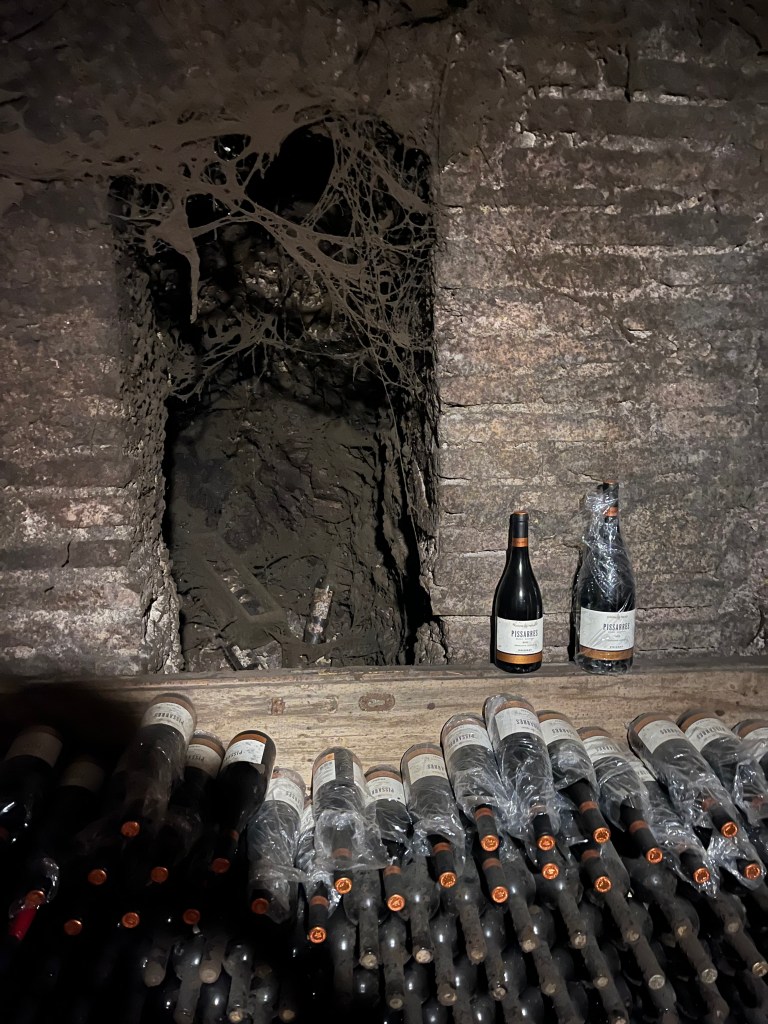
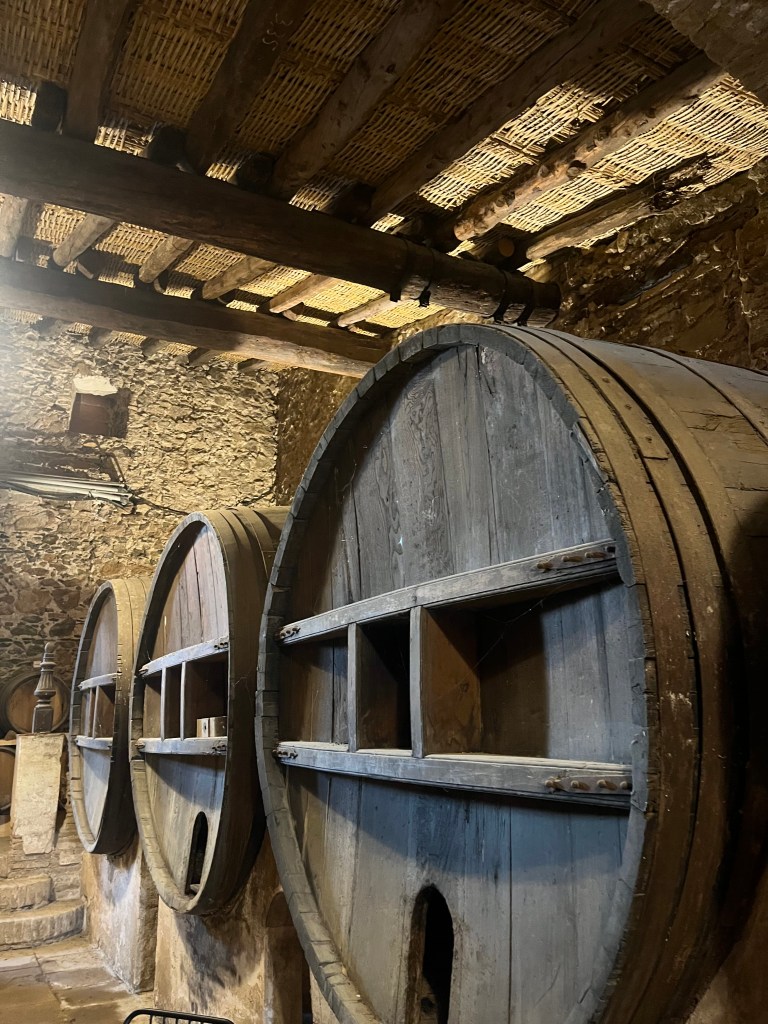
Costers del Priorat focuses on Carignan (also known here as Samsó) and Grenache. The range of wines are made in two series – one with grapes from all regions and one with single vineyard old vines.

The blended cuvees – Pissarres (the flagship wine) and Rocafosca – paint a broad picture of the landscape while the single-vineyard wines, Clos Cypres and Clos Alzina showcase the individual microclimates of the diverse appelations.
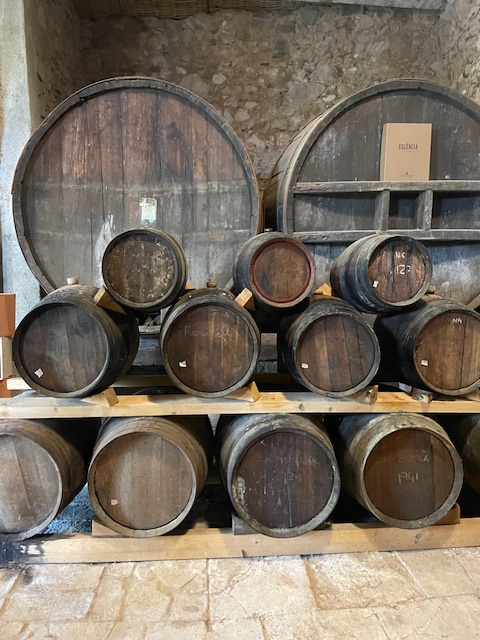
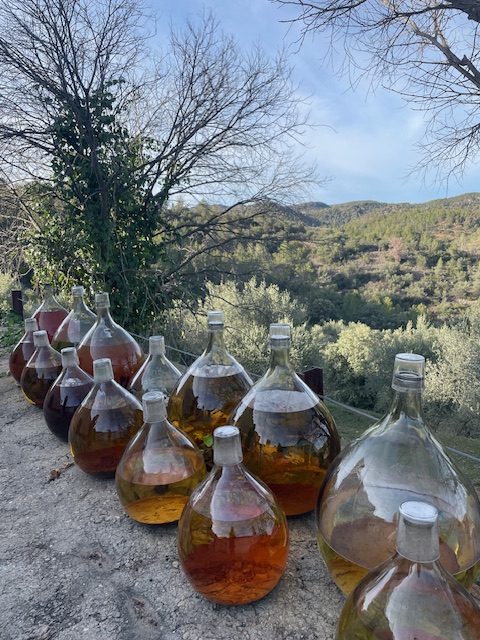
Another wine in the Costers del Priorat range is Memòries, an 8 year project for the winery, which comes from a long tradition in Priorat of making sweet and rancio wines. Known as Vi Ranci, these are dry, unfortified wines made with sun-dried Garnacha Blanca grapes. The wine is kept in the sun in glass demijohns, then transferred to partially filled old oak barrels for no less than 5 years. It is this oxidation process, further evolving over decades in soleras, that gives rise to the bouquet of unique tastes that characterizes Rancio. The resulting sweet wine is blended with rancio (20%) from a 1927 solera in a barrel of the latter wine.
In Priorat it was customary for families to store an old barrel of rancio somewhere deep in the cellar. When a son left the family house, the parents gave him a portion of the solera passing it on generation to generation. Apparently the winemaker of Costers del Priorat is a collector of generational rancio barrels, the oldest is from 1899!
As we stand, wine glass in hand, next to the demijohns of Memòries basking in the sun, we are grateful for the experiences we have shared on our mom and daughter wine tour of beautiful Priorat.
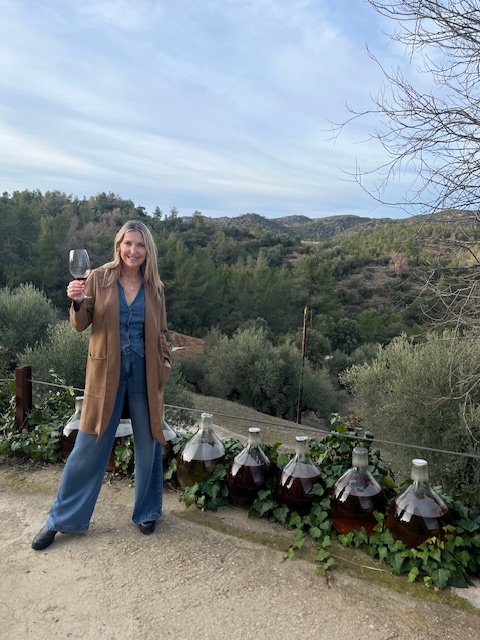
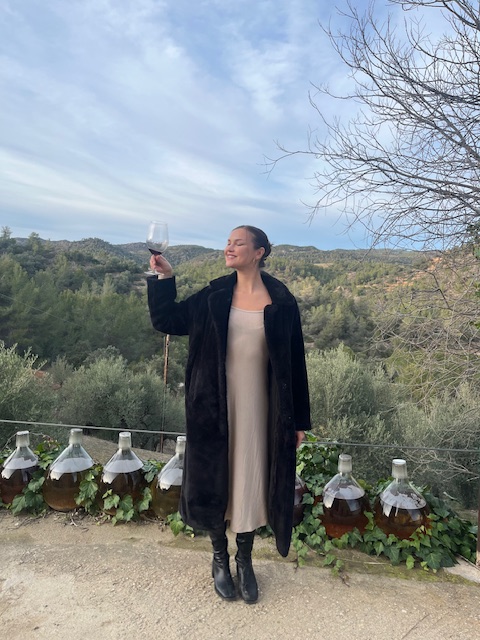
We met wonderful people, listened to their stories, learned a lot and tasted amazing, wines! We had a great experience with Travel Priorat’s, Ania and Blanca, who arranged our winery visits, made recommendations and drove us everywhere!
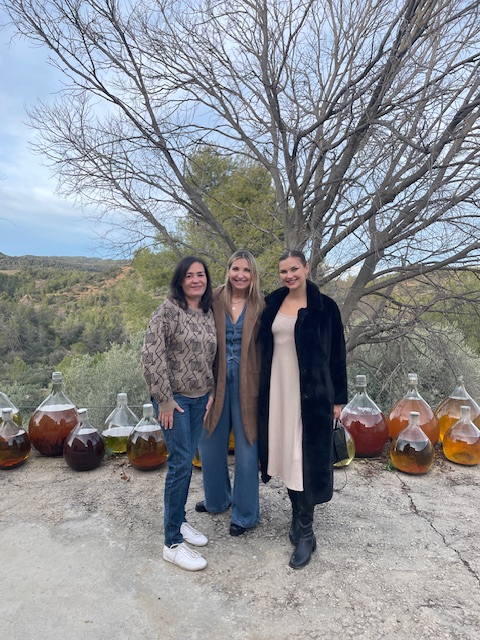
Until next time, Priorat... xo My Wine Playlist
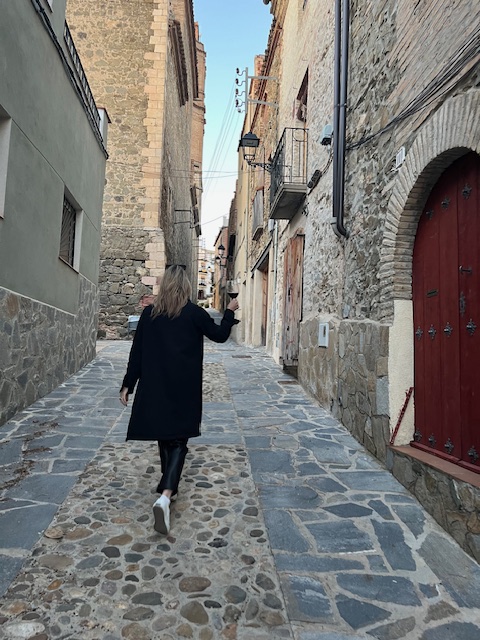
My Priorat Wine Playlist – 3 Day Itinerary
- Day 1: Arrive Hotel Gratallops for 3 night stay + Scala Dei + Slate Wine Bar
- Day 2: Clos Mogador + Buil & Gine + Devinssi Wines
- Day 3: Venus La Universal + Restaurant La Cooperativa + Marco Abella + Costers de Priorat
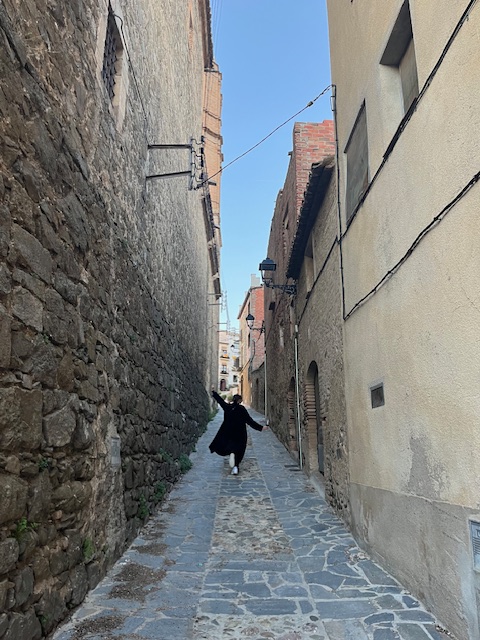
Beyond the Priorat wine region… Barcelona is an absolute gem in my book.
Fun fact – The Romans brought winemaking to Barcelona in the first century. The Roman cellar is an archaeological site that between the 1st century BC and 5th century AD was a wine center in the Roman Layetania. It has the only two reconstructions of wine presses in the country, accompanied by numerous artifacts of the time.
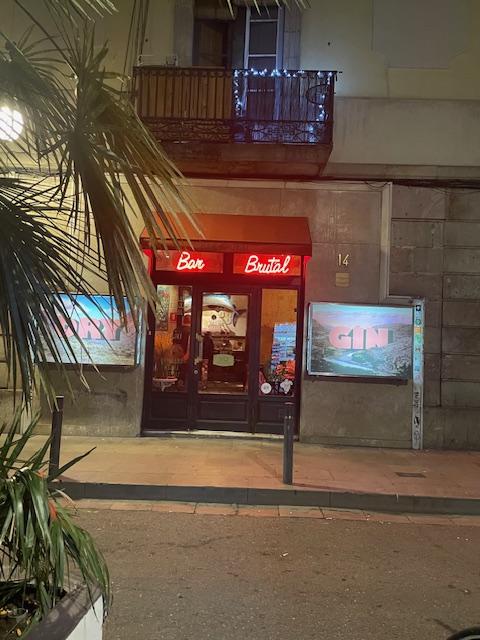
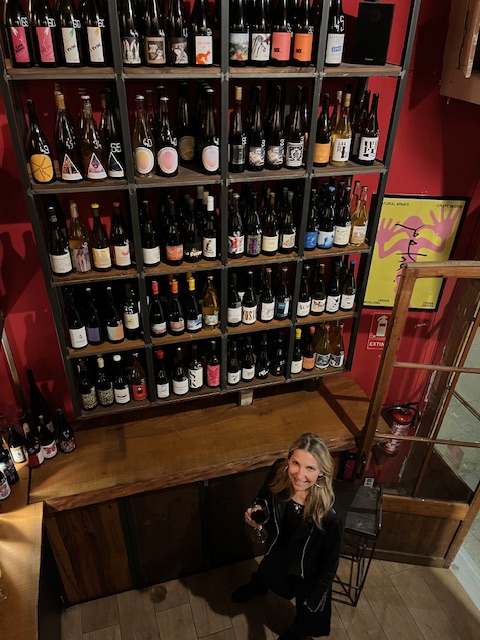
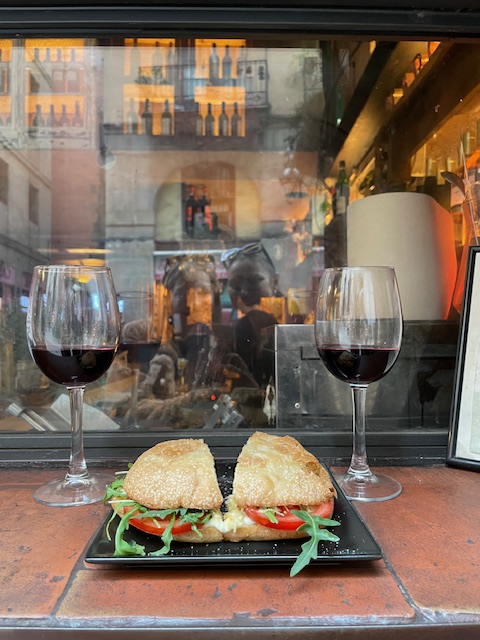
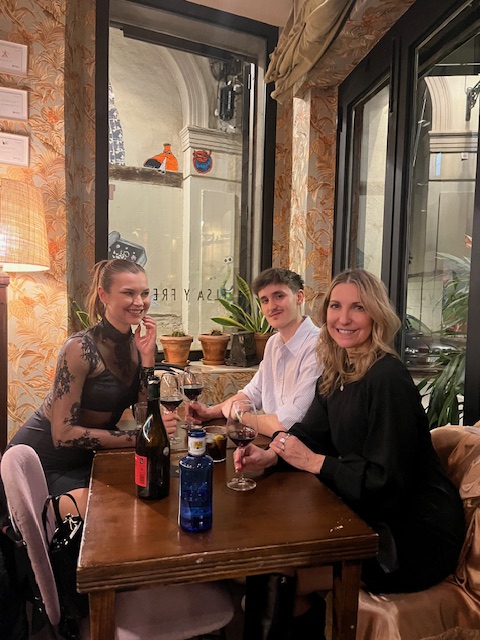
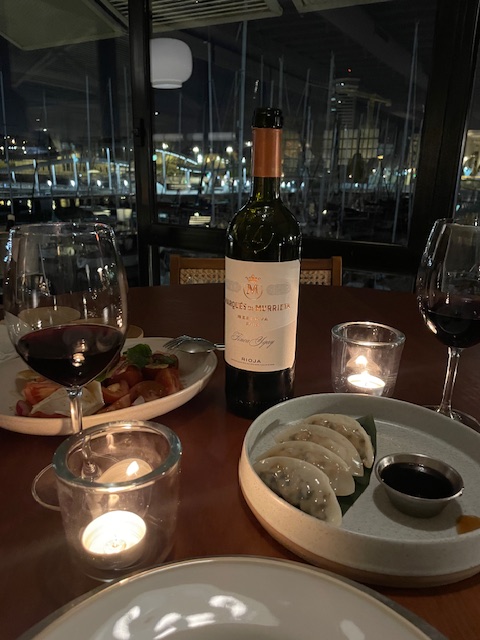
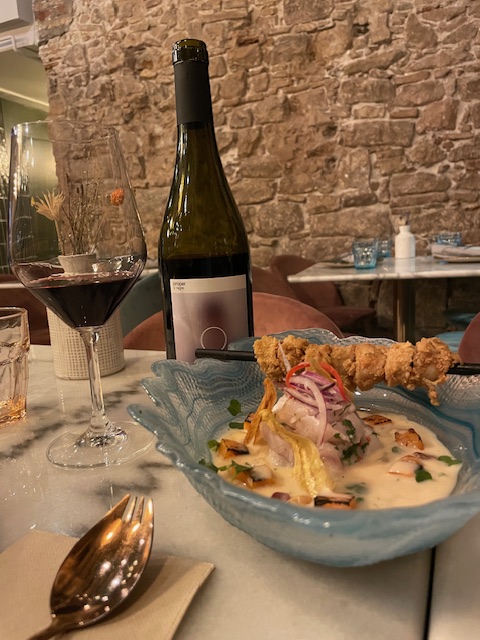
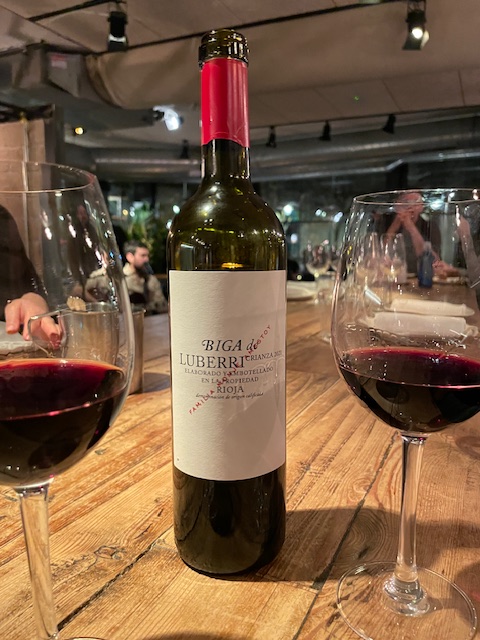
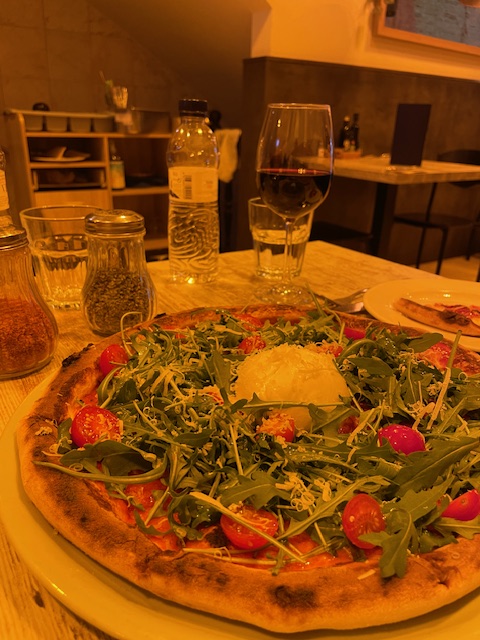
Here are some of my favourite wine bar/restaurants in Barcelona #mywineplaylistapproved
L-R Bar Brutal, PetNat, Narciso, Elsa y Fred, FiskeBar, Candela (best ceviche!!), Fismuler, Italo Pizzeria

 My Wine Playlist