C’est magnifique! A trip to Paris to visit my daughter with a side of Bordeaux. After a week in the City of Love and Lights, we escaped for 5 days to wine tour Bordeaux.
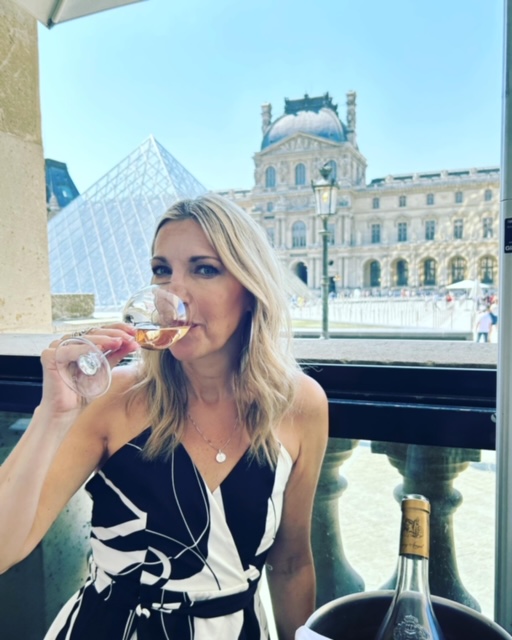
This is how it started: Here I am sipping Whispering Angel, a nod to the angels of The Louvre, at the gorgeous Le Café Marly. What a view!
So many wines, so little time.
With over 6,000 chateaux in this world-famous wine region, planning a Bordeaux wine tour can be overwhelming.
Ready. Set. Bordeaux…
We took the train from Paris to Bordeaux which took only about 2.5 hours. This gorgeous Airbnb in historic Bordeaux was our home base.
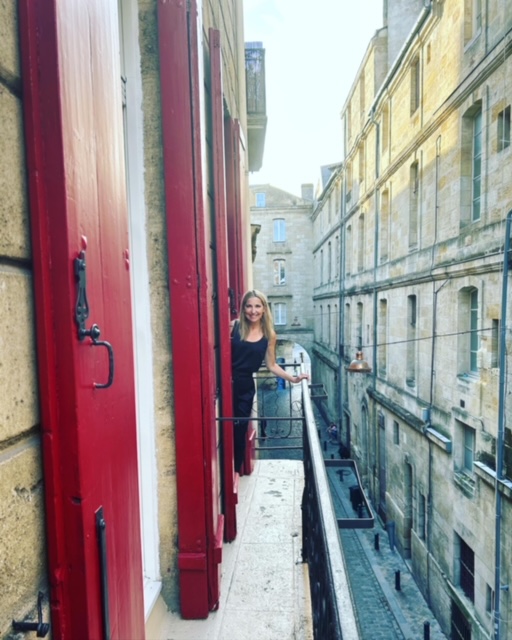
The hosts of our Airbnb, Mathilde and David, are truly super hosts. They went above and beyond to make our stay extraordinary including the best guidebook to inspire things to do in the area. We stayed in the Lillet By Homy, a one-bedroom flat with a balcony in front and a patio in the back (with a tower view!). It felt like we were living in a castle and it was pretty special.
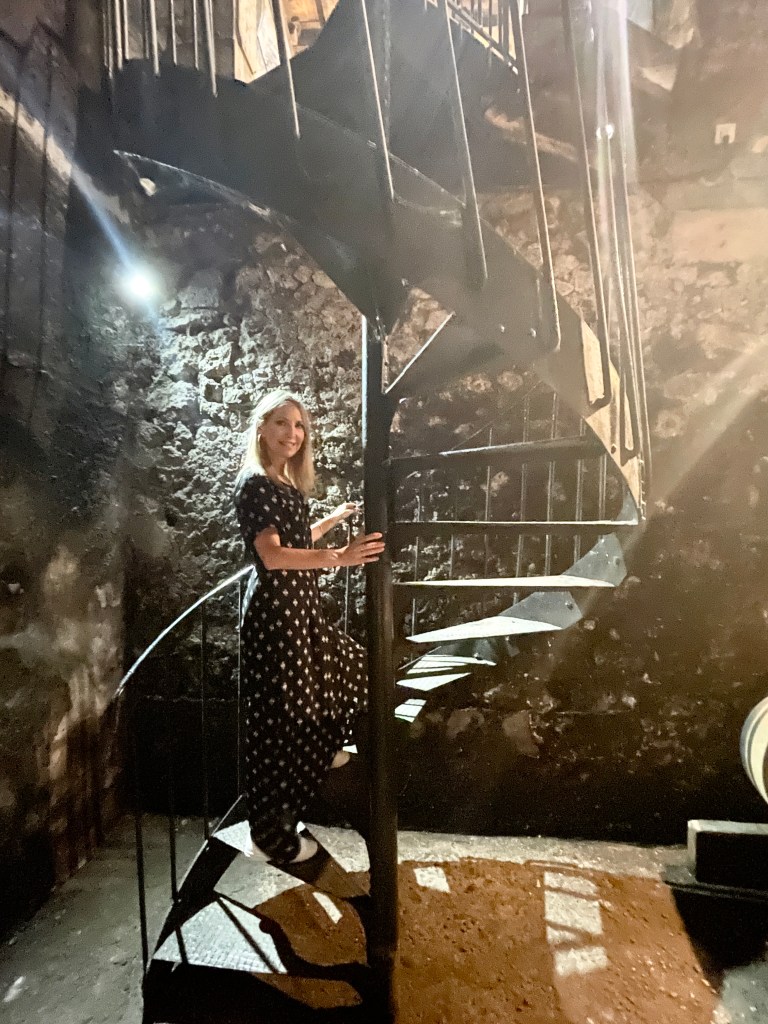
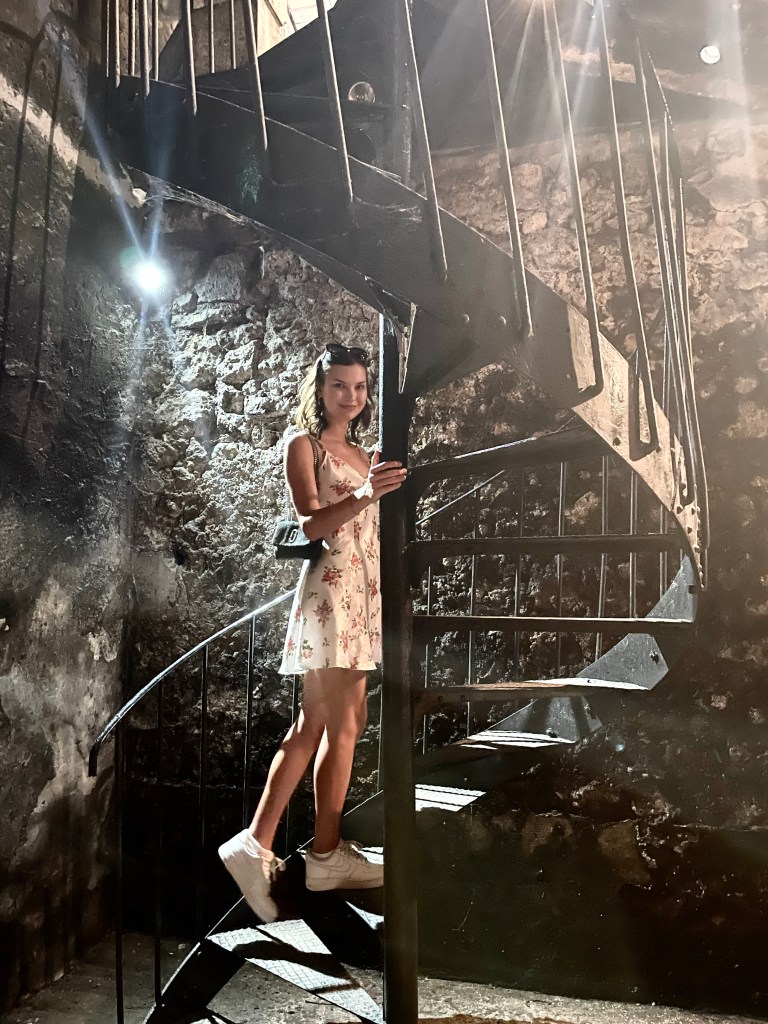
Fun and fancy on the staircase tower of our Airbnb.
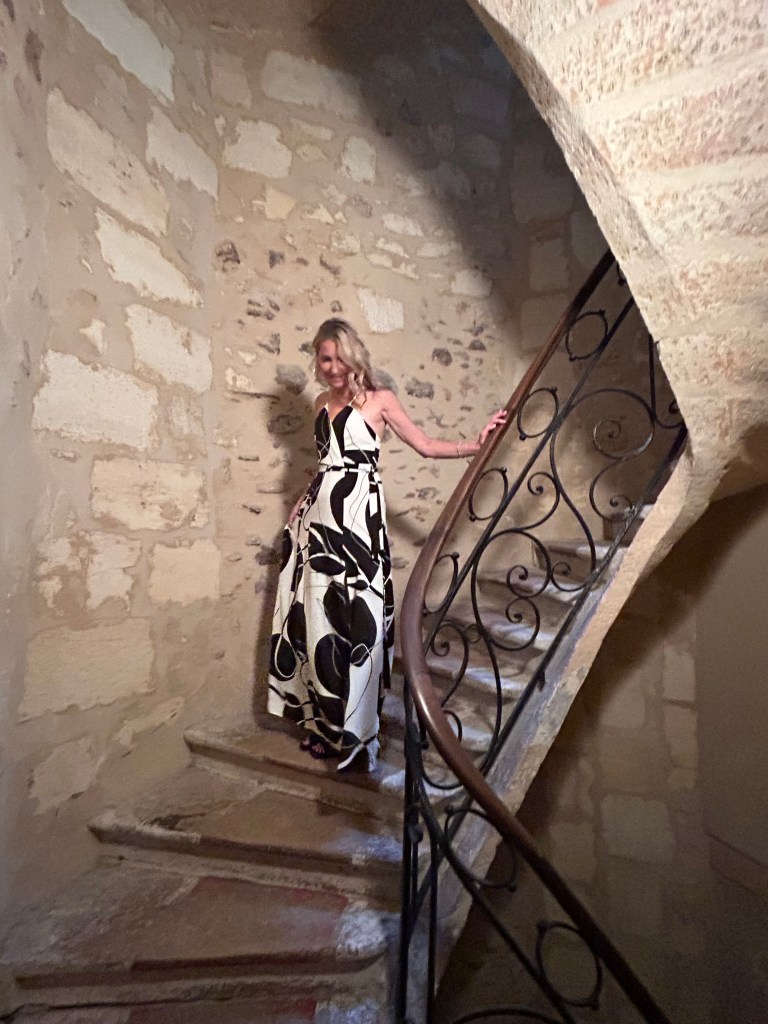
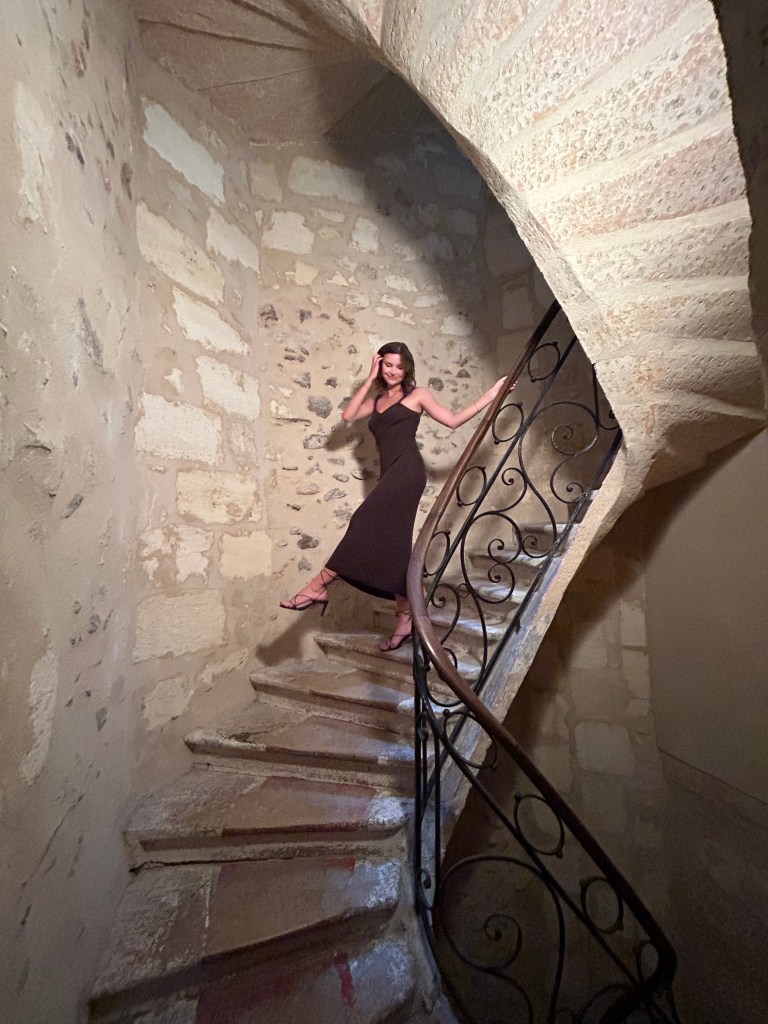
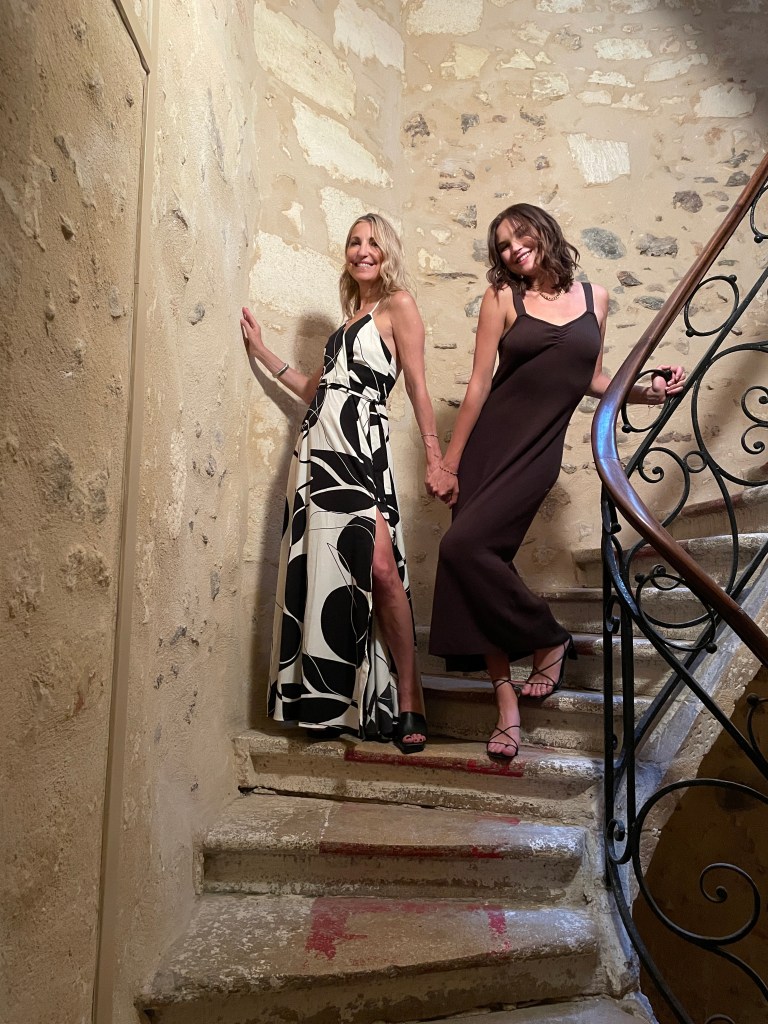
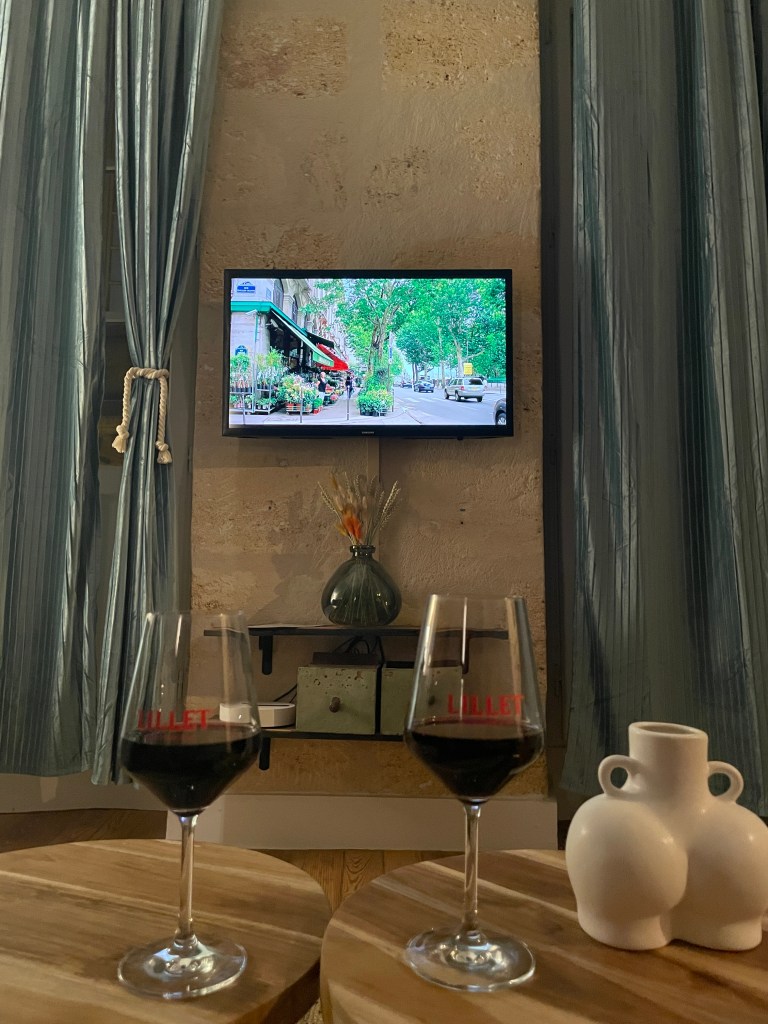
To see more photos of this fantastic accommodation in Bordeaux go to @byhomy.bordeaux on Instagram

Left bank. right bank.
Our taste of Bordeaux focused on the appellations of Saint-Émilion (Right Bank) and Haut-Médoc (Left Bank). Bordeaux is primarily Cabernet Sauvignon and Merlot. Generally Left Bank Bordeaux wine is Cabernet Sauvignon dominant and Right Bank is Merlot.
Bordeaux wines are a blend of two or more grape varieties that may include Merlot, Cabernet Sauvignon, Cabernet Franc, Petit Verdot and Malbec. Depending on which appellation a Bordeaux wine is from it will either have a Merlot dominant blend or a Cabernet Sauvignon dominant blend.
Fun fact: The first Cabernet Sauvignon and Merlot vines originated in Bordeaux.
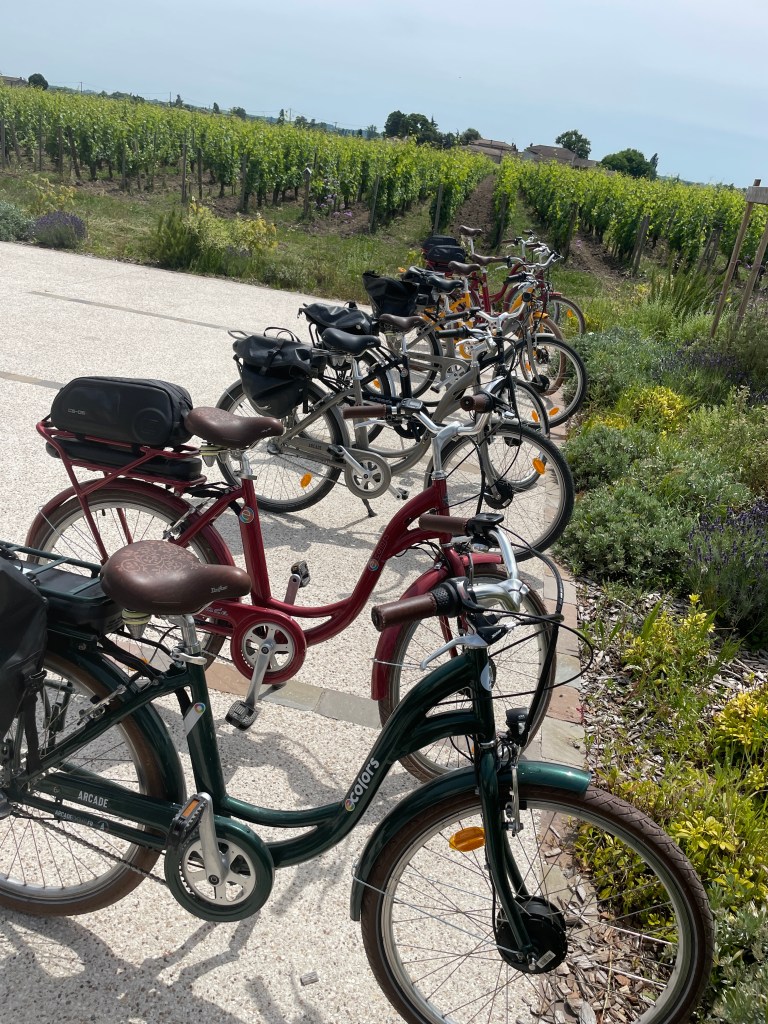
We started our adventure exploring Saint-Émilion, not only a prominent Bordeaux wine region but it too is a UNESCO World Heritage Site! With its gorgeous vineyards, rolling hills and panoramic views, an e-bike tour with Rustic Vines was the perfect way to explore the region.
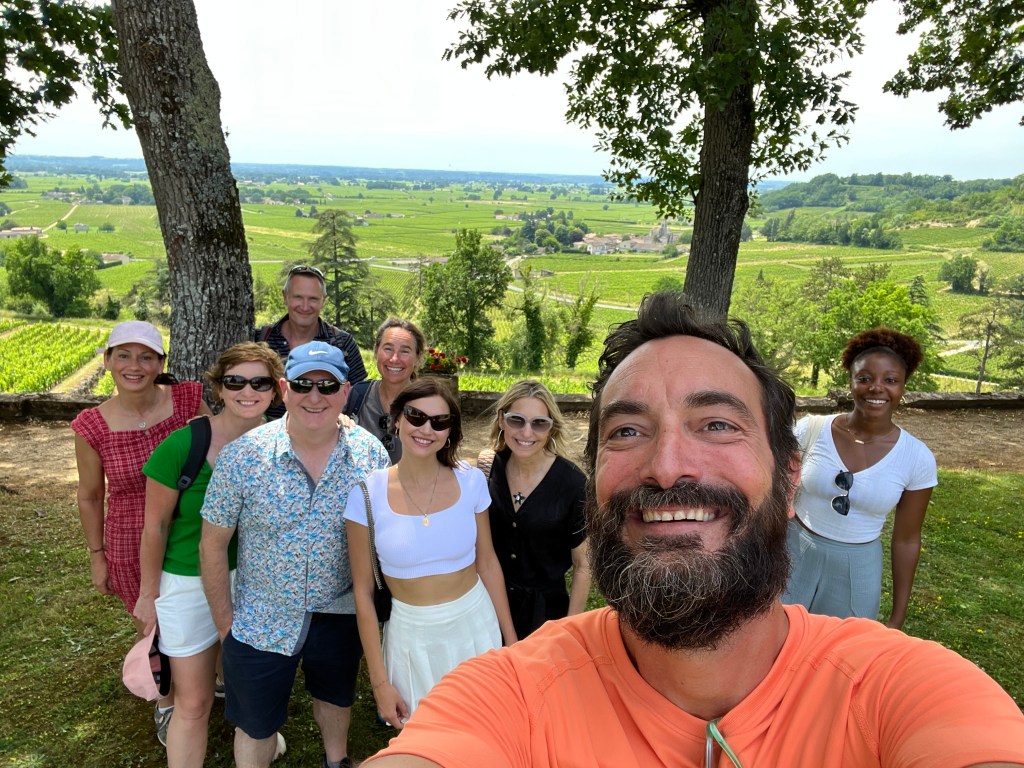
Our guide Jerome (aka J) made our wine tour fun and fabulous, sharing his knowledge of wine and the region and entertaining us with his jokes and his intel. Our word of the day was “terroir” which is everything to Bordeaux wines. Terroir is influenced by three things – the climate, the soil, and the human winemaking practices regulated in each appellation. Jerome explained that the appellations are like a brand. As a brand manager that made sense. Each brand has its own distinctive assets in its style and terroir.
On the Left bank, you have flat, gravelly soil, and less sun giving Cabernet Sauvignon its time to shine. The wines in this region are bolder and more tannic than right bank. Sub-regions/appellations of the Left Bank/Médoc include Pauillac, Saint-Julien, Saint-Estèphe, Margaux and Pessac-Léognan.
On the Right bank, layers of sand, clay, and limestone make the soil stay cooler and hold more water. So the reds that thrive in this terroir (Saint-Émilion) are primarily Merlot and Cabernet Franc. The average age of the vines is 40-45 years when they are in their prime producing both quality and quantity. The most known regions include Pomerol and Saint-Émilion. Wines here generally have softer, more refined tannins.
Regulations and Classifications
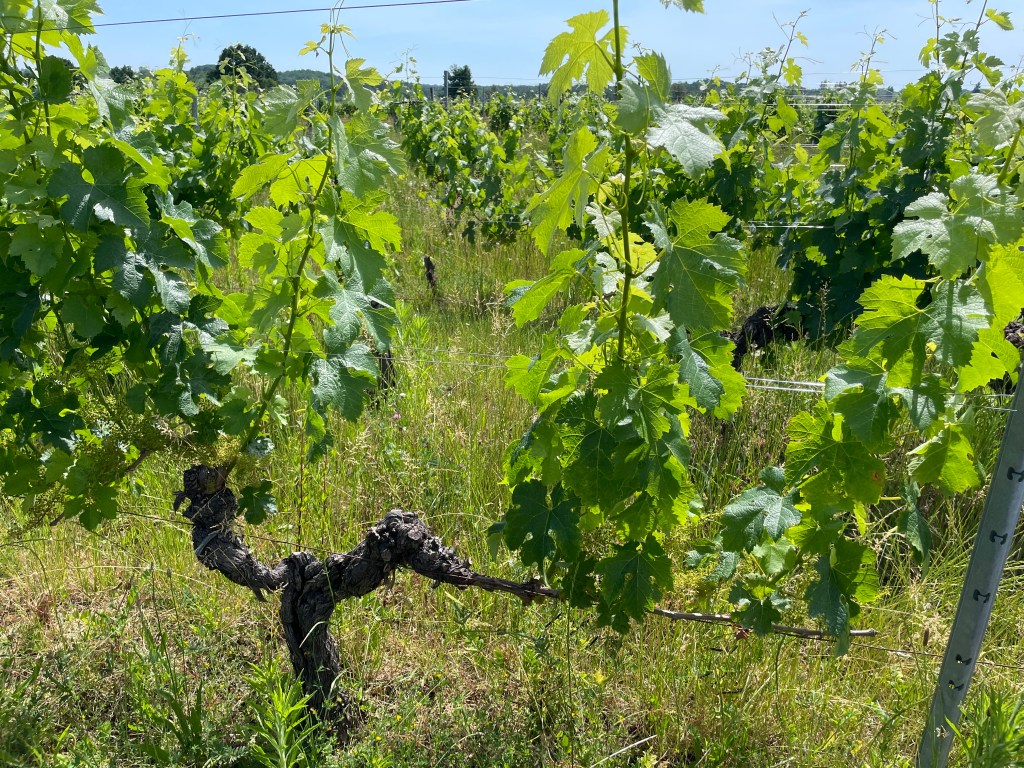
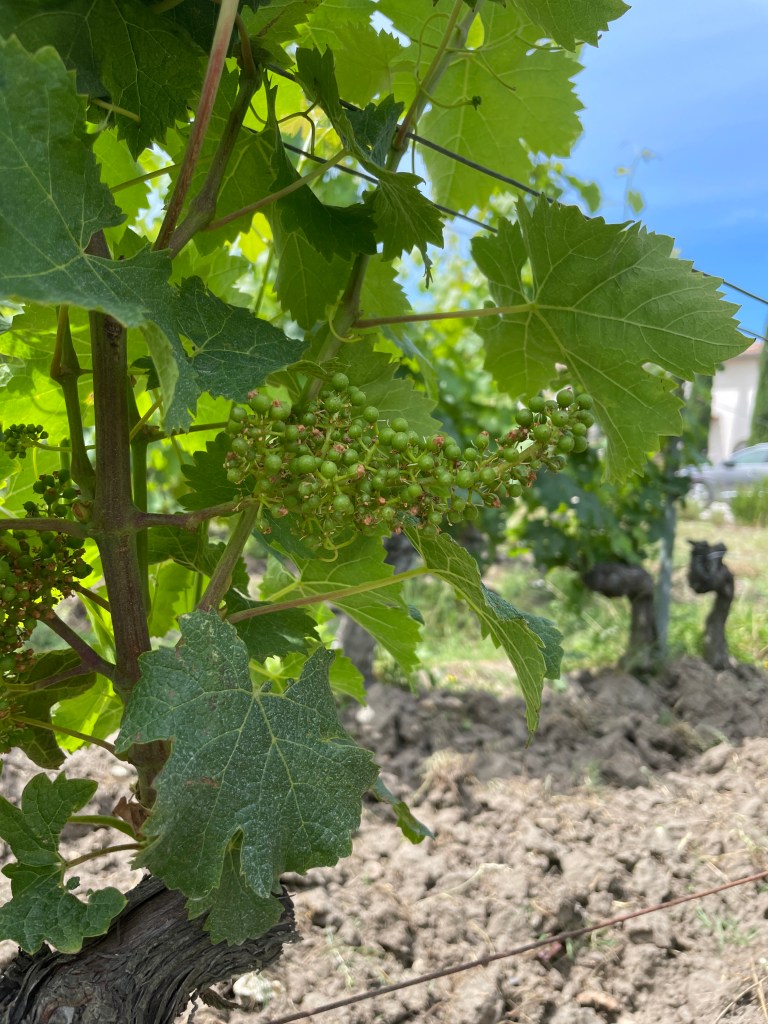
The age of the vine holds great importance. Vines aged 3 to 13 are considered “teenager vines”. They tend to grow fast and produce quantity but do not yet deliver quality. Prime time for the vines is 45-55 years of age. This is when the vines are producing both quantity and quality. In Saint-Émilion, the average age of the vines is 40. They tend to replace vines over 60 years when the vines are still producing but getting frail. However, a benefit of older vines is that they have a better root system that grows through all the layers of soil and minerals which ultimately makes the grapes taste better.
In addition to the viticulture regulations are Cru Classifications that identify wines with quality and often influence the price of the wine.
- Crus Classes de 1855 – 5 tier classification ordered by Napoleon in 1855 (Médoc and Graves)
- Crus Classes de Saint-Émilion – a classification awarded to top-quality producers every 10 years
- Crus Bourgeois – for producers in Médoc based on quality
Interestingly one of the most expensive wines in the world is Pétrus, from the Pomerol region (Right Bank), averaging €2000 and €3000 a bottle (much more for older vintages) and does not have any classification status.
WINE TIP: Regardless of classification, we learned that the best vintages to pay attention to right now in Bordeaux are those from 2016 and 2022.
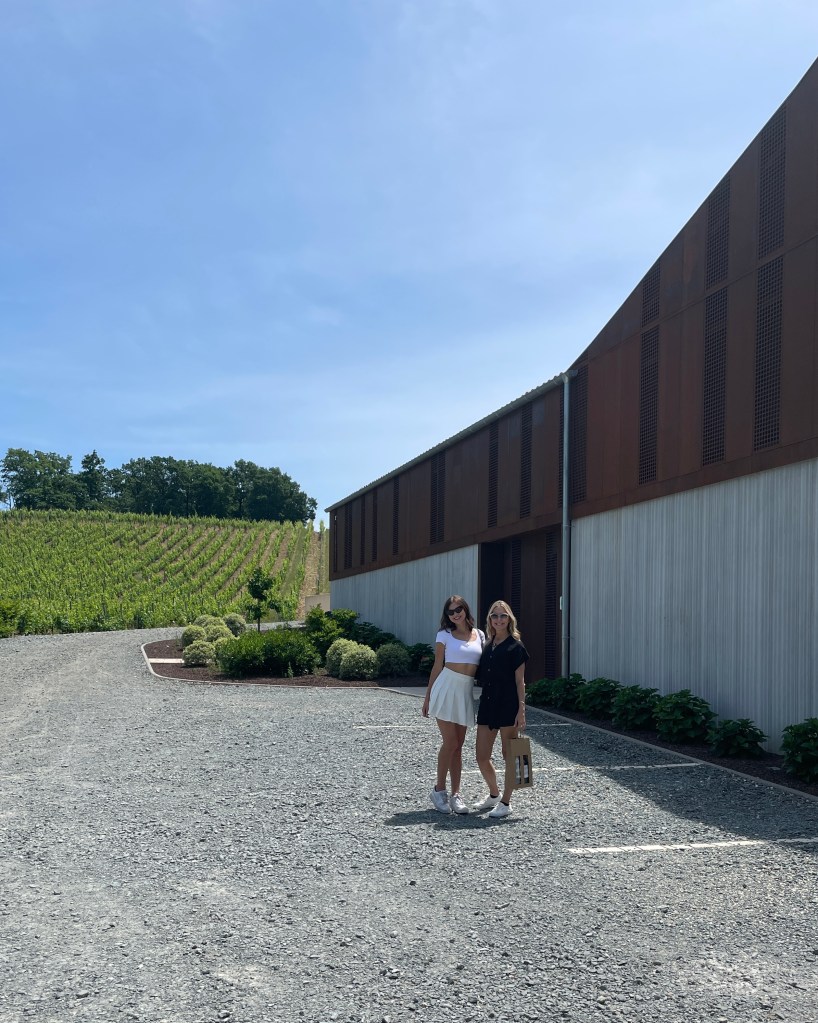
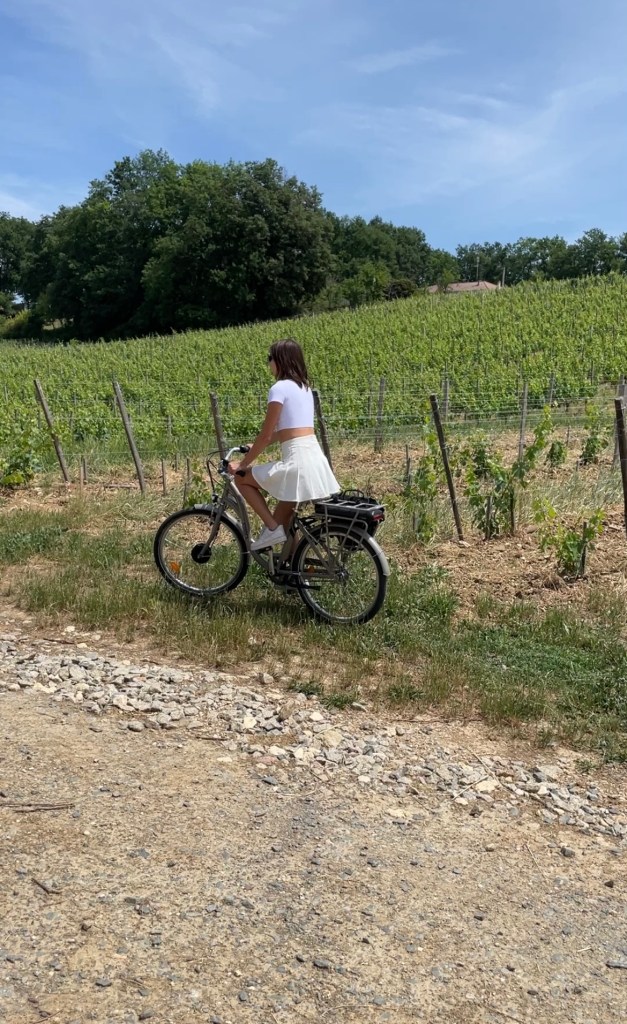
We pedaled up to a private tour of Château Rol Valentin, a Saint-Émilion Grand Cru Classe, as our first stop on our Rustic Vines e-bike tour.

Château Rol Valentin was acquired in 2009 by Alexandra and Nicolas Robin, each with an impressive wine-making lineage, who continue to build on the quality of the vineyard. The pretty golden logo with 4 angels was the original of the Château and is now an accurate representation of this family of four – Alexandra, Nicolas, and their two kids. The Vignobles Robin group started in 2004 with the purchase of Château de Laussac. Today they own five Chateau wine estates.
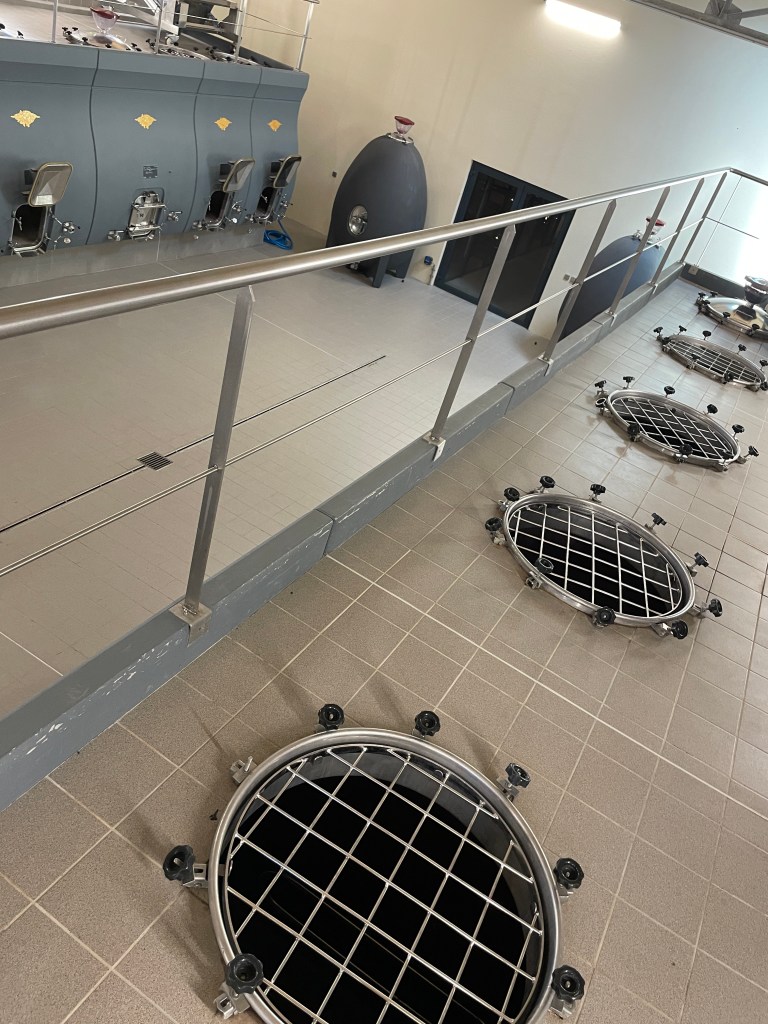

Our visit to Château Rol Valentin included a tour of the vineyard, the vat room and the barrels room.
The vineyard (78% merlot, 15% cabernet franc and 7% malbec) has a HVE3 (high environmental value) certification which does not mean organic, but it does mean protecting the environment, for example, no herbicides. In the winery, the recently modernized cellar consists of concrete tanks. Grapes enter the vats top down using the weight of gravity to push versus crush or stomp the grapes. The concrete bays maintain quality and allow better control of temperature. After fermentation, the wine is then aged in oak barrels for 14 to 16 months.

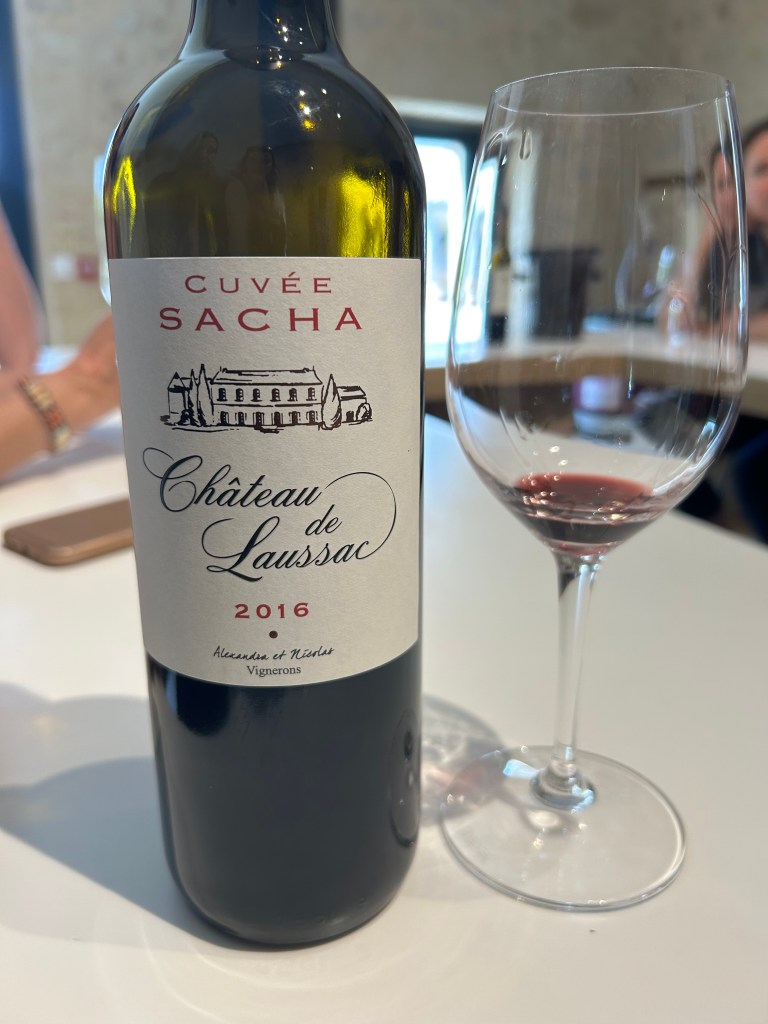
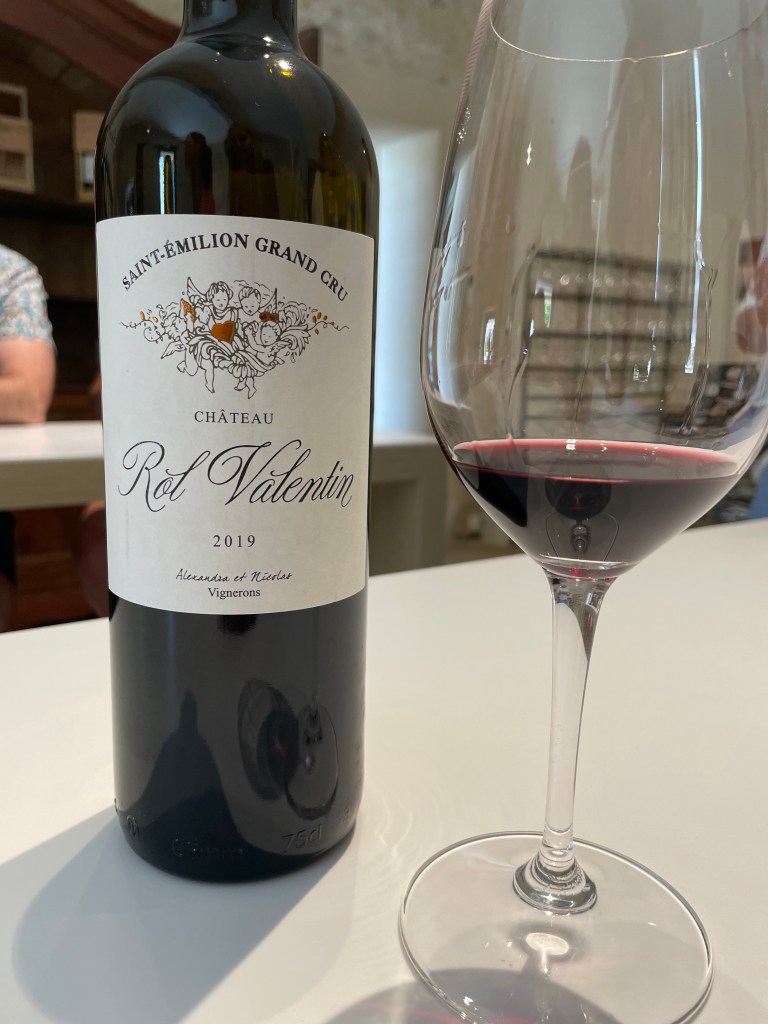
We tasted the 2019 Chateau Gontet Puisseguin Saint-Émilion and 2016 Château de Laussac Cuvée Sacha, labels residing under the Vignobes Robin group. Our favourite was the 2019 Château Rol Valentin. Interesting to note that this 2019 would have been produced in wooden vats as the modernization of the vat room didn’t take place until 2020. We thought it would be interesting to taste a 2020 so we brought one home to try in the future : )
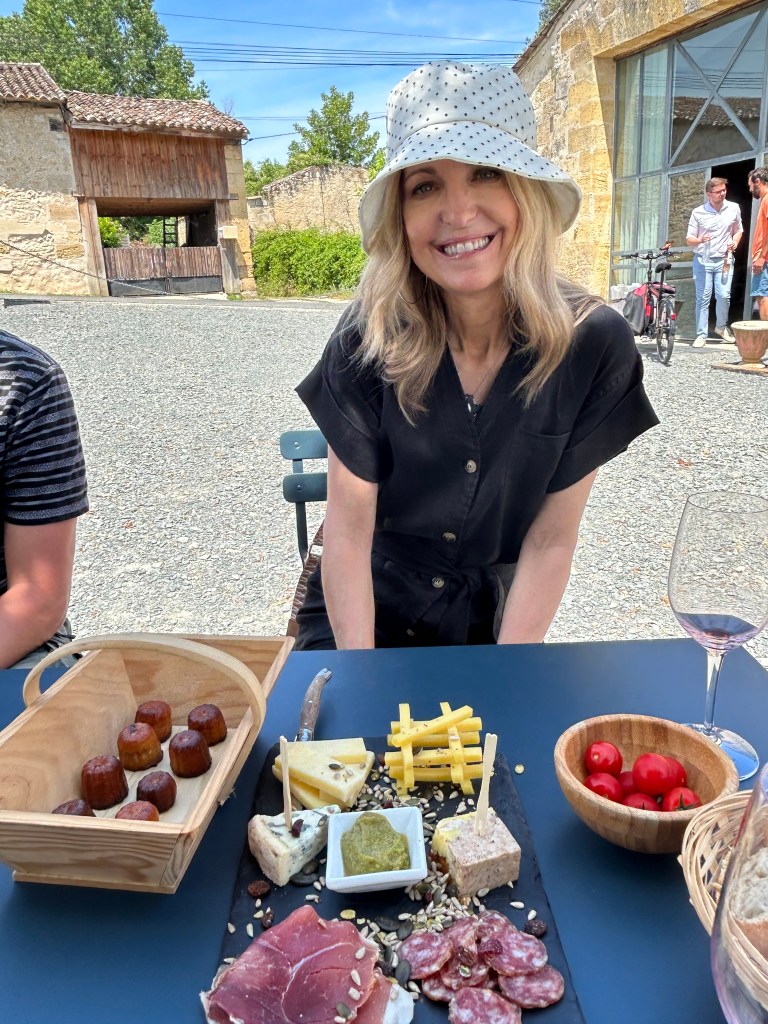
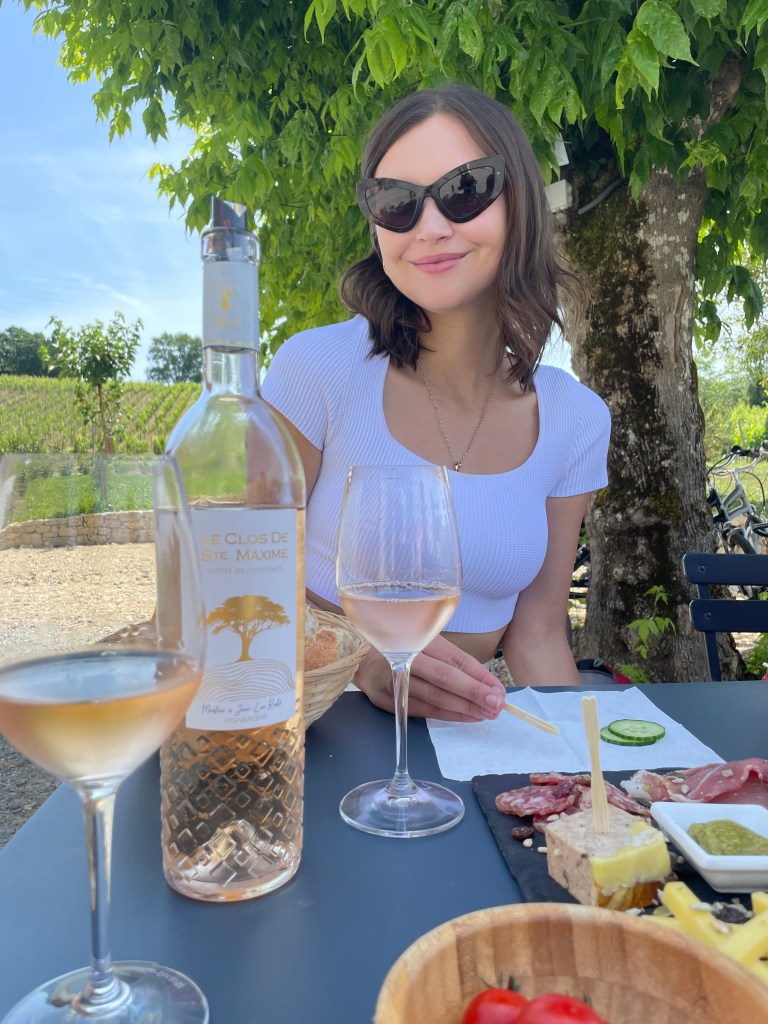
We enjoyed a picnic lunch alongside the vineyards with a lovely Le Clos De Ste Maxime Côtes de Provence Rose that was welcomed on this warm June day. Le Clos de Ste Maxime is a small vineyard in Sainte-Maxime owned by Alexandra’s parents and also under the Vignobles Robin group.
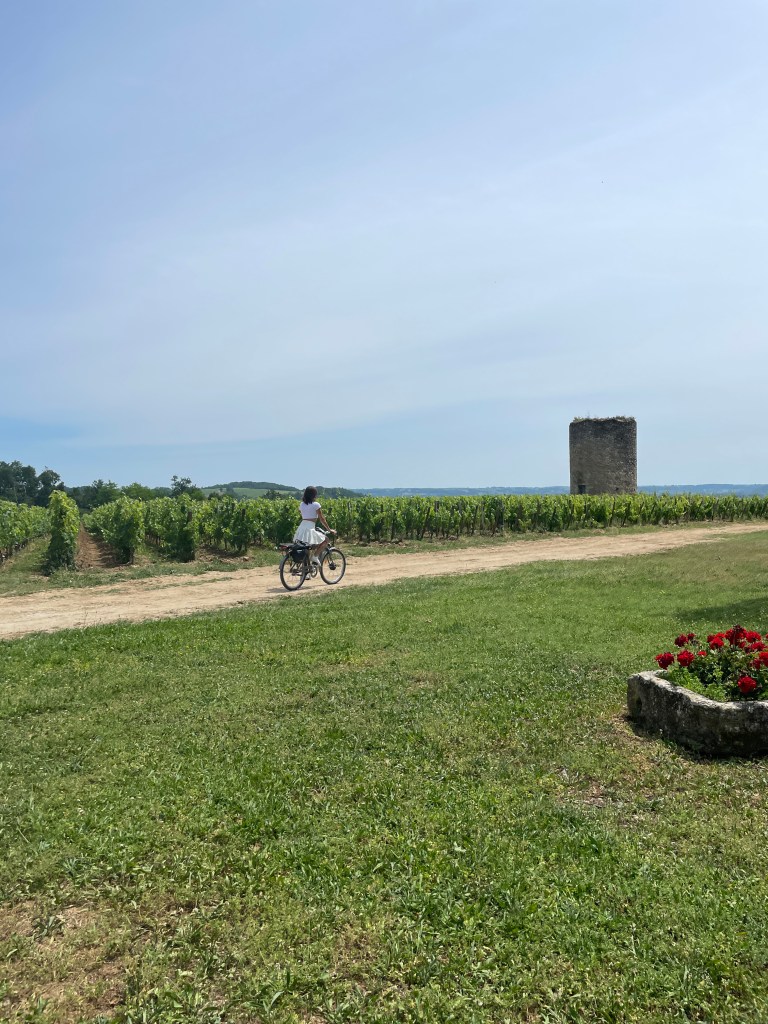
En route to our next winery, we stopped to enjoy the view at Château de Pressac where the treaty marking the end of the Hundred Year War was signed in 1453.

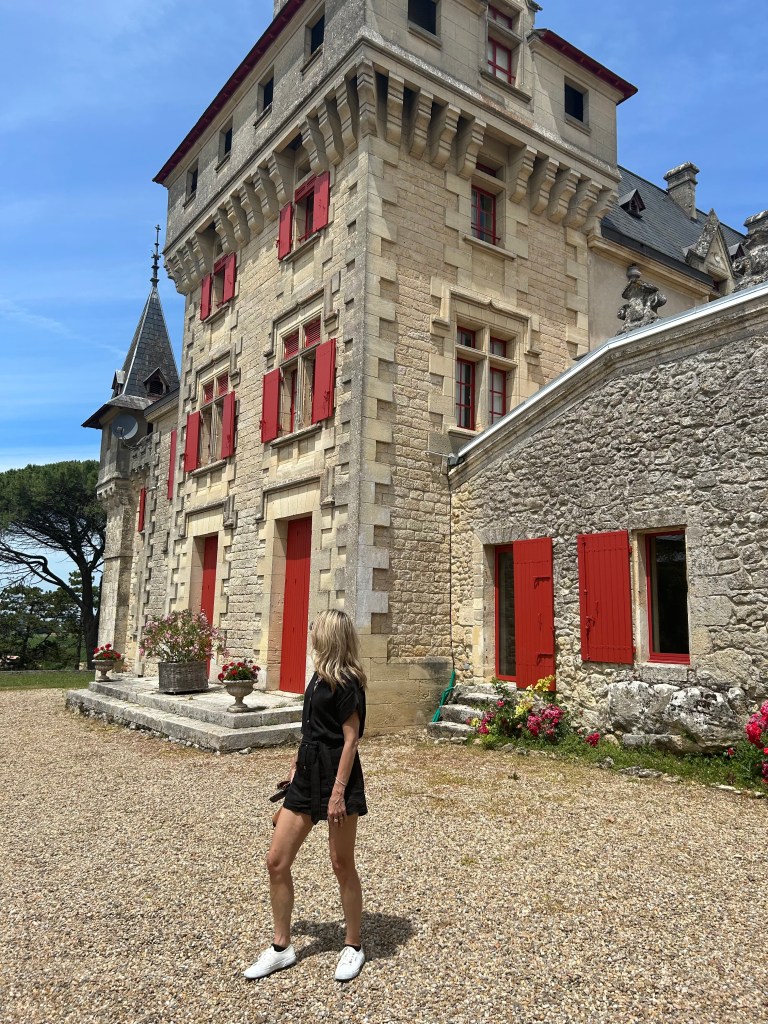

Time for wine at Château fleur de lisse


Riding our bikes through the Saint-Emilion countryside was amazing with stunning views. It was an easy ride. The e-bikes gave us the speed and stamina to go the distance and a breeze to keep us cool. Rustic Vines kept us hydrated with bottled water. Our next stop was a tasting and private tour of the very beautiful Château Fleur de Lisse.

Exploring Saint-Émilion via e-bike was not only a great adventure but also a wonderful way to reduce our carbon footprint on the environment.
Château Fleur de Lisse is a state-of-the-art wine estate, under the Teycheney family’s Vignobles Jade group, and where all of its labels are produced. Formerly an executive in the luxury watch industry, Caroline Teycheney, understands quality and style. The estate was renovated in 2021 creating an authentic yet modern environment for organic and biodynamic wine production.
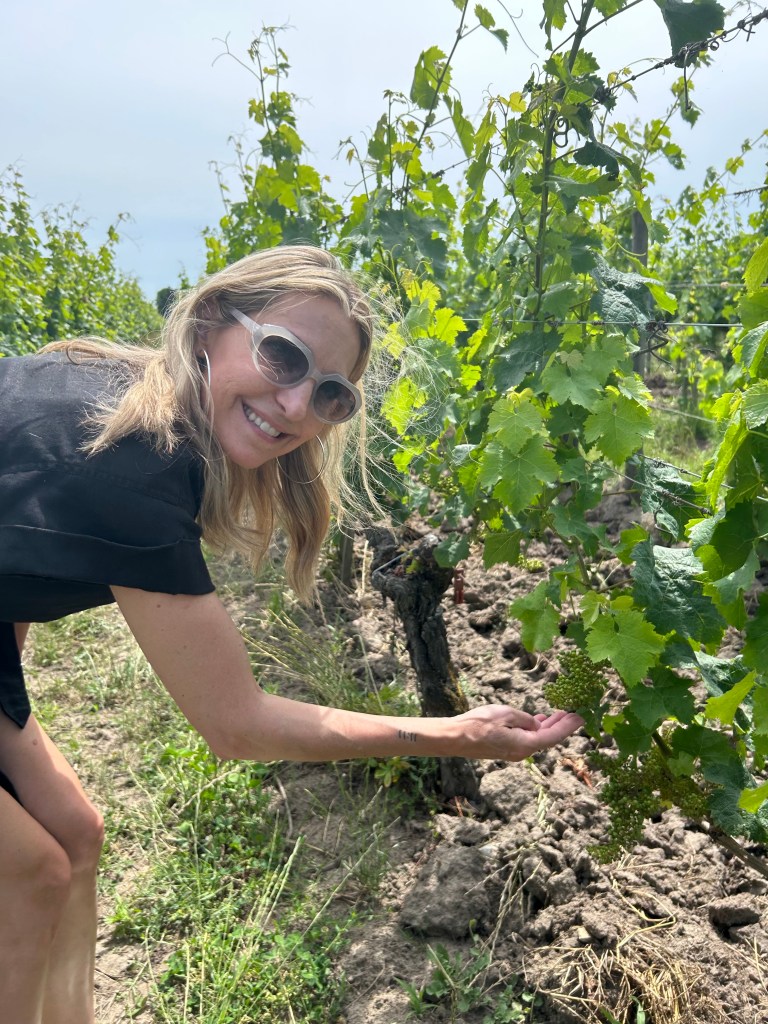
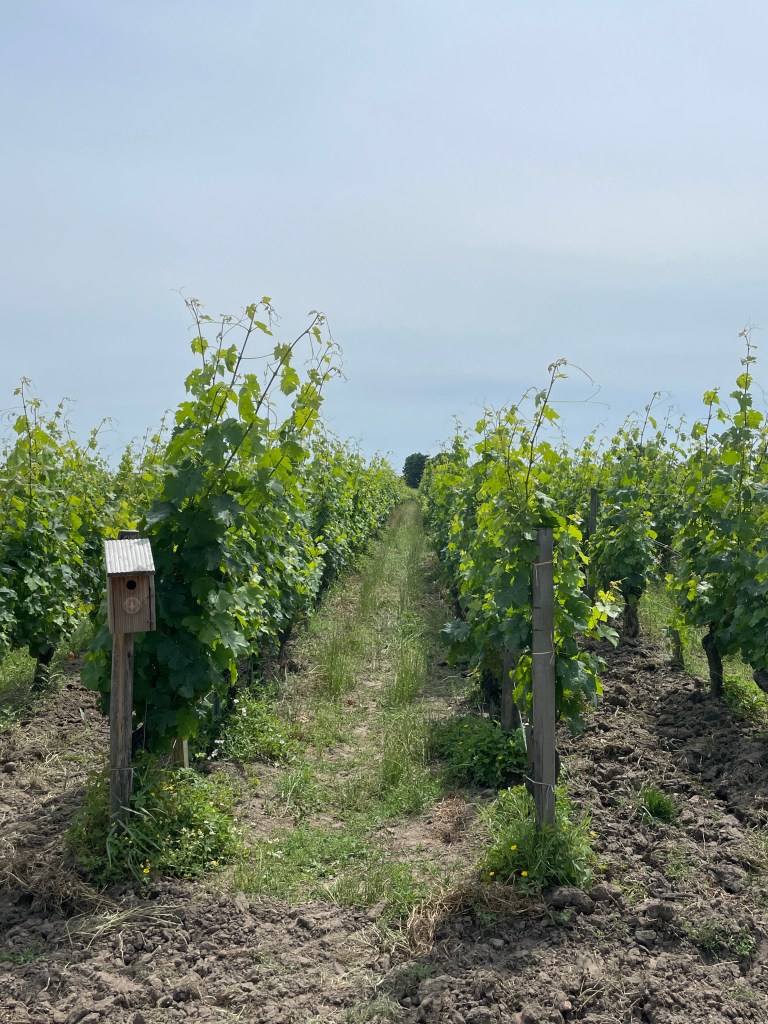
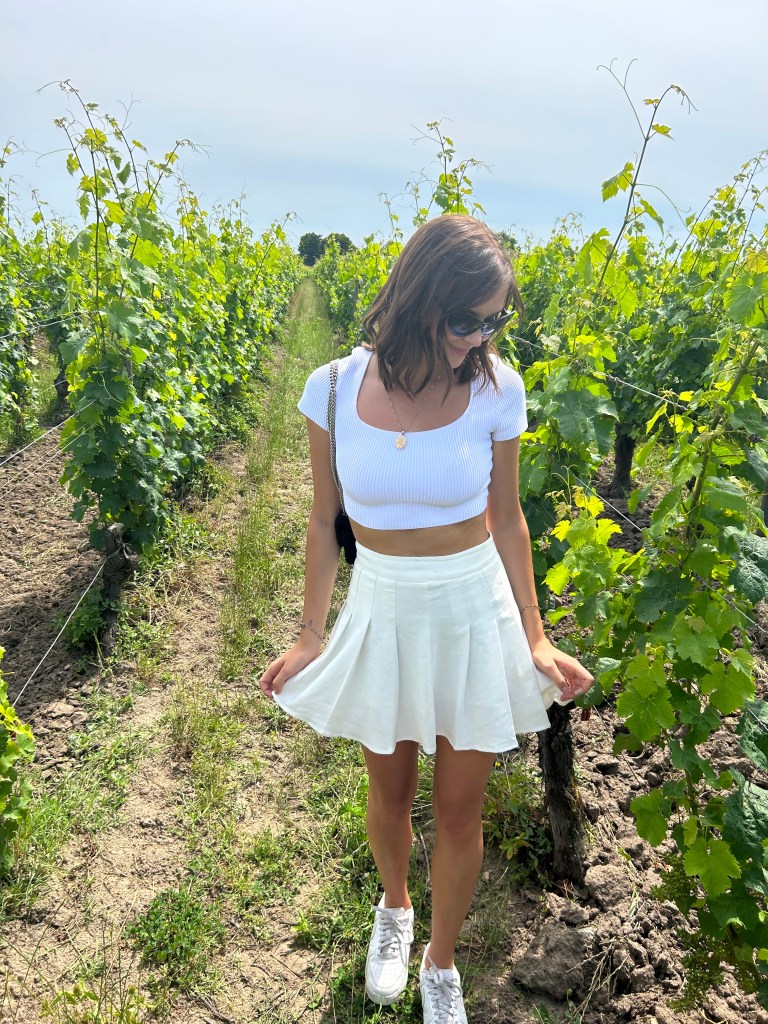
In 2016 Vignobles Jade committed to converting all of their vineyards to organic farming and biodynamic cultivation. Biodynamic wine-making is an ecosystem that respects the whole vineyard from the vines to the animals, soils as well as those who work there resulting in wines that reflect the terroir. Merlot, Cabernet Sauvignon, and Cabernet Franc thrive in the vineyards of Château Fleur de Lisse.
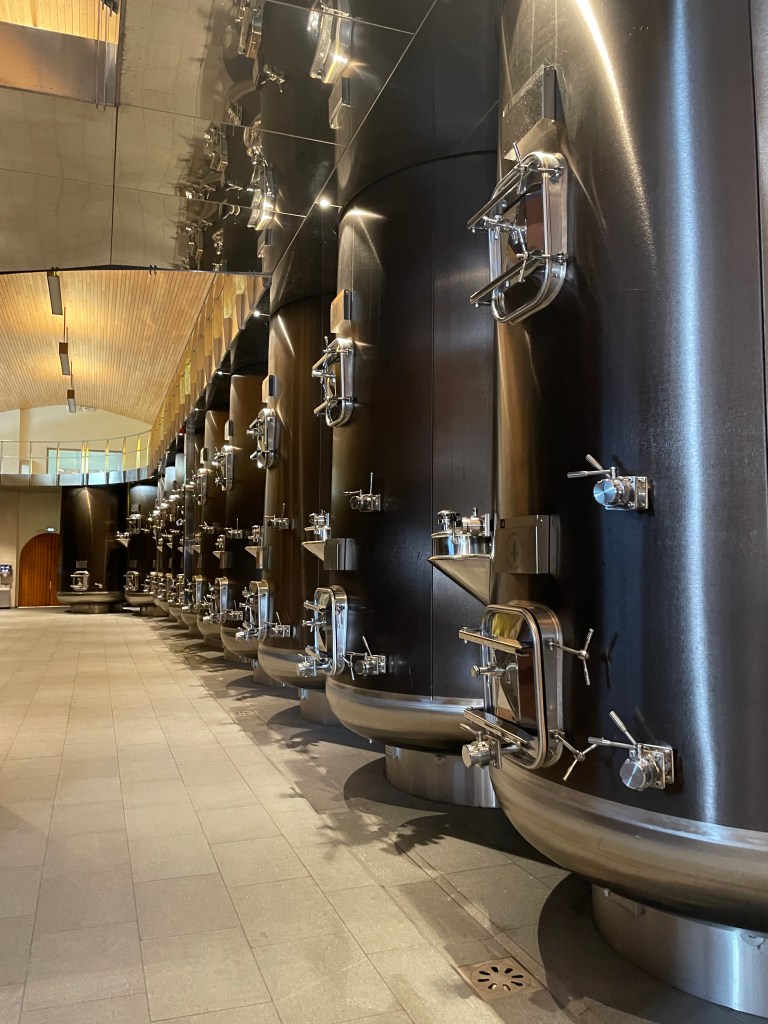

The vat room is state-of-the-art with double-walled stainless steel Italian vats. The tanks give freshness to the wine, and aging adds aroma. The aging cellar features barrels, casks, and tall Roman-style jars (amphora) in a cathedral-like structure to produce authentic wines.

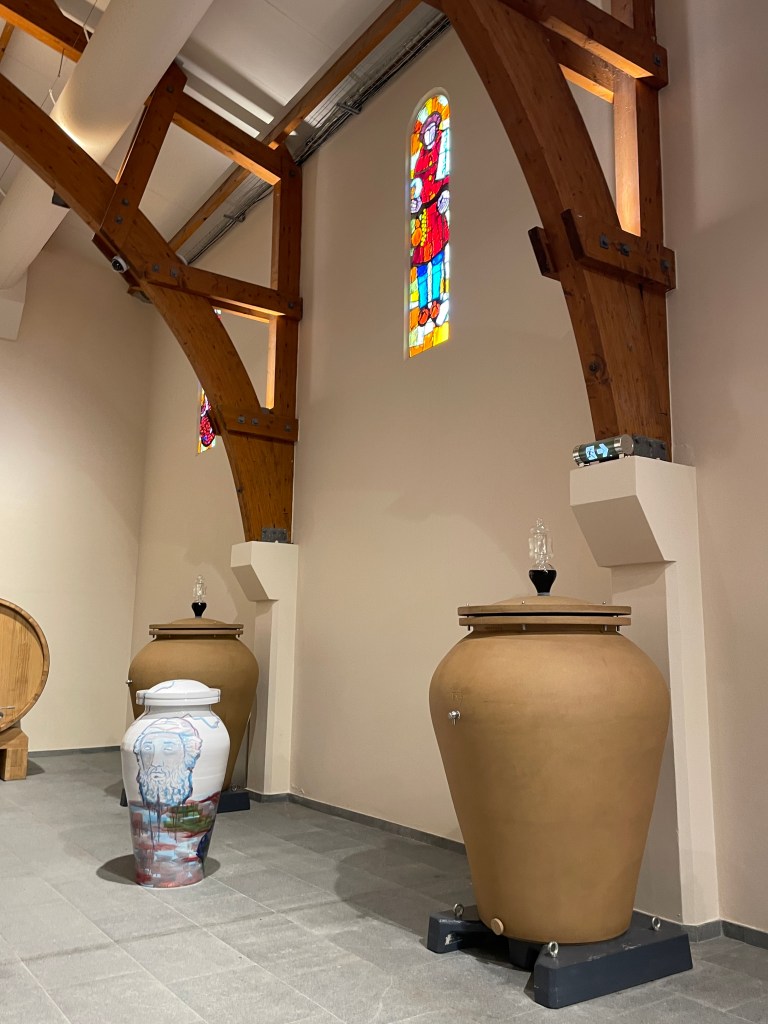
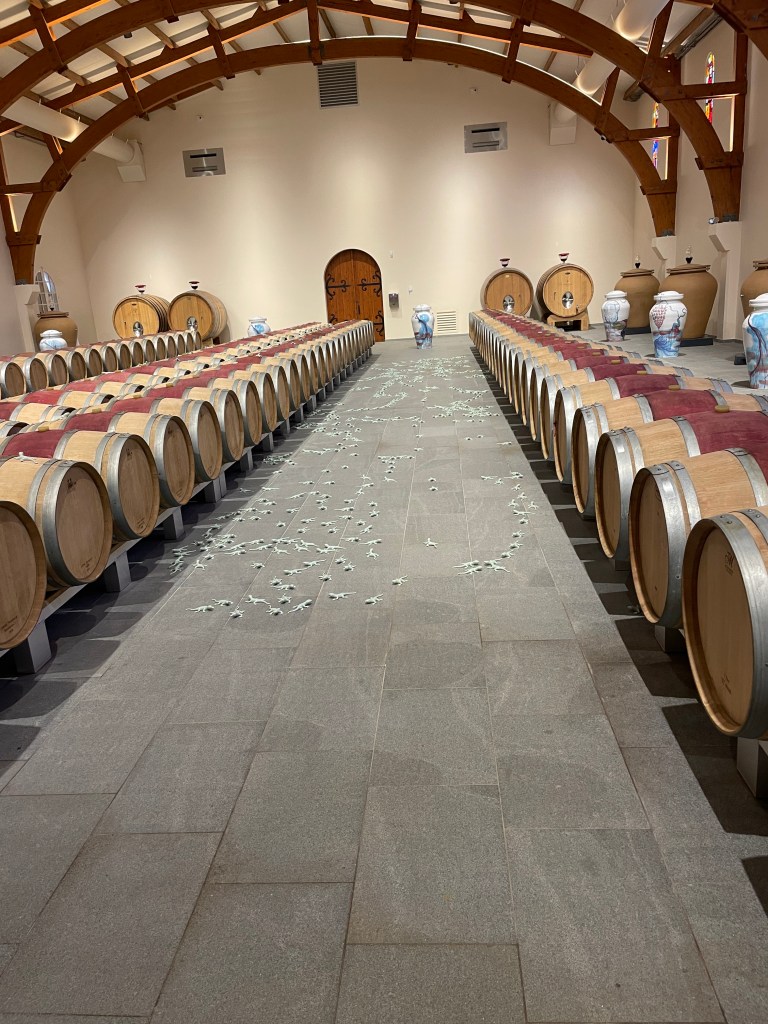
Cool story: Château Fleur de Lisse has collaborated with famed contemporary artist, Barthelemy Toguo, this summer on a special installation inside the barrel room. Inspired by the symbiosis between the earth (grapes and the vines) and humans, the artist created 12 amphoras. And if you look closely on the cellar floor pictured above you will see an installation of scattering salamanders which symbolizes the environmental impact of climate change and the animals fleeing.

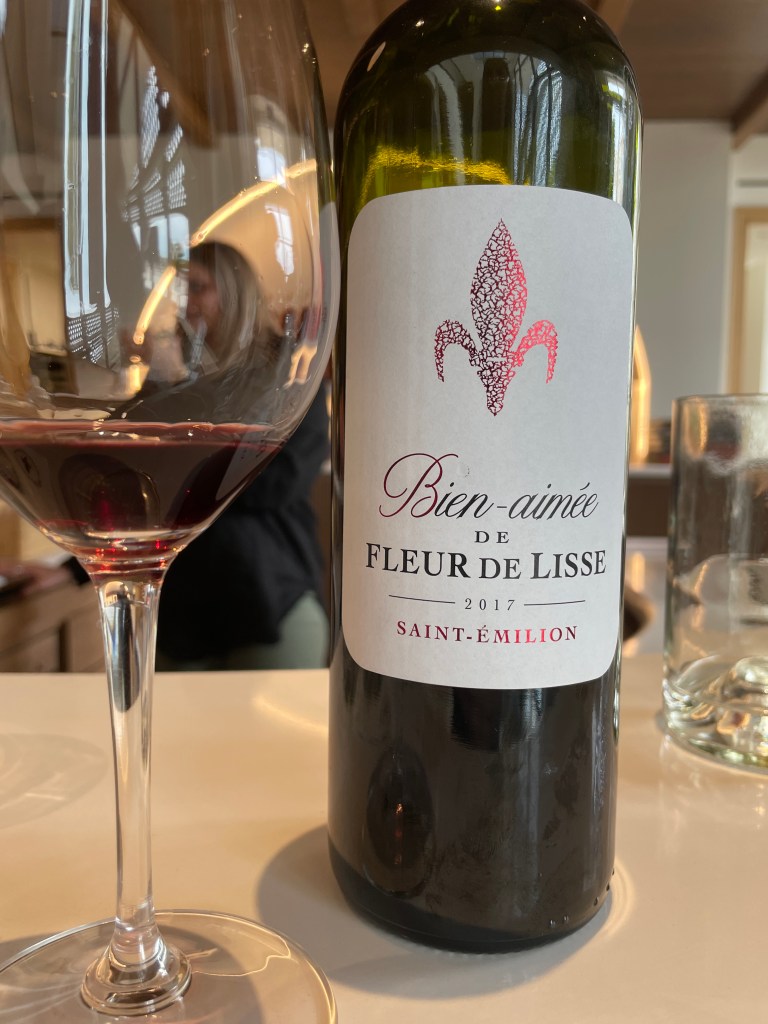
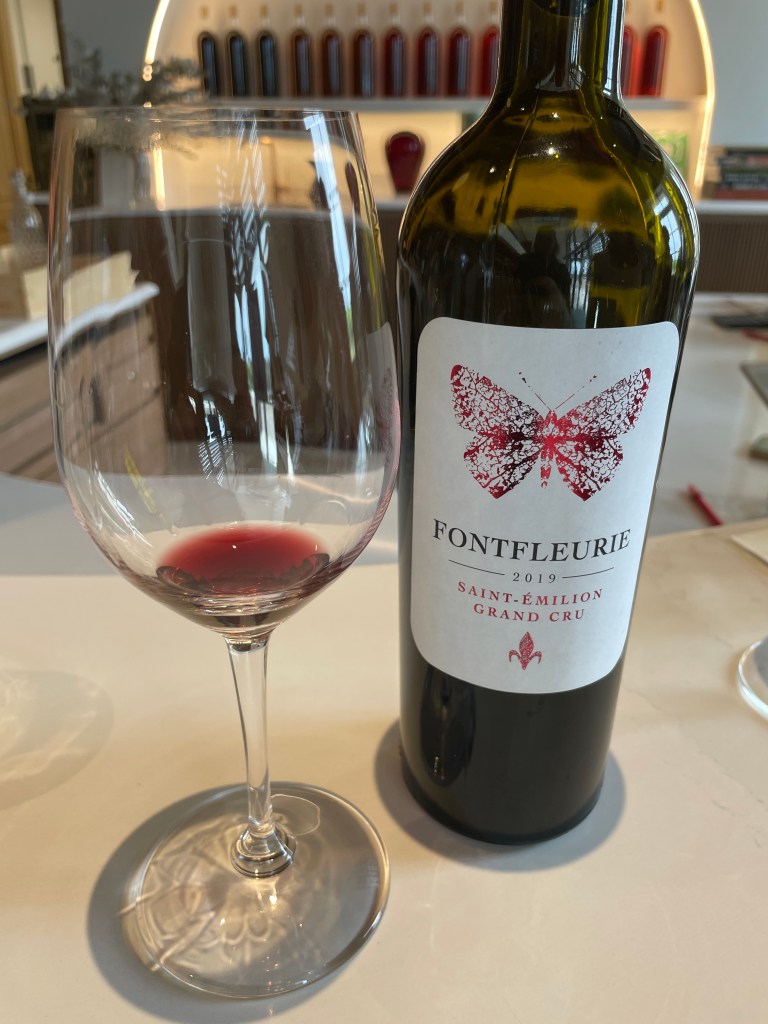
We tasted 3 wines under the Vignobles Jade group. The Le Loup de la Loubiere Rosé (with a rosé-coloured wolf on the label) is a blend of cabernet sauvignon, cabernet franc and merlot. This fresh rosé is pale pink in colour, rare for Bordeaux. We enjoyed it so much that we brought a bottle back to our Airbnb to enjoy again. We also enjoyed a 2017 Bien Aimee, which is the second wine of the Chateau Fleur de Lisse, and a Fontfleurie 2019 Saint-Émilion Grand Cru.

A beautiful sight. Isn’t this blue wall and the gradient display of red wines gorgeous? Welcome to the tasting room of Chateau Fleur de Lisse.
Top-shelf sips in Saint-Émilion
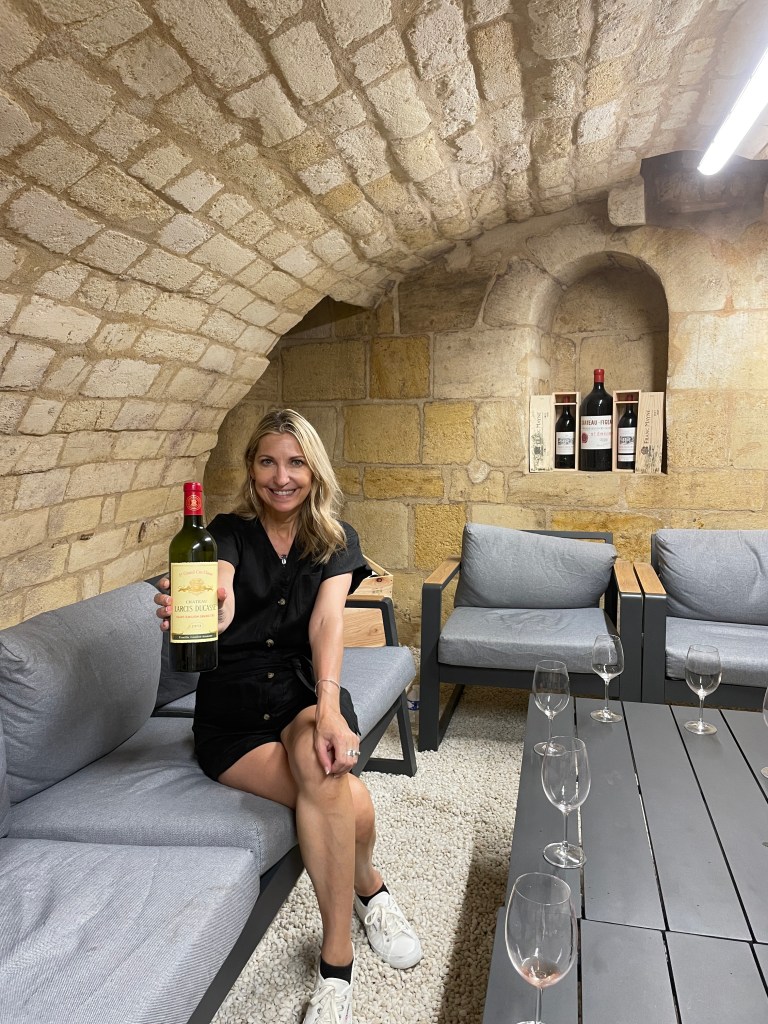

Our wine tour wrapped up on Rue de la Porte Bouqueyre in Saint-Emilion with an exclusive tasting in a cave-themed back room at Saint-Émilion Boutique Wines. Wine shops are a big deal in Saint-Émilion, a UNESCO World Heritage Site since 1999 and a major tourist destination for wine. It’s amazing to note that there are over 40 wine shops in this tiny wine city with a population of only 2000 residents.
It was a real treat to try three top-shelf wines representative of the region at Saint-Émilion Boutique Wines:
- Saint-ÉmilionGrand Cru Classe 2018 Chateau Haut-Sarpe by J. Janoueix (70% merlot/30% cabernet)
- Pomerol 2020 Clos Grangeneuve (100% Merlot)
- Premiere Grand Cru Classe 2013 Chateau Larcis Ducasse (ready now – 90% Merlot/10 % Cabernet Franc)
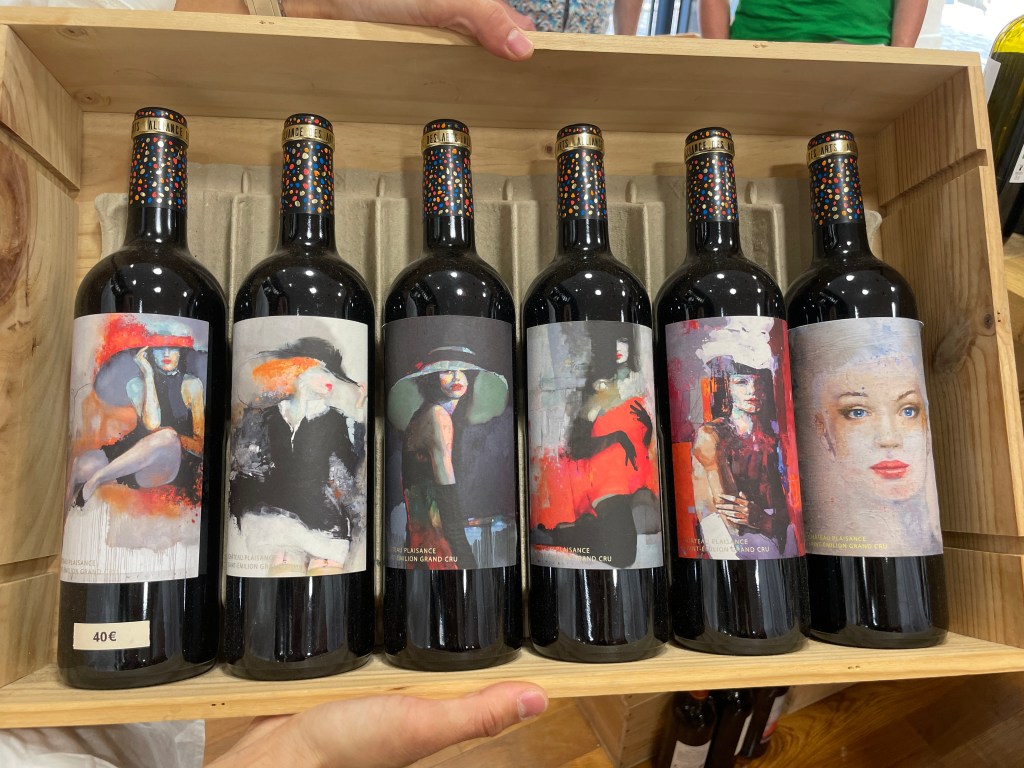
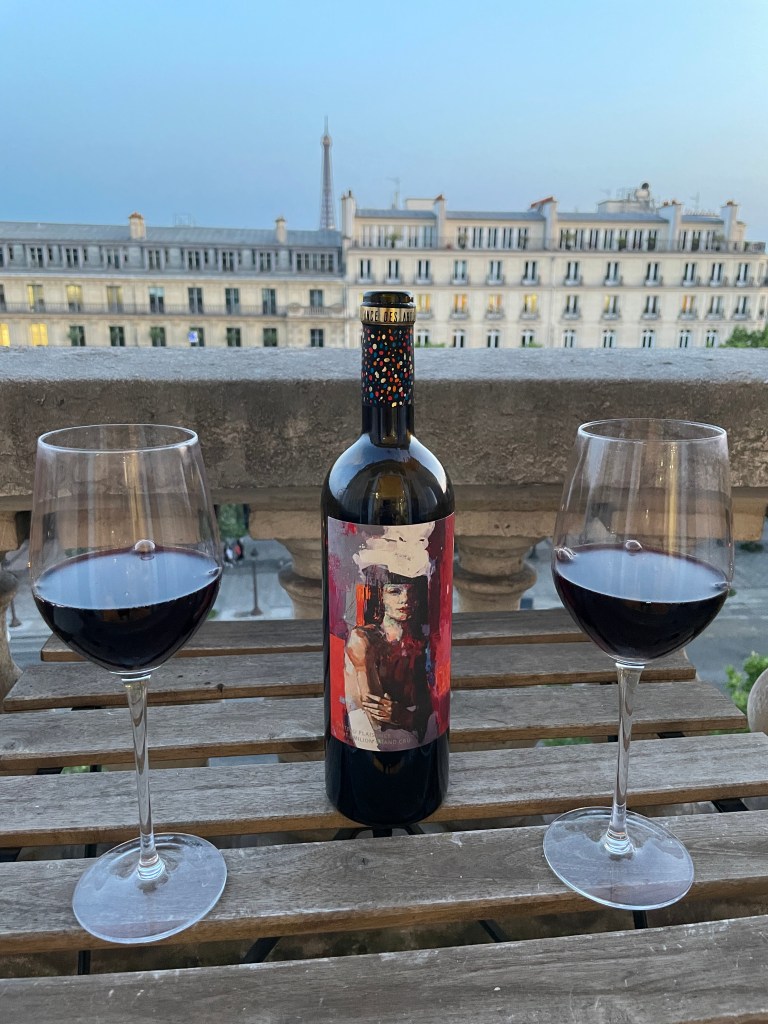
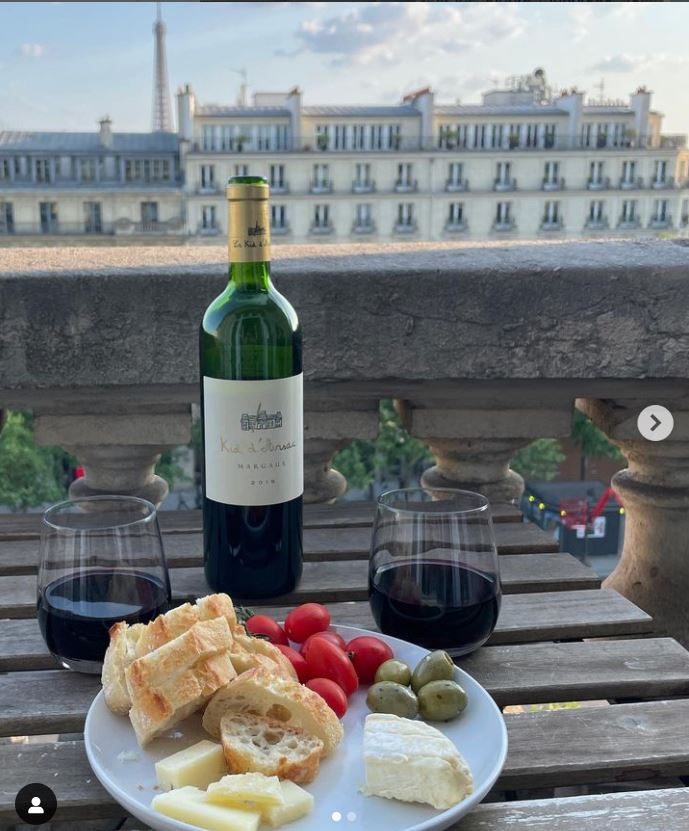
The stunning labels of this Saint-Émilion Grand Cru 2015 Alliances des Arts caught my eye and it was amazing to enjoy back in Paris with my daughter.
Ended the day with a guided walking tour exploring Saint-Émilion.
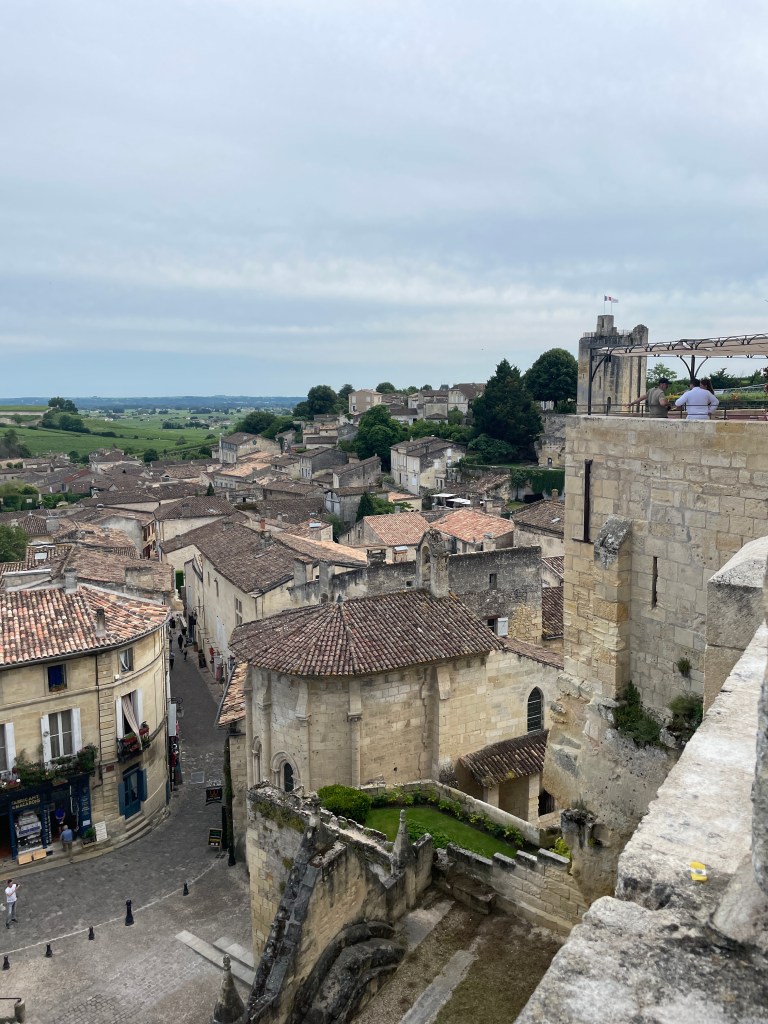
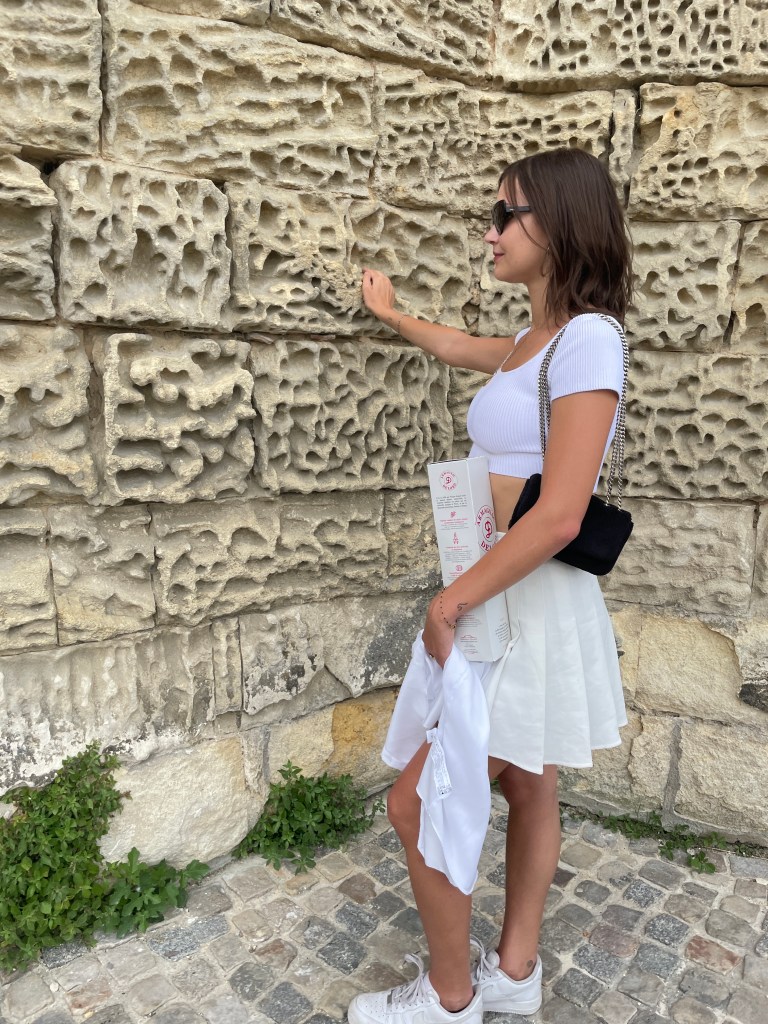
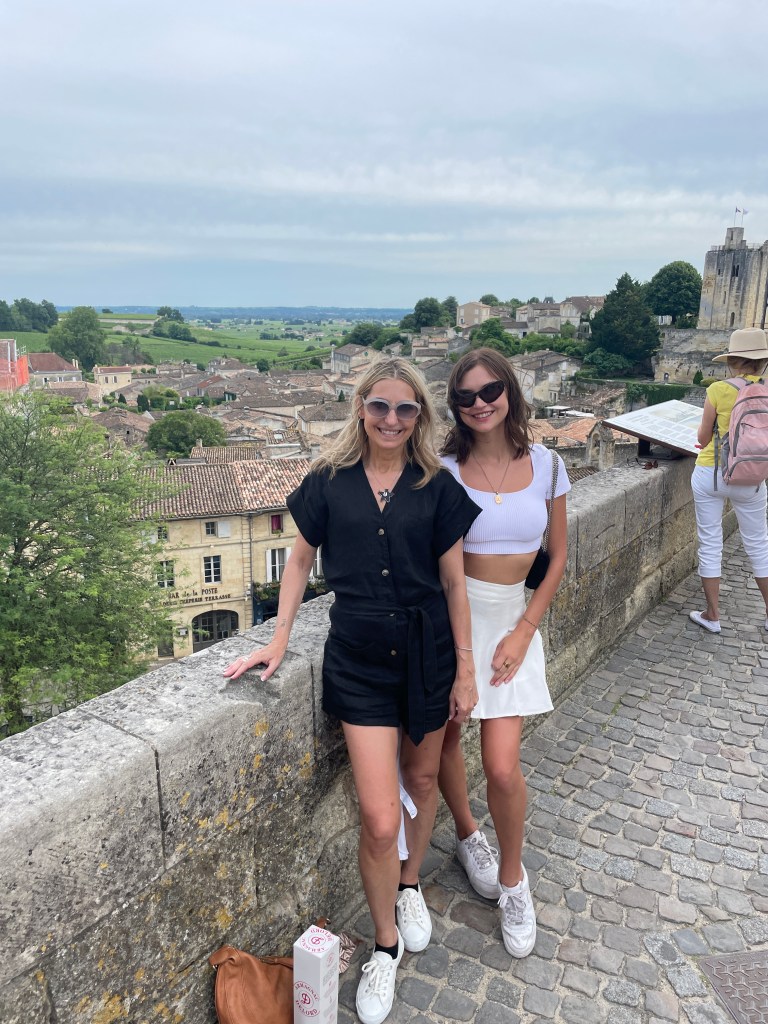
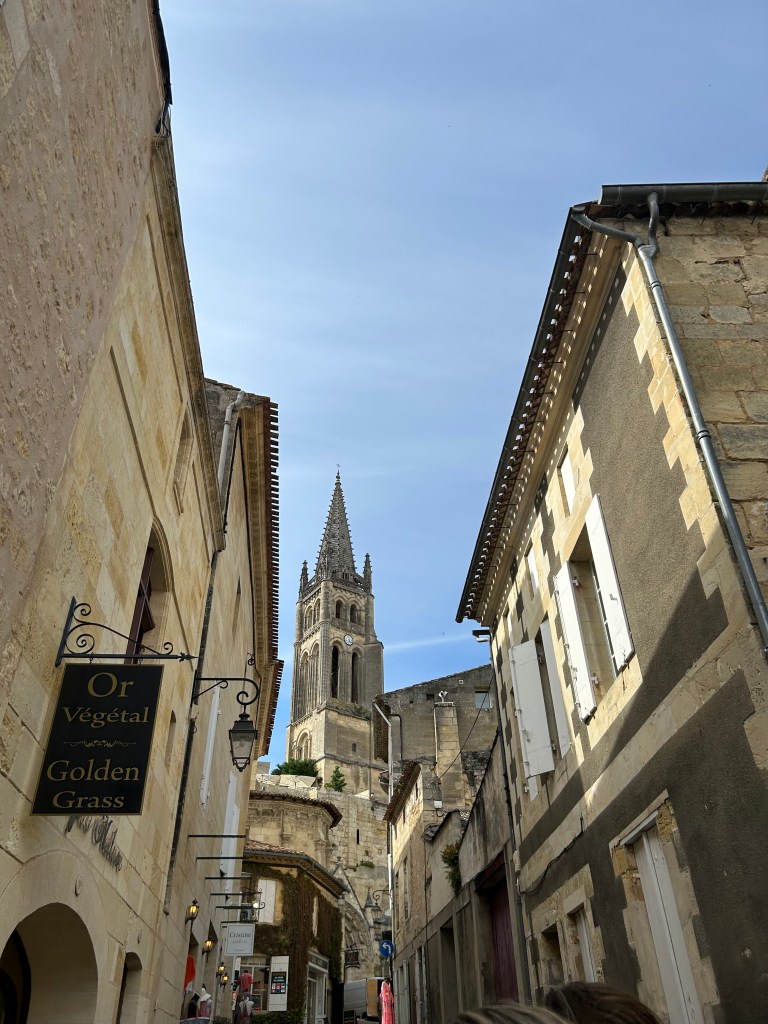
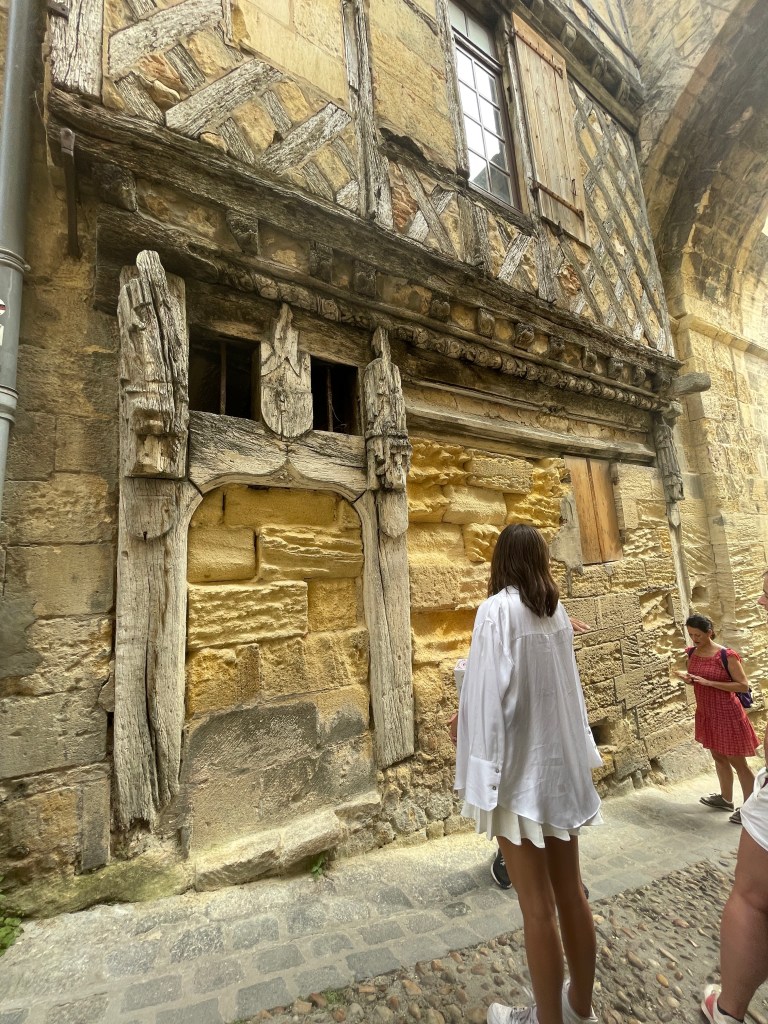
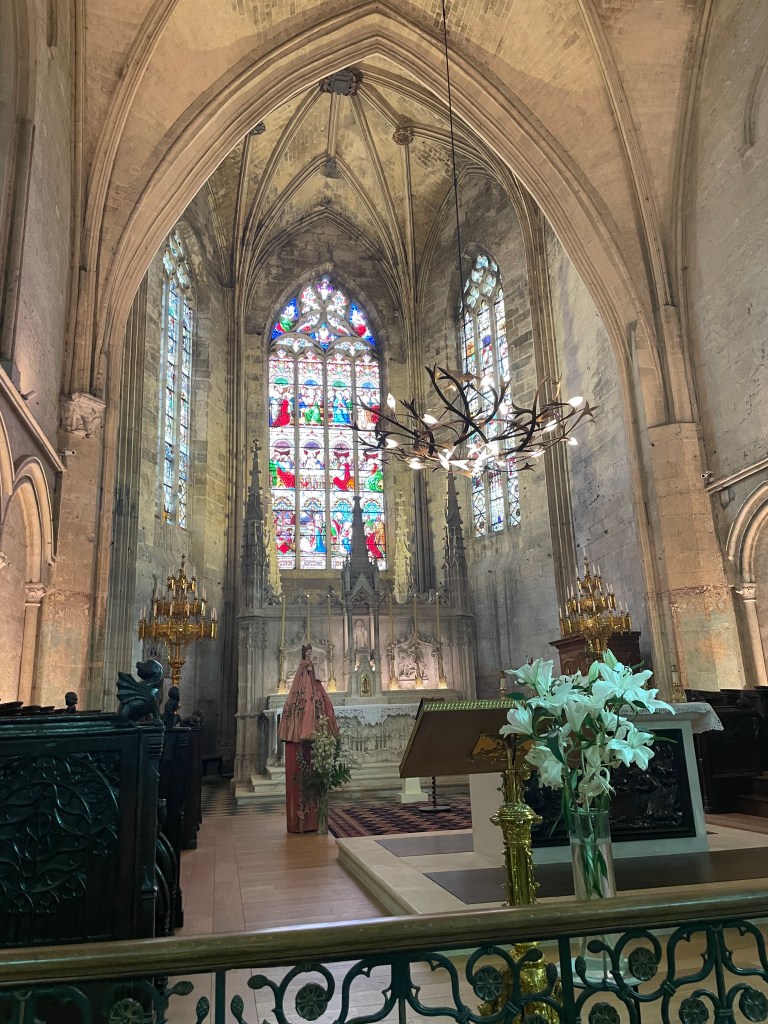
Highly recommend starting a Bordeaux wine tour with this experience. Very informative!

Fun fact, not wine-related: On our drive back to the city Jerome shared that France has the most roundabouts than anywhere else in the world (like 3000!). There is even an annual competition that awards the best and the worst.
An ancient cellar, a yellow chateau, and an enchanted castle.

This is Haut-Médoc. So many chateaux but only one day to cover this region. We hired an awesome private driver who chauffeured us to three fabulous wine estates. (Merci beaucoup, David!)
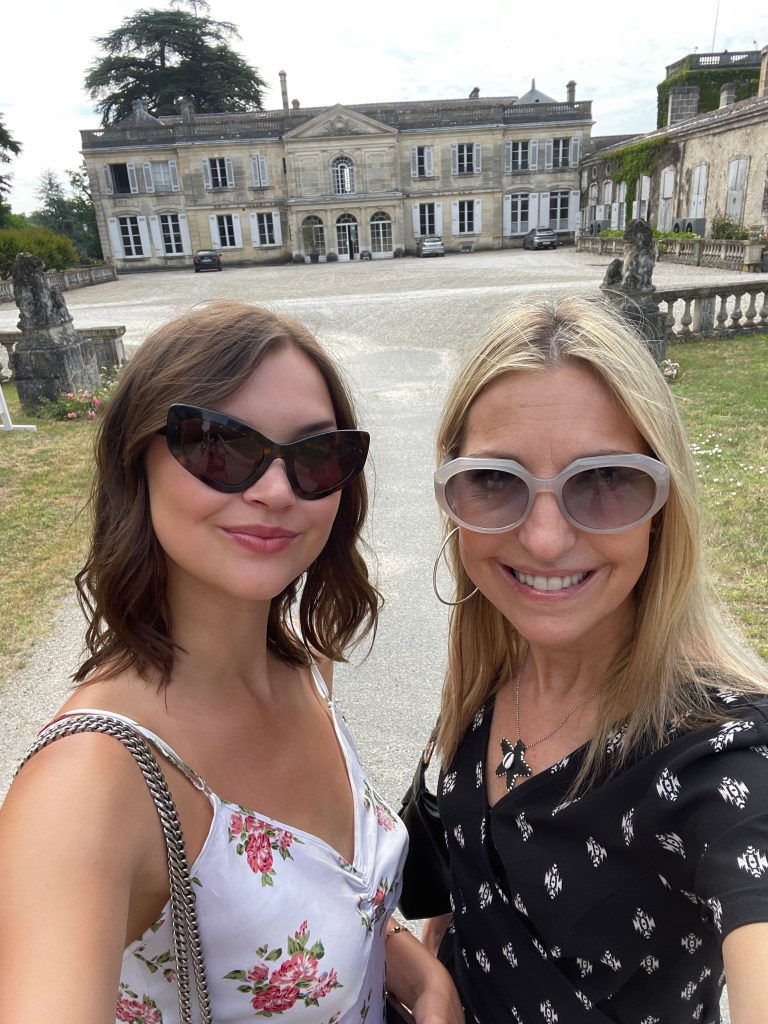
Château du Taillan is a story of five sisters who hold the reins of this family-owned estate winery. Acquired by their great-grandfather, Henri Cruse in 1896, the estate, including the underground cellars, is classified as a Historic Monument of France.
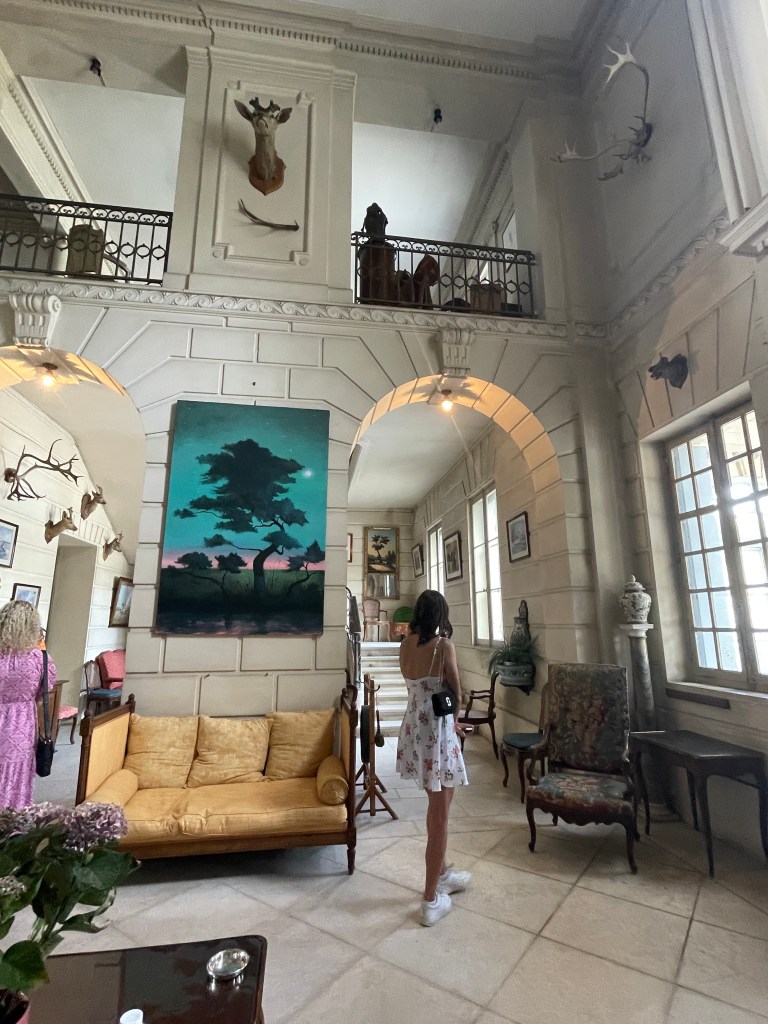
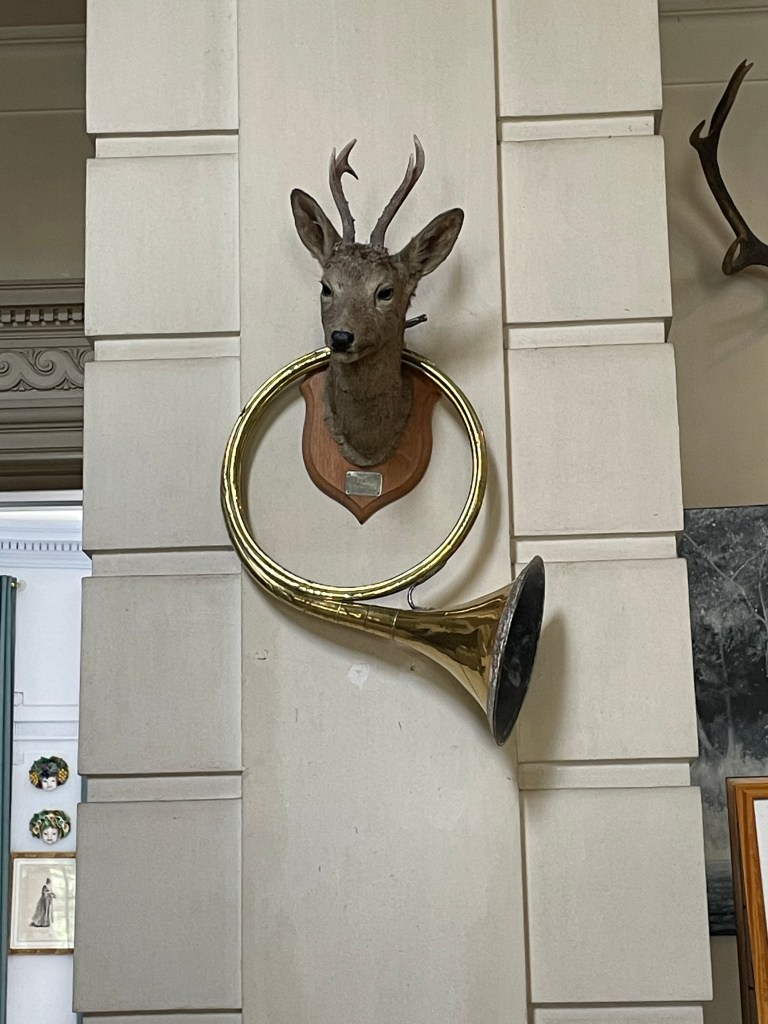
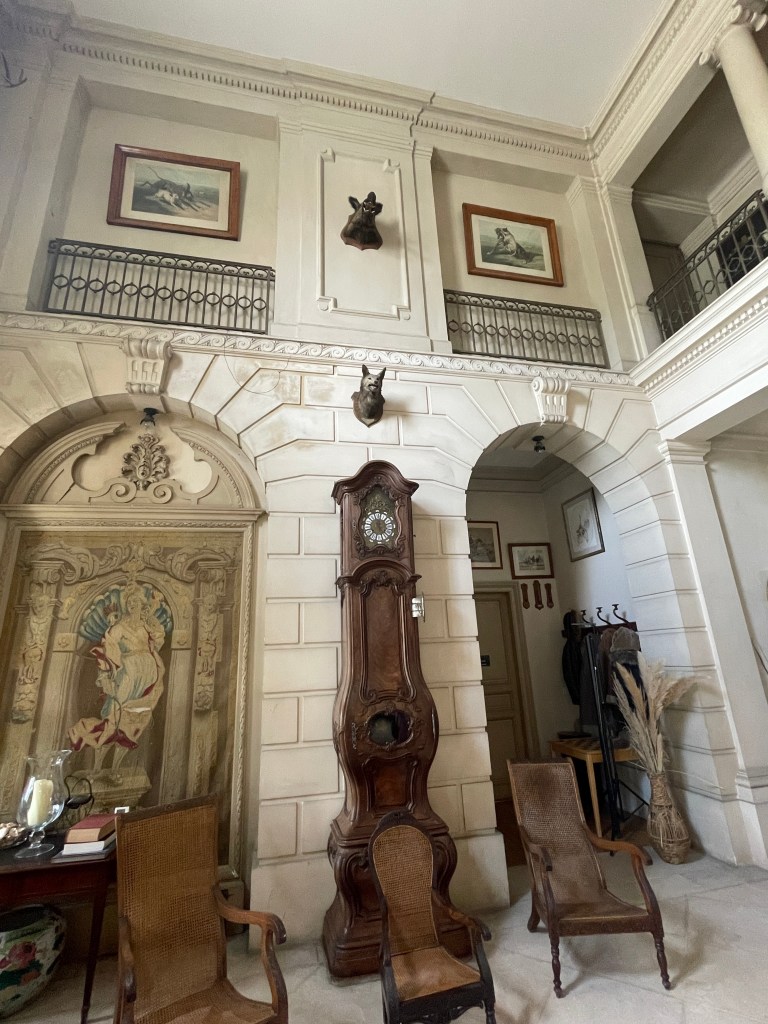
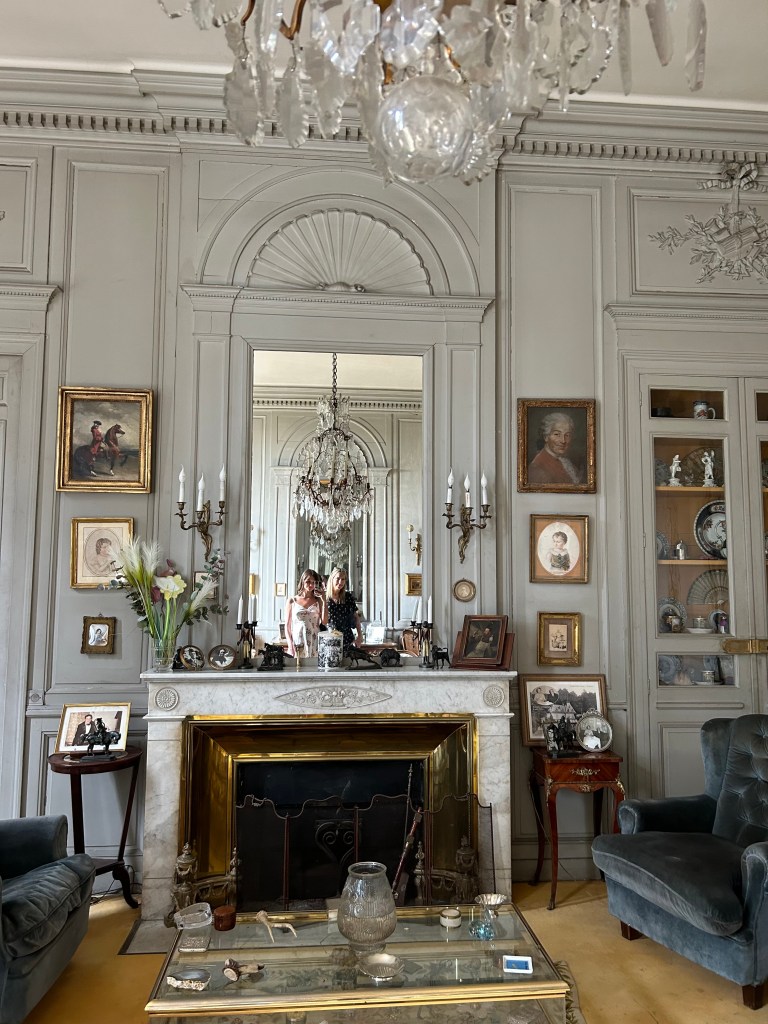
We enjoyed a tour of the castle, where the family still resides. In the entrance, filled with hunting displays, we learned about Henri Cruse and the men’s only room. How fortunate for Henri that he would pass his legacy on to a 4th generation of all women who would respect the history and write its modern-day story. Today the Château takes a sustainable approach with a commitment to protecting the environment and cultivating biodiversity. “From pruning the vines to bottling, we are focused on the quality of the wines”, such is the motto of the women owners which rewarded them with Cru Bourgeois Exceptionnel (the highest level) classification in 2020.
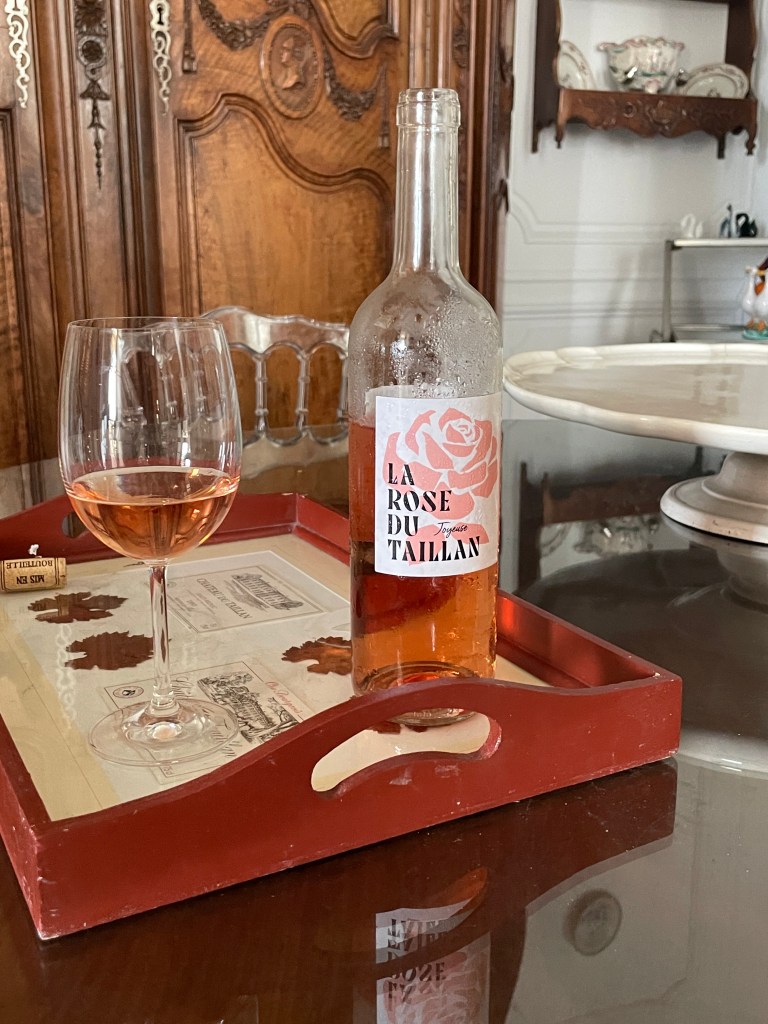
The wines of Château du Taillan are made to be charming, powerful and balanced. We enjoyed a limited edition 2021 Rosé (50% Merlot/50% Cabernet Sauvignon) on the lovely terrace of the Château.
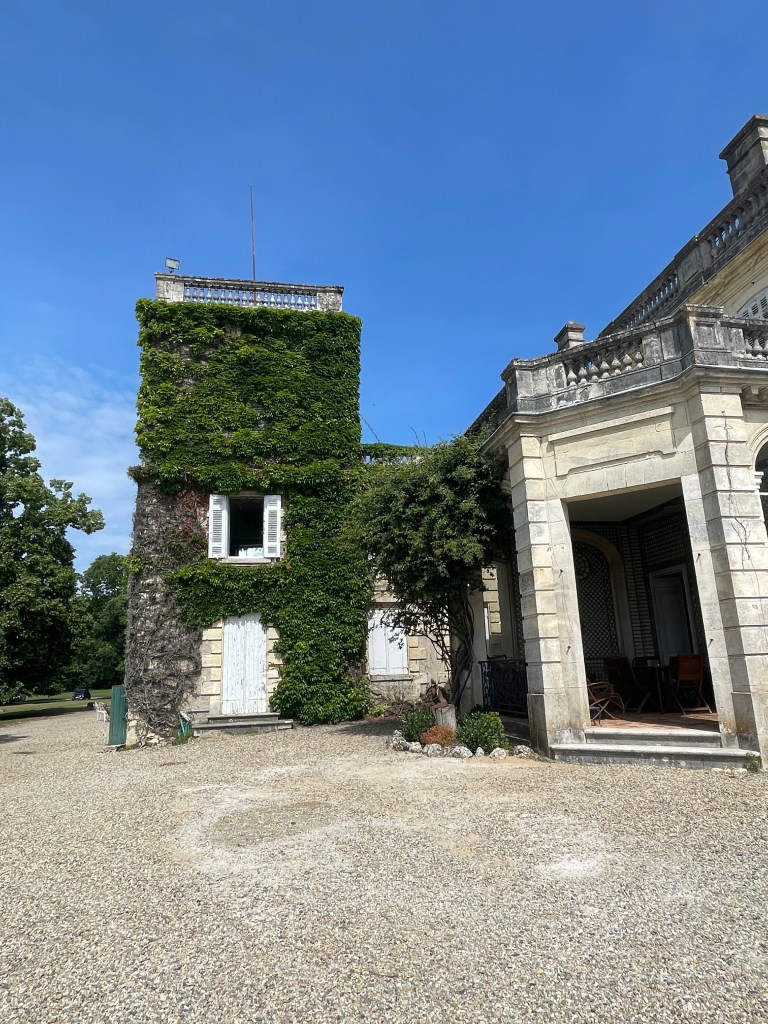
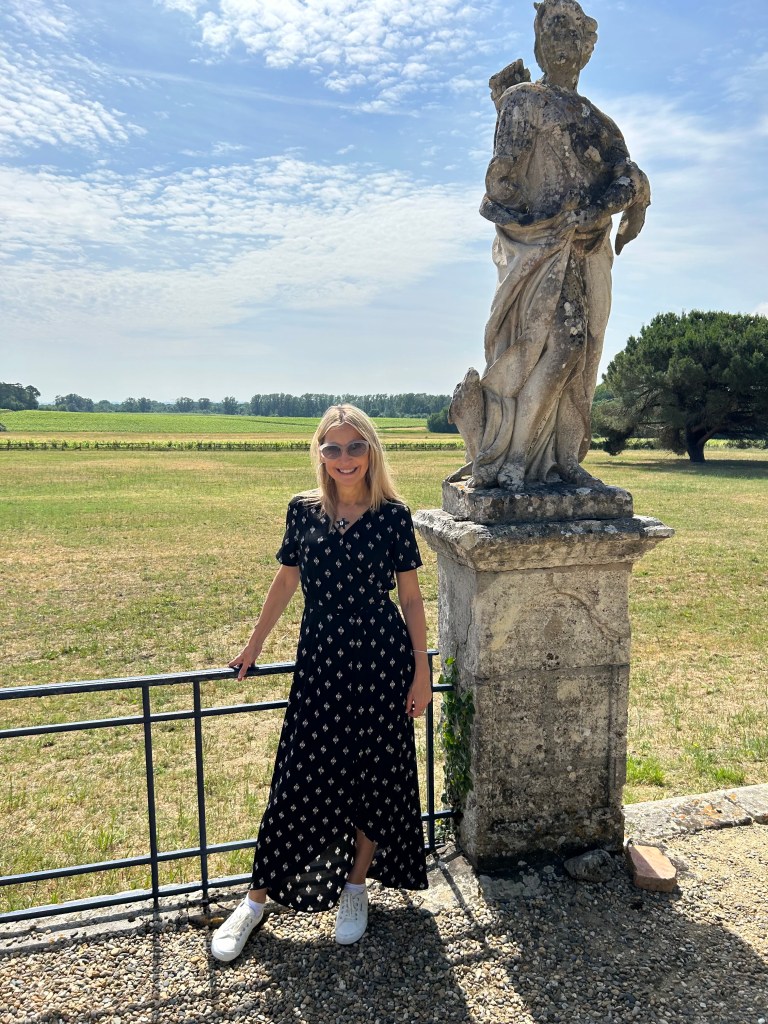
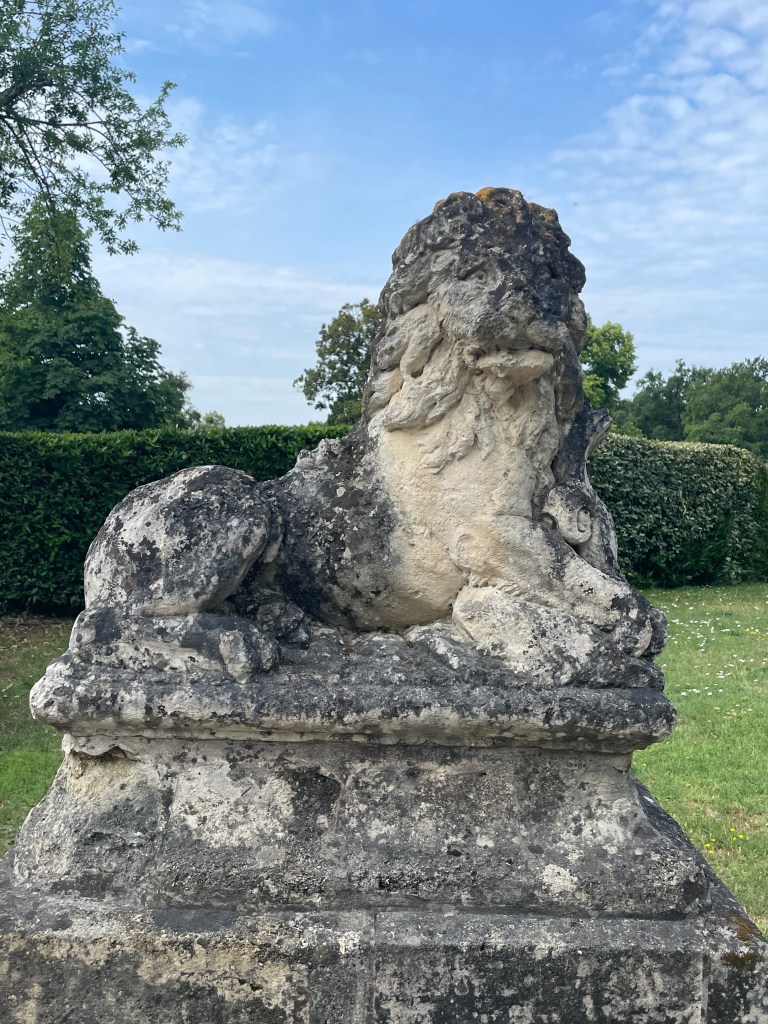
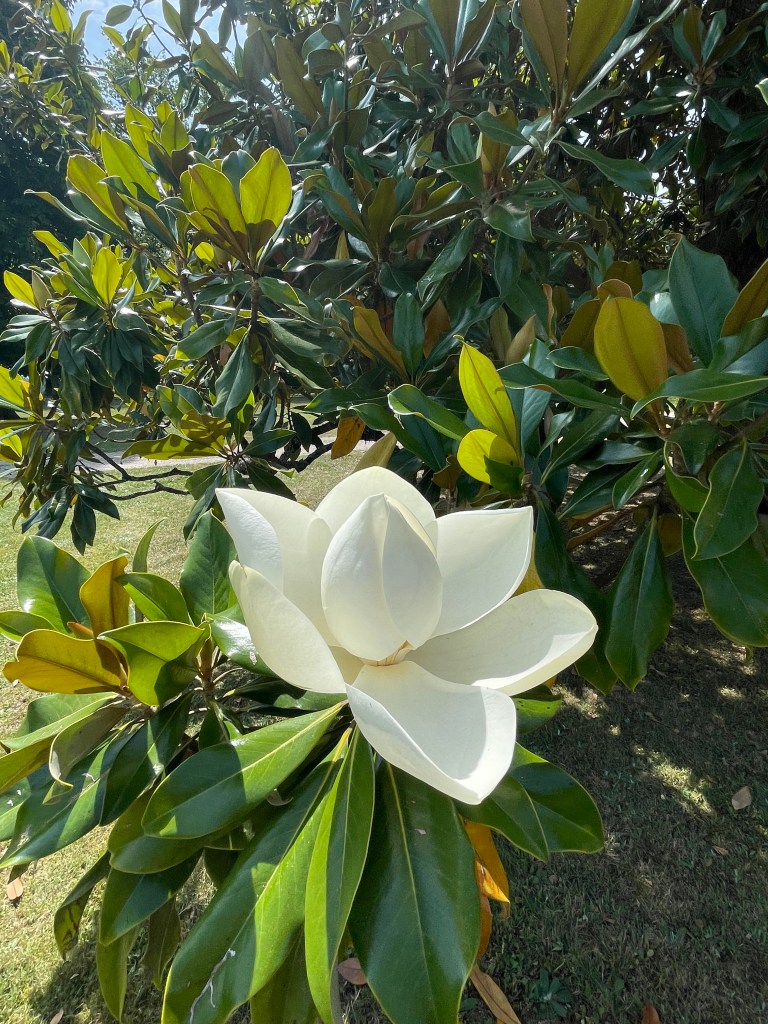
100 hectares of woods, 30 hectares of vineyard (Merlot, Cabernet Sauvignon, Cabernet Franc, and Sauvignon Blanc), and Magnolias at Chateau du Taillan. So pretty!
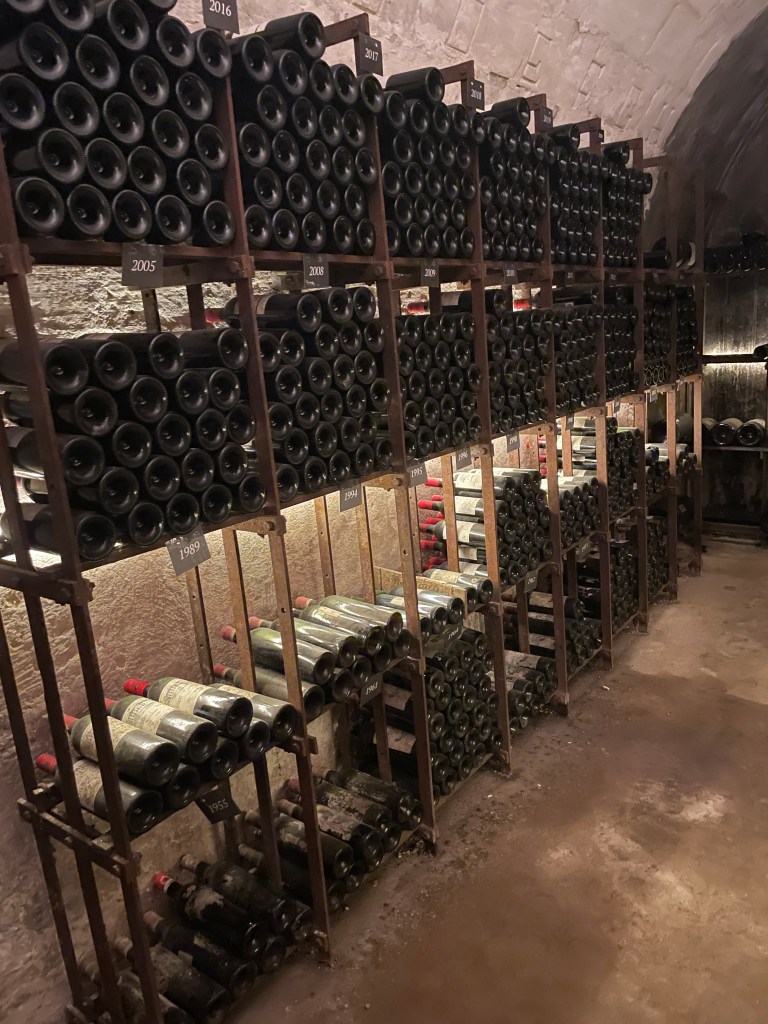
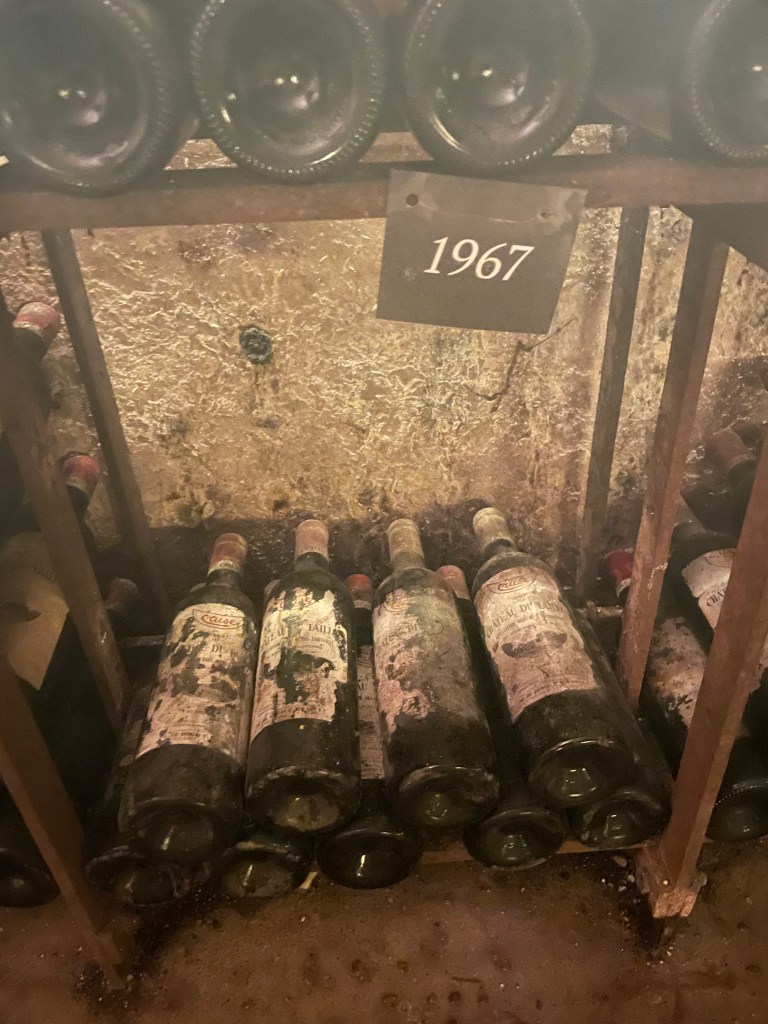
One red doorway leads to another… the ancient underground cellars OF Château du Taillan .
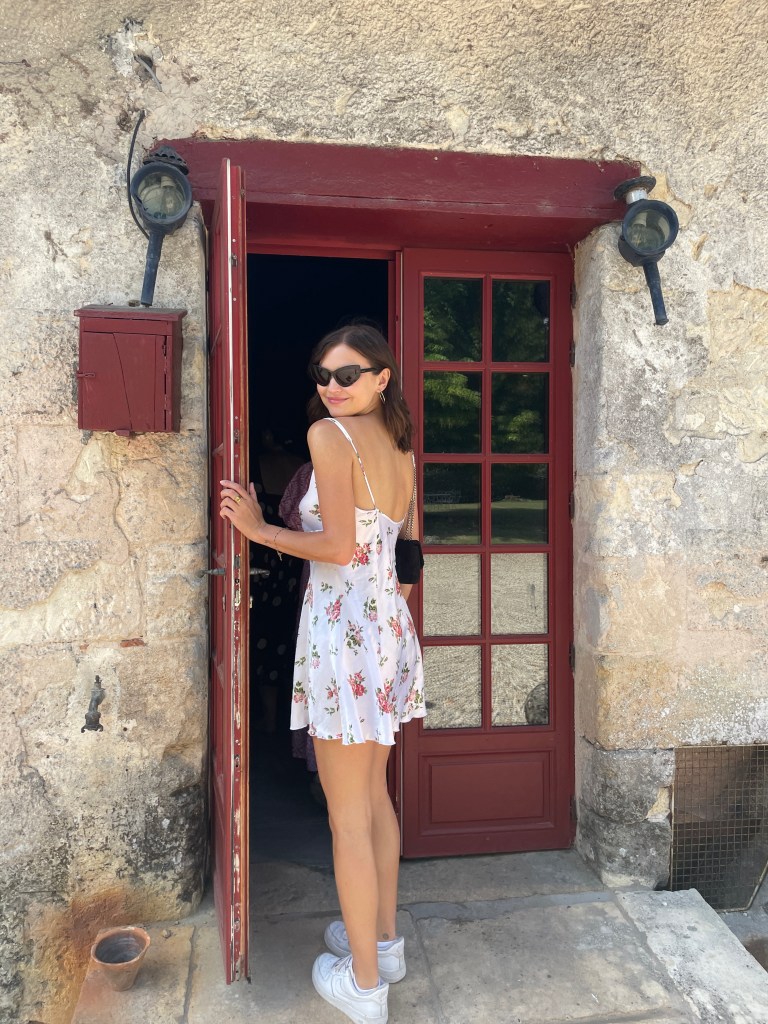
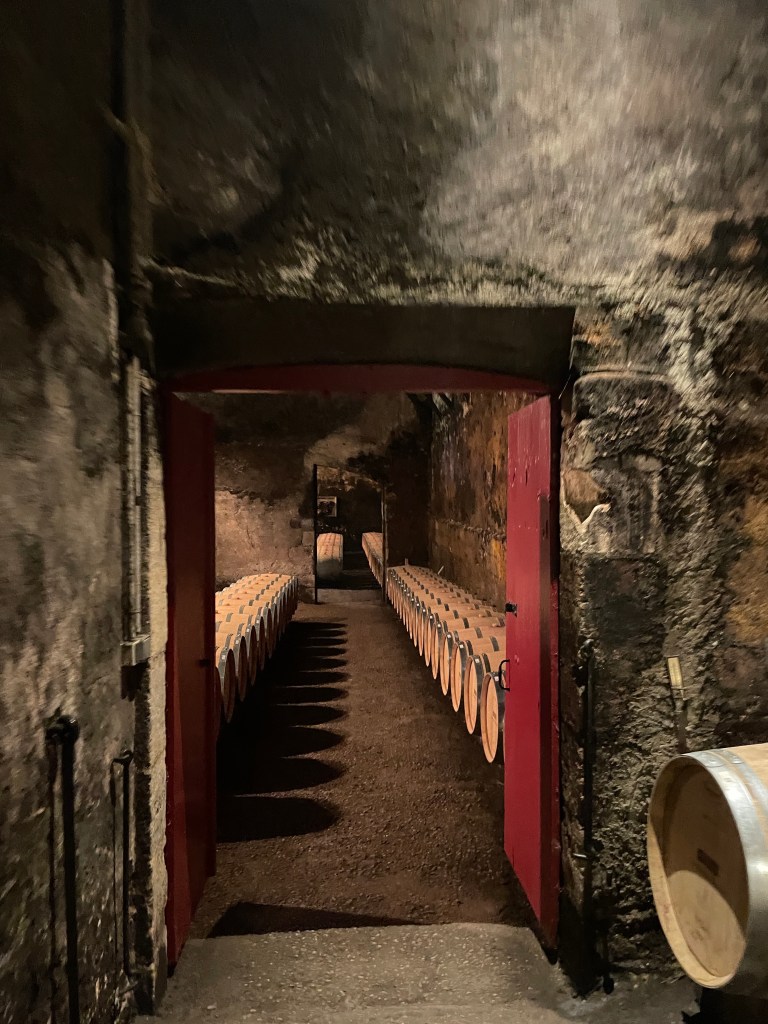
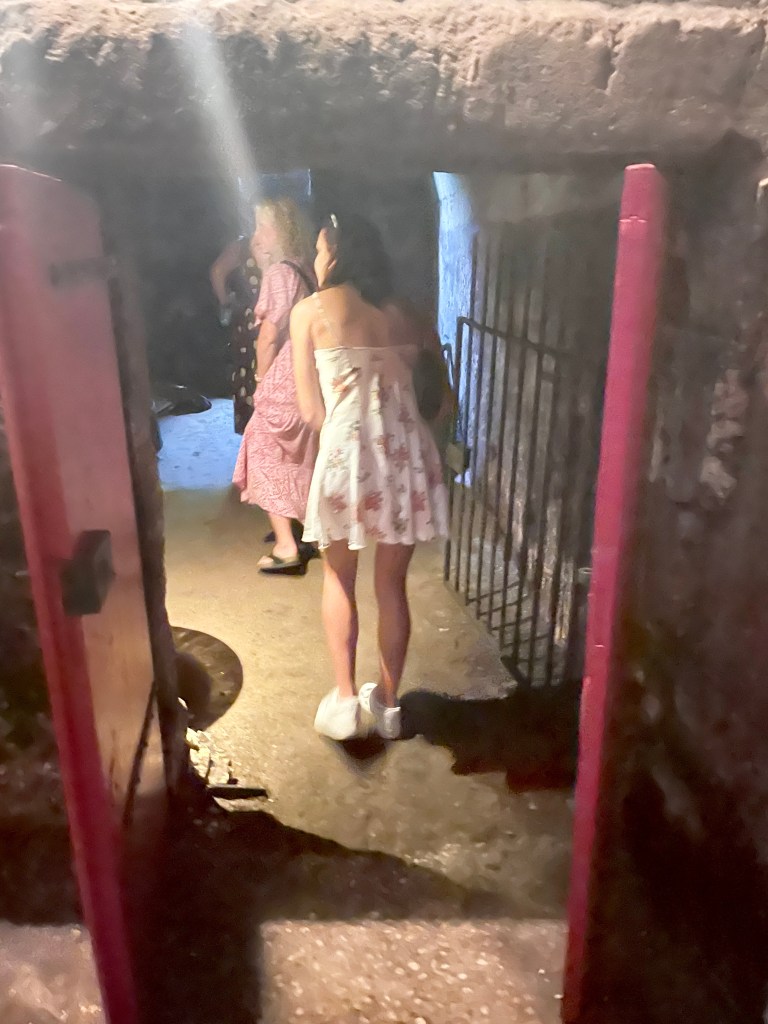
While noted as the oldest cellar of the Médoc from the 16th century, the cellar has actually been named as a Médoc pilgrimage stop in documents as early as the 12th century.
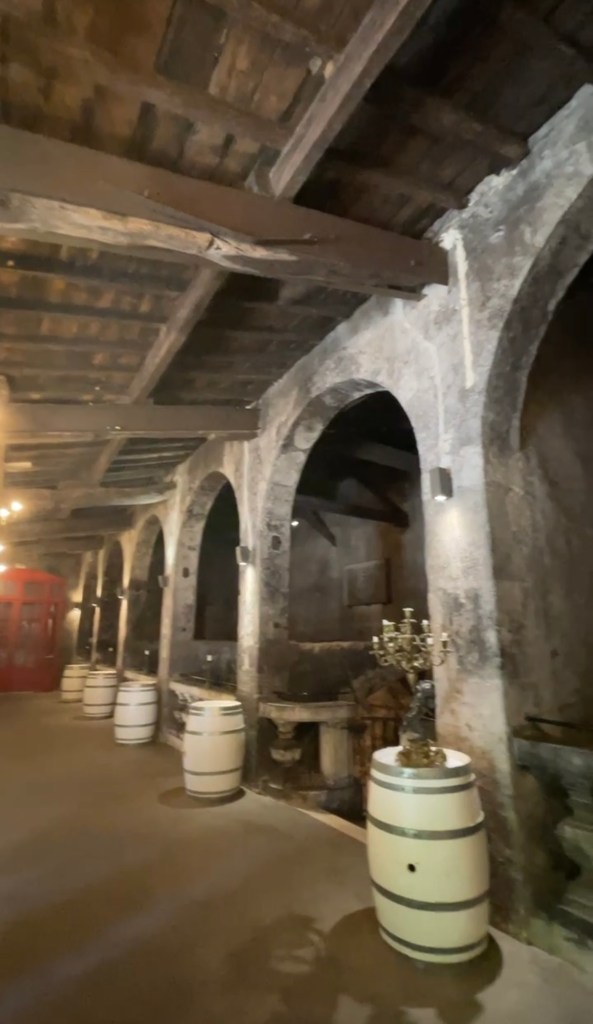
Not nearly as old, I did find a bottle of wine from my birth year in the private cellar which was very cool!!
The best castles have romantic stories.
This is the story of Dame Blanche (the white lady) who the chateau and the estate’s only white wine is named after. The original Domain owner fell in love with a Princess. When he died in war the Princess chose to wear only white dresses until the end of her life. A white mist in the mornings over the vineyard is renowned as the spirit of the white lady who returns to wish prosperity to the Domain.

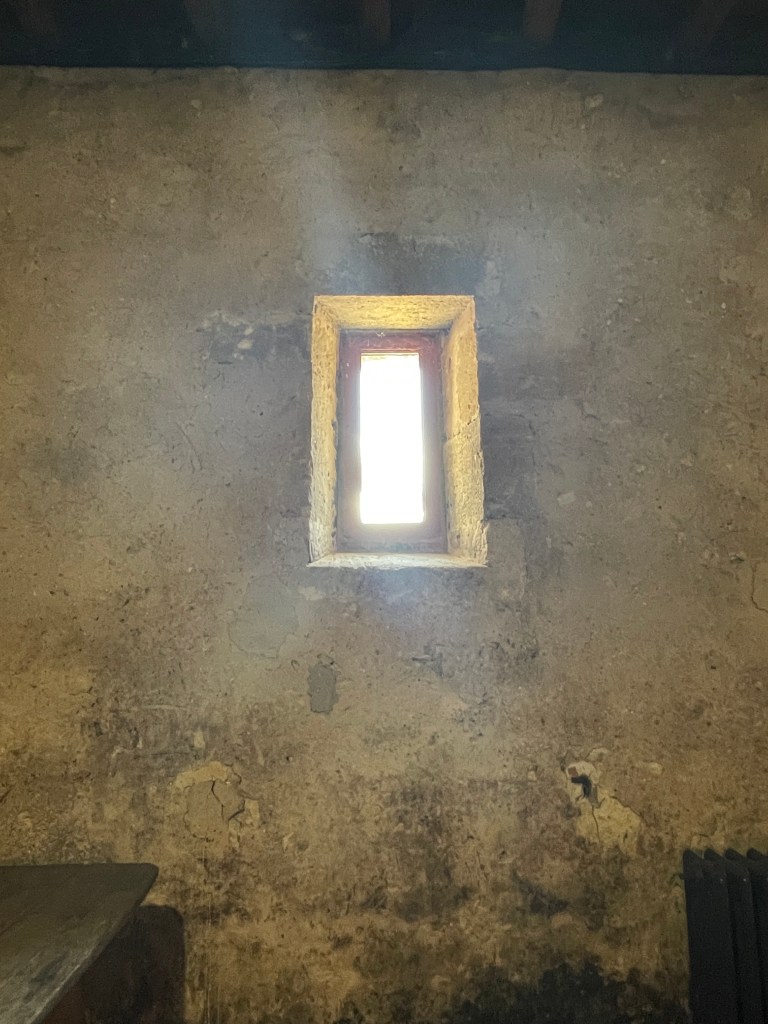
Sunlight from a single window in the ancient cellars shines angelically on a bust of Princess Bianca.

Here she is, La Dame Blanche, a small batch Sauvignon Blanc from the estate and one of the only white wines produced in the Médoc.
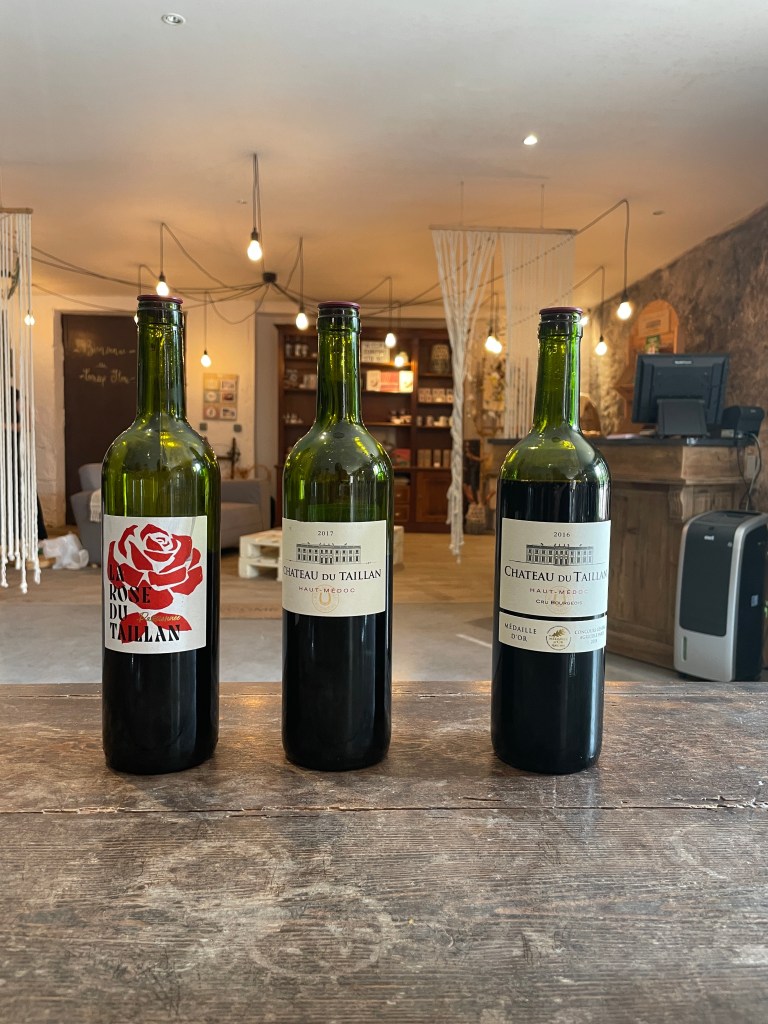
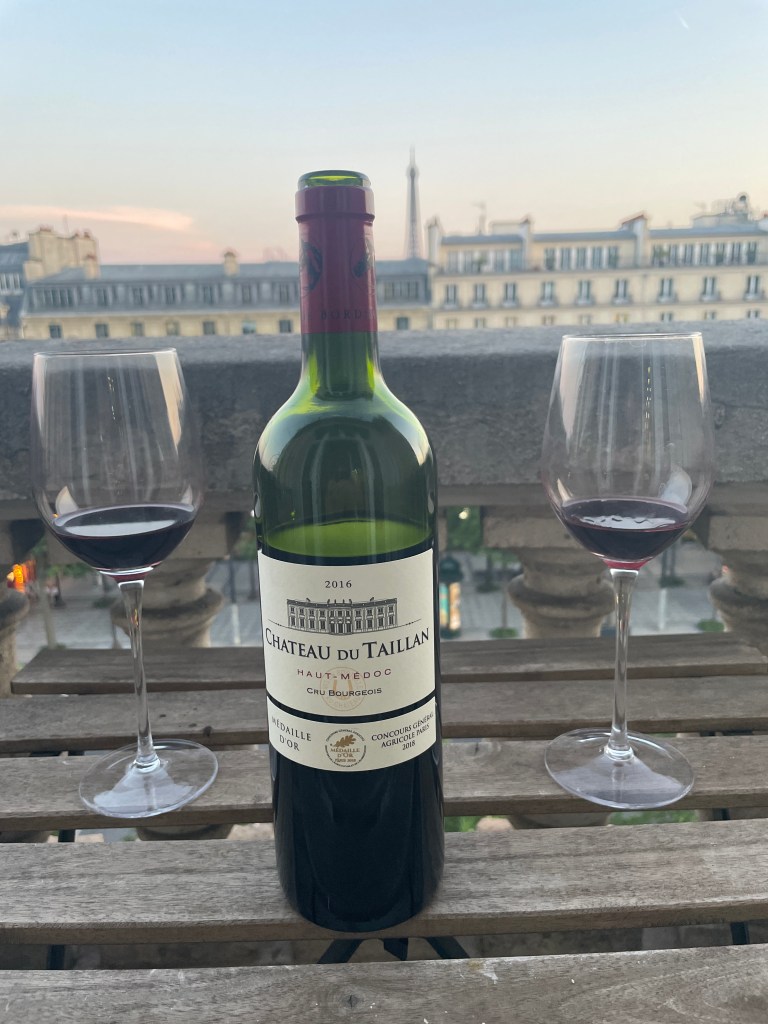
We enjoyed a tasting of three featured wines in the tasting room. A 2020 Rose Red made from the grapes of “teenager vines” (60% Merlot, 40% Cabernet). We tried the 2017 Chateau du Taillan (100% Merlot) a quality wine but the only year with no classification because it was a frost year and only 7000 bottles were produced. A rating requires a minimum of 12,000 bottles. Because of the smaller production, this wine is only available at the cellar door. The 2016 Cru Bourgeois, blended for this year only with 70% Merlot, 20% Cabernet, 10% Cabernet Franc, was our favourite.
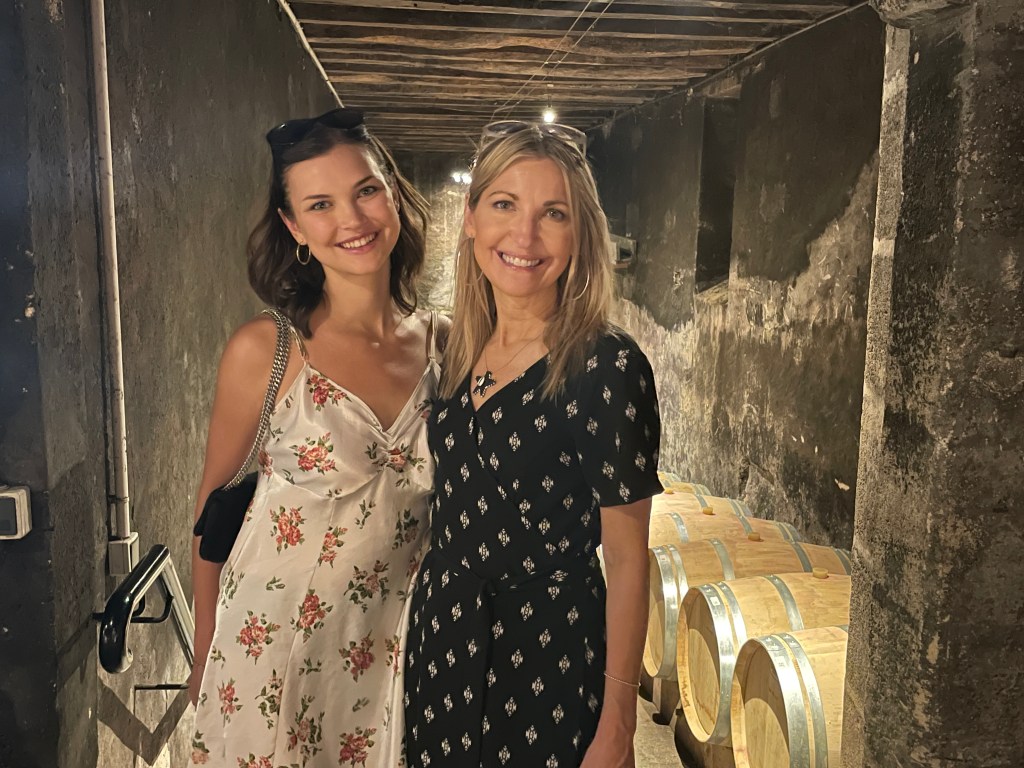
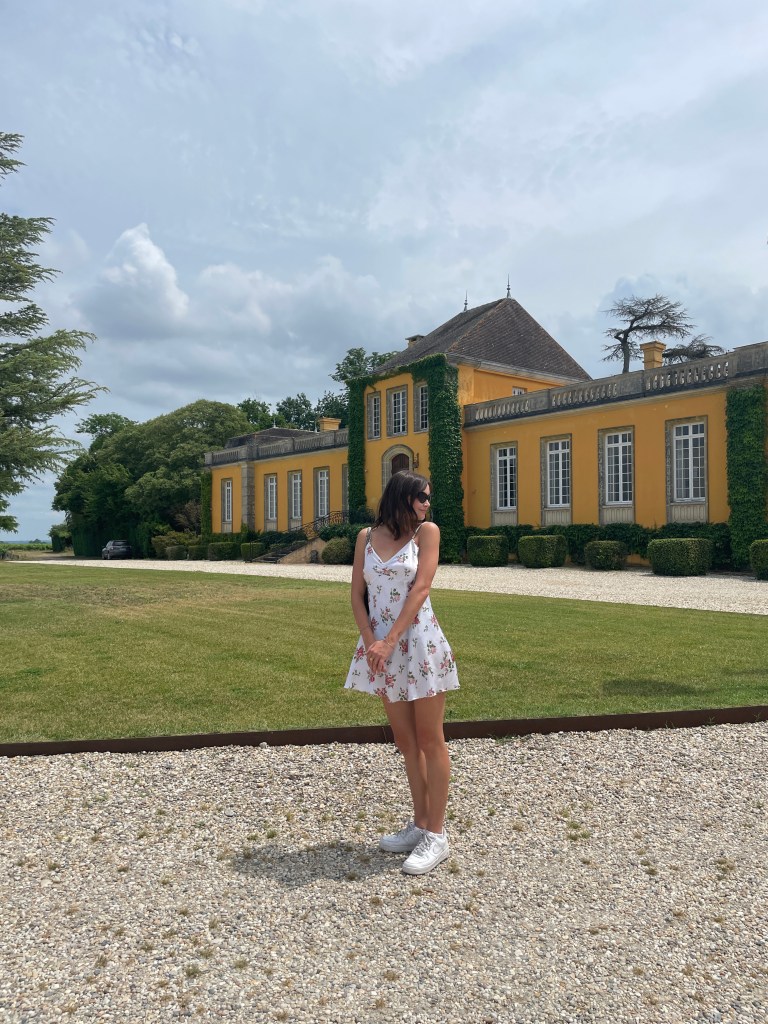
THE STUNNING YELLOW ESTATE OF Château Lafon Rochet
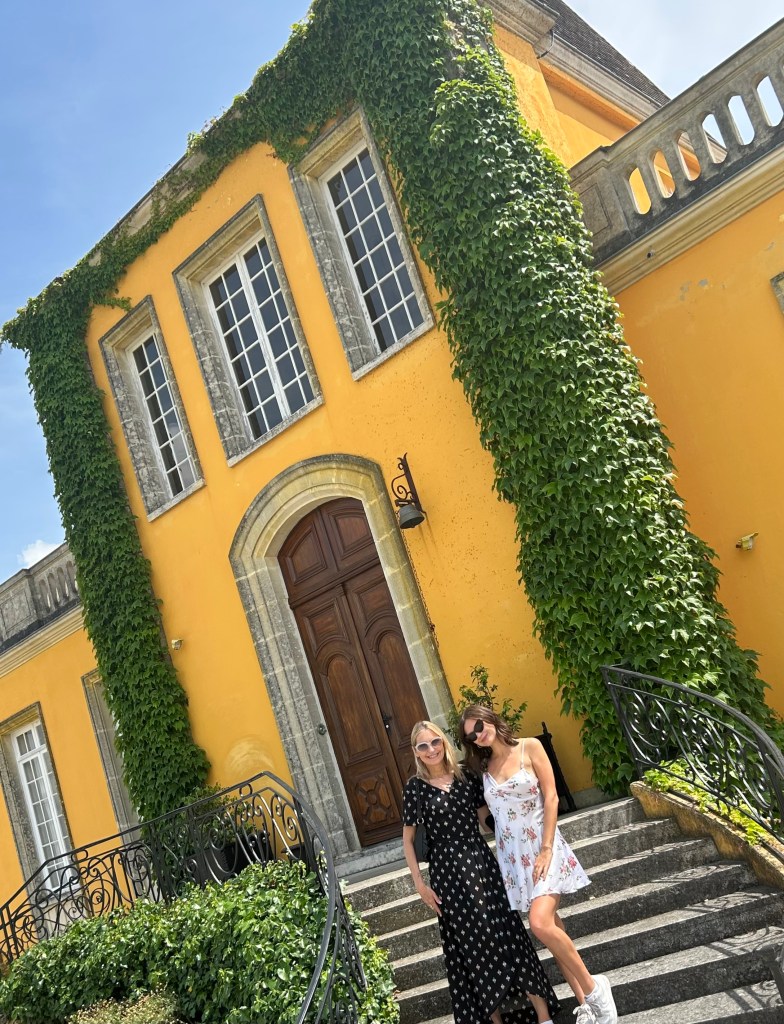
Our next chateau took us to the prestigious Saint-Estèphe appellation and was hard to miss. Its sunshiney yellow exterior is bright and welcoming and has been the iconic colour of the Château Lafon Rochet label since 2000.

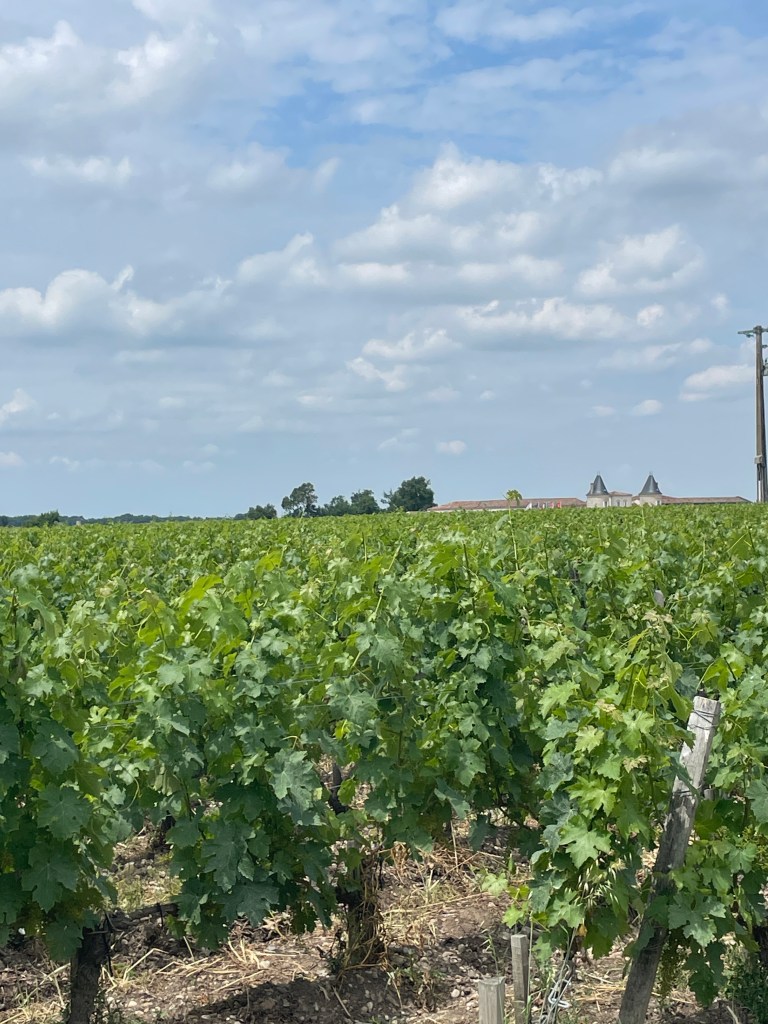
Easily spotted from the road the 111-acre (45-hectare) estate of Château Lafon-Rochet is impressively 4th ranked in the 1855 classification with an interesting history of new ownership every 20 years. Presently the new owner is also the owner of Paris’ rugby club Racing 92 and has added Château Lafon-Rochet to his portfolio of Bordeaux wineries including Château Lilian Ladouys (Cru Bourgeois Exceptionnel) pictured above on the other side of the vineyards, and Château Pédesclaux.
Château Lafon-Rochet grows Cabernet Sauvignon (48%) and Merlot (45%) with smaller plots of Petit Verdot and Cabernet Franc. The vines are 35 to 80 years old.

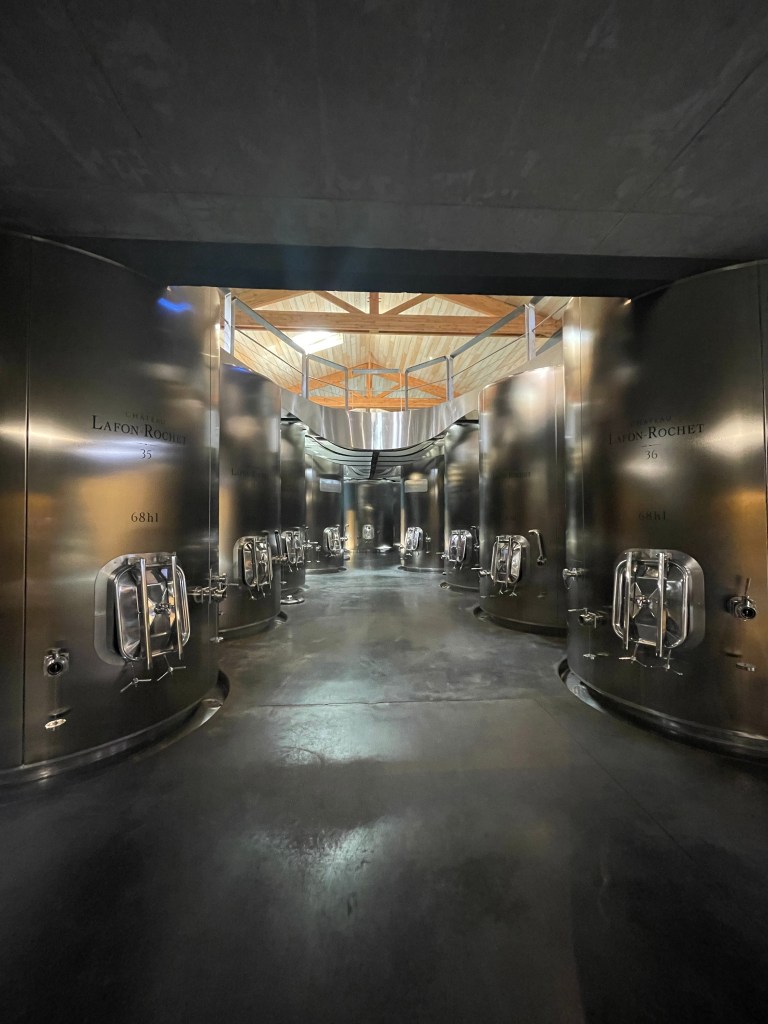
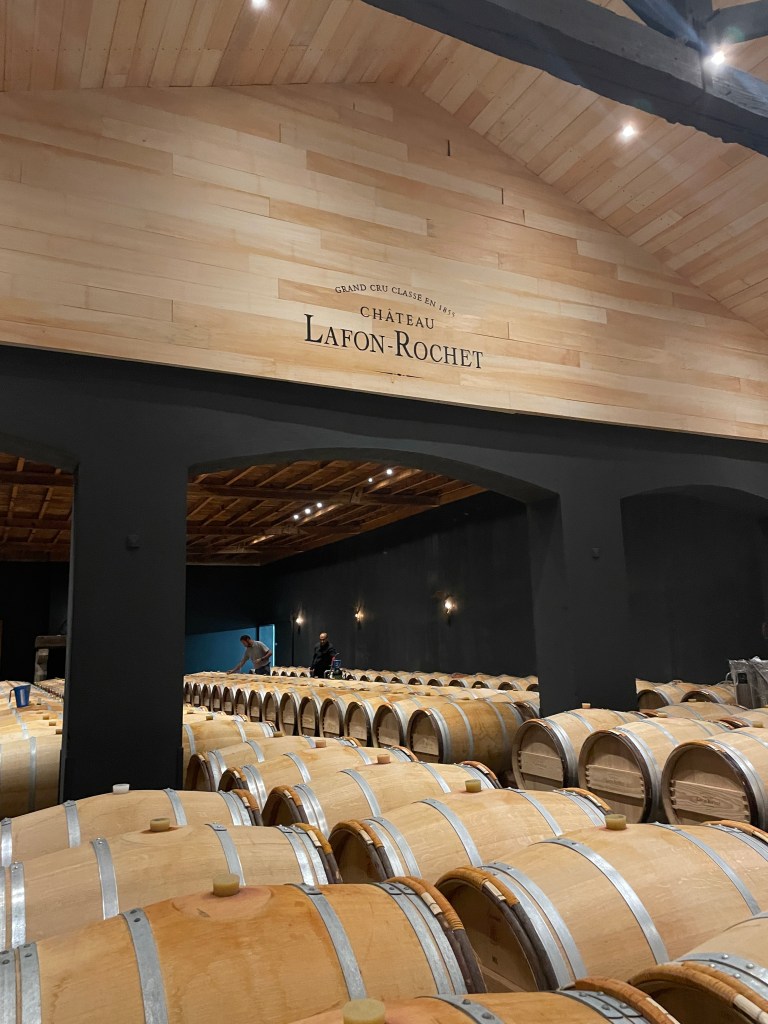
The winery is state-of-the-art producing two labels in two cellars – one with concrete vats and the other with stainless steel vats for smaller plots. They use a laser sorting process for the grapes and computer technology for temperature and humidity control.
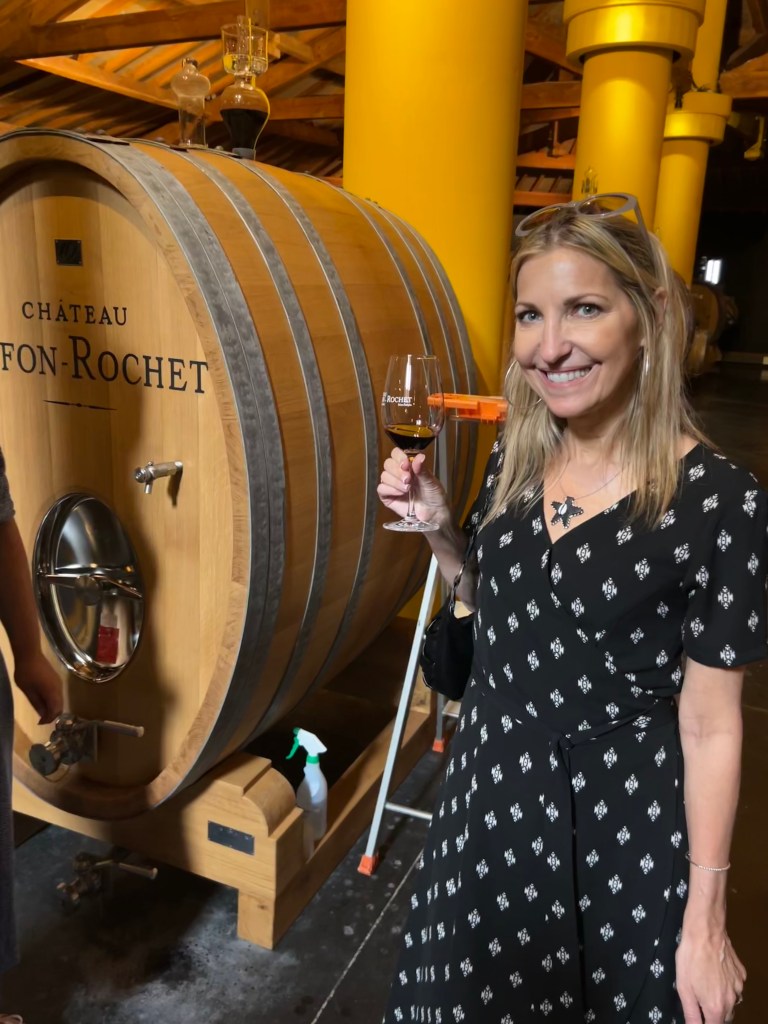
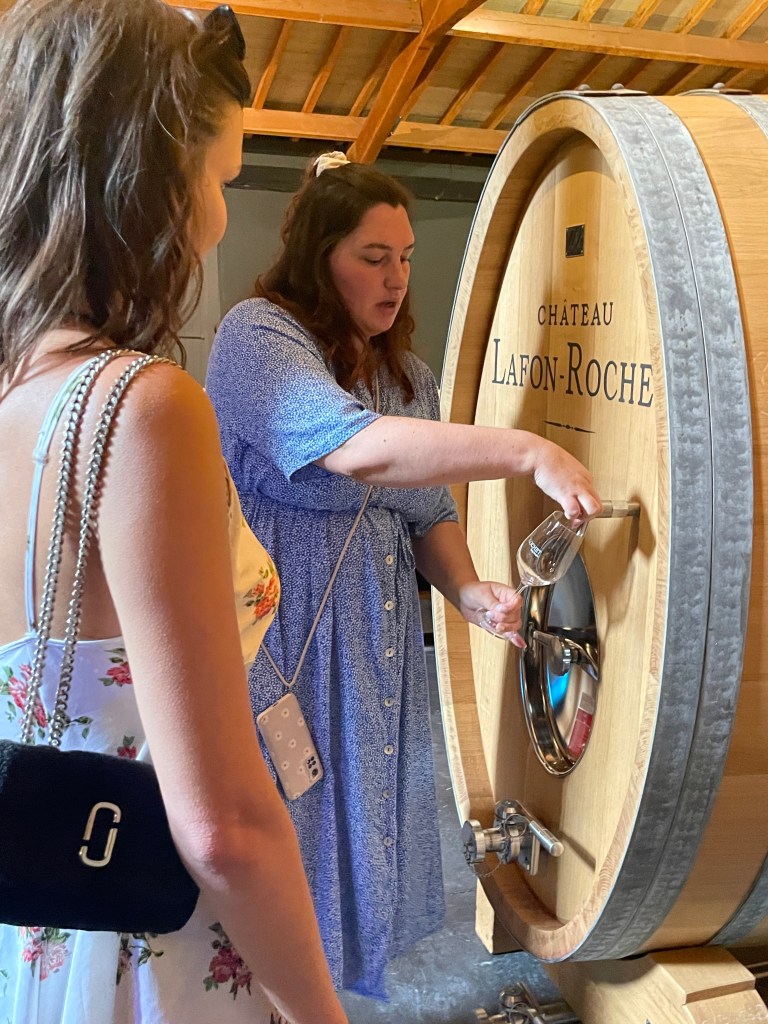
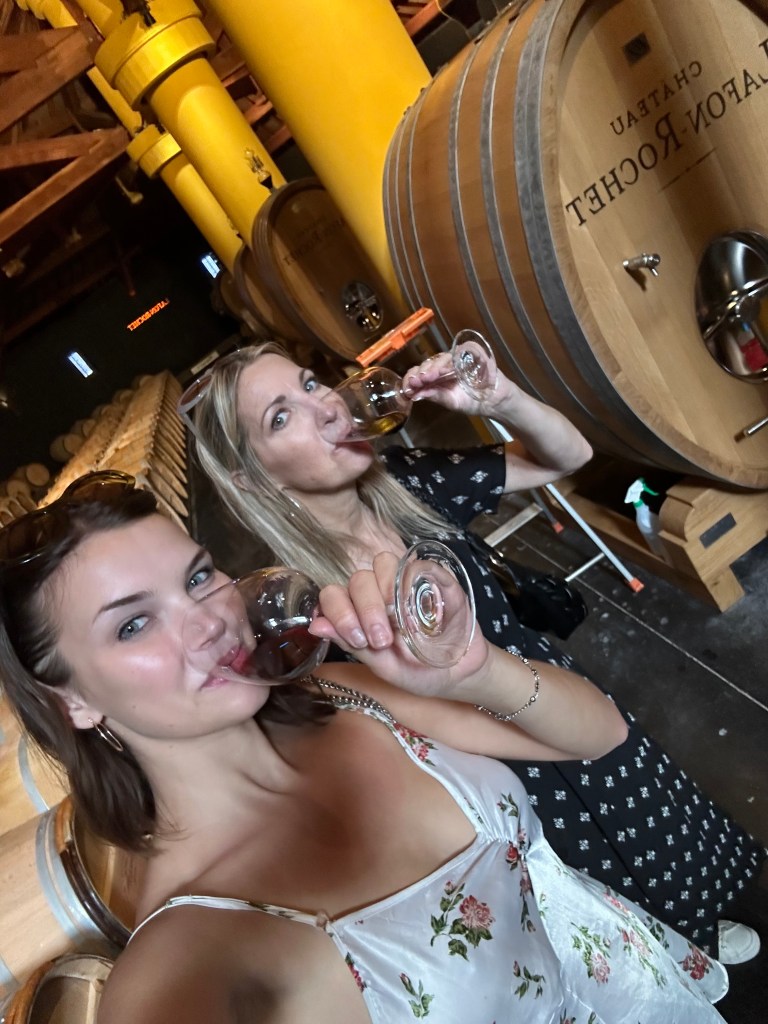
The wines are aged for 12 to 14 months in French barrels, although they are experimenting with American oak barrels as well. Here we enjoyed a barrel tasting of a 2022 100% Cabernet Sauvignon (6 months so far in barrel). Accurately described by our lovely host, it’s “like a fruit bomb in your face”. Really fun to taste.

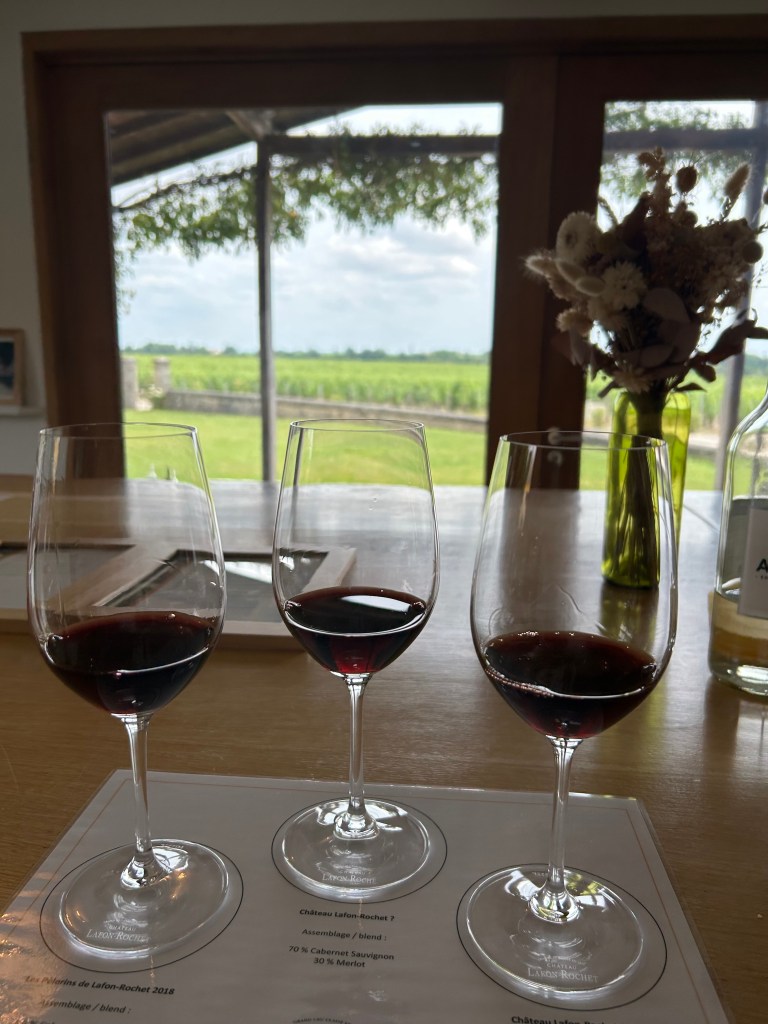
We tasted a 2018 Les Pélerins de Lafon-Rochet, the second label of the winery. An everyday wine, trustworthy, affordable, and drinkable now with aging power to 15 years. It was a treat to try a 1999 Château Lafon-Rochet 60% Merlot, 36% Cabernet Sauvignon and 4% Cabernet France. Totally channeling Prince at this moment 😉. 1999 was the last year before the label changed to the iconic yellow. We also enjoyed a 2013 Château Lafon-Rochet – yellow label of course (70% Cabernet Sauvignon and 30% Merlot). As a Cabernet Sauvignon fan, this was my preference of the three.
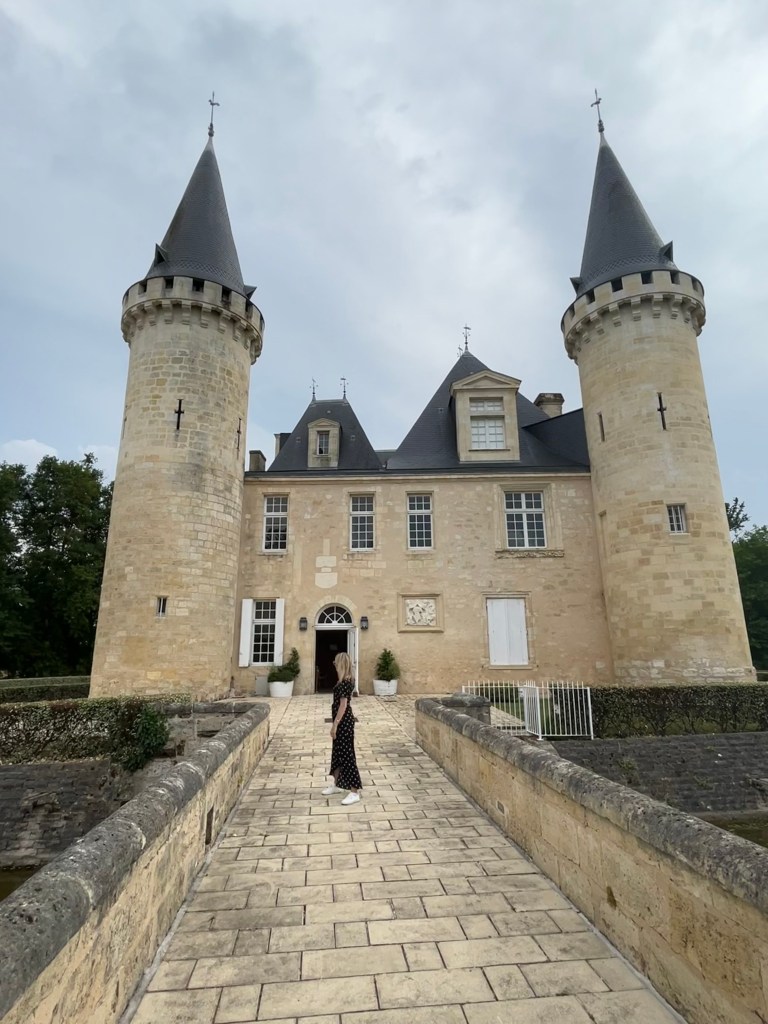
VISITING An enchanted castle – Château d’Agassac
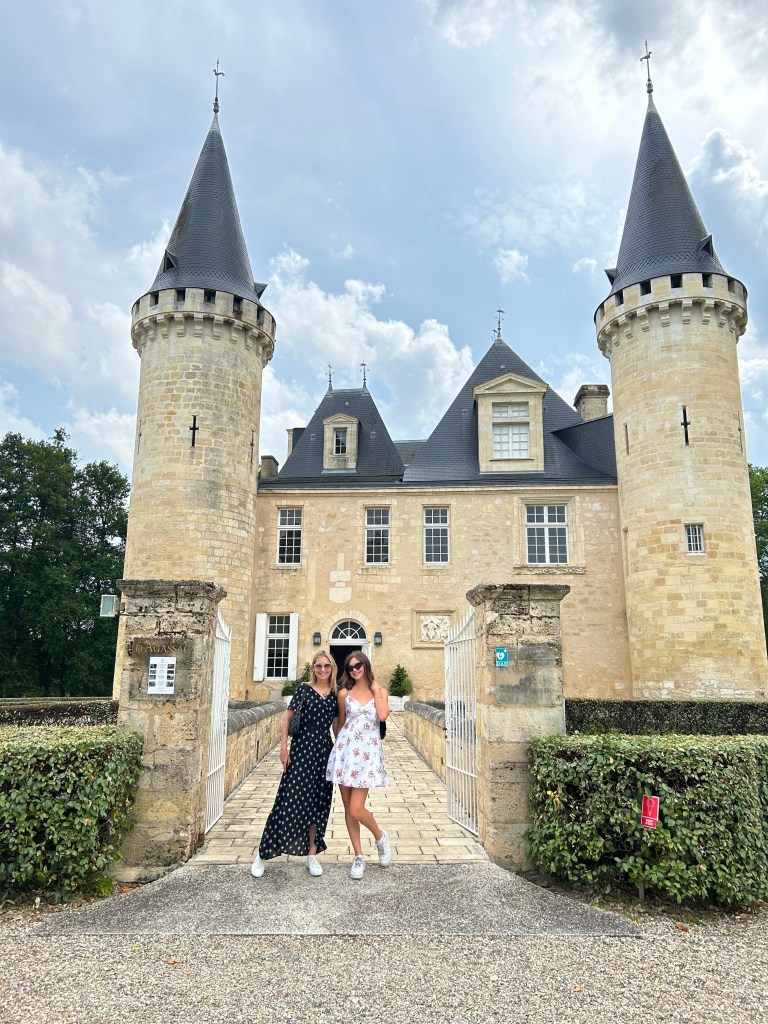
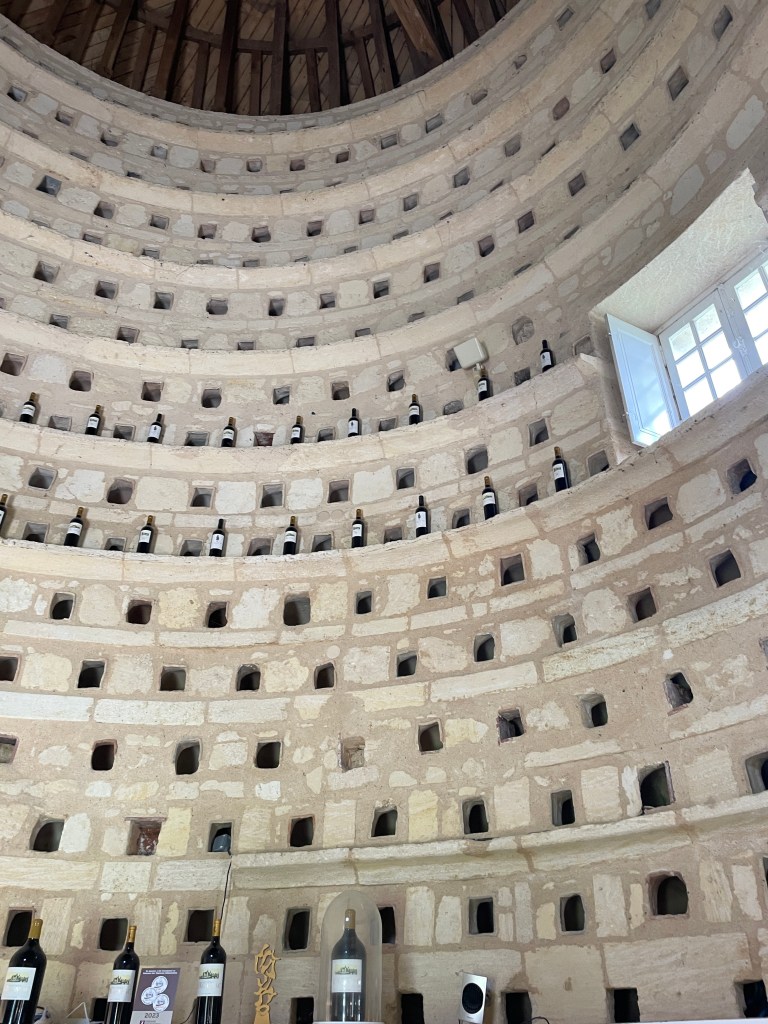
Our final stop of the day was Château d’Agassac, a 13th-century castle and notably one of the oldest Bordeaux chateaux, complete with a moat and a Pigeon House! Back in the day, this was a sign of power and today is a very cool wine shop on the estate.

Its wines can be both cellared and enjoyed young and are bottled with screw caps versus cork. In 2020, Château d’Agassac was awarded the highest designation of Cru Bourgeois Exceptionnel. Needless to say, a bottle from that vintage came home in my suitcase.

The 42-hectare vineyard grows 50% Merlot, 47% Cabernet Sauvignon and 3% Cabernet Franc. At this point in time, the vines are averaging 35 to 40 years and many are starting to be replaced. A common practice in many Bordeaux vineyards is to have roses planted at the start of the rows. Roses are like a watchdog for the vines. They are more fragile than the vine and can be a natural early detection of mold or disease.
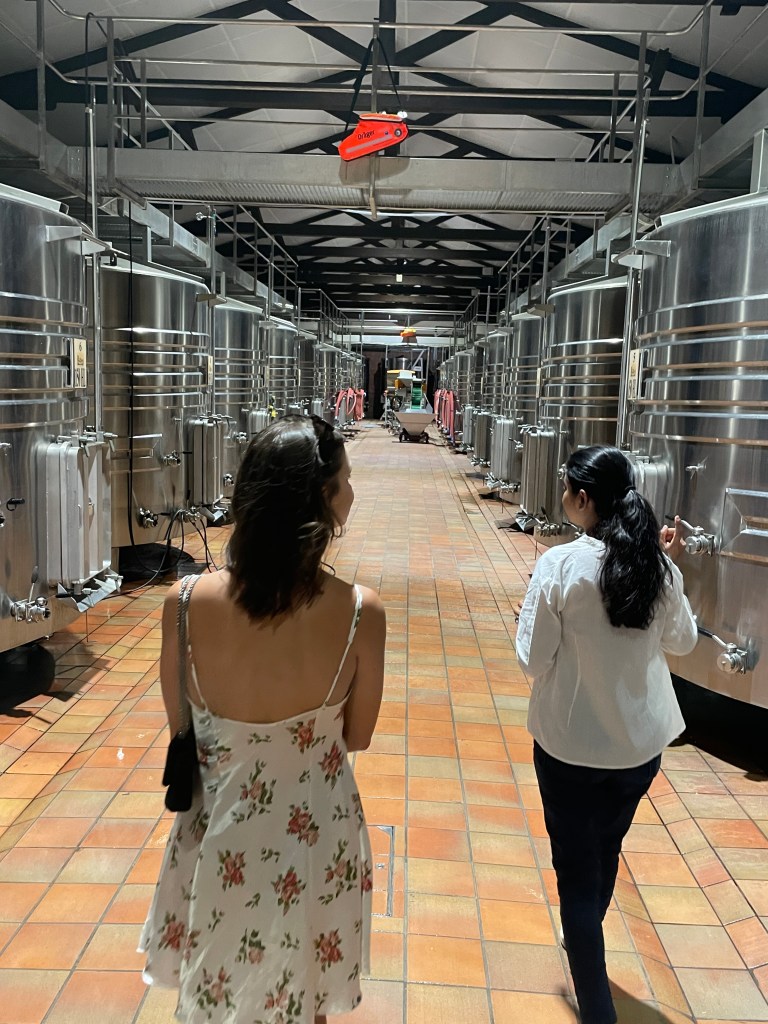
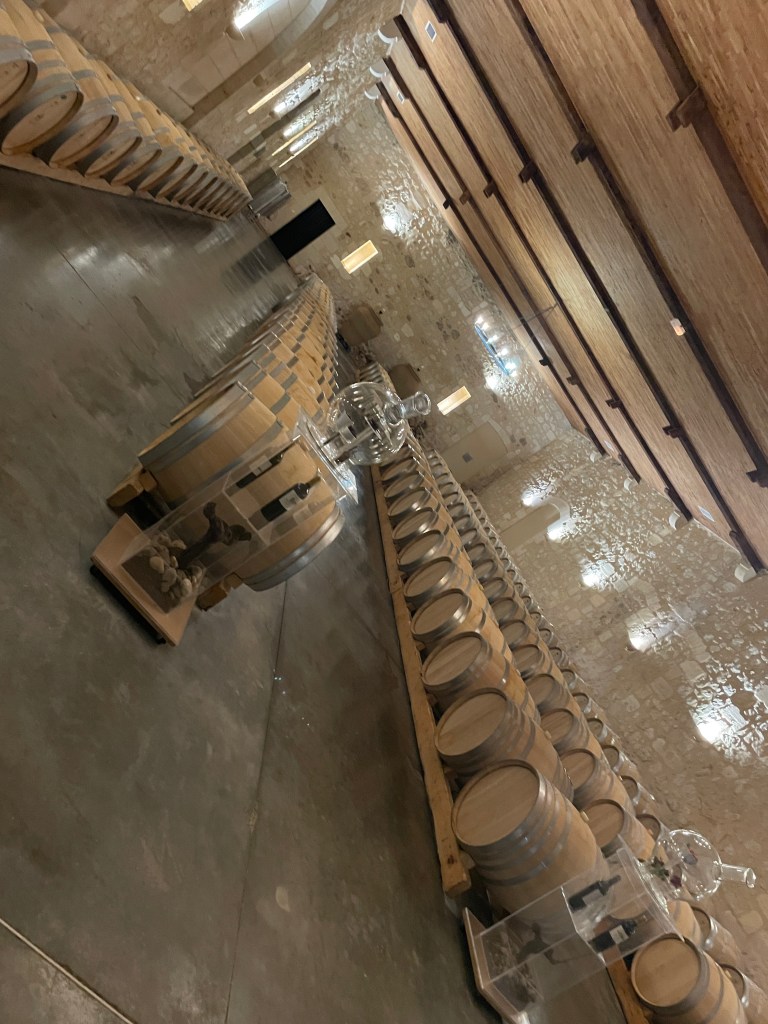
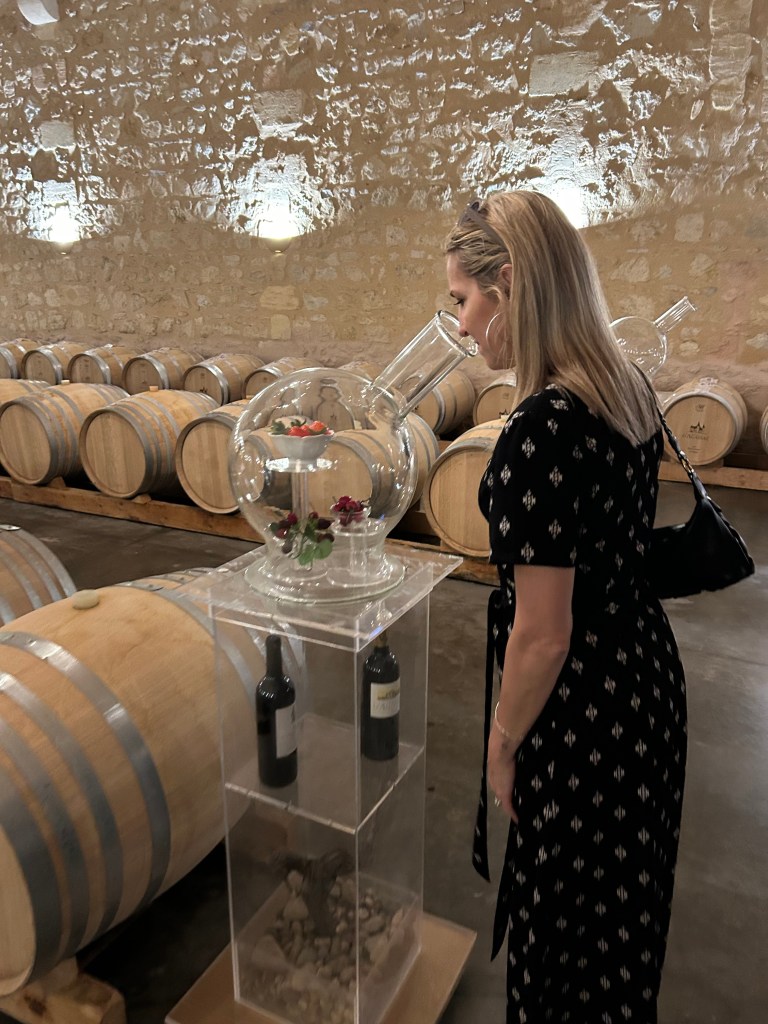
An interesting tour of the vat room and a barrel aging room with sensory decanters to express the aromas of each wine.
Cool fact: There are 37 bottles of wine in a barrel and at Château d’Agassac barrels are only used twice.
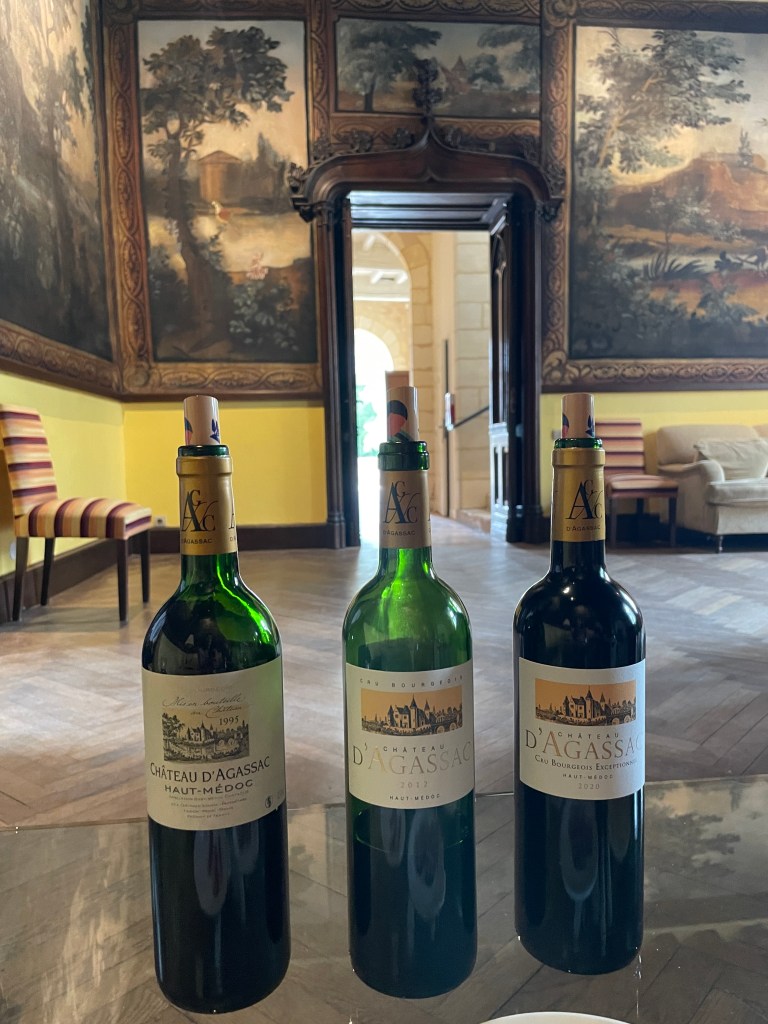

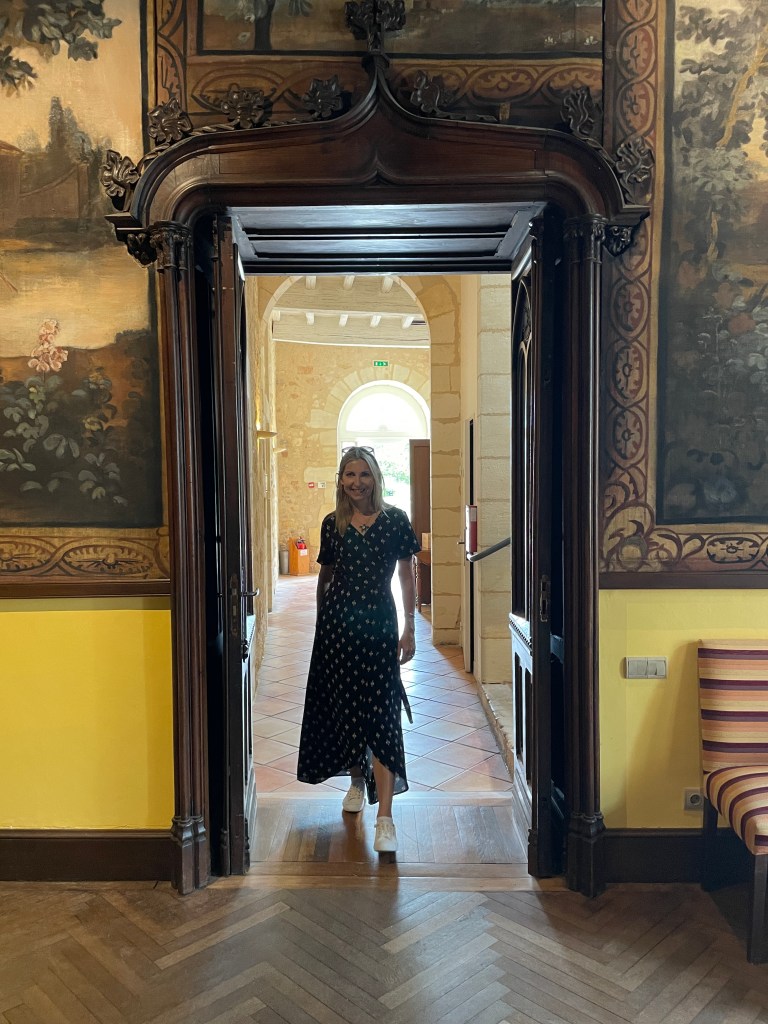
In the castle among its gorgeous historic tapestry, we tasted two Cru Bourgeois (one from 1995) and a 2020 Cru Bourgeois Exceptionnel which I brought home to cellar and try again in a few years.
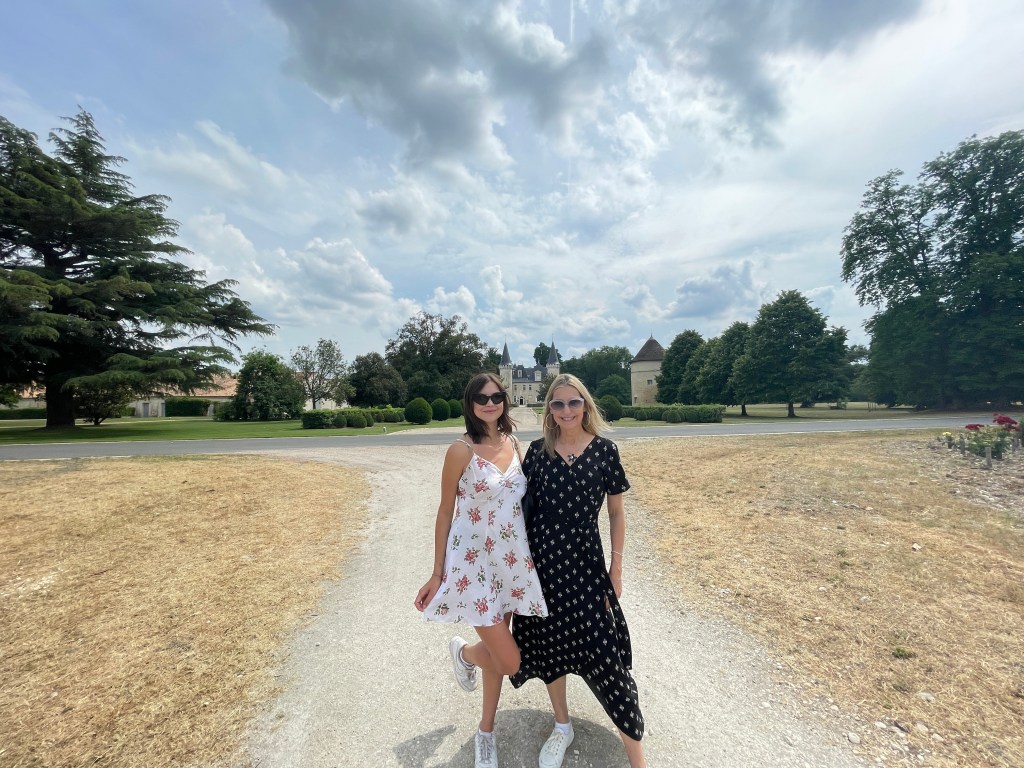
Château d’Agassac was like a fairytale ending to our Mom and Daughter Bordeaux Wine Tour.

Back in Paris, this statue at the Petit Palais titled “Le Toast”, caught my eye. A reminder of a moment in the movie “A Tourist’s Guide to Love” that my daughter and I watched one night in Bordeaux.
“A tourist wants to escape life. A traveler wants to experience it.”
We met so many amazing people in Bordeaux and in Paris that shared local recommendations (see below for some fabulous spots) and who were just really awesome to meet. It’s what I love most about traveling – meeting people, making connections, experiencing culture, and enjoying fabulous wine of course!
Wine is a passport to the world. – Thom Elkjer
A list of Bordeaux restaurants we tried and loved:
A few of our favourites in Paris:

 My Wine Playlist